A quarrel over holy sites
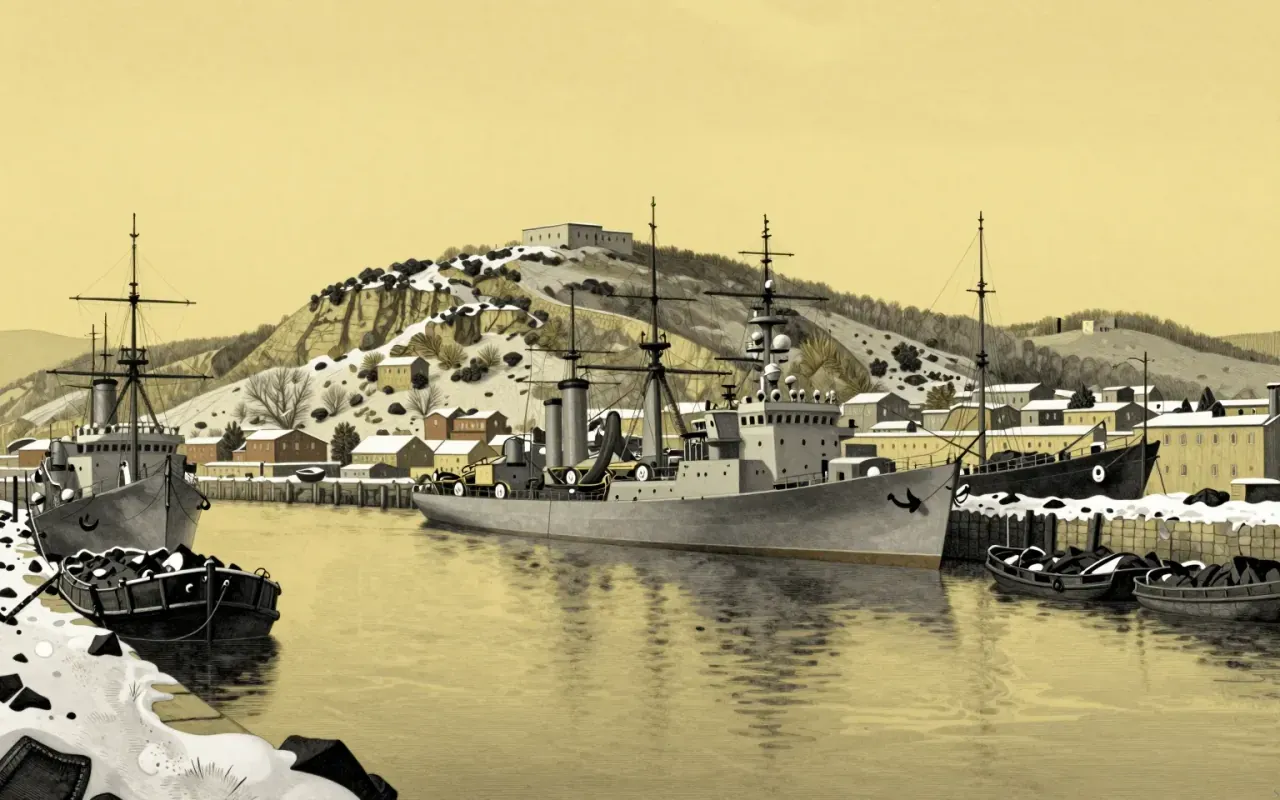
The war’s proximate cause was a dispute over Christian holy sites in Ottoman-ruled Palestine, where France asserted authority over Catholic interests and Russia claimed a protective role over Orthodox Christians, a disagreement that escalated after Russia’s Prince Menshikov demanded Ottoman recognition of a general Russian protectorate over Orthodox subjects across the empire and the Sultan, backed by Britain, refused. Russian forces occupied Ottoman territory along the Danube in mid-1853, the Ottomans declared war that October, and Britain and France entered in March 1854 once Russia ignored their ultimatums, shifting the main fighting to the Crimean peninsula, where an eleven-month siege of the Russian naval base at Sevastopol became the war’s central campaign before Russia sued for peace in March 1856.
Photographs and dispatches from the front
The Crimean War is unusually well documented for its era because it coincided with early war photography and telegraph reporting, meaning correspondents and photographers produced a real-time public record rather than one assembled entirely after the fact from officers’ memoirs. That immediacy shaped the war’s reception at home directly: reporting on conditions at the front, including the medical failures that led to Florence Nightingale’s intervention, reached British newspaper readers with a speed and detail earlier wars had not allowed, turning administrative failures that might once have stayed buried in official reports into a public scandal debated in Parliament while the war was still being fought.
A fear more than an ambition
Britain and France’s involvement reflected anxiety about Russian expansion more than any positive ambition of their own in the region; the historian A. J. P. Taylor’s often-cited judgment that mutual fear, not mutual aggression, caused the war captures how the conflict grew less from any single power’s clear objective than from each side’s concern about what the others might do if left unchecked. The underlying condition making this possible was the Ottoman Empire’s visible decline, evident in earlier losses of Serbian and Greek territory and Egypt, which raised what contemporaries called the Eastern Question, how the European powers would handle a weakening Ottoman state whose collapse might let Russia gain Mediterranean access none of the others wanted it to have.
Whose incompetence mattered more
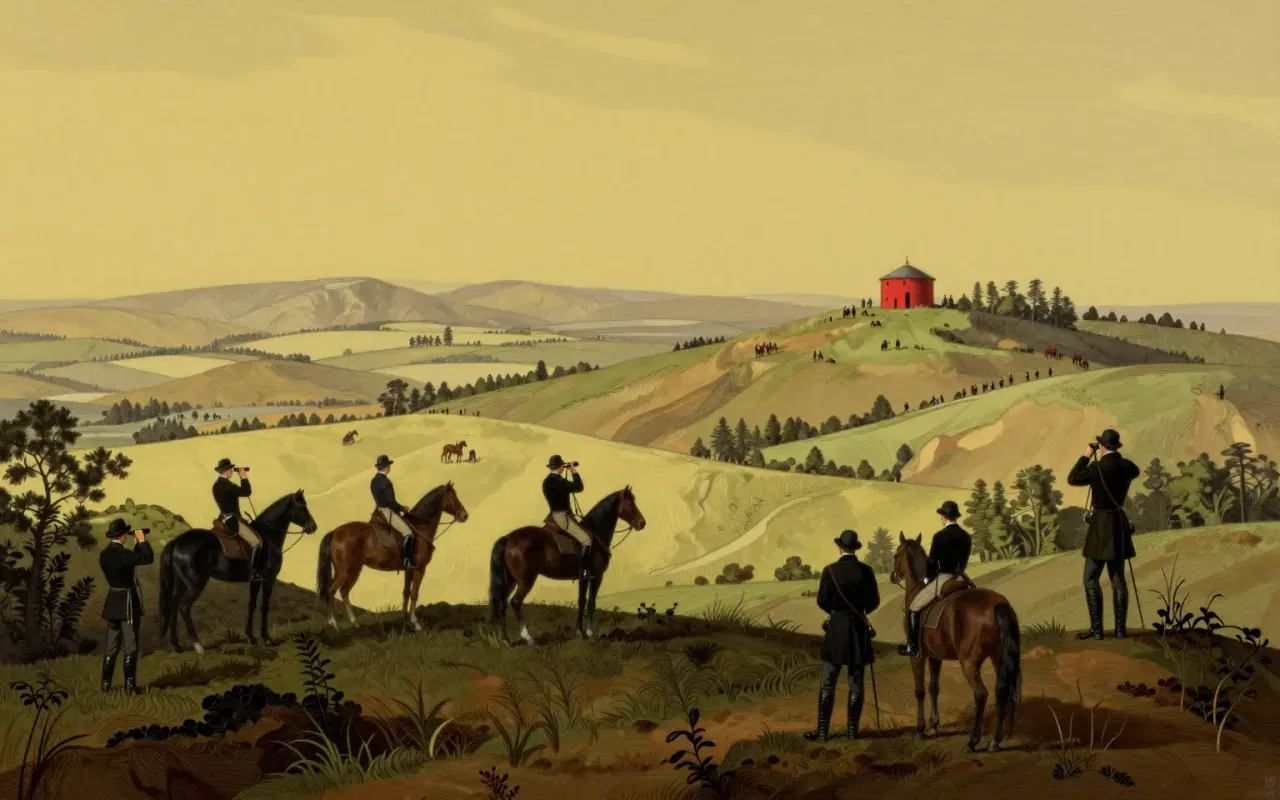
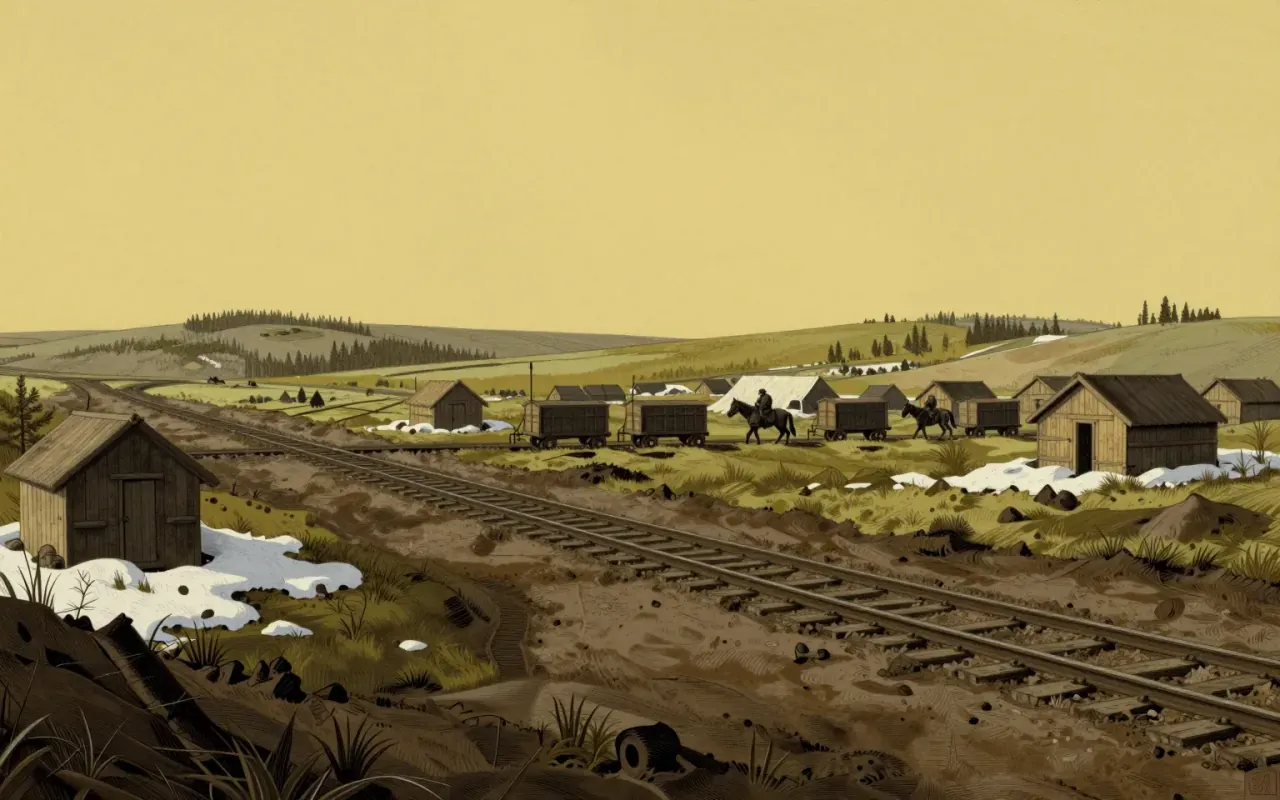
Historians assessing the war’s military conduct generally treat incompetence as widespread on all sides rather than concentrated in one army, but differ on where to place the greater weight. Russia’s performance is often described in terms of weak infrastructure, an underdeveloped rail network that slowed reinforcement, and administrative corruption, including officers embezzling soldiers’ pay, that compounded battlefield disadvantages. British and French failures, by contrast, are more often framed around logistical and medical mismanagement, epitomised by the conditions Nightingale found in military hospitals, than around institutional corruption as such, a distinction that shapes which reforms each country’s defeat or victory subsequently produced.
Disease outpacing the battlefield
Casualty figures for the war are dominated by disease rather than combat across every army involved: recorded British deaths of around twenty-two thousand include fewer than five thousand killed in action, with the remainder lost to illness, and French losses of over ninety-five thousand show an even starker gap, with combat deaths well under a quarter of the total. Russian losses are harder to fix precisely, with estimates ranging widely upward of four hundred thousand, but the same pattern of disease outweighing combat mortality holds. Florence Nightingale’s work organising nursing care at Scutari became internationally known specifically because it addressed this disease burden directly, and her reforms afterward helped establish nursing as a trained, respected profession rather than an informal, low-status role.
A defeat that forced reform
Russia’s defeat, formalised in the Treaty of Paris in March 1856, barred Russian warships from the Black Sea and cost it the Danube Delta and part of Bessarabia, a diplomatic setback that mattered less in itself than for what it forced at home: the scale of administrative and military failure the war exposed is credited with pushing Russia’s government toward the reforms of the following decade, including the emancipation of the serfs in 1861 and a broader modernisation of the army and legal system. The material is worth attention chiefly for that pattern, a war whose battles are less consequential in retrospect than the institutional failures it exposed on both the winning and losing sides.