A theatre seized mid-performance, nine hundred lives in the balance
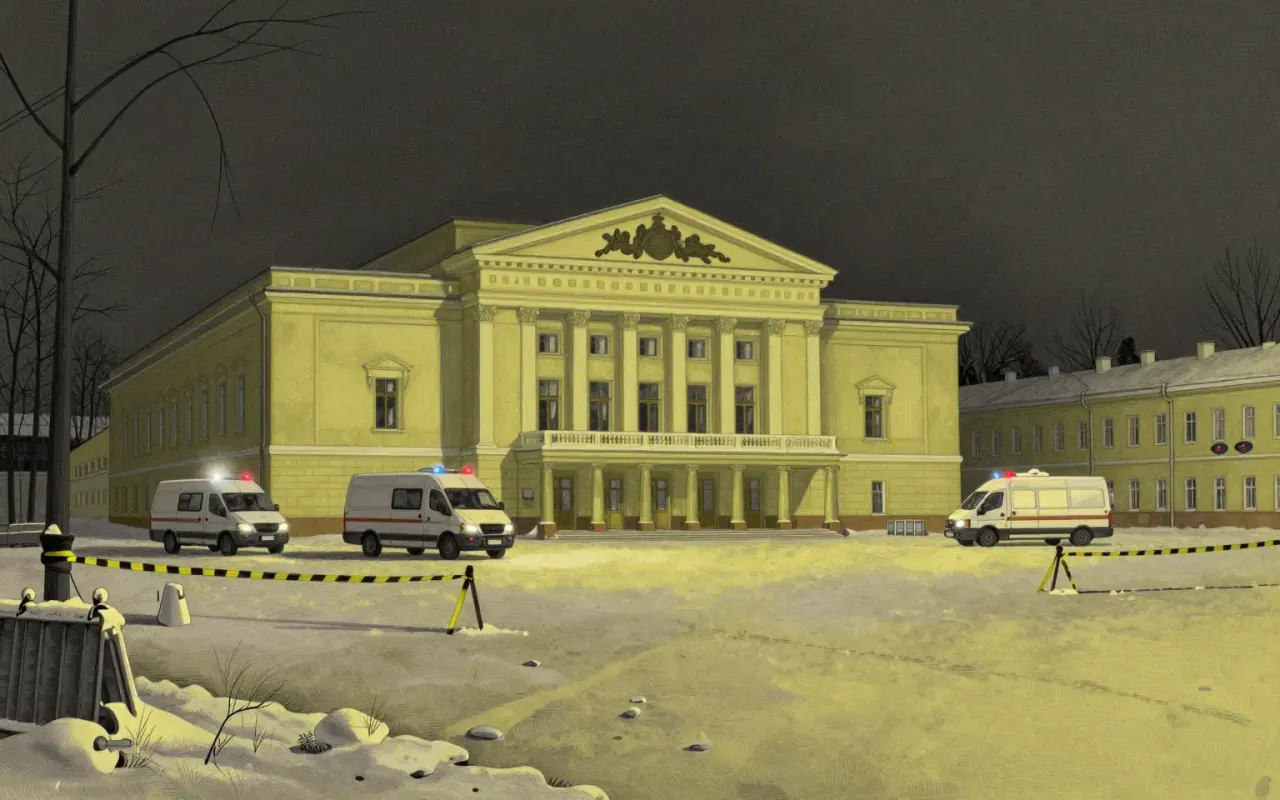
On the evening of 23 October 2002, Chechen militants led by Movsar Barayev seized the Dubrovka Theatre in Moscow during a performance of the musical Nord-Ost, taking somewhere between 850 and 900 people hostage. Over the following two days negotiators secured the release of 150 to 200 hostages, and roughly 75 foreign nationals were allowed to leave after producing passports, while the militants demanded an immediate and unconditional Russian troop withdrawal from Chechnya, an end to artillery and air operations there, and a public statement from President Putin committing to end the war. Before dawn on 26 October, Russian special forces pumped a chemical aerosol into the building through its ventilation system and stormed it, killing all forty hostage-takers.
A gas identified by outside researchers a decade after the raid
The Russian government did not disclose the identity of the gas used in the raid at the time, and it was only in 2012 that an independent study concluded the aerosol was a mixture of the synthetic opioids carfentanil and remifentanil, correcting earlier assumptions that it had been fentanyl-based. This decade-long gap between the raid itself and any credible outside identification of the substance used illustrates how much of the basic factual record of the siege had to be reconstructed by researchers working without government cooperation, rather than established through official disclosure at the time such information could have directly affected medical treatment of survivors.
A siege inside a wider, already brutal insurgency
The siege took place within the broader Second Chechen War, a conflict that had begun in August 1999 after Chechen-based fighters entered Dagestan and a wave of apartment bombings in Russian cities killed more than 350 people, escalating into a prolonged insurgency estimated by Amnesty International to have killed around 30,000 civilians by the time of the theatre crisis. The hostage-takers’ demands were framed explicitly around ending that war, situating the Moscow attack as an extension of a conflict already responsible for tens of thousands of deaths rather than as an isolated act of violence disconnected from the wider fighting in Chechnya itself.
Whether secrecy about the gas cost lives that could have been saved
Of the 132 hostage deaths officially recorded, Moscow’s health committee chairman stated that all but one resulted from the effects of the gas rather than from gunfire during the raid, even though the official cause of death was recorded simply as terrorism, without specifying the gas or its role. Some independent estimates suggest the true civilian toll, including deaths from complications in the following year, may have exceeded 200, and relatives of victims have alleged that the full scale of gas-related deaths remained deliberately withheld, a dispute that has never been fully resolved between official records and outside accounts of the crisis’s true cost.
Rescuers left without the one piece of information that mattered most
The medical response after the raid was hampered directly by the secrecy surrounding the gas: rescue workers lacked knowledge of the chemical agent’s identity or its appropriate antidote, and seventy-three hostages, including six children, received no medical assistance at all in the crisis’s immediate aftermath. Court testimony later suggested many hostages suffocated after losing consciousness and being unable to keep their airways clear, a risk that prompt administration of naloxone, an opioid antidote, might have mitigated had the gas’s composition been identified and communicated to responders in time rather than kept confidential during the operation itself.
Worth reading for the questions the investigation left open
The official investigation into the siege was suspended in June 2007, with prosecutors stating they were unable to identify culpable parties, and the case file never disclosed the gas’s identity, its antidote, the number of hostages actually released, or the names of officials who authorised the final assault. A former security officer separately alleged that some of the hostage-takers were themselves agents of the security services, a claim that remains disputed rather than established. Readers approaching the siege as a dramatic rescue gain the most from sitting with how much about its actual execution, and its true cost, was never officially resolved at all.