From a Milwaukee classroom to Israel’s fourth prime minister
Born Golda Mabovitch in 1898 in Kiev, Meir’s family emigrated to Milwaukee in 1906, and she moved to Mandatory Palestine in 1921 with her husband, joining a kibbutz before settling in Jerusalem. She rose through Labor Zionist politics, serving as labour minister from 1949 to 1956 and foreign minister from 1956 to 1966, before becoming prime minister on 17 March 1969 at the age of seventy-one following the death of Levi Eshkol. She led the country through the aftermath of the 1972 Munich Olympics massacre and the outbreak of the Yom Kippur War in October 1973, before resigning from office on 11 April 1974.
An official commission’s verdict, and historians’ quieter reservations
The Agranat Commission, appointed to investigate Israel’s preparedness for the 1973 war, formally cleared Meir of direct responsibility for the early setbacks, finding that she had decided wisely and with common sense in favour of full mobilisation of reserves, in line with the chief of staff’s recommendation, despite the political risks that decision carried. That official verdict sits alongside a more mixed assessment from later historians, who generally judge her earlier work as labour minister more favourably than her handling of the premiership, suggesting an institutional inquiry’s formal exoneration and a broader historical reputation are not always the same thing.
A record built on housing and immigration before it was tested by war
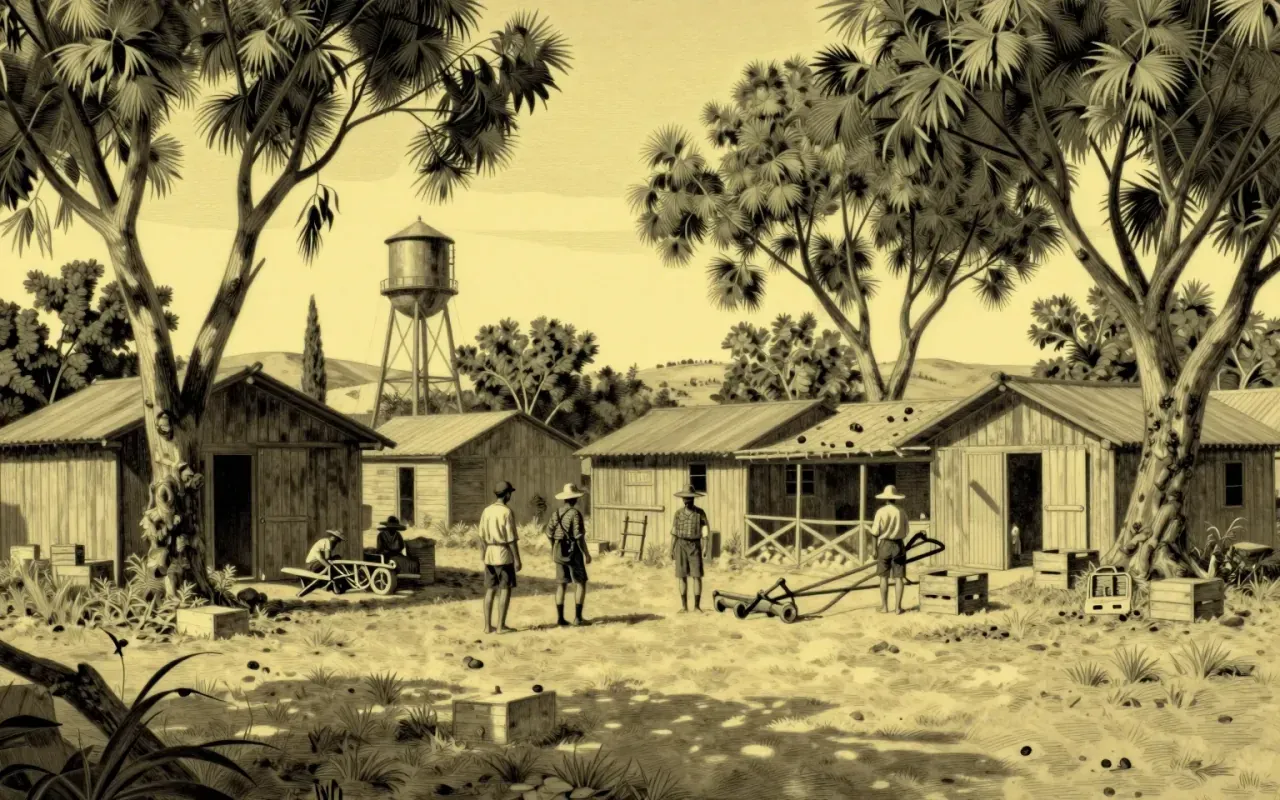
Before becoming prime minister, Meir’s tenure as labour minister from 1949 to 1956 is considered her most successful period in office. She oversaw the construction of more than one hundred temporary immigrant camps, and by 1956 roughly two-thirds of these had been closed as around 120,000 families moved into permanent housing, alongside broader construction of tens of thousands of apartments and houses and the establishment of social security and maternity benefit programmes. This record of large-scale, concrete administrative achievement in housing and welfare stands in contrast to the far more contested legacy of her later years as prime minister during wartime.
Mobilise without striking first, a decision made under six hours’ warning
On 5 October 1973, Meir received reports of Syrian forces massing on the Golan Heights, though her advisers initially counselled against alarm. Six hours before the Egyptian and Syrian attack began the following day, she met with her defence minister and chief of staff, who disagreed over whether to mobilise pre-emptively; she approved full mobilisation but rejected a pre-emptive strike, weighing the risk to Israel’s international standing and its relationship with the United States. Secretary of State Henry Kissinger later confirmed that a pre-emptive strike would likely have cost Israel American diplomatic backing, a judgment that has since been used to support the wisdom of her decision even amid criticism of the broader intelligence failure that preceded it.
A single sentence about Palestinian identity that outlived her premiership
In June 1969, Meir stated publicly that no distinct Palestinian people existed as such, a remark reported in the British press that became one of the most frequently cited and criticised statements of her time in office, seen by critics as emblematic of a broader pattern of denial regarding Palestinian national identity. Following the 1972 Munich Olympics massacre, in which Israeli athletes were killed, she authorised an operation to pursue those responsible for the attack, a decision that reflected the same combination of decisive, high-stakes judgment calls that characterised her handling of the following year’s war, for better and for worse depending on the assessment.
Worth reading for the split between two very different tenures
Meir’s career rewards attention for the contrast between its two main phases: a widely admired record building housing and social infrastructure as labour minister, and a far more contested premiership dominated by a war whose early failures an official commission attributed to the broader defence establishment rather than to her personally, even as historians continue to weigh her specific choices, including the mobilisation decision and the earlier public dismissal of Palestinian identity, more critically than that commission did. Readers who know her mainly as a wartime leader gain the most from returning to the ministerial record that came before, since it is there, more than in 1973, that her most durable achievements actually lie.