Fifty-five days behind legation walls, defended by an improvised cannon
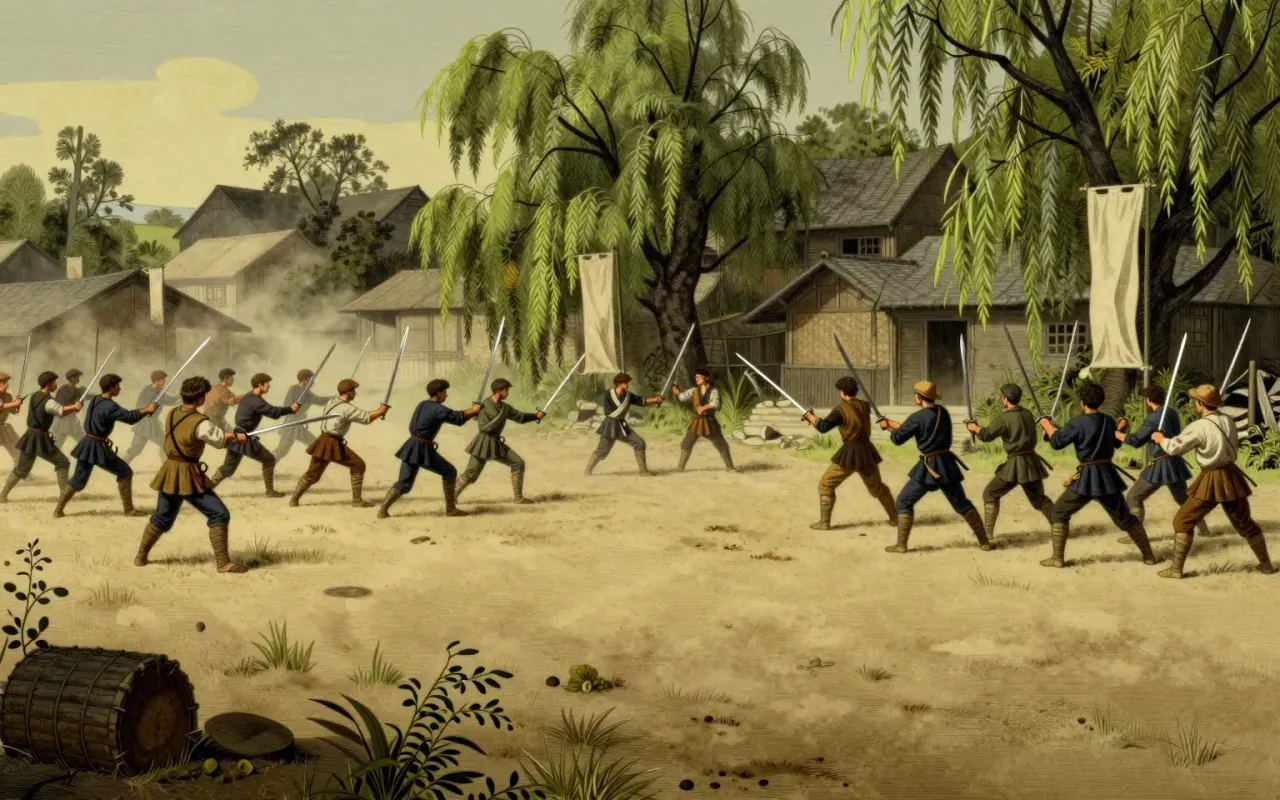
Members of the Society of Righteous and Harmonious Fists, known in the West as Boxers, emerged from economic distress in Shandong province, where cotton markets had collapsed under foreign competition and drought and flooding in 1897 and 1898 drove farmers into crisis, adopting the slogan support the Qing, destroy the foreigners by October 1899. Their siege of the foreign legation quarter in Beijing ran fifty-five days, from 20 June to 14 August 1900, trapping 473 foreign civilians, 409 soldiers from eight nations and roughly 3,000 Chinese Christians, who defended themselves partly with a single improvised cannon assembled from a British barrel, an Italian carriage, Russian shells and an American crew, until an Eight-Nation Alliance force relieved the siege.
A death toll that still doesn’t add up to its own headline number
The rebellion’s casualty accounting contains a striking internal gap: sources cite an aggregate total of around 100,000 deaths, while the specific breakdown given, roughly 32,000 Chinese Christians and 200 Western missionaries killed in northern China, accounts for barely a third of that stated total, with the remainder, presumably combatant Boxers, Qing soldiers and other civilians, left effectively uncounted in any coherent way. This gap illustrates how thoroughly a chaotic, decentralised conflict fought across multiple fronts and involving reprisals from all sides can outrun any single reliable tally, leaving historians to cite a headline figure that the same sources cannot actually itemise.
Drought, dispossession and a scramble for Chinese territory
The uprising’s roots lay in a convergence of specific grievances: German territorial ambitions announced in December 1897 triggered a wider scramble in which Russia, Britain, France and Japan carved out their own spheres of influence, while German control over Shandong’s railways and mining directly threatened local livelihoods already strained by economic decline. Missionary activity compounded the resentment, since treaty provisions from 1860 let foreign missionaries acquire land, sometimes displacing local temples in ways believed to violate feng shui, while missionaries’ use of extraterritorial legal privileges to intervene in local disputes on behalf of Chinese converts bred further resentment among non-Christian communities.
A general who sabotaged his own government’s siege
A decisive but often understated factor in the siege’s outcome was the conduct of Qing general Ronglu, who concluded that fighting all eight foreign powers simultaneously was unwinnable and deliberately worked to undermine the siege even as the imperial court had formally aligned with the Boxers. He withheld artillery from General Dong Fuxiang’s forces, issued measures protecting foreigners, and withheld decrees from commanders like Nie Shicheng that would have redirected their operations from suppressing Boxers toward attacking foreigners directly, a pattern of quiet insubordination that likely prevented the numerically superior besieging forces from overwhelming the legations despite having, by contemporary assessment, the capacity to do so within a single determined assault.
An indemnity larger than the government’s entire annual income
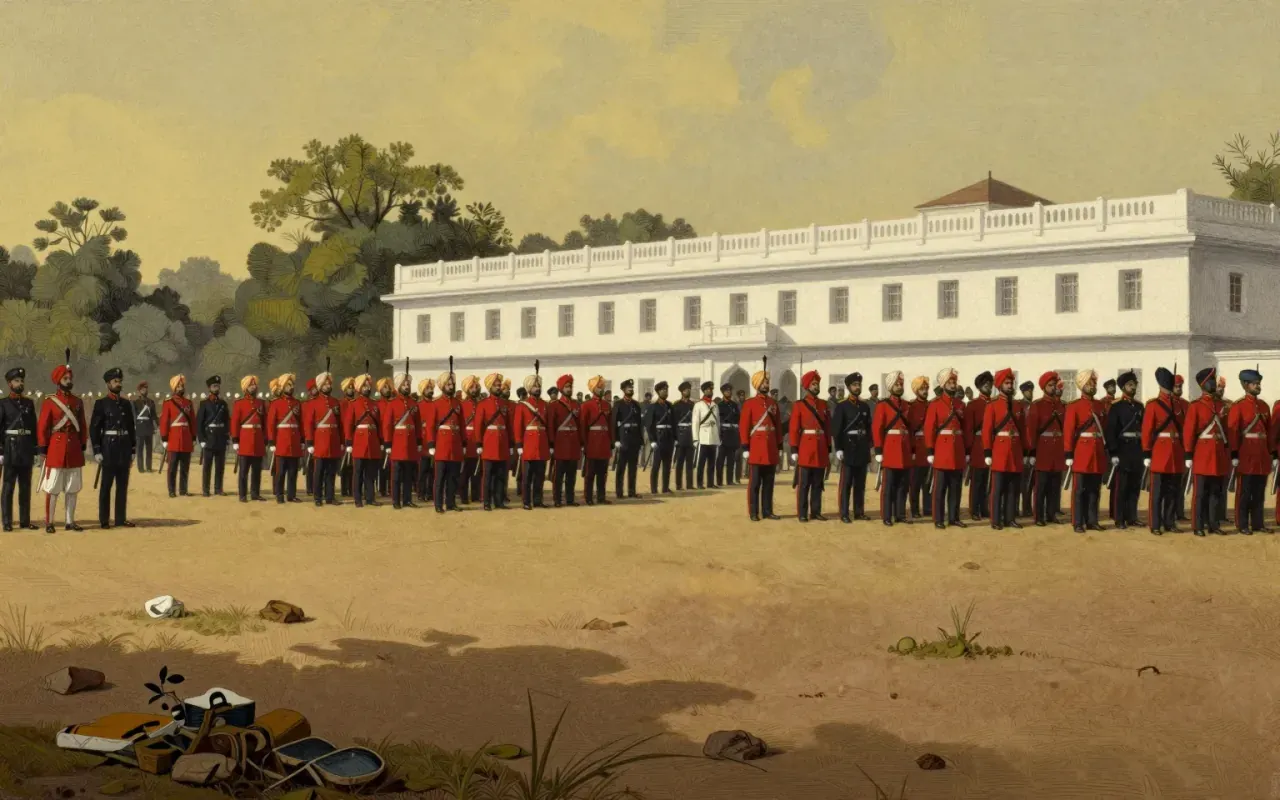
After the Eight-Nation Alliance, a coalition of roughly 51,755 troops led by Japan’s 20,840 and Russia’s 12,400, relieved the siege on 14 August 1900, its forces carried out extensive looting and reprisal killings across Beijing and the surrounding countryside, including the destruction of thousands of bronze artefacts and the loss of significant portions of the historic Yongle Dadian encyclopedia, alongside documented executions of people merely suspected of Boxer sympathies. The resulting Boxer Protocol, signed 7 September 1901, imposed an indemnity of 450 million taels of silver payable over 39 years, a sum exceeding the Qing government’s total annual tax revenue and a financial burden historians credit with accelerating the late Qing reforms and the eventual instability that culminated in the dynasty’s fall in the 1911 revolution.
Worth reading for the numbers that still don’t reconcile
The rebellion is worth engaging closely for how visibly its own historical record fails to add up in places, an oft-cited death toll that its own sources cannot fully itemise, and for the quiet, consequential defiance of a single Qing general whose sabotage of his own government’s siege likely determined whether the legations survived at all. Readers drawn to the siege’s dramatic details, an improvised international cannon, invulnerability rituals tested against modern rifles, gain the most from setting them beside the messier underlying reality: a conflict whose true human cost, and whose internal Qing politics, remain considerably less settled than the familiar narrative of a fifty-five-day siege usually suggests.