What happened
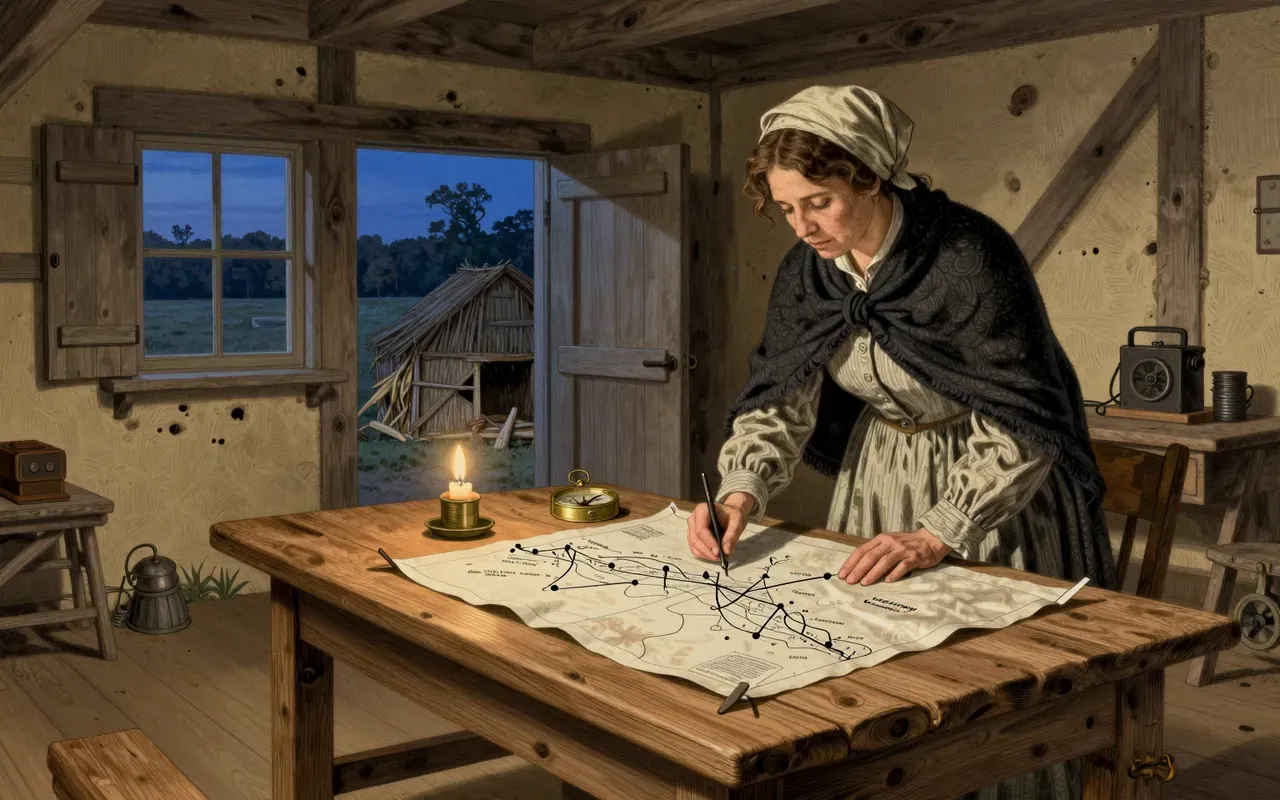
Harriet Tubman conducted 13 rescue missions via the Underground Railroad, freeing approximately 70 enslaved people. She served as an armed scout and spy for the Union Army. She led the Combahee River Raid, liberating over 700 enslaved people. She travelled by night and in extreme secrecy. She carried a revolver and threatened to shoot anyone who attempted to turn back. She used spirituals as coded messages.
How we know it
The record comes from a single source: a document titled ‘Harriet Tubman’ that states verified claims about her missions, military role, raid outcome, conduct, and methods. No other sources are cited or referenced.
Why it went that way
Tubman’s success relied on methodical conditions: night travel, extreme secrecy, use of coded communication, armed deterrence, and integration into existing networks (the Underground Railroad and Union intelligence). Her personal resolve — including willingness to enforce discipline with lethal threat — was necessary to sustain group movement under mortal risk.
What is still contested
The source does not address contested points — such as the precise number of people she rescued beyond the stated ‘approximately 70’ on the Underground Railroad or ‘over 700’ at Combahee Ferry, the reliability of her ‘never lost a passenger’ claim under scrutiny, the authorship or provenance of the spirituals she used, or whether her leadership of the Combahee River Raid was formally authorised or later contested by Union officers.
What it changed
It established that an enslaved Black woman could plan, lead, and execute large-scale armed liberation operations under U.S. military command — a precedent confirmed by the documented outcome of the Combahee River Raid. It demonstrated that clandestine resistance could scale from individual escapes to collective, militarily coordinated emancipation.
Is it worth your time
Yes — because it documents a rare, verifiable case of sustained, high-risk resistance by an enslaved woman who operated with strategic autonomy, military authority, and measurable results — all within the constraints of documented evidence.