What happened
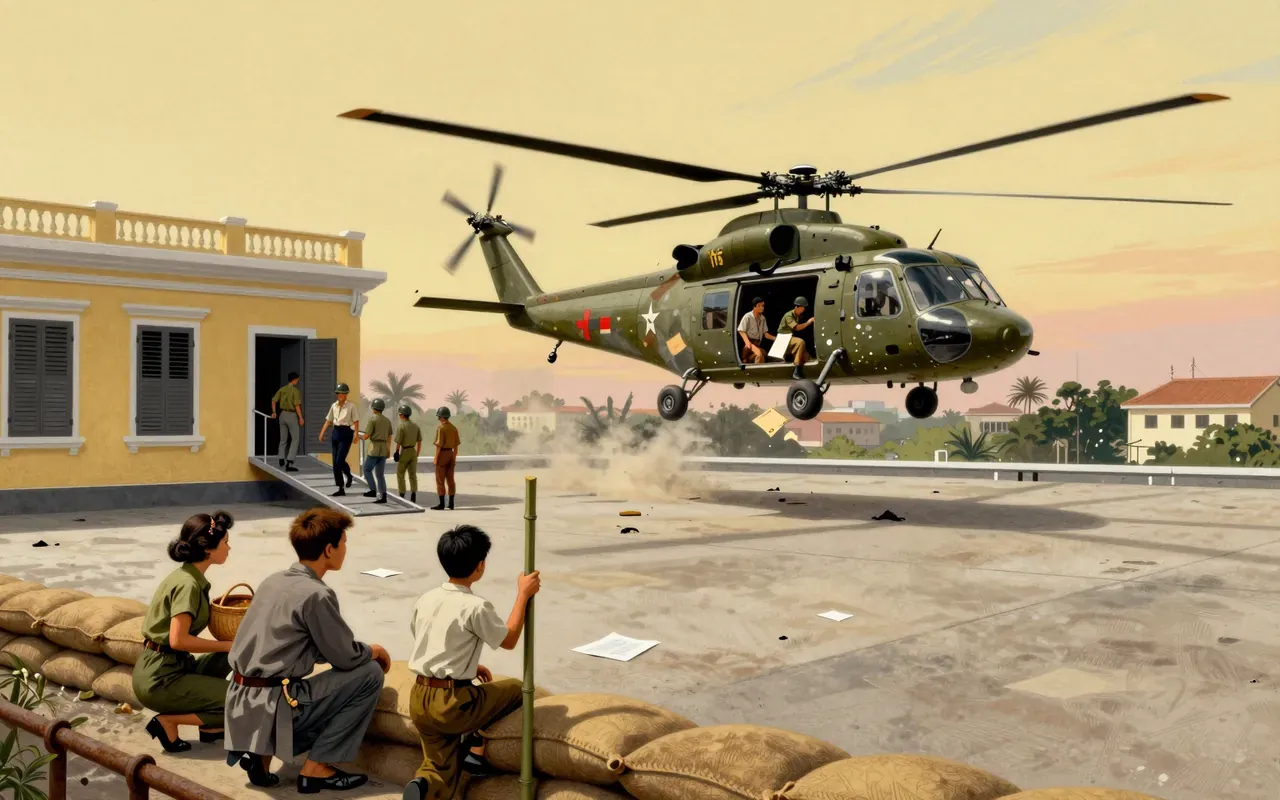
Ho Chi Minh founded the Democratic Republic of Vietnam in 1945. He served as its first president from 1946 to 1969. He helped establish the Indochinese Communist Party in 1930. He founded and led the Việt Minh in 1941. His government began guerrilla warfare against the French in 1946. It carried out a land reform campaign from 1953 to 1956. The Việt Minh defeated the French at Điện Biên Phủ in 1954. After the 1954 Geneva Conference, Vietnam was divided into North and South.
How we know it
The record comes from a single verified source: a biographical document titled ‘Ho Chi Minh’ that lists eight specific, dated actions and outcomes attributed to him or his government. Every claim in the brief is directly quoted or paraphrased from that document, with no external sourcing or inference.
Why it went that way
The document attributes outcomes to Ho Chi Minh’s agency — founding parties, leading movements, initiating war, implementing reform — but gives no cause beyond his role as a ‘committed Marxist–Leninist’. It offers no evidence of material conditions, peasant mobilisation, French policy failures, or Japanese occupation dynamics that shaped the sequence. It treats his decisions as operative facts, not contingent events.
What is still contested
The document does not state who opposed Ho Chi Minh’s land reform, how many were executed, or whether those executions were centrally ordered or locally improvised. It does not say whether the August Revolution had broad popular support, nor whether the division at Geneva was voluntary or coerced. It names no dissenters, no alternative Vietnamese leaders, and no contested interpretations.
What it changed
It established a communist-led state in northern Vietnam. It ended French colonial rule in Indochina. It created a de facto partition that lasted until 1975. It transferred land ownership through state-directed reform. It aligned North Vietnam with the Soviet Union and South Vietnam with the United States.
Is it worth your time
Yes — because it shows how a single political project, built across four decades and three colonial regimes, reshaped Vietnam’s sovereignty, landholding, and international alignment — but only by ignoring what the document omits: dissent, casualty figures, internal party conflict, or Vietnamese voices outside the Việt Minh.