Trained by the empire he fought
San Martín was born in 1778 in the Spanish colony that is now Argentina but was taken to Spain as a child and spent more than twenty years as an officer in the Spanish army, fighting in North Africa, against Napoleon’s forces in the Peninsular War, and rising to lieutenant colonel. He resigned that commission and returned to Buenos Aires in 1812, then spent the following decade leading the campaign that brought independence to Argentina, Chile, and Peru in turn: raising and training the Army of the Andes in the province of Cuyo, crossing the mountains into Chile in 1817, and sailing north two years later to press the fight into Peru, before withdrawing from public life entirely after a private meeting with Simón Bolívar in 1822.
Campaign records and a closed door
San Martín’s military planning is unusually well documented, since the logistics of raising an army in an underdeveloped province, provisioning it, and moving thousands of men and animals across the Andes generated detailed contemporary records of conscription, supply, and route planning. The war’s political and personal turning points are less fully recorded. The 26 July 1822 meeting with Bolívar at Guayaquil was held behind closed doors with no official minutes kept, and neither man left a full account of what was said; San Martín’s resignation followed within weeks, but the connection between the conversation and the decision is something historians have had to reconstruct from indirect evidence and each man’s later, guarded remarks rather than from any direct record of the exchange itself.
Mules lost to altitude
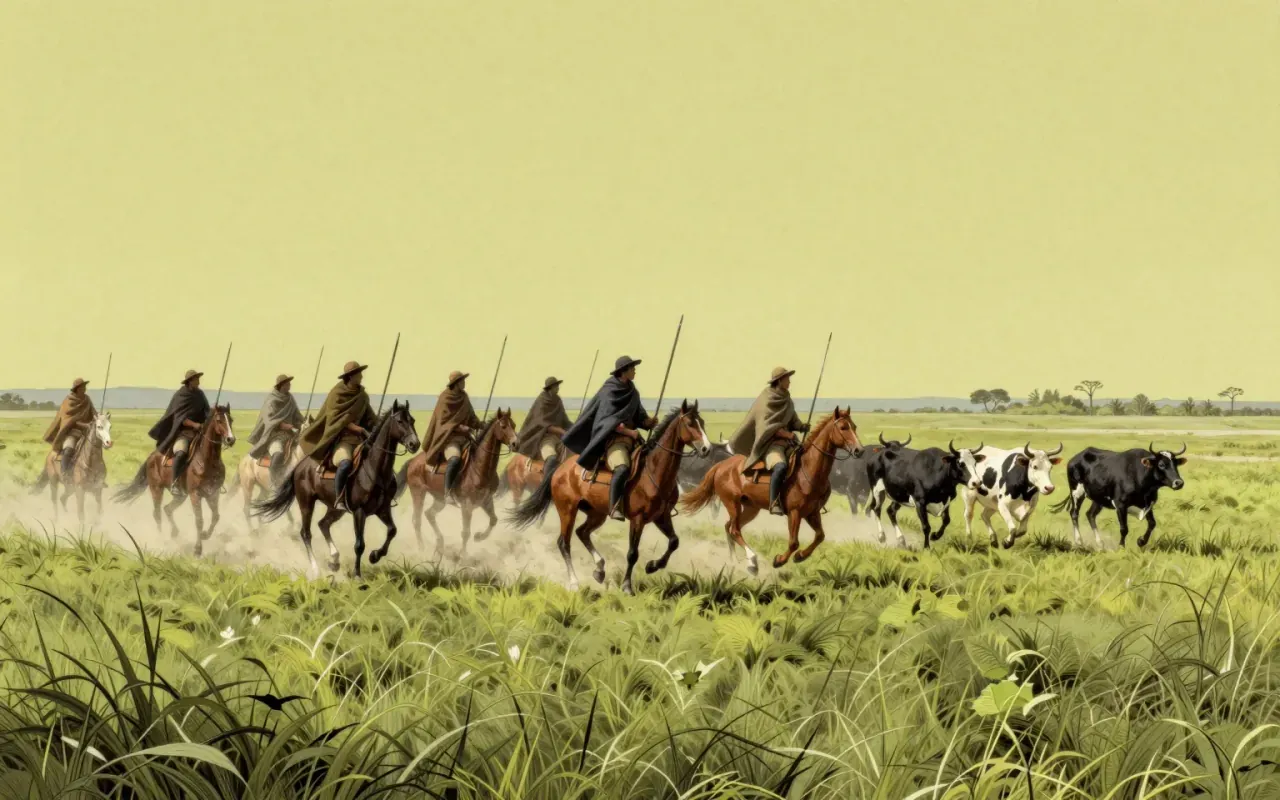
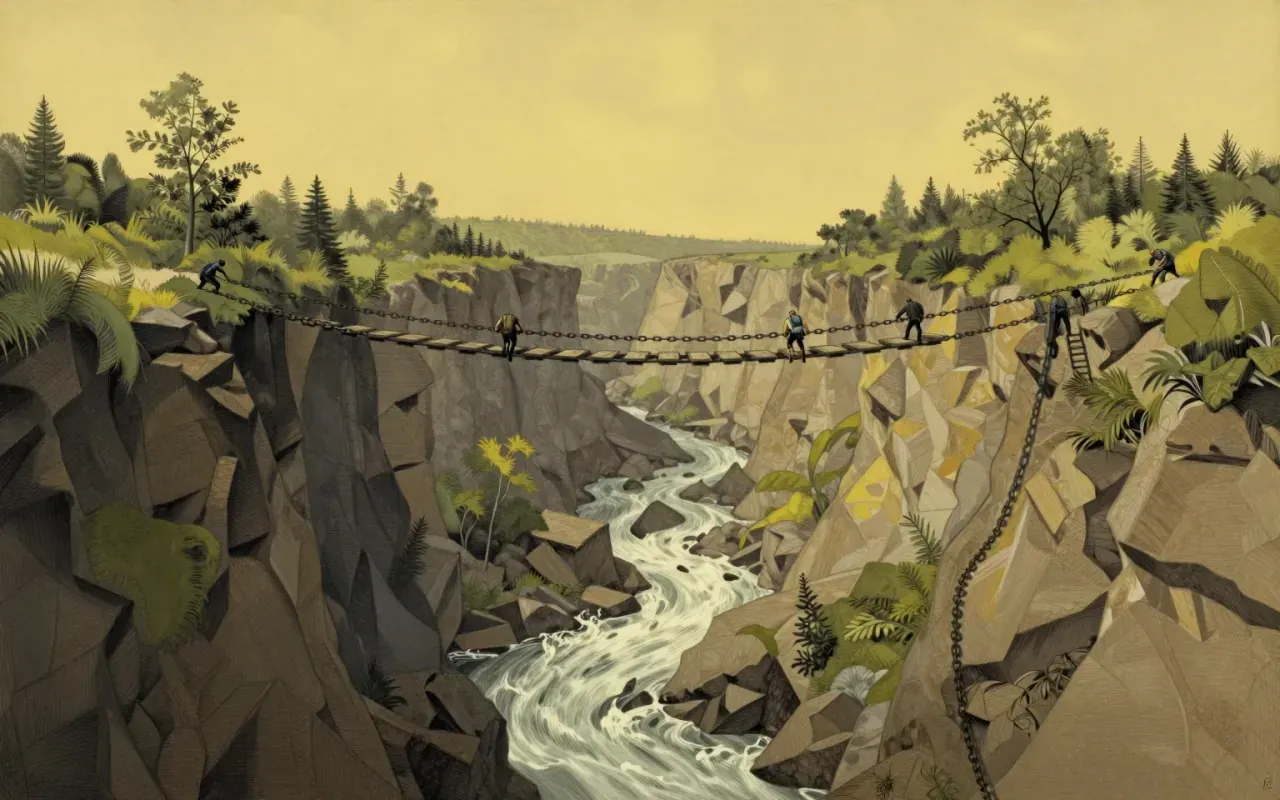
San Martín’s approach to campaigning was methodical rather than improvised, reflecting his formal European training: years spent building the Army of the Andes from conscripts, confiscated resources, and a deliberately organised wartime economy before he risked a single major engagement. That preparation still could not fully offset the terrain. The crossing itself, undertaken in six columns over separate mountain passes in January 1817, took nearly a month and reduced the expedition’s pack animals from roughly ten thousand mules and fifteen hundred horses to well under half that number by the time the army reached Chile, a loss of matériel that reflects the crossing’s genuine difficulty rather than any planning failure on San Martín’s part.
Two theories of a resignation
The central open question in San Martín’s career is why he withdrew from command and South American politics so completely after Guayaquil. One view treats the meeting as effectively a defeat, in which Bolívar’s larger army and greater political leverage left San Martín with no realistic path to lead the campaign’s final phase and little choice but to step aside gracefully. Another treats the withdrawal as a deliberate, principled choice by a man who had achieved his stated aims and preferred to avoid a rivalry that might have split the independence movement or slid toward personal dictatorship. Because no full record of the conversation survives, historians continue to argue the case from San Martín’s subsequent conduct rather than from direct evidence of his reasoning.
Chile and Peru declared free
The campaigns San Martín led delivered independence to three future countries in short order: Argentina declared independence in 1816 before his Andes crossing even began, Chile’s independence followed the decisive victory at Maipú in 1818, and Peru’s was proclaimed in 1821 after his forces occupied Lima, though full military victory over remaining royalist strongholds there was left to Bolívar’s later campaigns. San Martín served briefly as Peru’s head of state under the title Protector before resigning it, having by his own choice avoided consolidating the kind of durable personal authority that some of his contemporaries, including Bolívar, held onto for longer.
An exit without a sequel
San Martín’s career offers a useful counterweight to the more famous and more overtly political story of Bolívar: less rhetoric, more attention to supply lines and mountain passes, and an ending that refuses to resolve into either triumph or tragedy. He left South America for Europe in 1824, at forty-six, and died in France in 1850 having never returned to public office, a quiet conclusion to a campaign that had liberated three countries. Readers who want their revolutionary leaders explained rather than mythologised will find the unresolved Guayaquil question more satisfying than frustrating, since it is presented as a genuine historical gap rather than smoothed over with confident invention.