An ambush with large consequences
Washington’s public life began with a mistake that mattered well beyond Virginia. Sent in 1754 to challenge French claims in the Ohio Valley, he led an ambush at Jumonville Glen that killed a French officer, an incident that helped ignite the French and Indian War, fought thereafter across North America and, as part of a wider conflict, in Europe as well. Two decades later he commanded the Continental Army through the Revolution, surviving a near-collapse in New York and New Jersey in 1776 before eventual victory at Yorktown in 1781, then served as the first president from 1789 to 1797, setting precedents for the office before retiring voluntarily, twice, from positions of real power.
A well-kept record
Washington’s career is unusually well documented for its era because he kept extensive diaries and correspondence throughout his life, material later collected and annotated by generations of editors, and because his officers, cabinet members, and political rivals left their own accounts that can be checked against his. Biographers such as Ron Chernow and John Ferling have drawn heavily on this correspondence to reconstruct not just his decisions but his private doubts, including moments of real uncertainty about the army’s prospects during the 1776 retreat. His financial and household records, including detailed lists of the enslaved people at Mount Vernon, similarly survive in enough depth that historians can trace the plantation’s dependence on their labour with some precision rather than relying on general impression.
Near-collapse, then recovery
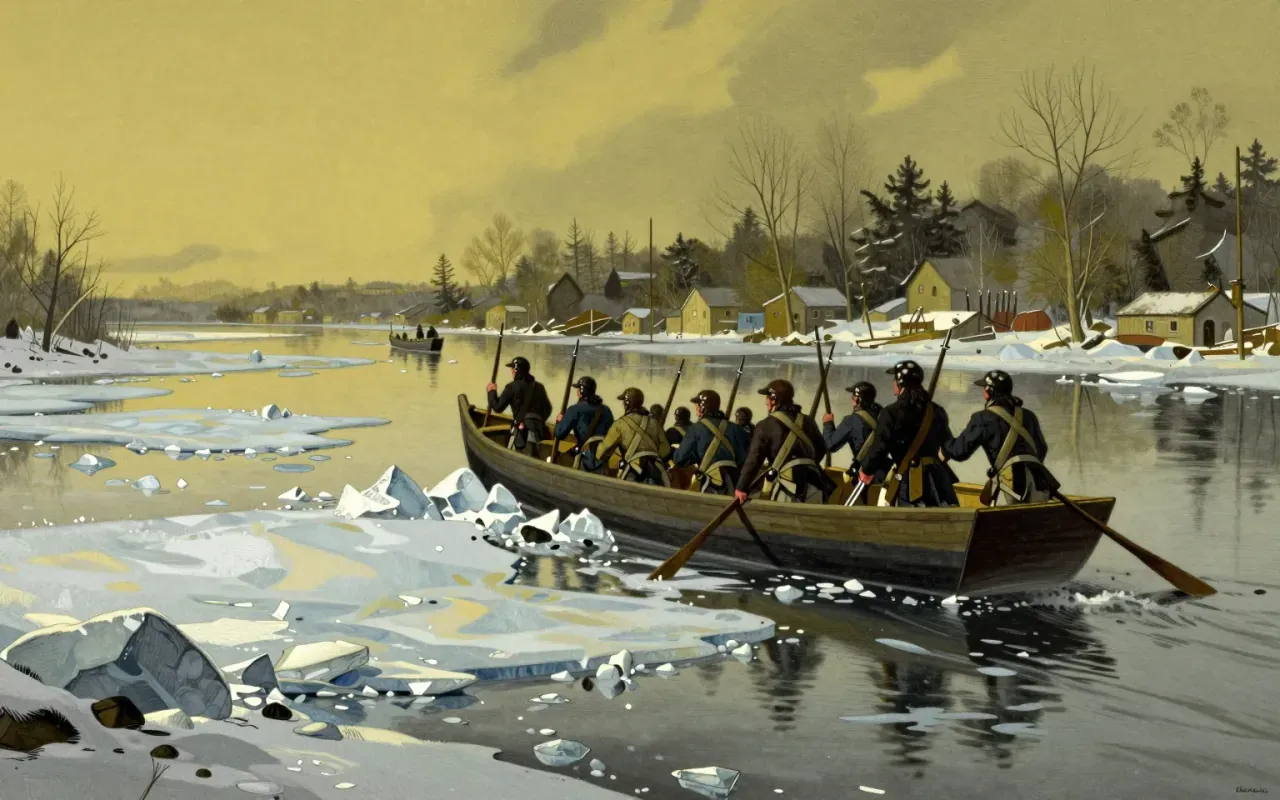
The retreat and recovery of 1776 illustrate why the war’s outcome was not a foregone conclusion. British forces drove Washington’s army out of New York that autumn, and by December his effective strength had fallen sharply as enlistments expired and desertion took its toll; a crossing of the Delaware River late that month produced a surprise victory at Trenton and another soon after at Princeton, restoring morale that had been close to collapse. The pattern of hard defeat followed by recovery recurred at Valley Forge the following winter, where shortages of food and supplies tested the army’s cohesion more severely than any battle had, before renewed discipline carried it through to the decisive siege at Yorktown in 1781.
How much credit for restraint
Historians continue to weigh how much personal restraint to credit Washington with for his two most celebrated acts of stepping back from power: resigning his military commission in 1783 rather than retaining it, and leaving the presidency after two terms in 1797 rather than seeking a third. Contemporaries and later scholars broadly agree both choices were unusual for a man in his position and shaped how the young republic understood civilian control of the military and peaceful transfers of power, but the debate turns on how far to read these as principled acts of self-restraint against how far his own popularity and health made either choice easier for him than it would have been for someone with more to prove or less standing to lose.
Precedents without a rulebook
As the first president, Washington had no domestic precedent to follow and effectively created several by simply choosing how to act: the title Mr. President, a cabinet balancing rival advisers Jefferson and Hamilton, and the informal two-term limit that remained custom rather than law until it was finally written into the Constitution in 1951. He kept the country out of the wars then raging in revolutionary France, used federal force to suppress the Whiskey Rebellion in 1794, and used his Farewell Address to warn against factional and foreign entanglement, a text later generations returned to more often than most of his specific policy decisions in office.
A household built on bondage
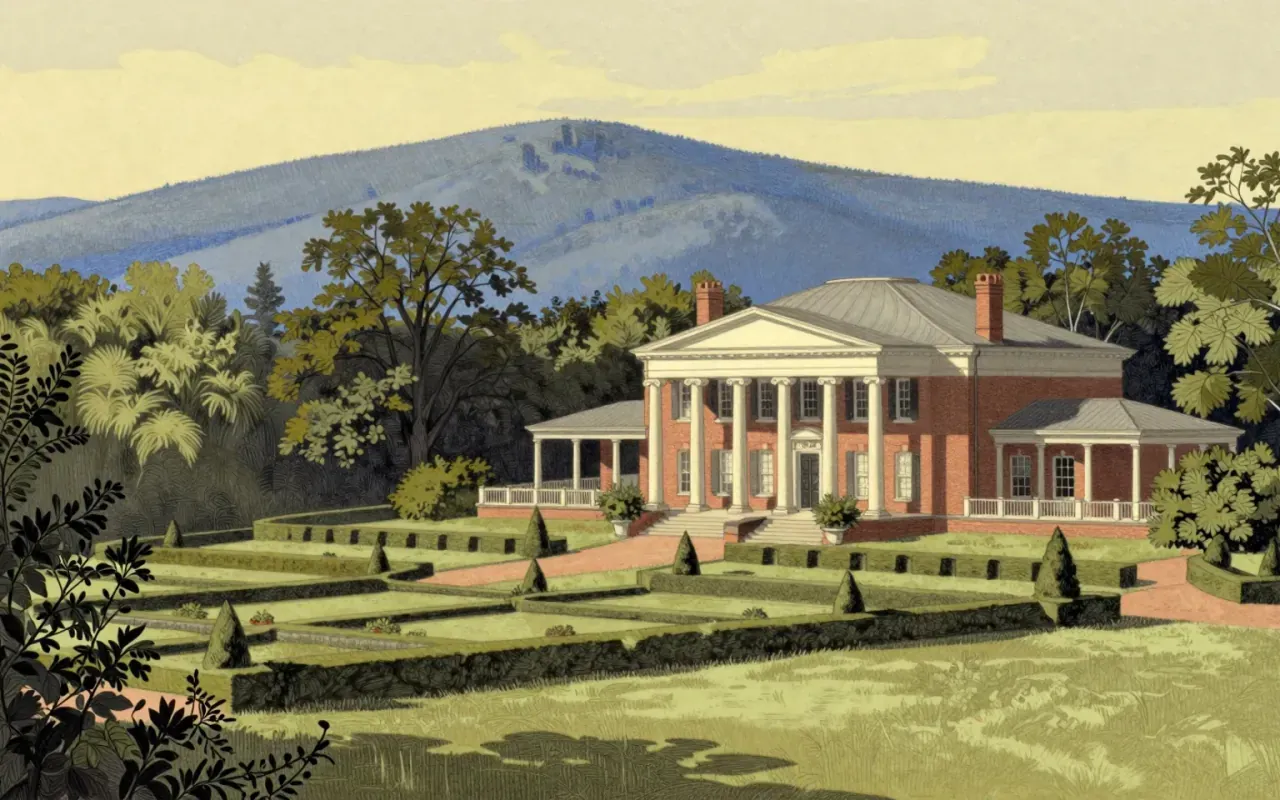
Washington’s household at Mount Vernon depended throughout on enslaved labour, more than a hundred people by the mid-1770s, a workforce his marriage to the wealthy widow Martha Custis had substantially enlarged. He is recorded as beginning to oppose slavery only late in life, and his will provided for the eventual freeing of the people he personally owned, a provision that did not extend to the larger number held through his wife’s estate. The material rewards attention less for any single dramatic episode than for the accumulation of moments where a man who could plausibly have kept more power chose not to, set against a private life that depended on holding people who had no such choice at all.