Free before the revolution
Toussaint Louverture was born into slavery around 1743 on a plantation in French Saint-Domingue and had already been freed, probably in the 1770s, when the slave uprising of 1791 broke out. He joined it in his late forties as an experienced plantation manager rather than a newly freed labourer, first fighting alongside Spanish forces based in neighbouring Santo Domingo before switching to revolutionary France in 1794. Over the following years he defeated rival commanders, negotiated a British withdrawal, and became the colony’s ranking officer by 1797, eventually uniting the whole island under his authority and issuing his own constitution in 1801, an act of self-government Napoleon answered with an invasion that led to Louverture’s capture, deportation, and death in a French prison in 1803.
A voice mostly dictated
Much of what survives from Louverture is mediated rather than direct. Legal documents from the 1770s and early 1780s suggest he could not write at that stage, and for most of his military and political career he dictated his correspondence to secretaries, meaning even letters issued in his name pass through another person’s hand. Late in life some documents survive in his own handwriting, in a phonetic French closer to Creole than to standard usage, evidence that he acquired literacy gradually rather than possessing it from the start. His fullest first-person statement, a memoir composed during his final imprisonment protesting his treatment, was smuggled out to reach French officials, a document historians read as sincere but necessarily self-interested, written by a man arguing for his own vindication.
Switching sides for abolition
Louverture’s rise reflected the specific opportunities the revolutionary period opened for someone with his background and skills. His years managing plantation labour before 1791 gave him administrative experience most of his fellow insurgents lacked, while the shifting alliances among Spain, Britain, and revolutionary France, all competing for control of the colony, let him move between patrons as circumstances changed, gaining resources and legitimacy from whichever power currently offered the most. His decision to leave Spanish service coincided with France’s 1794 decree abolishing slavery in its colonies, which gave him both an ideological alignment and a practical route to greater military support than Spain had been willing to provide him.
How willing an emancipator
Historians disagree over how to weigh conviction against calculation in that 1794 switch. One influential account holds that Louverture changed sides specifically because he learned of France’s abolition decree, treating the move as driven by commitment to ending slavery; another argues he was largely indifferent to the decree itself and motivated instead by mistreatment from his Spanish superiors and concern for his own position; a third treats him as both a genuine abolitionist and a calculating power-seeker acting on parallel tracks, already in informal contact with French officers before his declared switch. Accounts also diverge on casualties in some of his campaigns, with contemporary French estimates running far higher than later specialist assessments of the same fighting.
An invasion answers a constitution
By 1801 Louverture had brought the neighbouring Spanish-controlled part of the island under his authority as well and issued a constitution making himself governor for life, one that abolished slavery explicitly while still compelling plantation labour, and that described Saint-Domingue as remaining part of the French empire even though it was published without Paris’s approval. Napoleon Bonaparte answered with roughly twenty thousand troops under General Charles Leclerc, arriving in late 1801 with orders historians describe as including the deportation of Black officers and possibly the restoration of slavery. Louverture’s defensive campaign held through early 1802 before defections among his own officers led him to negotiate a surrender that promised him a personal amnesty and retirement.
A death before the declaration
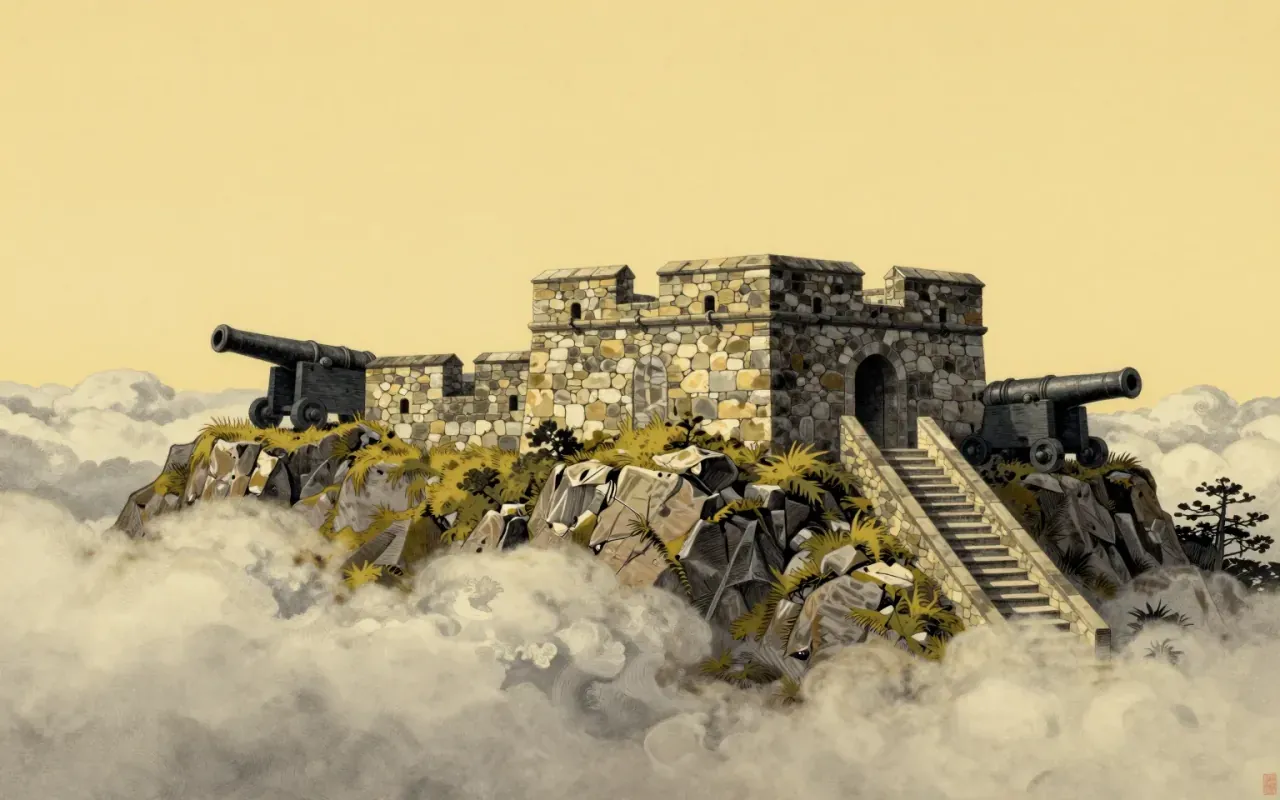
That amnesty did not hold: Louverture was arrested by deception in June 1802, deported to France, and imprisoned in a mountain fortress where guards are recorded as having refused him adequate medical care, in language later surfacing that attributed the refusal explicitly to his race. He died there in April 1803, several months before his former subordinate Jean-Jacques Dessalines defeated the French and Haiti declared independence in January 1804. The story rewards attention for the complexity it does not resolve, a man who had once owned enslaved people himself, who governed through compelled labour even after abolishing slavery in name, and who was nonetheless imprisoned and left to die for the threat his self-rule posed to an empire that lost the territory regardless.