What happened
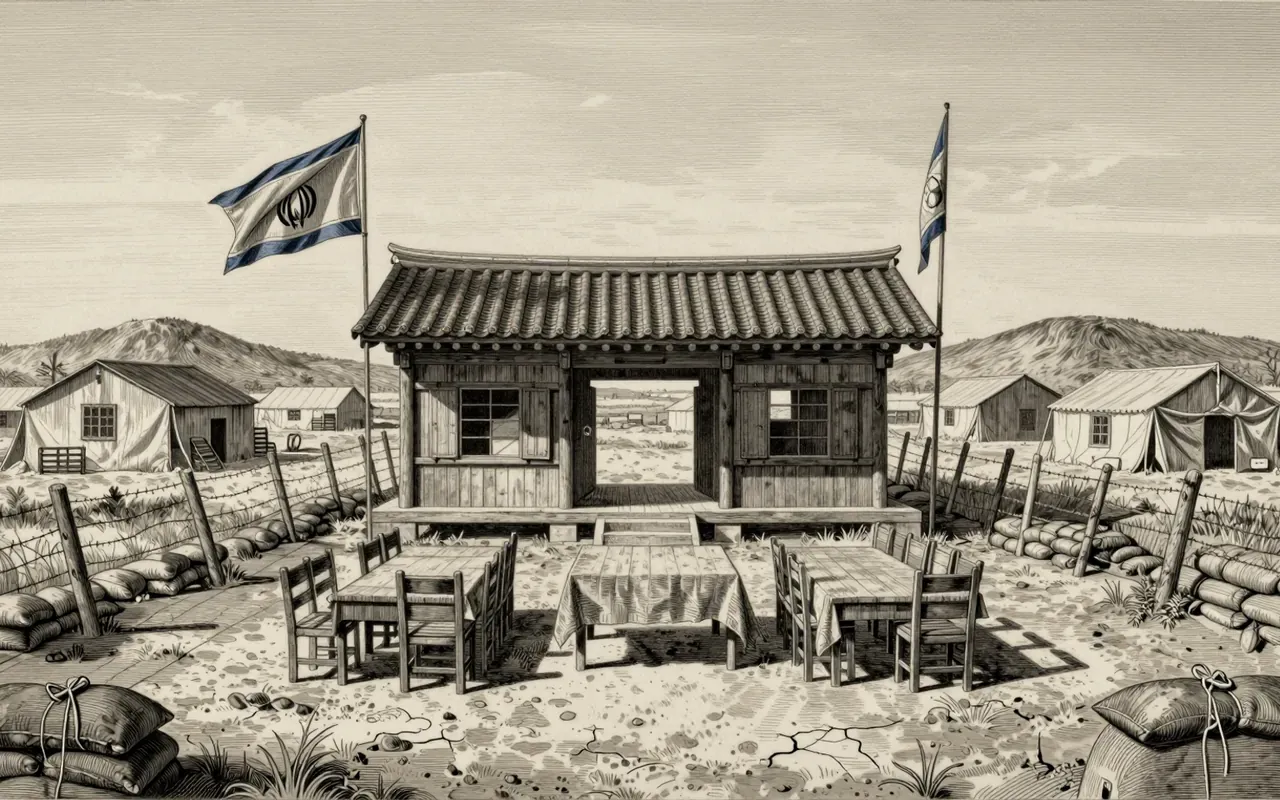
On 27 July 1953, military representatives signed the Korean Armistice Agreement at Panmunjom. It suspended hostilities between the United Nations Command and the opposing Korean People’s Army and Chinese People’s Volunteers. It was not a permanent peace treaty.
How we know it
The signed agreement survives in the US National Archives, alongside a transcript. Its provisions identify the forces involved and specify what they agreed to do, allowing the text to be distinguished from later descriptions of victory or defeat.
Why it went that way
The agreement made stopping combat a military undertaking while reserving a final settlement for political negotiation. That limited scope helped separate an immediate ceasefire from the larger question of Korea’s future.
What is still contested
Calling the armistice the end of the war can obscure its limits. The document settled procedures for a truce, not the underlying political division. Assessments of success therefore depend on which of those outcomes is being judged.
What it changed
It established a demilitarized buffer, prisoner arrangements and bodies to supervise the truce. These mechanisms organized separation rather than reunification.
Is it worth your time
Worth understanding as an example of the difference between ending sustained combat and resolving a conflict. Read the operational provisions alongside the stated ambition of a later peaceful settlement.