Seventy-two years on the throne, longer than any other monarch
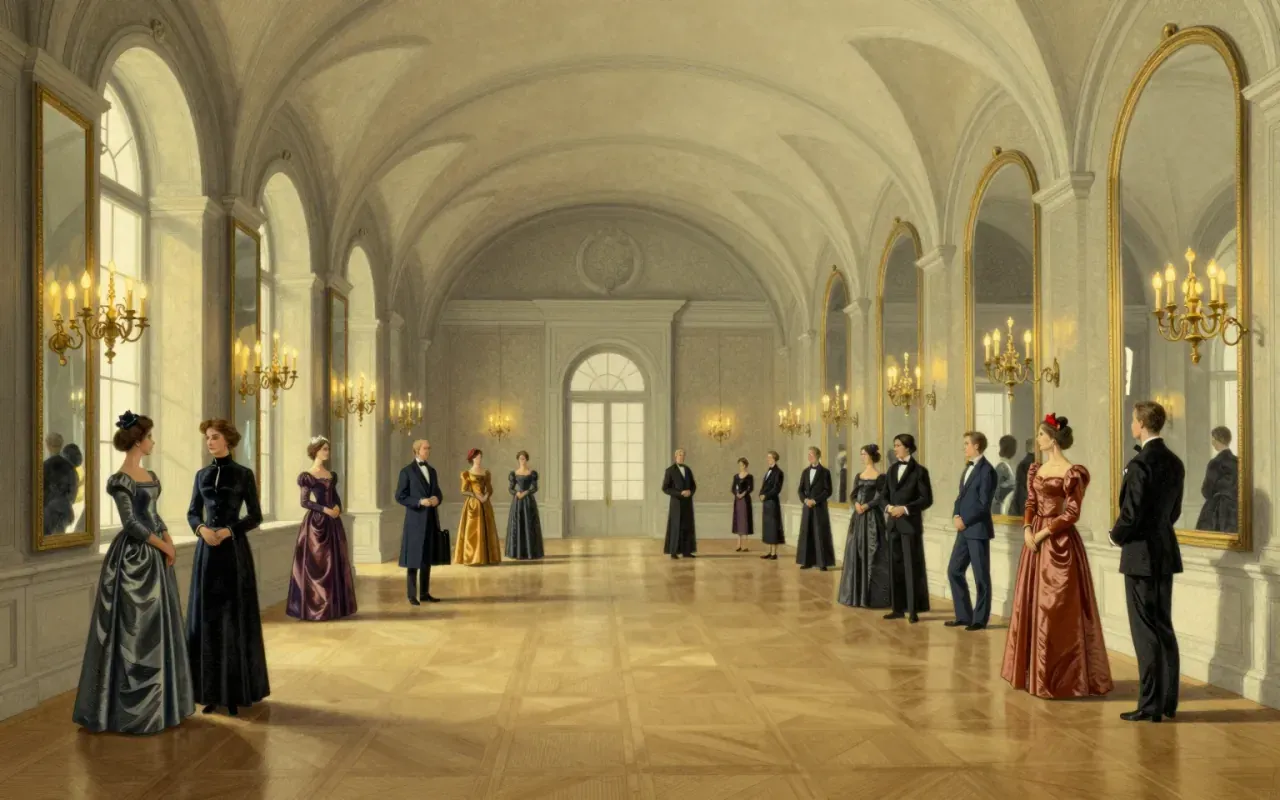
Louis XIV reigned from 14 May 1643 to 1 September 1715, seventy-two years and 110 days, the longest reign of any sovereign monarch in recorded history, ruling under a doctrine of divine right and adopting the title of the Sun King. He built the Palace of Versailles into the centre of his court and government, requiring French nobility to reside there for extended periods, a move that succeeded in pacifying an aristocracy many of whom had taken part in earlier rebellions against the crown. He also revoked the Edict of Nantes, ending legal protection for France’s Protestant Huguenot minority and using forced military billeting known as dragonnades to pressure conversions, a policy that drove many Huguenots to emigrate.
A famous line about the state that may never have been said
The line most commonly attributed to Louis as the summary of his absolutist philosophy does not appear in the standard historical record of his reign. What is documented instead is a more restrained statement made when he assumed personal control of government in 1661, indicating that from then on he intended to govern his ministers and affairs directly himself, rather than through a chief minister as his father and predecessors had done. This gap between the widely repeated, more sweeping phrase and the actual recorded statement illustrates how a ruler’s popular reputation can settle around a version of events considerably more absolute-sounding than what contemporary documentation actually supports.
A childhood rebellion that built a palace decades later
Louis’s approach to the nobility traces directly to his own childhood, when the Fronde rebellions of the 1640s and early 1650s saw factions of the aristocracy and the Parisian parlements rise against the crown during his minority. That experience is described as having shaped his lasting distrust of both Paris and the higher nobility, a wariness that later expressed itself concretely in the construction of Versailles as a mechanism for keeping the aristocracy under close royal observation rather than free to organise independently in their own territories or in the capital, converting a childhood political trauma into a permanent architectural and administrative solution decades afterward.
Grandeur weighed against the debt it left behind
Assessments of Louis’s reign differ on how to weigh its two most visible legacies against each other: an era of significant administrative reform, including the fiscal innovations of his minister Jean-Baptiste Colbert, alongside a court culture that shaped European taste for generations, set against three major wars, the Franco-Dutch War, the Nine Years’ War and the War of the Spanish Succession, that together strained French finances to their limit. The reign left his successor, as the record puts it, a powerful but war-weary kingdom carrying major debt, a combination that historians continue to weigh differently depending on whether they emphasise the cultural and institutional achievements or the financial exhaustion that outlasted Louis’s own lifetime.
A minority stripped of legal protection, a court reshaped
The revocation of the Edict of Nantes had lasting demographic and religious consequences, effectively ending organised Protestant life in France and pushing a substantial portion of the Huguenot population into exile in Protestant countries elsewhere in Europe, a loss of skilled and educated emigrants whose departure affected French trade and manufacturing for years afterward. Domestically, the relocation of the nobility to Versailles restructured the practical exercise of aristocratic power, shifting status and influence toward proximity to the king’s person and court ritual rather than toward independent regional authority, a change in the structure of French elite politics that persisted well beyond Louis’s own reign.
Worth reading past the myth for the calculation underneath it
Louis’s reign rewards attention precisely at the points where the popularised image, an absolute monarch declaring himself synonymous with the state, gives way to more specific and calculated history: a measured statement about personal rule rather than a sweeping declaration, and a palace built not simply for glory but as a deliberate answer to a childhood rebellion. Readers who arrive already familiar with the Sun King caricature gain the most from tracing how much of his actual governing method was reactive and engineered response to prior political threat, rather than simple, uncomplicated self-regard, without that correction diminishing the real scale of what his seventy-two years in power reshaped.