Fifteen years of positioning
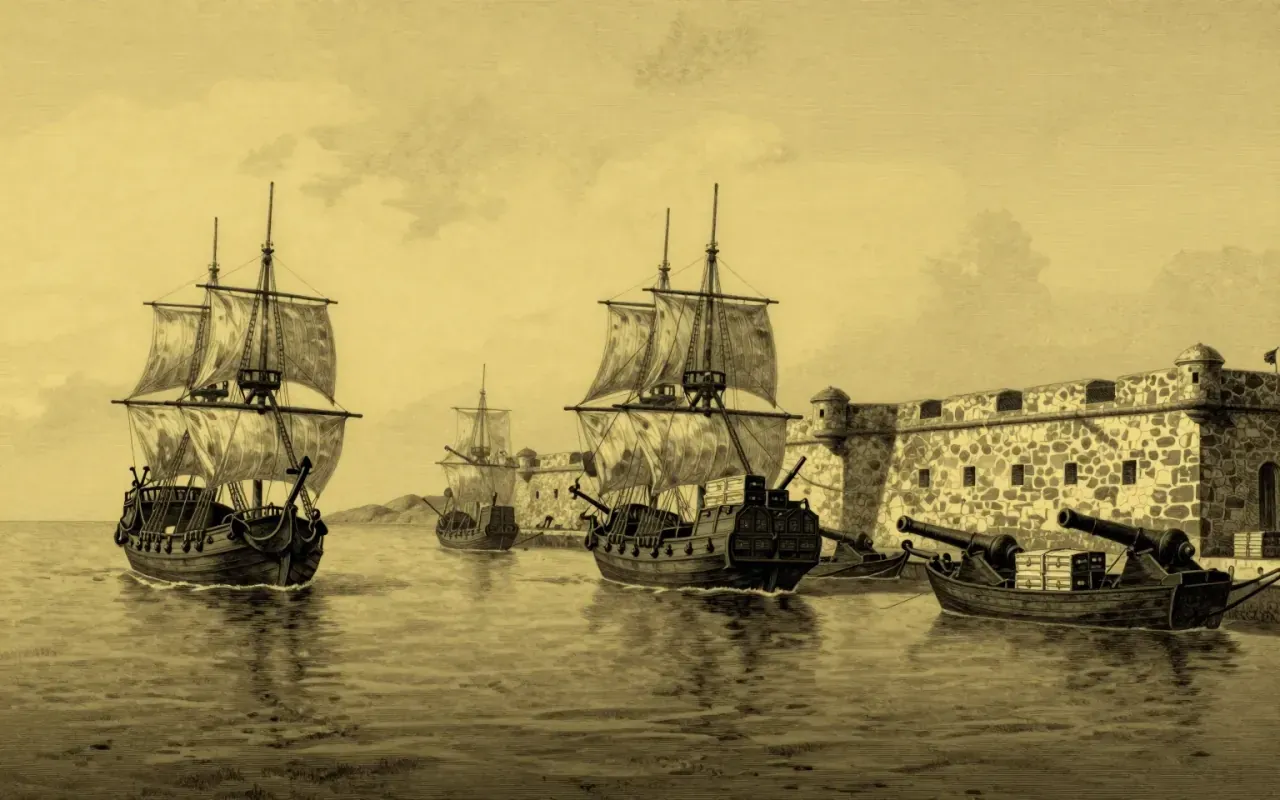
Born around 1478 to a poor family in Trujillo, Spain, Francisco Pizarro sailed for the New World in 1509 and spent the following decade and a half establishing himself in the Spanish colonial administration of Panama, including service under the explorer Vasco Nunez de Balboa and several years as mayor of Panama City. Two earlier expeditions toward Peru, in 1524 and 1526, produced little beyond confirmation that a wealthy civilisation lay to the south, and only after securing royal authorisation in 1529 did Pizarro lead a third expedition, departing Panama the following year with three ships and fewer than two hundred men. That force captured the Inca emperor Atahualpa at Cajamarca in November 1532, and after collecting a vast ransom Pizarro had him executed the following year regardless. He founded the city of Lima in 1535 before being assassinated by rivals in his own colonial faction in June 1541.
Even his bones were disputed
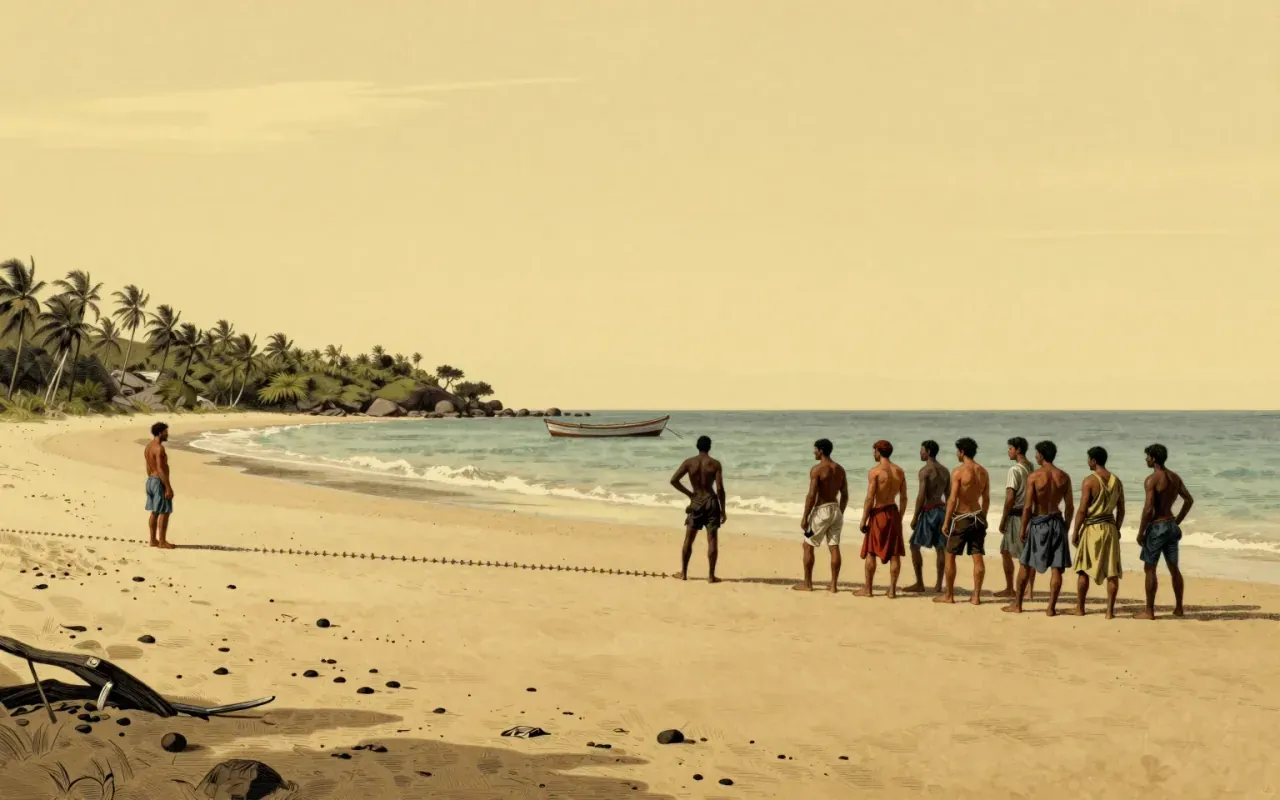
The foundational modern account of Pizarro’s career remains William Prescott’s nineteenth-century history of the conquest, itself built on earlier Spanish chronicles and period documentation, supplemented by the twentieth-century historian John Hemming’s more thorough reassessment drawing on a wider range of primary sources. Even Pizarro’s own physical remains became a subject of historical dispute: bones identified as his in 1892 were contradicted by a later forensic examination in 1977, carried out by William Maples and colleagues, which established a different set of remains as the authentic ones instead. Much of the surviving narrative record around his most dramatic decisions, including a famous story of him drawing a line in the sand to challenge wavering companions to choose between poverty and glory, lacks independent verification beyond the chronicle tradition that popularised it, meaning some of the most memorable details of his career rest on considerably less solid documentary ground than the broader outline of his life.
A gamble on collapsed succession
Pizarro’s eventual success depended less on any single moment of brilliance than on nearly fifteen years of patient positioning within Spain’s Panama colony, building the connections, colonial standing and practical experience needed to secure formal royal backing for a third and finally well-resourced expedition after two earlier attempts had produced little beyond preliminary intelligence. His illiteracy, a real handicap in an administration built around written correspondence and legal documentation, did not prevent him from navigating court politics skilfully enough to obtain the crown’s authorisation directly, a capitulation granting him extensive powers over any territory he might conquer. Arriving in Peru at the precise moment Inca succession had already collapsed into civil war gave his modest force an opening far beyond what its numbers alone could have won, and his decision to press the advantage immediately at Cajamarca, rather than wait or negotiate at length, reflected a calculated willingness to gamble everything on a single decisive and violent stroke.
Reluctance or performance
Historians disagree over how genuinely reluctant Pizarro actually was to execute Atahualpa after the ransom had been paid, since the record shows both him and his subordinate Hernando de Soto expressing opposition to the killing while Pizarro ultimately consented anyway under pressure from his partner Diego de Almagro and general unease among the wider Spanish force, leaving real ambiguity about how much his stated reluctance reflected genuine conviction rather than convenient self-justification recorded for later audiences, including a Spanish king who reportedly disapproved of the execution once he learned of it. The famous line-in-the-sand story, in which Pizarro is said to have drawn a mark and challenged wavering men to cross it and continue south with him, is treated by many historians as a dramatic embellishment rather than a reliably documented event. Even a violent incident at Tumbes early in the campaign is described in the record only vaguely, leaving responsibility for that attack genuinely unclear among the surviving accounts.
A legendary line never verified
Pizarro’s conquest dismantled the Inca state and installed Spanish colonial rule that would govern the Andes for roughly three centuries, replacing indigenous religious and political institutions with Christianity and an encomienda labour system that reduced much of the surviving population to conditions historians describe as effective serfdom. The city he founded, Lima, became the administrative capital of Spanish South America and remains Peru’s capital today, a direct institutional legacy that outlasted both his own violent death and the civil wars among rival conquistador factions that consumed Spanish Peru for years afterward. His memory remains genuinely divided in modern Peru, where many people of indigenous descent view him negatively for the execution of Atahualpa despite the ransom already paid, even as his role in founding the colonial and eventually modern Peruvian state is impossible to separate from the country’s subsequent history under any account of how it came to exist in its present form.
A founder still contested
Pizarro rewards attention as a study in how patient, unglamorous positioning within a colonial bureaucracy, sustained over more than a decade, can matter as much as any single dramatic act of daring in producing history’s more consequential outcomes, whatever the more theatrical stories later attached to his name suggest. Readers should treat the line-in-the-sand episode and similar vivid anecdotes as probable embellishment rather than settled fact, while still recognising the genuine and considerable risk involved in leading fewer than two hundred men against an empire of millions. His assassination by former allies just years after his greatest triumph is itself a useful reminder that success built on betrayal and ruthless opportunism tends to leave enemies close at hand. Anyone interested in the mechanics of colonial conquest, in the moral ambiguity of a figure both praised and reviled within the very country his actions helped create, will find him a genuinely substantial and still contested historical subject.