historybriefs
Topic

Peru

The Andes, the Inca, and a cuisine assembled from four continents.

5
in history
13:00
average
65 min
in total
10
across the network
Peru across the network →
All briefs5
13:00

Atahualpa

1502–1533

Atahualpa won a civil war against his half-brother Huascar in April 1532, only for Francisco Pizarro's expedition to reach Cajamarca days later and capture him in an ambush his own recent overconfidence had helped enable. He paid an enormous ransom in gold and silver, but Spanish forces executed him anyway in July 1533. Surviving chroniclers, some drawing on direct testimony from Inca nobility, disagree on basic facts including his birthplace and mother's identity, and historians differ on whether his ransom offer aimed at genuine freedom or simply survival.
13:00

Francisco Pizarro

1478–1541

An illiterate colonist from a poor Spanish family, Francisco Pizarro spent nearly fifteen years building standing within Panama's colonial administration before leading a small, well-timed expedition that captured the Inca emperor Atahualpa in 1532. After collecting an enormous ransom he had Atahualpa executed anyway, founded Lima in 1535, and was assassinated by rival conquistadors in 1541. Historians question how genuine his reluctance to execute Atahualpa actually was, and his most celebrated anecdotes, including the famous line drawn in the sand, rest on chronicle tradition rather than independent verification.

13:00

Machu Picchu

1450–1572

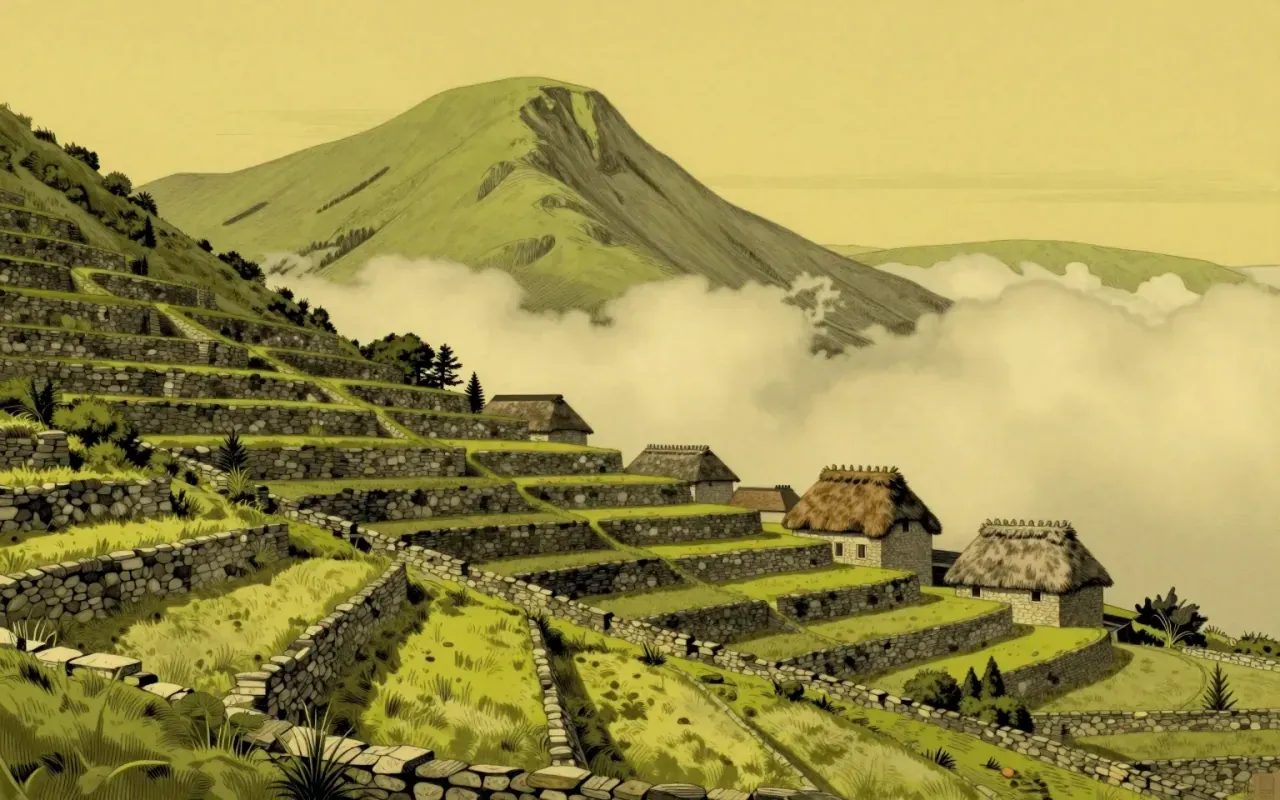
Inca ruler Pachacutec commissioned Machu Picchu as a royal estate following his conquest of the Urubamba region, with traditional dating placing construction around 1450, though 2021 radiocarbon analysis pushed occupation as early as 1420. The site housed a genetically diverse population of roughly 750 support staff before being abandoned around the Spanish conquest, and though the Peruvian farmer Agustin Lizarraga reached the ruins in 1902, American historian Hiram Bingham's 1911 visit and subsequent writing established him as the site's credited discoverer, a framing Bingham himself later hardened despite initially acknowledging Lizarraga.

13:00

Spanish conquest of the Inca Empire

1532–1572

A smallpox epidemic killed the Inca emperor Huayna Capac around 1525 and triggered a civil war between his sons that was still raging when Francisco Pizarro landed with roughly a hundred and eighty men in 1532. Pizarro ambushed and captured the victorious Atahualpa at Cajamarca, collected an enormous ransom, then executed him anyway, and organised Inca resistance continued in diminishing form until 1572. Most surviving accounts derive from Spanish chroniclers, and historians still dispute how much credit for the conquest belongs to Spanish technology versus the empire's prior weakness, while disease ultimately killed far more people than any battle did.

13:00

Inca Empire

1438–1533

The Inca state took its imperial form as Tawantinsuyu under Pachacuti from 1438, expanding under his successors to become the largest pre-Columbian empire in the Americas by the 1520s, governed through knotted-cord records called khipu that later generations lost the ability to read. Francisco Pizarro's small Spanish force captured the emperor Atahualpa in 1532 amid an Inca civil war, and though resistance continued under a rump Neo-Inca State until 1572, disease and conquest together killed a population historians can now only estimate in the millions.