historybriefs
Highest rated

All briefs

482 briefs · 5812 min · 97–192 on page 2 of 6
13:00

2010 Haiti earthquake

12 January 2010

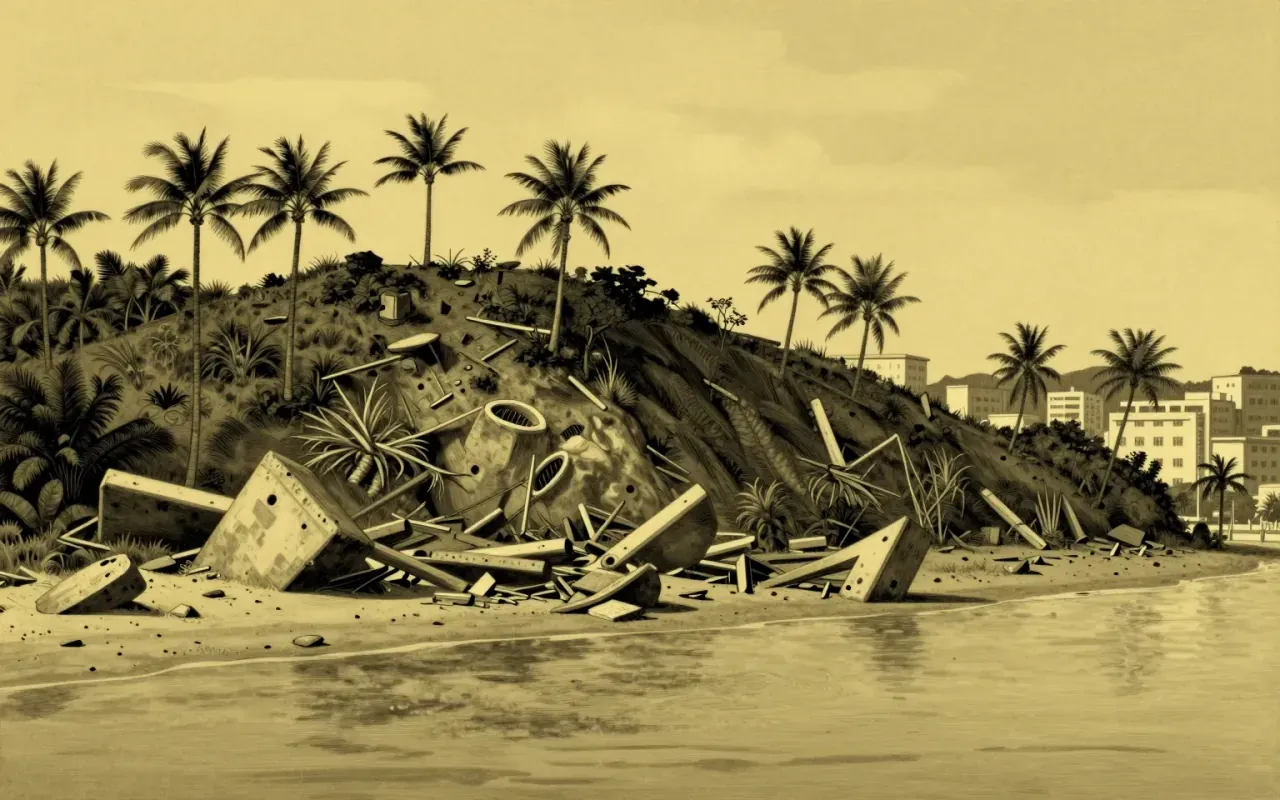
The magnitude 7.0 earthquake that struck near Port-au-Prince on 12 January 2010 lasted under thirty seconds but killed somewhere between roughly 46,000 and 316,000 people, with estimates varying so widely between the Haitian government, USAID, and independent researchers that no single figure commands full agreement. Haiti's near-total absence of building codes, its position as the poorest country in the Western Hemisphere, and a long history of debt and foreign intervention left its buildings unable to withstand the shaking. The international response eventually raised roughly 3.5 billion dollars, yet five years on, more than half a million survivors were still living in temporary shelters without electricity, plumbing, or sewage.

13:00

2011 Tōhoku earthquake and tsunami

11 March 2011

The magnitude 9.0 to 9.1 earthquake that struck off Japan's Oshika Peninsula on 11 March 2011 was the most powerful ever recorded in the country, generating tsunami waves as high as 40.5 metres that reached ten kilometres inland and killed close to twenty thousand people. Total damage exceeded three hundred billion dollars, making it the costliest natural disaster in recorded history even before accounting for the Fukushima Daiichi nuclear accident the tsunami triggered. The earthquake shifted Honshu by 2.4 metres, generated more than thirteen thousand aftershocks, and measurably altered the length of Earth's day, prompting a fundamental rethinking of Japan's disaster prevention policy afterward.

13:00

Typhoon Haiyan

3 November – 11 November 2013

Typhoon Haiyan reached one-minute sustained winds of 315 kilometres an hour before striking the Philippines on 7 November 2013, at the time the strongest tropical cyclone ever recorded by wind speed, and it went on to make six separate landfalls across the Visayas. Its storm surge, reaching 5.2 metres at Tacloban's airport, proved deadlier than the wind itself, destroying an estimated ninety percent of the city and even flooding the evacuation centre meant to shelter residents from the storm. The disaster killed at least 6,300 people, displaced over six million, and caused roughly 2.2 billion dollars in damage, making it the costliest typhoon in Philippine history, while triggering a large international relief effort complicated by damaged infrastructure and, controversially, an initially very small pledge of aid from China.

13:00

April 2015 Nepal earthquake

2015

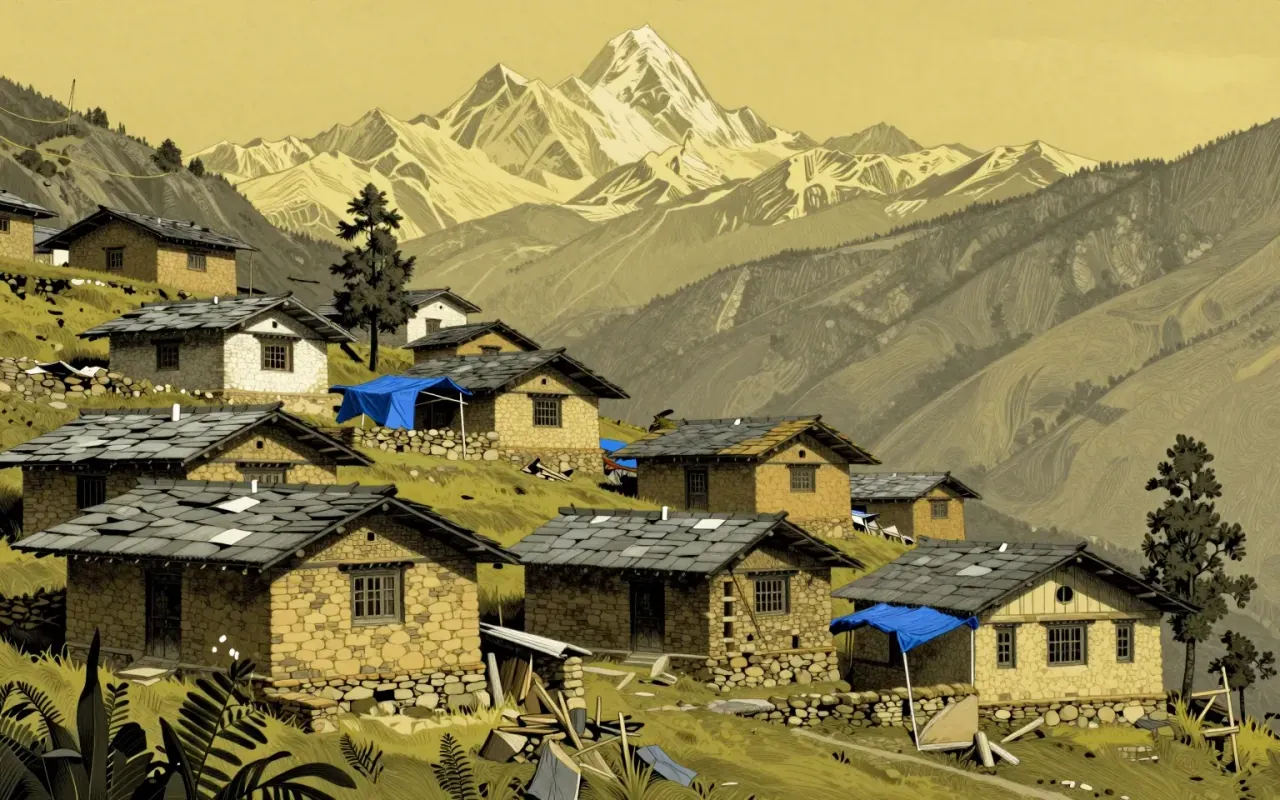
The magnitude 7.8 to 7.9 earthquake that struck central Nepal on 25 April 2015 killed 8,962 people across four countries, most of them in Nepal, and left about 3.5 million people homeless. It toppled the nineteenth-century Dharahara tower and damaged or destroyed more than thirty monuments across the Kathmandu Valley's historic squares, triggered an avalanche on Mount Everest that killed at least nineteen climbers, the deadliest single incident on the mountain's record, and buried the village of Langtang under a slide two to three kilometres wide. Geophysicists had warned for years that the Central Himalayan Gap, unruptured since 1505, held enough accumulated energy for a major quake, and the roughly ten billion dollars in damage this one caused amounted to about half of Nepal's annual economic output.

13:00

September 11 attacks

11 September 2001

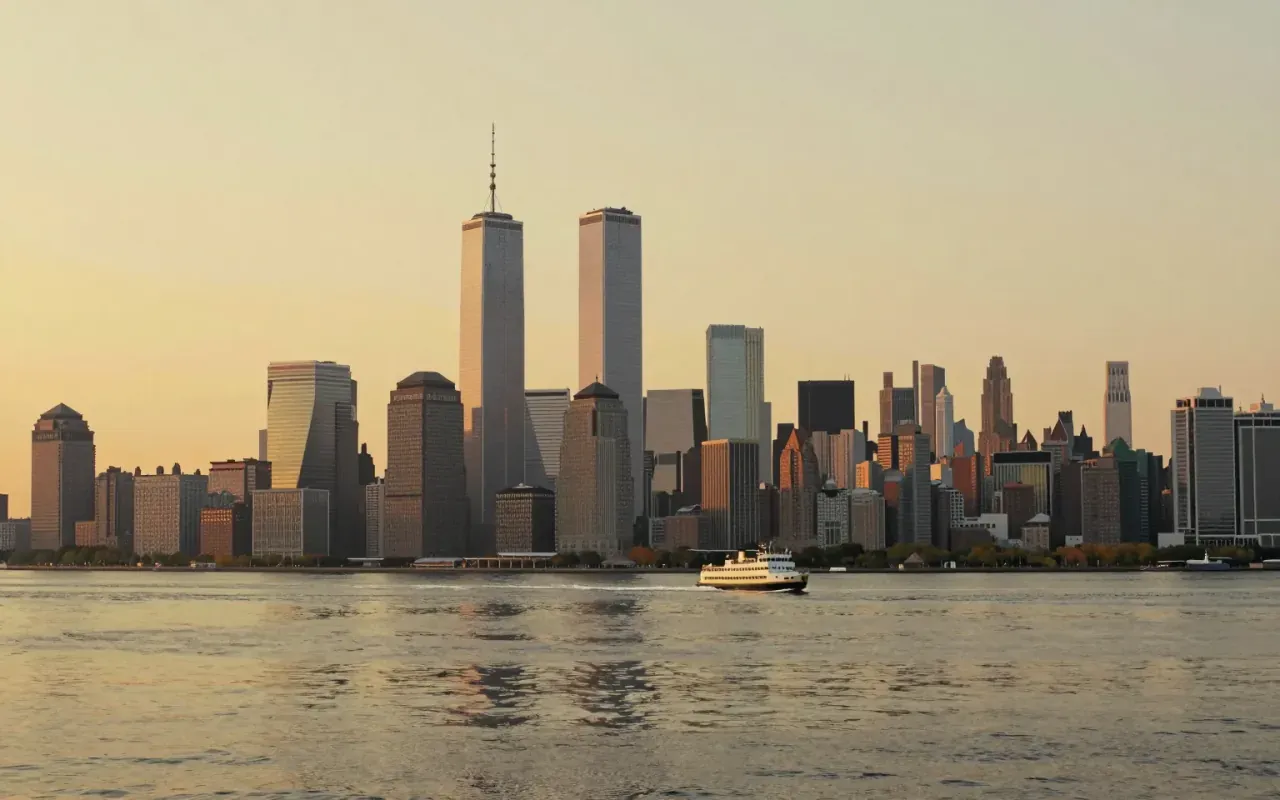
On 11 September 2001, al-Qaeda operatives hijacked four airliners and crashed three of them into the World Trade Center and the Pentagon, with the fourth brought down by passengers over Pennsylvania, killing 2,977 people. The 9/11 Commission's 2004 report established the plot's planning in detail, while the wars in Afghanistan and Iraq that followed are estimated by the Costs of War Project to have contributed to over 4.5 million deaths in the decades since.

13:00

American Civil War

1861–1865

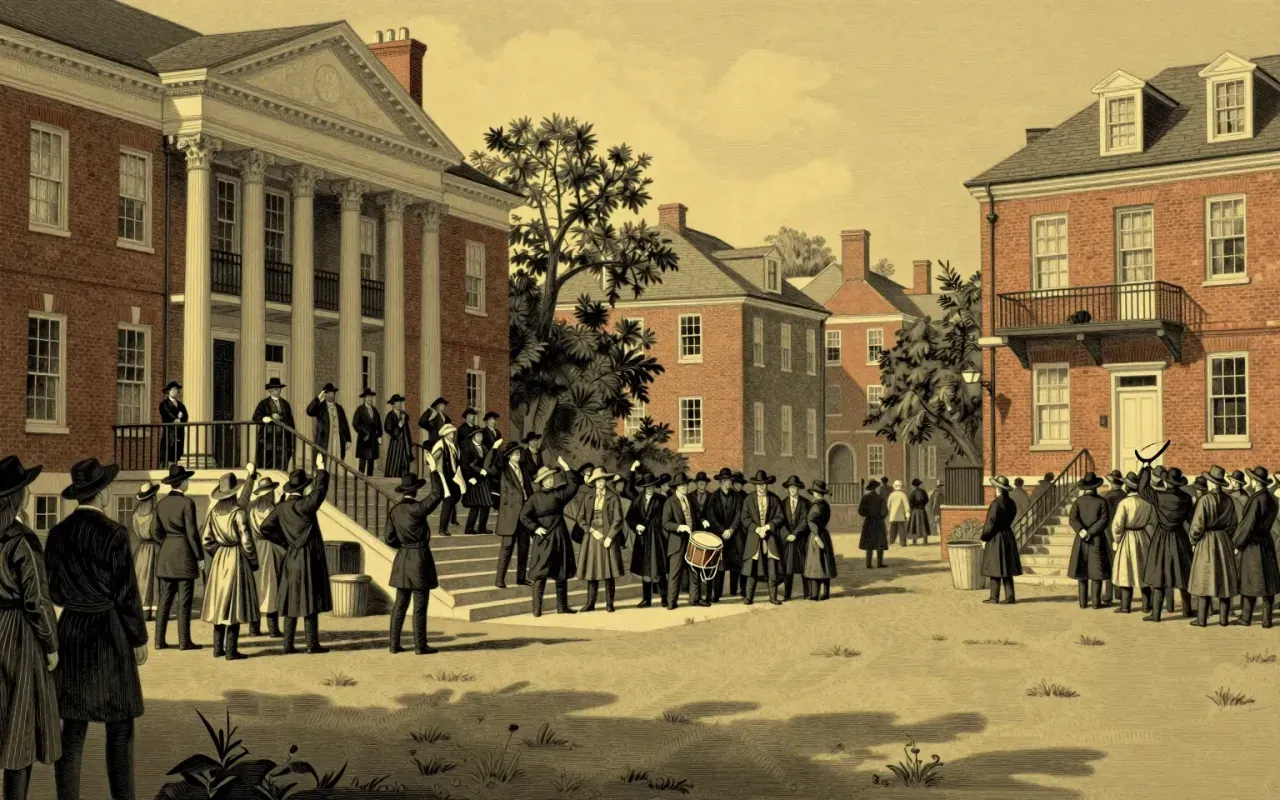
The American Civil War, fought from 1861 to 1865 after eleven Southern states seceded following Abraham Lincoln's election, killed an estimated 616,000 to over a million people through combat, disease and civilian and enslaved deaths whose exact toll remains genuinely uncertain, and ended with Confederate surrender, the abolition of slavery, and a Union preserved under expanded federal authority. Modern historians overwhelmingly identify slavery as the war's central cause, a conclusion the seceding states' own secession documents support directly, in explicit contrast to the later Lost Cause narrative that denied it.

13:00

United States Declaration of Independence

4 July 1776

Congress voted for independence on 2 July 1776 and approved Jefferson's wording two days later, but the parchment copy most people picture, with fifty-six signatures, was not signed by most delegates until 2 August and later still. The gap between the vote, the text, and the signing says something about how founding documents get simplified in memory.

13:00

Armistice of 11 November 1918

11 November 1918

German negotiators, given seventy-two hours and almost no leverage, signed the armistice ending the First World War in a railway carriage near Compiègne at five in the morning on 11 November 1918, with the ceasefire set to take effect six hours later, at the eleventh hour of the eleventh day of the eleventh month. Fighting continued through that gap and killed nearly eleven thousand men on the war's final day, and the armistice itself was only a pause, not a formal peace, one German generals later exploited by claiming their army had never actually been defeated in the field.

13:00

Tokyo subway sarin attack

20 March 1995

On the morning of 20 March 1995, five members of the Aum Shinrikyo cult released sarin nerve agent on three Tokyo subway lines during rush hour, killing fourteen people and injuring roughly a thousand more, an attack that followed the cult's own earlier, less-publicised sarin attack in Matsumoto in June 1994 that killed eight. Police had already found chemical residue consistent with sarin production near the group's compound the previous October but had no legal basis to act on it, and cult leader Shoko Asahara learned of a planned raid from Self-Defense Force sympathisers in time to accelerate the subway attack, a sequence of missed warnings that later became as central to the event's history as the attack itself.

13:00

Battle of Adwa

1 March 1896

On 1 March 1896, an overextended and poorly coordinated Italian army was decisively defeated by Emperor Menelik's larger, better-armed Ethiopian force near Adwa, one of the heaviest reverses a European colonial power suffered in Africa. The battle is documented from both sides in unusual depth, yet historians still dispute troop numbers, casualty figures, the cause of Italy's fatal column split, and whether Menelik's decision not to pursue the retreat reflected wisdom or hesitation. Italy's government collapsed within days, and the resulting treaty secured Ethiopian sovereignty for four decades, making Adwa a lasting reference point for anti-colonial resistance across Africa.

13:00

Battle of Britain

10 July – 31 October 1940

From July to October 1940 the Royal Air Force and Germany's Luftwaffe fought for control of the skies over southern Britain, a contest Hitler had made a precondition for any invasion. Britain's radar-linked defence system, built under Air Chief Marshal Hugh Dowding, let a numerically stretched Fighter Command meet each wave of attacks; Germany's shift in September to bombing cities came after it failed to destroy that defence outright. The invasion, Operation Sea Lion, was postponed and then abandoned. Dowding himself was removed from command within weeks of the victory, a decision historians still argue over.

13:00

Battle of Karbala

10 October 680

In 680, Husayn ibn Ali, grandson of the Prophet Muhammad, was intercepted and killed near Karbala after marching toward Kufa on the promise of support that failed to materialise. The core account descends from a single compiler working within two decades of the battle, preserved through later historians, and shows signs that soldiers from the winning army softened the record out of guilt. The killing transformed a political dispute over leadership into the foundation of a distinct Shia religious identity, still commemorated annually by tens of millions.

13:00

Battle of Stalingrad

1942–1943

The Battle of Stalingrad, fought from July 1942 to February 1943, ended with the surrender of Germany's Sixth Army after Soviet forces encircled it in Operation Uranus that November, a defeat that ended Germany's 1942 summer offensive and shifted the strategic initiative on the Eastern Front permanently toward the Soviet Union. Total deaths across both sides are estimated at somewhere between 1.1 and over 3 million, a range reflecting genuine and substantial disagreement among historians, including between rival Soviet casualty analysts Krivosheev and Pereslegin, over how losses should be classified and counted.

13:00

Battle of the Somme

1 July – 17 November 1916

The Battle of the Somme ran from July to November 1916, opening with close to sixty thousand British casualties on its first day and ending, after more than a million combined losses on all sides, with neither the town of Bapaume nor Péronne captured. Douglas Haig commanded the offensive throughout, and his reputation has swung since between the nickname Butcher Haig and a more recent revisionist defence arguing the casualties reflected the era's tactical realities rather than a single commander's incompetence.

13:00

Battle of Verdun

21 February – 18 December 1916

German commander Erich von Falkenhayn planned the assault on Verdun in February 1916 explicitly to bleed French reserves through attrition rather than to win territory outright, opening ten months of fighting that killed or wounded over seven hundred thousand men on both sides. Philippe Pétain's defence, built on rotating units and a supply road that kept ammunition and reinforcements flowing, made him France's most celebrated general of the war, a reputation that makes his later collaboration with Nazi Germany one of the starkest reversals in twentieth-century political memory.

13:00

Beer Hall Putsch

8 November – 9 November 1923

Hitler's attempt to seize power in Munich on 8 and 9 November 1923 collapsed within hours once a police cordon met his marching supporters with gunfire, killing sixteen Nazis and four police officers before Hitler was arrested two days later. His trial gave him national publicity he had not had before, his sentence amounted to comfortable fortress confinement rather than harsh imprisonment, and the nine months he actually served produced Mein Kampf and a deliberate strategic shift from armed putsch to the legal route that brought him to power a decade later.

13:00

Bengal famine of 1943

1943–1944

The Bengal famine of 1943 killed somewhere between 800,000 and 3.8 million people, with most historians now converging on a figure near 2.1 million, following a combination of a cyclone that struck in October 1942, the loss of Burmese rice imports after Japan's invasion, wartime demand from Allied troops, and British colonial policies including the confiscation of tens of thousands of boats and the removal of surplus grain from coastal districts judged vulnerable to invasion. More than half the deaths came in 1944 from disease rather than outright starvation. Whether the underlying cause was genuine scarcity or a failure of distribution, and how much responsibility rests with Winston Churchill's wartime government, remain disputed among historians.

13:00

Berlin Blockade

1948–1949

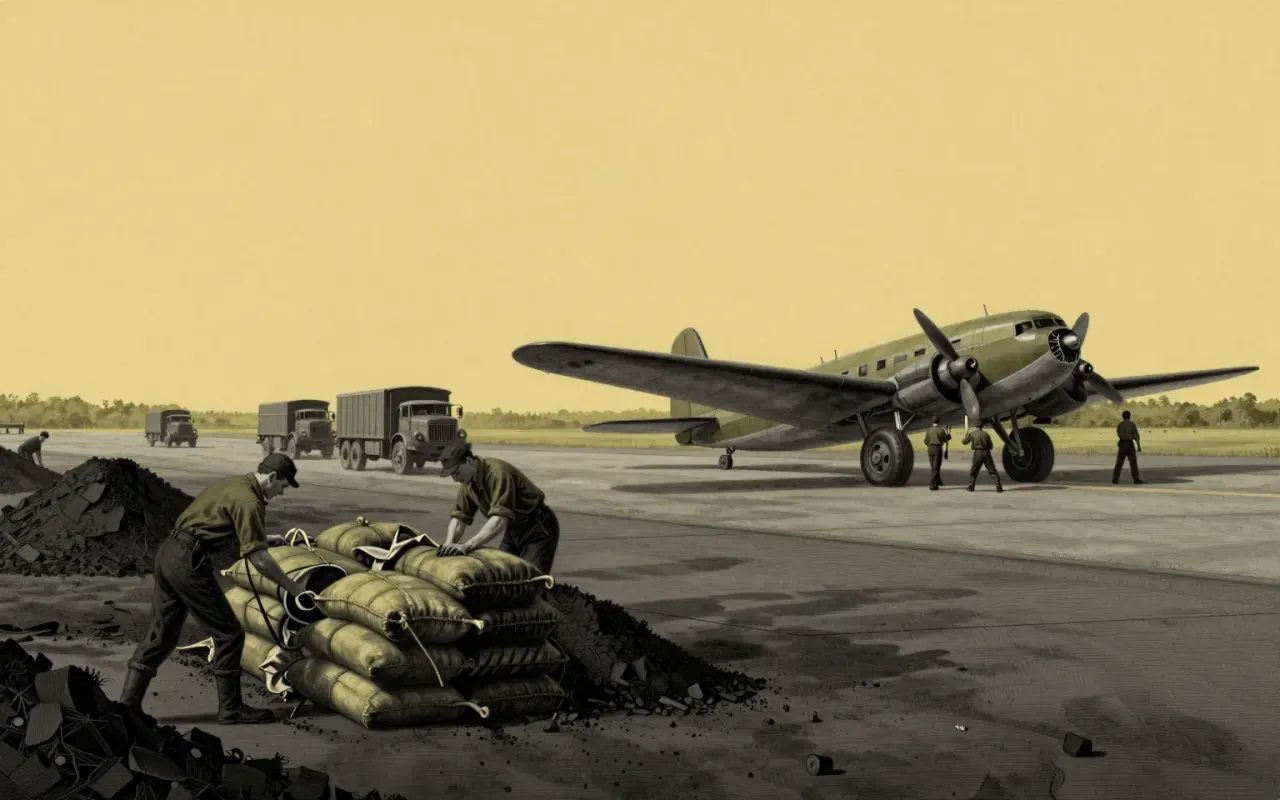
On 24 June 1948, the Soviet Union cut all rail, road and canal access to the Western-controlled sectors of Berlin, an enclave inside its own occupation zone, after Western powers introduced a new currency in their zones of Germany. The United States, Britain and their allies responded with the Berlin Airlift, flying over 2.3 million tons of supplies across 278,000 flights until the blockade was lifted on 12 May 1949, an operation that cost 101 lives in accidents and left West Berlin permanently tied to Western support.

13:00

Berlin Wall

1961–1989

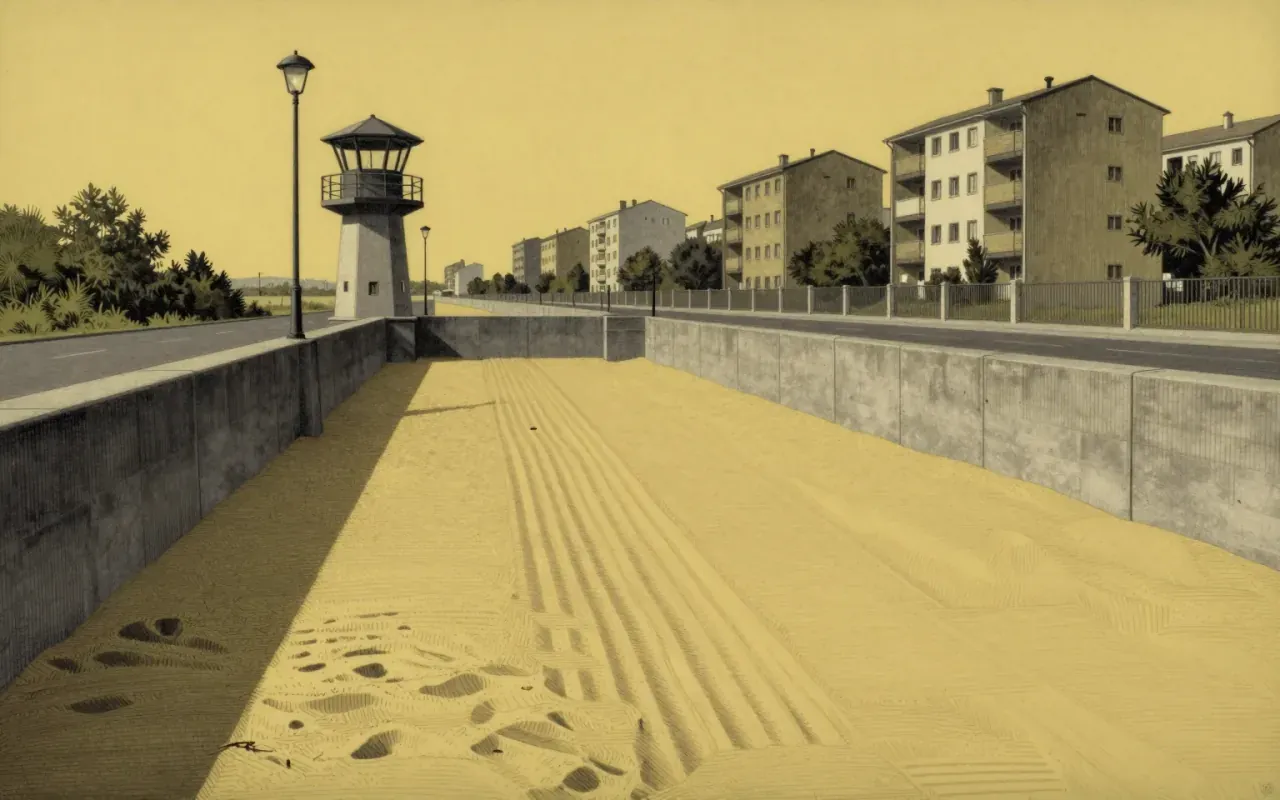
East Germany closed its border with West Berlin overnight on 13 August 1961, building the wall in response to the departure of roughly 3.5 million citizens, disproportionately young and educated, since the country's founding. The wall stood until it was opened on 9 November 1989, a moment triggered less by policy than by a confused press conference, and its full demolition took until 1994. Estimates of how many died attempting to cross range from 136 to over 200.

13:00

Beslan school siege

1 September – 3 September 2004

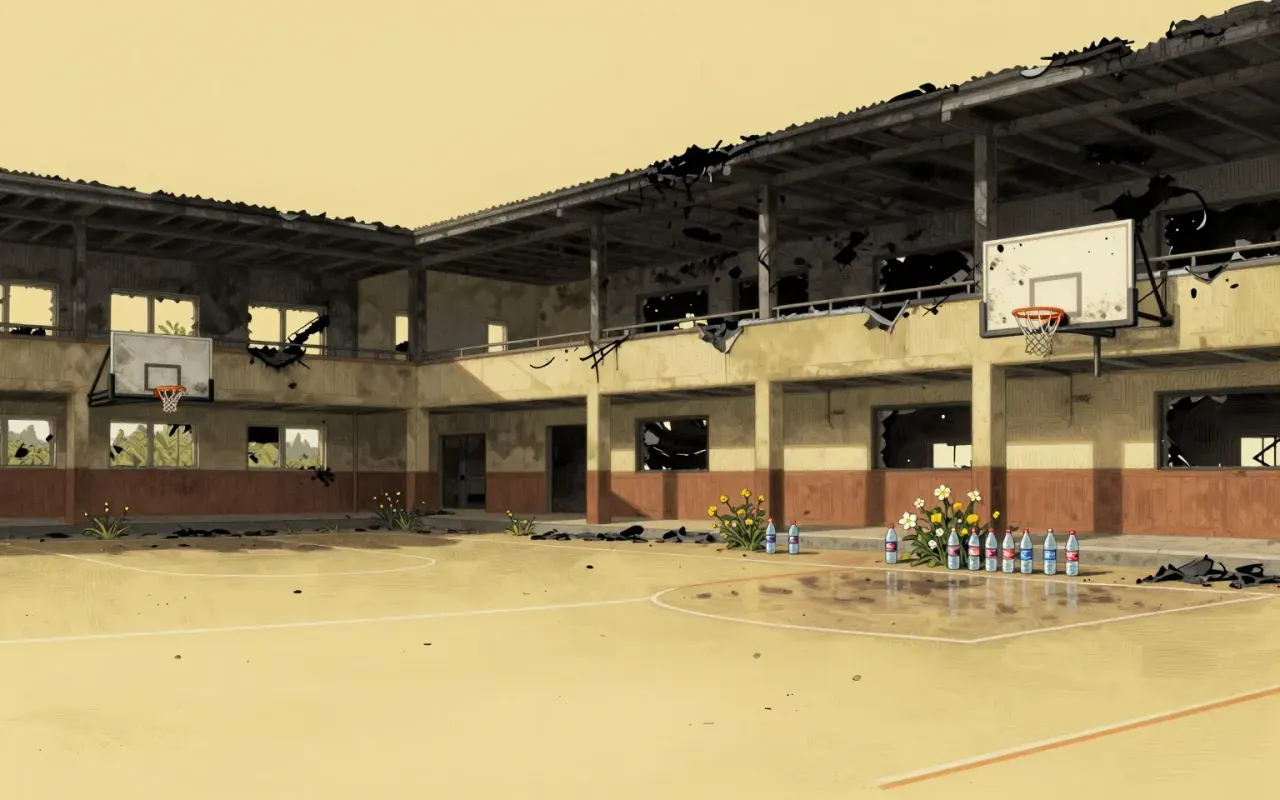
Around thirty-two militants from the Riyad-us Saliheen Brigade seized a school in Beslan, North Ossetia, on 1 September 2004, holding more than 1,100 hostages, including 777 children, in the gymnasium for fifty-two hours. The siege collapsed into chaos on 3 September after explosions of disputed origin brought down the gymnasium roof, and Russian special forces stormed the building with tanks and thermobaric weapons in a roughly twelve-hour battle that left 334 hostages dead, 186 of them children. Russian authorities faced sustained criticism for understating hostage numbers to the captors, allowing a premature assault despite ongoing negotiation, and responding with force that many observers judged disproportionate to the goal of protecting the hostages inside.

13:00

The Blitz

1940–1941

German bombing of London and other British cities ran from September 1940 to May 1941, killing around forty thousand civilians and destroying or damaging two million homes without ever achieving its strategic aim of breaking British war production or morale. The unified Blitz spirit later celebrated in popular memory sits awkwardly against wartime survey data showing most people simply stayed home rather than sheltering together, and showing real anxiety, prejudice, and social friction beneath the surface resilience contemporaries and later histories preferred to emphasise.

13:00

Second Boer War

1899–1902

Gold discovered at the Witwatersrand in 1884 turned tension between Britain and the Boer republics into open war by October 1899, a conflict that moved from conventional battles the Boers initially won, through a British counteroffensive that captured both capitals, into more than a year of guerrilla warfare Britain answered with scorched-earth tactics and concentration camps. Those camps killed over twenty-six thousand Boer civilians and an uncertain but substantial number of Black African internees, a death toll historians still argue was either deliberate policy or catastrophic administrative failure.

13:00

Srebrenica massacre

11 July – 22 July 1995

Bosnian Serb forces under General Ratko Mladić overran the UN-declared safe area of Srebrenica in July 1995, killing more than eight thousand Bosniak men and boys over an eleven-day span while roughly 370 lightly armed Dutch peacekeepers stood unable to stop them, and forcibly displacing a further 25,000 to 30,000 Bosniak women and children. Both the International Criminal Tribunal for the former Yugoslavia in 2004 and the International Court of Justice in 2007 ruled that the killings constituted genocide, the first such legal finding in Europe since the Second World War, and Mladić himself was convicted of genocide in 2017 alongside Bosnian Serb political leader Radovan Karadžić. Nearly seven thousand victims had been identified through DNA analysis by 2020, and the United Nations designated 11 July as an annual day of international commemoration in 2024.

13:00

Bosnian War

1992–1995

When Bosnia and Herzegovina voted for independence in 1992, its Serb population rejected the result and, backed by Serbia, fought a three-year war against Bosniak and Croat forces that killed over 100,000 people and displaced 2.2 million more. The siege of Sarajevo and the Srebrenica massacre became its defining atrocities, and the war ended only after NATO air strikes and American-brokered negotiations produced the Dayton Accords in late 1995.

13:00

East India Company

1600–1874

Chartered by Elizabeth I in 1600 with a monopoly on English trade east of the Cape of Good Hope, the East India Company spent its first century as a trading concern before turning, after the 1757 Battle of Plassey, into the effective ruler of large parts of India, funded by taxation of the people it governed and defended by an army that at its peak outnumbered Britain's own. Its opium trade with China, its tax policies during the Bengal famine of 1770, and its use of torture to extract revenue are all part of the documented record. The Indian Rebellion of 1857 ended Company rule outright; the Crown assumed direct control the following year, and the Company itself was formally dissolved in 1874.

13:00

2016 Brussels bombings

22 March 2016

On 22 March 2016, three suicide bombers from the same Brussels-based ISIS cell responsible for the November 2015 Paris attacks struck Brussels Airport and the city's Maelbeek metro station, killing 32 civilians and injuring more than three hundred. All five attackers involved that day had also helped plan and carry out the Paris attacks, and Belgian investigators believe the arrest of Paris attacker Salah Abdeslam just four days earlier may have accelerated the Brussels operation before the cell was fully prepared. A parliamentary inquiry later found serious failures in Belgian security coordination and information-sharing, and separate trials in Paris and Brussels eventually convicted the cell's surviving members, sentencing several, including Abdeslam, to life imprisonment.

13:00

Burning of books and burying of scholars

213 BC

According to Sima Qian's Records of the Grand Historian, written about a century after the events it describes, Qin Shi Huang ordered the burning of rival philosophical texts in 213 BC on the advice of his chancellor Li Si and had more than 460 scholars killed the following year after alchemists he had employed to seek immortality fled his court. Modern historians including Michael Nylan and Ulrich Neininger have raised serious doubts about this traditional account, noting that no source earlier than Sima Qian mentions the killings, that texts supposedly burned continued to be quoted in Qin and early Han writing, and that the label of persecuted Confucian martyrs appears to be a later Han-dynasty embellishment layered onto a real but more limited campaign against politically inconvenient texts and individuals.

13:00

Cherokee removal

1838–1839

Following the 1828 Georgia gold rush and the 1830 Indian Removal Act, a minority Cherokee faction signed the Treaty of New Echota in 1835, ceding tribal land against the wishes of the elected leadership and over sixteen thousand petitioning Cherokee. When voluntary emigration fell short, federal troops forcibly removed roughly fifteen thousand five hundred Cherokee people in 1838 and 1839, a journey historians estimate killed between two and six thousand people, figures that cannot be fixed precisely from the surviving records. Historians remain divided over whether the policy amounted to genocide, ethnic cleansing, or a catastrophic outcome of paternalistic but non-murderous intent.

13:00

Israeli Declaration of Independence

14 May 1948

David Ben-Gurion proclaimed the State of Israel on 14 May 1948 as British rule over Palestine ended, in a declaration whose drafters deliberately left the new state's borders undefined. Arab states invaded the next day, beginning a war that ran into 1949, displaced more than 700,000 Palestinians in what they call the Nakba, and ended with armistice lines rather than a negotiated peace. Historians still disagree sharply over how much of that displacement resulted from expulsion versus flight.

13:00

Cuban Missile Crisis

14 October – 28 October 1962

The Cuban Missile Crisis unfolded between 16 and 28 October 1962, after American reconnaissance confirmed Soviet nuclear missiles being installed in Cuba. President Kennedy's administration responded with a naval blockade rather than the invasion his military advisers preferred, and the crisis ended with a negotiated withdrawal that included a secret, unpublicised American concession over missiles in Turkey. It is remembered as the closest the Cold War came to direct nuclear conflict.

13:00

Deepwater Horizon oil spill

2010

An explosion aboard the Deepwater Horizon drilling rig on 20 April 2010 killed eleven workers and began the largest marine oil spill in history, releasing an estimated 4.9 million barrels of oil into the Gulf of Mexico over eighty-seven days before the well was finally capped. The flow rate BP initially reported, one to five thousand barrels a day, turned out to understate the true figure of roughly 62,000 barrels a day by more than tenfold. BP pleaded guilty to eleven counts of manslaughter in 2012 and was later found grossly negligent, culminating in a 2016 settlement of 20.8 billion dollars, the largest environmental damage settlement in American history, on top of total costs that had reached over 65 billion dollars by 2018.

13:00

Breakup of Yugoslavia

1991–1992

Yugoslavia, a federation of six republics held together for thirty-five years partly by Josip Broz Tito's authority, began unravelling after his death in 1980 amid mounting foreign debt, unemployment and the rise of Slobodan Milosevic in Serbia. Slovenia and Croatia declared independence on 25 June 1991, followed by Macedonia and Bosnia and Herzegovina, and the wars that followed over the next decade killed an estimated 130,000 to 140,000 people and displaced more than four million, ending the country historians still argue over how to explain.

13:00

Dreyfus affair

1894–1906

Alfred Dreyfus, a Jewish artillery officer, was wrongly convicted of treason in 1894 on the strength of disputed handwriting evidence and imprisoned on Devil's Island, while the army suppressed subsequent proof identifying the real culprit. Émile Zola's 1898 open letter J'Accuse galvanised public opinion, and Dreyfus was eventually pardoned in 1899 and fully exonerated in 1906, an affair that split French society and exposed institutional antisemitism at the highest levels of the military.

13:00

Easter Rising

24 April – 30 April 1916

Roughly fifteen hundred republican volunteers seized key buildings across Dublin over Easter week 1916, holding out for six days against a British garrison that grew to over sixteen thousand before Patrick Pearse surrendered to prevent further civilian deaths. Public opinion in Dublin was initially hostile to the rising, but the execution of sixteen leaders that May reversed that sentiment so thoroughly that it helped produce Sinn Féin's landslide in the 1918 election, a shift historians treat as the rising's real historical consequence rather than anything it achieved militarily.

13:00

Edict of Nantes

April 1598 to October 1685

Issued in April 1598 to end decades of the French Wars of Religion, the Edict of Nantes gave French Protestants freedom of worship in specified areas, access to public office, state-funded schools, and control of fortified towns including La Rochelle, while leaving them subject to Catholic tithes and holidays. Henry IV, who had converted to Catholicism himself in 1593 after years fighting as a Protestant leader, signed it to secure a fragile peace, and provincial parlements delayed its registration for years. His grandson Louis XIV revoked it through the Edict of Fontainebleau in October 1685, triggering an exodus of roughly 400,000 Huguenots that religious freedom in France would not formally match again until 1787.

13:00

2003 European heatwave

2003

The summer of 2003 was Europe's hottest since at least 1540, with temperatures reaching 47.3 degrees Celsius in Portugal and record highs across Britain, Germany, and Switzerland, and it is estimated to have killed around 72,000 people across the continent. France suffered the heaviest toll, somewhere between roughly 14,800 and 19,000 deaths, driven less by the heat itself than by nights that stayed unusually warm, housing without air conditioning, and a health and social care system that emptied out for the traditional August holiday just as elderly people living alone needed it most. The scandal cost Health Minister Jean-François Mattei his job the following year and led France to build a national heat wave response plan that has measurably reduced death tolls in subsequent hot summers.

13:00

Fall of Constantinople

6 April – 29 May 1453

Ottoman forces under the nineteen-year-old Mehmed II besieged Constantinople for fifty-three days before breaching its ancient walls on 29 May 1453, ending over a thousand years of Byzantine imperial continuity. Defenders numbering fewer than eight thousand faced an Ottoman force contemporaries estimated anywhere from fifty thousand to three hundred thousand, a discrepancy that has never been resolved, while massive gunpowder cannon, one reportedly capable of firing six-hundred-pound projectiles over a mile, demonstrated that the era of medieval fortification was ending.

13:00

Magellan expedition

1519–1522

Ferdinand Magellan's 1519 expedition found a passage through South America and crossed the Pacific before his death in the Philippines, after which Juan Sebastian Elcano brought the sole surviving ship home in 1522, completing the first known voyage around the world. The venture proved the earth could be circled by sea and revealed the Pacific's true scale, even though the western route it pioneered turned out too long and costly to be commercially useful.

13:00

Franco-Prussian War

1870–1871

Bismarck's editing of the Ems Dispatch in July 1870 turned a diplomatic exchange over a Spanish succession dispute into a war France declared and then lost within weeks, its main army captured at Sedan and Metz before a four-month siege forced Paris to surrender. The German Empire was proclaimed at Versailles as the war ended, and the Treaty of Frankfurt's transfer of Alsace and part of Lorraine to Germany left a grievance in French politics that outlasted everyone who fought the war itself.

13:00

Fukushima nuclear accident

2011

The 2011 Tohoku tsunami overtopped Fukushima Daiichi's seawall about fifty minutes after the earthquake, flooding the plant and destroying ten of its thirteen backup generators, which led to fuel melting in three reactors and hydrogen explosions across the site between 12 and 15 March. Radiation released into the atmosphere made it the worst nuclear accident since Chernobyl, and roughly 164,000 residents were displaced at the evacuation's peak, but the evacuation itself proved directly lethal to at least fifty-one people, mostly elderly patients relocated without adequate medical support. The UN Scientific Committee has found no confirmed radiation-linked health effects among residents, even as cleanup costs run to an estimated 180 billion dollars and more than 41,000 people remained displaced a decade later.

13:00

Glorious Revolution

1688–1689

William of Orange landed in England in November 1688 with a fleet larger than any assembled in European waters to that point, and James II's rule collapsed within weeks, leading Parliament to install William and his wife Mary as joint monarchs. The change of ruler in England involved little direct fighting, but the settlement's aftermath produced genuine, sustained violence in Ireland, and historians now describe the episode as substantially a Dutch military operation rather than a purely English uprising.

13:00

Great Depression

1929–1941

The Great Depression began with the October 1929 Wall Street crash and, over the following years, produced a roughly 46 per cent drop in American industrial production, unemployment reaching a quarter of the workforce, and a worldwide contraction in trade and output that lasted until the outbreak of the Second World War. Economists have proposed several overlapping explanations, monetary contraction, insufficient aggregate demand, and a debt-deflation spiral among them, and continue to debate how much credit each deserves alongside factors including the Smoot-Hawley Tariff and the rigidity of the gold standard.

13:00

Printing press

c. 1440

Around 1440, Johannes Gutenberg combined existing technologies with his own innovations in metal type and ink to create a practical movable-type printing system, completing his famous 42-line Bible around 1455 before the press spread to well over a hundred European cities within decades. Because Gutenberg left no personal account of his methods, most of what is known comes from legal records connected to a financial dispute rather than any direct description of his work.

13:00

Haitian Revolution

1791–1804

Beginning with a 1791 uprising among the roughly 450,000 enslaved people of the French colony of Saint-Domingue and continuing through wars against French, British and Spanish forces, the Haitian Revolution ended in January 1804 with the declaration of Haiti's independence, the only successful slave revolt in history to establish a sovereign state. Historian Michel-Rolph Trouillot has argued the revolution has been systematically overshadowed in mainstream history compared with the French Revolution it followed, despite its more direct and lasting consequences for the institution of slavery itself.

13:00

Indian Rebellion of 1857

1857–1858

The Indian Rebellion of 1857 began on 10 May with a sepoy mutiny at Meerut over rumours that new rifle cartridges were greased with cow and pig fat, and spread across northern India, drawing in the aged Mughal emperor Bahadur Shah Zafar as a reluctant figurehead before British forces recaptured Delhi by late September and suppressed the last resistance by mid-1858. The uprising killed roughly 6,000 British subjects and an estimated 800,000 or more Indians, including deaths from the war's associated famine and disease, and it ended East India Company rule entirely, transferring India to direct British Crown administration the following year.

13:00

Indian Removal Act

1830

The Indian Removal Act of 1830 passed Congress by narrow margins and authorised the federal government to exchange western land for territory held by tribes east of the Mississippi, language that in practice became coercion and, for the Cherokee in particular, an armed forced march that killed thousands. The Supreme Court ruled against Georgia's authority over Cherokee land in 1832, a decision Andrew Jackson's administration did not enforce, and historians now debate not whether the removals caused mass death but whether the policy and its intent amount to ethnic cleansing.

13:00

Invasion of Poland

1 September – 6 October 1939

Germany invaded Poland on 1 September 1939 behind the manufactured pretext of a staged attack at Gleiwitz, deploying newly mechanised blitzkrieg tactics that broke Polish resistance within weeks while the Soviet Union invaded from the east on 17 September under the secret terms of the Molotov-Ribbentrop Pact signed a week before the war began. Hitler's own instructions to his forces called for killing Polish people without pity or mercy, language historians treat as establishing genocidal intent from the campaign's very outset rather than something that developed only later in the occupation.

13:00

Operation Barbarossa

22 June – 5 December 1941

Germany launched the largest invasion in history against the Soviet Union on 22 June 1941, deploying nearly four million troops along a front stretching almost three thousand kilometres and capturing vast Soviet territory before the advance stalled outside Moscow that December. What followed became the largest and deadliest land campaign of the Second World War, ultimately killing millions on both sides, and historians still debate how much of the German failure traces to winter and logistics against how much reflects a strategic miscalculation built on racial assumptions about Soviet weakness that Hitler held from the outset.

13:00

Jacobitism

1688–1807

Jacobitism sought to restore the exiled Stuart dynasty to the British throne through several armed risings between 1689 and 1745, ending decisively at the Battle of Culloden after Charles Edward Stuart's final campaign. The movement's popular image as a Highland Catholic cause obscures a more varied reality of Protestant Lowland Episcopalians, English Tory sympathisers, and heavy dependence on French and Spanish sponsorship pursued mainly to distract British military resources.

13:00

1755 Lisbon earthquake

1 November 1755

The earthquake that struck Lisbon on the morning of 1 November 1755 is estimated at magnitude 7.7 or higher, destroyed some eighty-five percent of the city's buildings, and was followed by a tsunami and fires that together killed an estimated forty to fifty thousand people across Portugal and Morocco. The disaster shook European intellectual life as much as it shook Lisbon itself, prompting Voltaire's attack on optimistic philosophy in Candide and Immanuel Kant's attempts to explain earthquakes through natural rather than divine causes. The chief minister, the future Marquis of Pombal, organised relief, rebuilt the city centre with some of Europe's earliest earthquake-resistant construction, and commissioned a nationwide survey of the disaster's effects that later became a foundational document for modern seismology.

13:00

7 July 2005 London bombings

7 July 2005

Four suicide bombers detonated devices on three London Underground trains and a bus during the morning rush hour of 7 July 2005, killing 52 civilians alongside themselves and injuring nearly 800 people in Britain's deadliest terrorist attack since Lockerbie. An independent inquest later ruled the deaths unlawful but unpreventable, while finding MI5's earlier, brief scrutiny of ringleader Mohammad Sidique Khan had not amounted to a missed warning. Two weeks later, on 21 July, four more attackers attempted an almost identical attack using bombs of similar size and construction, but faulty explosives meant only the detonators fired, and the resulting manhunt led police to fatally shoot an innocent Brazilian electrician, Jean Charles de Menezes, before all four bombers were caught and later sentenced to life imprisonment.

13:00

Love Canal

1978–2004

Between 1942 and 1952, Hooker Chemical Company buried roughly 21,800 tons of industrial waste in an abandoned canal excavation near Niagara Falls, then sold the site for one dollar to the local school board, which built an elementary school on it and allowed residential development around it. Contamination surfaced publicly in 1978 after journalists and then activist Lois Gibbs documented chemical vapours, elevated white blood cell counts and chromosomal damage among residents, prompting President Carter to declare the first federal emergency for a non-natural disaster and leading directly to the 1980 Superfund law, even though scientists remained divided for years over how conclusively the buried chemicals, as opposed to other factors, explained residents' specific health problems.

13:00

2004 Madrid train bombings

11 March 2004

Ten bombs exploded across four commuter trains in Madrid on the morning of 11 March 2004, killing 193 people and injuring roughly 2,500 in the deadliest terrorist attack in Spanish history. The government of José María Aznar pointed to the Basque separatist group ETA within hours, even as evidence mounted toward a loosely organised, internet-radicalised cell of Moroccan, Syrian, and Algerian extremists inspired by rather than directed by al-Qaeda. Spontaneous protests erupted once that evidence became public on 12 and 13 March, and three days after the bombings, voters delivered an upset general election victory to the opposition Socialist Party, a result researchers have linked directly to public anger over the government's initial handling of the attack's aftermath.

13:00

Mamluk Sultanate

1250–1517

The Mamluk Sultanate began in 1250 when slave soldiers overthrew the Ayyubid dynasty in Egypt, installing a system of governance in which power passed largely by military promotion rather than inheritance. Mamluk forces stopped the Mongol advance at Ain Jalut in 1260 and cleared the last Crusader strongholds from the Levant by 1291, but the Black Death of 1347 and 1348 hit the sultanate's population and finances hard, and its Burji-era rulers failed to match Ottoman adoption of firearms. Ottoman Sultan Selim I conquered Cairo in January 1517, ending 267 years of Mamluk rule and inheriting the caliphate along with it.

13:00

Manchester Arena bombing

22 May 2017

Salman Abedi detonated a nail bomb in the foyer of Manchester Arena as concertgoers left an Ariana Grande show on 22 May 2017, killing 22 people and injuring over a thousand in Britain's deadliest terrorist attack since the 2005 London bombings. A public inquiry found a series of missed opportunities, including a security guard who noticed Abedi acting suspiciously but did not intervene for fear of appearing racist, understaffed police coverage of the arena's exit area, and an MI5 assessment that had judged Abedi low-risk despite community warnings about his extremist views. His brother Hashem was later convicted of helping build the bomb and sentenced to a minimum fifty-five years, the longest minimum term ever imposed by a British court, while Ariana Grande's One Love Manchester benefit concert raised more than ten million pounds within twelve hours.

13:00

Moon landing

20 July 1969

Apollo 11 landed on the Moon on 20 July 1969, with Neil Armstrong and Buzz Aldrin spending about two and a half hours outside the lunar module while Michael Collins orbited above in the command module. The landing itself required Armstrong to take manual control past a boulder field with only seconds of propellant remaining, and the mission was watched live by hundreds of millions of people, a scale of audience unmatched at the time.

13:00

Moscow theater hostage crisis

23 October – 26 October 2002

On 23 October 2002, Chechen militants led by Movsar Barayev seized Moscow's Dubrovka Theatre during a performance, taking roughly 850 to 900 hostages and demanding a Russian withdrawal from Chechnya, before special forces pumped an opioid-based aerosol through the ventilation system and stormed the building before dawn on 26 October, killing all forty hostage-takers. The gas, later identified in a 2012 study as a mixture of carfentanil and remifentanil, was implicated in the deaths of all but one of the 132 officially recorded hostage fatalities, and a Moscow health official stated most died from the gas's effects rather than gunfire, a toll worsened by rescuers who lacked the antidote information needed to treat overdosed survivors and who left seventy-three hostages, including six children, without any medical attention at all.

13:00

Munich Agreement

30 September 1938

Britain, France, Germany, and Italy met in Munich in September 1938 and agreed to hand Germany the Sudetenland, a heavily fortified, industrially significant region of Czechoslovakia, without any Czechoslovak representative present at the actual negotiations. Neville Chamberlain returned home declaring peace for our time, a claim contemporary polling suggests most of the British public initially welcomed, before Hitler occupied the rest of Czechoslovakia within six months and turned the agreement into the standard historical example of appeasement's failure.

13:00

Cyclone Nargis

25 April – 4 May 2008

Cyclone Nargis made landfall in Myanmar's Ayeyarwady Delta on 2 May 2008 at near-peak strength, pushing a storm surge some forty kilometres up the densely populated delta and destroying roughly ninety-five percent of buildings there. The government's official count of 138,373 dead and missing is itself disputed, with aid workers and NGOs suggesting the true toll may have reached as high as 300,000, and the ruling military junta initially refused to allow foreign aid workers or military assistance into the country even as a United States carrier group sat offshore for weeks with undelivered supplies. UN Secretary-General Ban Ki-moon's direct negotiation eventually opened the country to aid workers of any nationality, though military assistance remained barred throughout.

13:00

2016 Nice truck attack

14 July 2016

On Bastille Day, 14 July 2016, Mohamed Lahouaiej-Bouhlel, a 31-year-old Tunisian delivery driver living in Nice, drove a nineteen-tonne truck into crowds on the Promenade des Anglais, killing 86 people and injuring 458 before police shot him dead roughly five minutes after the attack began. He had no prior links to organised terrorism and was not on any watchlist, but investigators found he had rapidly self-radicalised over the preceding months, growing a beard, researching mass-casualty attacks online, and surveying the Promenade in the days beforehand, while separately battling depression, addiction, and a recent divorce and firing. The Islamic State claimed him as acting on its behalf, but French prosecutors concluded he had acted with some accomplices yet without central direction from the group itself.

13:00

Norman Conquest

1066–1075

When Edward the Confessor died childless in January 1066, three men claimed the English throne; William, duke of Normandy, defeated Harold Godwinson at Hastings that October after Harold had already fought off a Norwegian invasion days earlier, and was crowned that Christmas. Full Norman control took nearly a decade to secure, and the conquest's central justifications, a promise from Edward and an oath from Harold, appear only in sources written by the Norman side.

13:00

Nuremberg trials

1945–1946

Twenty-two senior Nazi leaders stood trial before judges from the four Allied powers between November 1945 and October 1946, charged under a newly created legal framework that made individuals, not just states, criminally responsible for aggression and atrocity, resulting in eleven death sentences and three acquittals. The trials established lasting precedents for international law even as critics have long pointed out their selective scope, a charter narrow enough that Soviet purges and deportations never came under the same scrutiny applied to the defendants in the dock.

13:00

October Revolution

25 October – 26 October 1917

The October Revolution unfolded over roughly twenty-four hours on 24 and 25 October 1917 in the old Russian calendar, as Bolshevik forces under Leon Trotsky's organisation seized key points in Petrograd and took the Winter Palace from a token garrison of cadets, cossacks and a women's battalion, forcing Alexander Kerensky's Provisional Government to flee. Vladimir Lenin became head of the new Soviet government, and though the Bolsheviks won only 24 percent of the vote in elections held weeks later, they dissolved the resulting Constituent Assembly after a single session, a seizure of power that Soviet-era propaganda later reimagined as a dramatic battle even though the original assault had produced almost no casualties at all.

13:00

First Opium War

1839–1842

The First Opium War ran from 1839 to 1842 after Chinese commissioner Lin Zexu confiscated and destroyed over 20,000 chests of British-imported opium at Humen, prompting Britain to send a naval and military force that defeated Qing forces along the Pearl and Yangtze rivers while suffering only 87 combat deaths against several thousand Chinese casualties. The resulting Treaty of Nanking, signed in August 1842, ceded Hong Kong to Britain in perpetuity, opened five treaty ports, imposed a 21 to 27 million silver dollar indemnity and granted extraterritorial rights to British subjects, becoming the first of the unequal treaties that Chinese nationalist historiography later dated as the start of a Century of Humiliation.

13:00

Janissary

1363–1826

Founded in the fourteenth century as the Ottoman sultan's personal infantry, the Janissary corps was filled for nearly three centuries through the devshirme, a periodic levy of Christian boys from the Balkans who were converted, trained, and bound to lifelong service. Their early adoption of firearms made them one of the first true gunpowder infantry forces in the world, but by the seventeenth century the corps had opened membership to hereditary recruits, taken up trade and property, and turned repeatedly on the sultans who depended on it. Sultan Mahmud II finally destroyed the institution in 1826, in an episode still known as the Auspicious Incident.

13:00

November 2015 Paris attacks

13 November 2015

On the night of 13 November 2015, ten operatives from a Brussels-based ISIS cell carried out coordinated shootings and suicide bombings across six sites in Paris and Saint-Denis, killing 130 civilians and injuring more than four hundred, with the Bataclan theatre alone accounting for ninety deaths during a hostage-taking that ended in a police assault. President François Hollande called the attacks an act of war and declared a three-month state of emergency, and France launched major airstrikes against ISIS targets in Raqqa within two days. Salah Abdeslam, the only surviving member of the attack teams, evaded capture until March 2016, while the cell's ringleader, Abdelhamid Abaaoud, was killed in a raid five days after the attacks.

13:00

Partition of India

15 August 1947

British India was divided into India and Pakistan in August 1947, ending decades of colonial rule and an independence movement that stretched back to the previous century. The partition triggered mass displacement across new religious lines, with estimates of deaths ranging from 200,000 to two million and displaced people numbered between 12 and 20 million, figures that remain disputed rather than settled. It left lasting hostility between the two new states that continues to shape the region.

13:00

Partition of Ireland

3 May 1921

The Government of Ireland Act of 1920 split the island into two self-governing territories, drawing Northern Ireland's border around six counties chosen specifically because they gave unionists a workable majority, even though two of those counties had nationalist majorities of their own. A boundary commission set up under the 1921 treaty to revisit that line spent years preparing its case, only for its 1925 report to leak, be suppressed by all three governments involved, and leave the original six-county border permanently fixed in place.

13:00

Division of Korea

August 1945

Korea was split at the 38th parallel in August 1945 after two young American officers, working overnight with a commercial atlas rather than any deep regional expertise, proposed the line to ensure Seoul fell under American rather than Soviet control. Separate governments under Kim Il Sung and Syngman Rhee formed by 1948, both claiming the whole peninsula, and the resulting Korean War of 1950 to 1953 killed well over a million civilians before ending in an armistice that left the country divided along almost the same line, without a peace treaty ever being signed.

13:00

Peloponnesian War

431–404 BC

From 431 to 404 BC, Athens and Sparta fought for dominance of the Greek world, a conflict of shifting alliances, a devastating plague, and a catastrophic Athenian invasion of Sicily that ended in naval defeat and surrender. Nearly everything known about it comes from the Athenian general Thucydides, writing partly from exile, and from Xenophon's later, more Spartan-leaning continuation, sources historians still weigh carefully rather than take at face value.

13:00

Piper Alpha

July 1988

The Piper Alpha platform in the North Sea exploded and burned through the night of 6 and 7 July 1988 after a night shift restarted a pump whose safety valve had been removed for maintenance, a hazard recorded only on a separate permit that had gone missing during the shift handover, killing 167 people including two rescuers in what remains the worst death toll in offshore oil and gas history. The subsequent Cullen Inquiry issued 106 safety recommendations and led to the transfer of North Sea safety regulation to an independent body, fundamentally reshaping offshore platform design and oversight standards later adopted internationally, even as a 1997 civil ruling controversially found two dead workers negligent for failures that occurred amid the same broken permit system.

13:00

Philosophiæ Naturalis Principia Mathematica

1687

Prompted by a question from the astronomer Edmond Halley in 1684, Isaac Newton spent roughly two years producing the Principia, a three-book work establishing the mathematical laws of motion and gravitation, published in 1687 with Halley personally funding the print run. A priority dispute with Robert Hooke over the underlying gravitational insight nearly derailed the project, and historians now read that dispute as more nuanced than a simple case of Newton taking credit for someone else's idea.

13:00

Punic Wars

264–146 BC

Rome and Carthage fought three wars between 264 and 146 BC, moving from a dispute over Sicily through Hannibal's invasion of Italy to the final siege and total destruction of Carthage itself. The whole surviving record comes from Greek and Roman writers, chiefly Polybius and Livy, since no Carthaginian account of any of the three wars has survived.

13:00

International Committee of the Red Cross

Founded 1863

The International Committee of the Red Cross grew directly out of Henry Dunant's shock at the aftermath of the 1859 Battle of Solferino, where he organised civilian relief for roughly forty thousand wounded and dying soldiers regardless of which side they fought for. His 1862 book led to a founding committee in Geneva the following year and, in 1864, the first Geneva Convention. The organisation's strict neutrality, run by an assembly of Swiss citizens only, has sustained its access to conflicts for over a century and a half, but the same neutrality left it silent about the Holocaust while it was happening, a failure the ICRC has since formally acknowledged.

13:00

Russo-Japanese War

1904–1905

The Russo-Japanese War of 1904 and 1905 grew from rival Russian and Japanese ambitions in Manchuria and Korea, opening with a surprise Japanese attack on Port Arthur in February 1904 and culminating in the destruction of Russia's Baltic Fleet at Tsushima in May 1905 after a seven-month voyage of some 18,000 nautical miles. Total deaths reached roughly 43,000 to 71,000 for Russia and 80,000 to 99,000 for Japan, and the Treaty of Portsmouth, mediated by Theodore Roosevelt, awarded Japan control of the Liaodong Peninsula, the South Manchuria Railway and southern Sakhalin, a settlement whose lack of a cash indemnity sparked riots in Tokyo even as the war marked the first modern defeat of a European power by an Asian one and helped trigger Russia's 1905 revolution.

13:00

Rwandan genocide

7 April – 4 July 1994

Following the assassination of President Juvénal Habyarimana on 6 April 1994, Hutu extremists in Rwanda's government and military organised the systematic killing of the Tutsi minority and moderate Hutu, coordinated in part through radio broadcasts and neighbourhood checkpoints, over roughly one hundred days. Scholarly estimates put the death toll between 500,000 and 662,000, well below the Rwandan government's own figure of over a million, and the killing ended only when the Rwandan Patriotic Front took military control of the country in July 1994.

13:00

Sack of Rome (410)

24 August – 27 August 410

In August 410, Visigothic forces under Alaric looted Rome for three days, the first time a foreign army had taken the city in roughly eight centuries, after years of failed negotiation with the western Roman government. Ancient sources, none of them Gothic, describe the damage as concentrated and the violence relatively restrained by the standards of the age, while historians still debate how far Alaric sought the city's destruction against a secure, legitimate place within the empire he had spent his career fighting.

13:00

Seven Years' War

1756–1763

The Seven Years' War, fought from 1756 to 1763 across Europe, North America, India, the Caribbean and West Africa, grew out of unresolved tensions from the previous War of the Austrian Succession and a sudden realignment of European alliances. The 1763 Treaty of Paris confirmed Britain as the dominant global colonial power, and the resulting tax burden on Britain's American colonies fed directly into the grievances behind the American Revolution barely a decade later.

13:00

Six-Day War

5 June – 10 June 1967

Israel launched a surprise air assault against Egypt on 5 June 1967 after weeks of escalating tension triggered partly by a false Soviet report of Israeli troop movements against Syria, and within six days had defeated Egyptian, Jordanian and Syrian forces, seizing the Sinai Peninsula, the West Bank, East Jerusalem, Gaza and the Golan Heights. The war displaced roughly 413,000 Palestinians and remains disputed over whether Israel's strike constituted legitimate pre-emption or aggression, a question tied to the closure of the Straits of Tiran that preceded it.

13:00

Spanish–American War

25 April – 11 August 1898

The Spanish-American War ran from April to August 1898, triggered by the unexplained sinking of the USS Maine in Havana harbour in February that year and fought over Spain's brutal suppression of Cuban independence movements. American victories at Manila Bay and Santiago de Cuba, alongside far heavier losses to disease than to combat, forced Spain to sue for peace, and the resulting Treaty of Paris transferred Puerto Rico, Guam and the Philippines to the United States for a payment of twenty million dollars while granting Cuba nominal independence, a settlement that made the United States an overseas imperial power and that historians still debate as either a humanitarian intervention or a calculated act of expansion dressed in moral language.
13:00

Taiping Rebellion

1851–1864

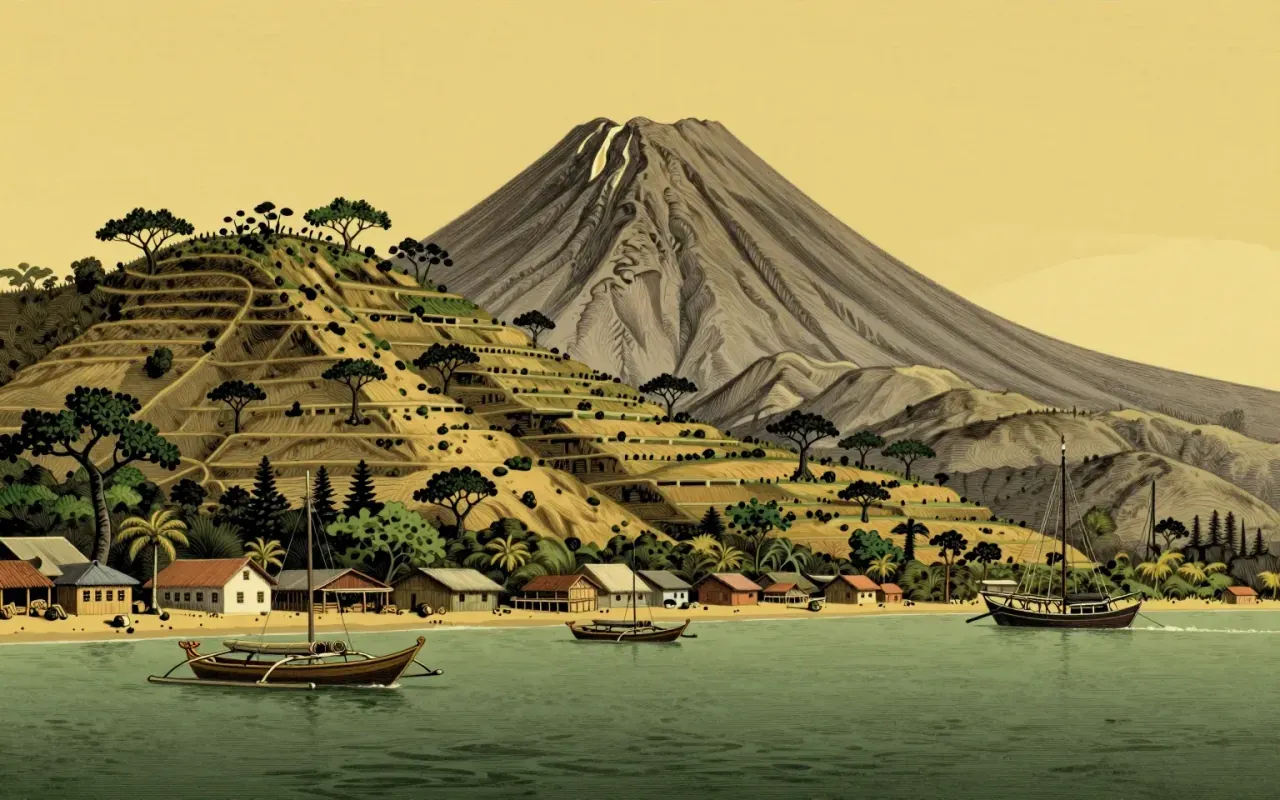
Hong Xiuquan, a failed imperial examination candidate from Guangdong who came to believe he was the younger brother of Jesus Christ after a breakdown and a set of visions, founded a millenarian movement that captured Nanjing in 1853 and fought the Qing dynasty for fourteen years before the city fell in 1864 and Hong died during its final siege. Death toll estimates range from a commonly cited 20 to 30 million up to as high as 73 to 100 million, figures historians acknowledge are necessarily speculative given the absence of reliable census data and the destruction of most Taiping records, and modern scholars continue to disagree over whether to call the conflict a rebellion, a civil war or a revolution, each label carrying different implications about the Qing dynasty's legitimacy and the movement's own transformative ambitions.
13:00

1976 Tangshan earthquake

28 July 1976

The magnitude 7.6 earthquake that struck Tangshan at 3:42 in the morning on 28 July 1976 gave no perceptible warning, unlike a 1975 quake at Haicheng that had been successfully predicted, and it collapsed roughly 85 percent of the city's largely unreinforced brick buildings within minutes. China's official death toll stands at 242,469, though historians cross-checking government files put the true figure at 300,000 or more, a gap the state has never fully resolved. The disaster struck six weeks before Mao Zedong's death and amid the ideological pressures of the Cultural Revolution, and the government initially refused foreign aid, mobilising over 42,000 workers domestically instead to restore rail lines within weeks even as full economic recovery took well over a year.

13:00

Atlantic slave trade

15th–19th century

Between the fifteenth and nineteenth centuries, European traders transported an estimated 12.75 million enslaved Africans across the Atlantic, purchasing most from African merchants rather than capturing them directly, with roughly two million dying during the voyage itself. Portugal and Britain carried the largest shares, the trade fed plantation economies concentrated heavily in Brazil and the Caribbean, and historians continue to debate how equal a bargaining position African traders actually held against the European commercial networks driving demand.

13:00

Camp David Accords

17 September 1978

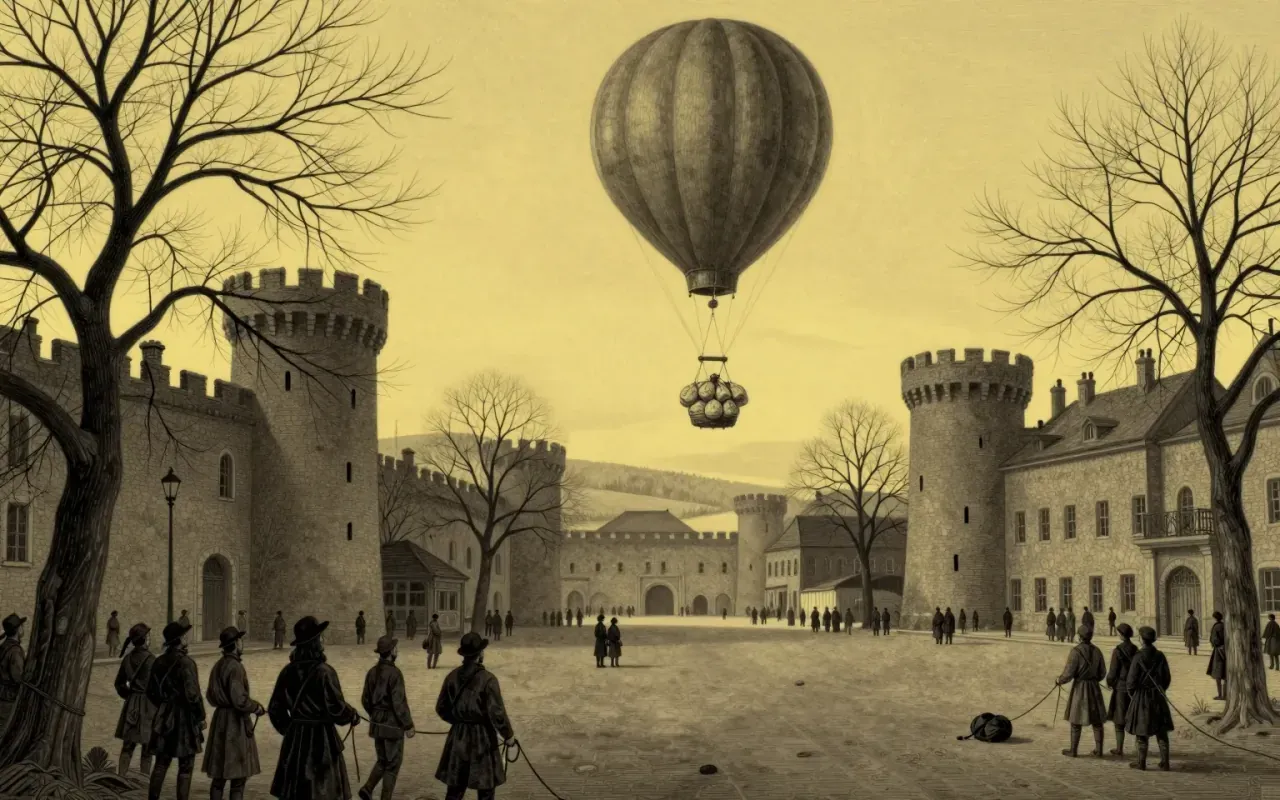
President Jimmy Carter mediated thirteen days of negotiation between Egyptian President Anwar Sadat and Israeli Prime Minister Menachem Begin at Camp David in September 1978, the two leaders so personally hostile toward each other that Carter had to shuttle between separate cabins rather than let them negotiate face to face. The resulting accords produced a framework for Palestinian autonomy that went largely unimplemented and a separate framework leading directly to the 1979 Egypt-Israel peace treaty, under which Israel withdrew fully from the Sinai Peninsula. Sadat and Begin shared the 1978 Nobel Peace Prize, but the Arab League suspended Egypt's membership for a decade in retaliation, and Sadat himself was assassinated by Egyptian Islamic Jihad militants in October 1981, a peace that has endured since as what observers describe as a cold one.
13:00

Velvet Revolution

17 November – 29 December 1989

Beginning with a police crackdown on a student march in Prague on 17 November 1989, Czechoslovakia's Velvet Revolution unfolded over six weeks through strikes, mass demonstrations reaching hundreds of thousands, and negotiations led by the newly formed Civic Forum under Vaclav Havel. The Communist Party's leading role was struck from the constitution on 27 November, Havel became president on 29 December, and the transition, named for its lack of violence, was completed without the bloodshed seen elsewhere in the region that year.

13:00

Watergate scandal

1972–1974

A break-in at the Democratic National Committee's Watergate offices in June 1972 unravelled over two years into a constitutional crisis, as investigation revealed Nixon's own White House taping system had captured him ordering the FBI investigation obstructed. Nixon resigned on 9 August 1974 rather than face near-certain impeachment, but the burglary's actual purpose and who ordered it have never been conclusively established, even after sixty-nine people were charged in connection with the wider scandal.

13:00

Toussaint Louverture

1743–1803

Toussaint Louverture, freed well before the Haitian Revolution began, rose from plantation overseer to the colony's commander and governor, negotiating with Spain, Britain, and revolutionary France in turn before his own 1801 constitution provoked Napoleon into sending an invasion force. Captured under a broken amnesty and imprisoned in France, he died in 1803, months before his former officers completed the revolution and declared Haiti's independence.

13:00

Vladimir Lenin

1870–1924

Vladimir Lenin's brother was executed for plotting against the tsar in 1887, a turning point that pushed him toward the revolutionary Marxism he spent three decades organising before leading the Bolsheviks to power in October 1917. His government's mix of land and peace decrees, a violent Red Terror, and a wartime economy built on forced grain requisition left a legacy historians still argue over: a champion of working-class liberation to his admirers, and to his critics the architect of a one-party, secret-police state with a direct line to Stalin's later atrocities.

13:00

Winston Churchill

1874–1965

Winston Churchill spent the 1930s as a marginalised backbencher warning about German rearmament before becoming prime minister in May 1940 and leading Britain through the war largely alone against Hitler until the Soviet Union and the United States joined. British voters rejected him at the ballot box within months of victory in 1945, and his record now carries alongside its wartime achievement a harder scrutiny of his imperialism, his recorded comments on race, and his government's response to the 1943 Bengal famine, questions historians increasingly weigh against his standing as a defender of liberal democracy.

13:00

World War I

1914–1918

World War I ran from 28 July 1914 to 11 November 1918, triggered by the assassination of Archduke Franz Ferdinand and escalating through a web of alliances into a conflict that killed an estimated fifteen to twenty-two million people across the Western, Eastern and several peripheral fronts. It ended with the collapse of the German, Austro-Hungarian, Ottoman and Russian empires and a peace settlement, centred on the Treaty of Versailles, that many historians connect directly to the political conditions enabling the Second World War two decades later.

13:00

World War II

1939–1945

World War II is most commonly dated from Germany's invasion of Poland on 1 September 1939 to Japan's formal surrender on 2 September 1945, though historians propose earlier starting points including Japan's 1931 invasion of Manchuria and Italy's 1935 invasion of Ethiopia, reflecting genuine disagreement over which aggression should count as the war's true beginning. The conflict killed an estimated sixty to seventy-five million people, a majority of them civilians, across European, Pacific and Mediterranean theatres, and ended with the collapse of the League of Nations system, the founding of the United Nations, and the emergence of the United States and Soviet Union as rival superpowers.

13:00

Wu Zetian

624–705

Wu Zetian rose from a concubine of Emperor Taizong to become, in 690, the only woman in Chinese history to rule in her own right as emperor, founding the short-lived Zhou dynasty after decades of steadily consolidating power under and then alongside Emperor Gaozong. Her fifteen-year reign expanded merit-based civil examinations, patronised Buddhism and coincided with a period of Tang cultural and political strength, though it was also marked by a secret-police apparatus that pursued rivals through denunciation and torture. She was deposed in 705 and died the same year, and traditional Confucian historians condemned her far more severely than modern scholars, who have reassessed several of the era's darker accusations against her.

9:59

Chandragupta Maurya

Chandragupta didn’t found India — he founded the first empire that forced its geography, trade, and diplomacy to answer to a single capital in Magadha.
11:13

Charlotte Brontë

A woman wrote a classic by turning her school’s brutality into fiction — and hiding her name to get it read.
10:28

Emmeline Pankhurst

She didn’t win the vote by being reasonable — she won it by being useful after stopping the fight.
9:32

Ferdinand de Lesseps

17 November 1869

Ferdinand de Lesseps built the Suez Canal — a sea-level maritime link between the Mediterranean and Red Seas — opening it in 1869 after beginning construction at Port Said in 1859. He raised over half its capital via French public subscriptions. In the 1880s, he repeated the model for Panama: a sea-level canal approved by a 1879 Paris congress. But tropical disease, technical challenges and financial collapse led to bankruptcy in December 1888. The record establishes these events, methods and outcomes — but says nothing about motives, dissent, or wider consequences.