Six sites in three hours
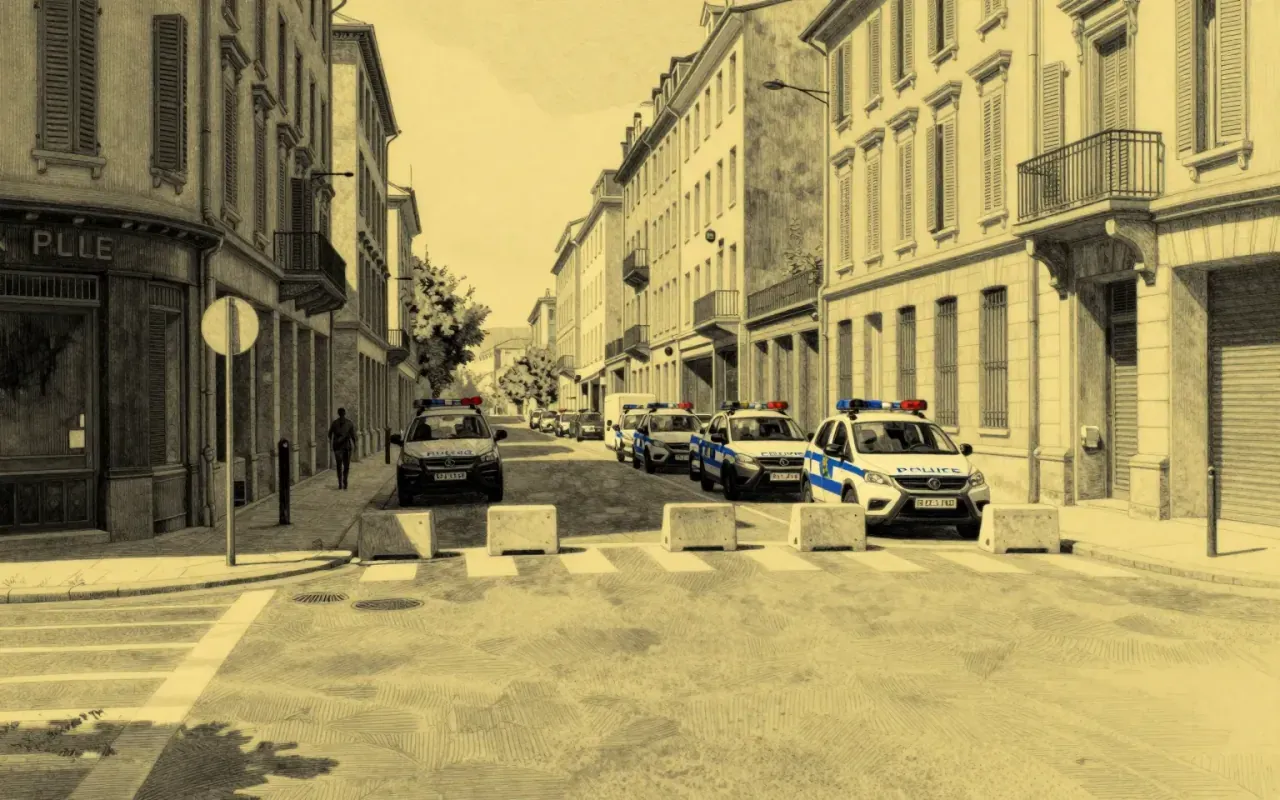
The attacks unfolded across six separate locations in Paris and the neighbouring suburb of Saint-Denis over roughly three hours on the night of 13 November 2015, beginning at 21:16 and continuing until close to one in the morning. Three suicide bombers struck near the Stade de France during a football match between France and Germany, while separate teams carried out shootings at cafés and restaurants including Le Carillon, Le Petit Cambodge, Café Bonne Bière, La Casa Nostra, and La Belle Équipe, alongside a further suicide bombing at the Comptoir Voltaire café. This dispersal across multiple sites simultaneously was designed to overwhelm the city’s emergency response capacity by forcing it to react to several major incidents at once rather than a single, contained attack.
Ninety dead at one theatre
The deadliest single location was the Bataclan theatre, where gunmen entered during a concert by the American rock band Eagles of Death Metal and proceeded to take hostages amid ongoing gunfire, ultimately killing ninety people there alone before police stormed the venue. Across all six sites combined, the attacks killed 130 civilians and injured more than four hundred people, with between eighty and ninety-nine described as being in serious condition in the immediate aftermath. Seven of the attackers were killed during the attacks themselves, either through suicide detonation or through direct confrontation with police, leaving the operational cell substantially, though not entirely, eliminated by the time the immediate crisis had ended that same night.
A cell run out of Brussels
Responsibility for the coordinated assault rested with a ten-person operational cell organised out of Brussels and linked directly to the Islamic State. Most of the attackers were French or Belgian nationals of Moroccan or Algerian descent, though two held Iraqi nationality, and a number of the operatives had previously travelled to fight in Syria before returning to Europe to carry out the attack. This combination of European nationality and direct combat experience gained abroad gave the cell both the local familiarity needed to plan and execute an attack across multiple sites in a major Western European capital and the operational training associated with fighting alongside an organised militant group overseas.
The ringleader falls within days
Abdelhamid Abaaoud, the cell’s ringleader, did not die in the initial attacks and instead continued directing operations from hiding in the days that followed, before being killed during a police raid in Saint-Denis on 18 November, just five days after the attacks he had helped coordinate. His death, while significant, did not immediately end the broader threat the cell represented, since several other operatives, including Salah Abdeslam, who had served as a driver for one of the attack teams and whose own explosives failed to detonate that night, remained unaccounted for and continued to pose an active security concern across both France and Belgium in the weeks that followed.
The one who got away, for a while
Abdeslam’s continued evasion of capture became one of the most closely watched manhunts in recent European history, spanning more than four months before he was finally located and arrested in the Molenbeek district of Brussels in March 2016. His survival, given that he was the only member of the attack teams from that night not killed either during the attacks or in the subsequent raid that killed Abaaoud, made him a uniquely significant figure for investigators seeking direct testimony about how the attacks had actually been planned and executed, and his eventual capture and later trial provided some of the clearest public accounting of the cell’s internal operations.
A state of emergency and an act of war
France’s political response was immediate and forceful. President François Hollande characterised the attacks as an act of war carried out by the Islamic State and declared a three-month state of emergency, granting police expanded powers including warrantless searches and the ability to block websites. Within two days, France had launched significant airstrikes against Islamic State targets in Raqqa, Syria, marking a substantial escalation of its military campaign against the group. Domestically, police conducted extensive raids across the country, arresting twenty-three people and placing 104 others under house arrest within the first three days following the attacks, a rapid and wide-reaching security response reflecting the scale of public alarm the coordinated assault had generated.