historybriefs
Highest rated

All briefs

482 briefs · 5812 min · 385–480 on page 5 of 6
13:00

Viking activity in the British Isles

789–878

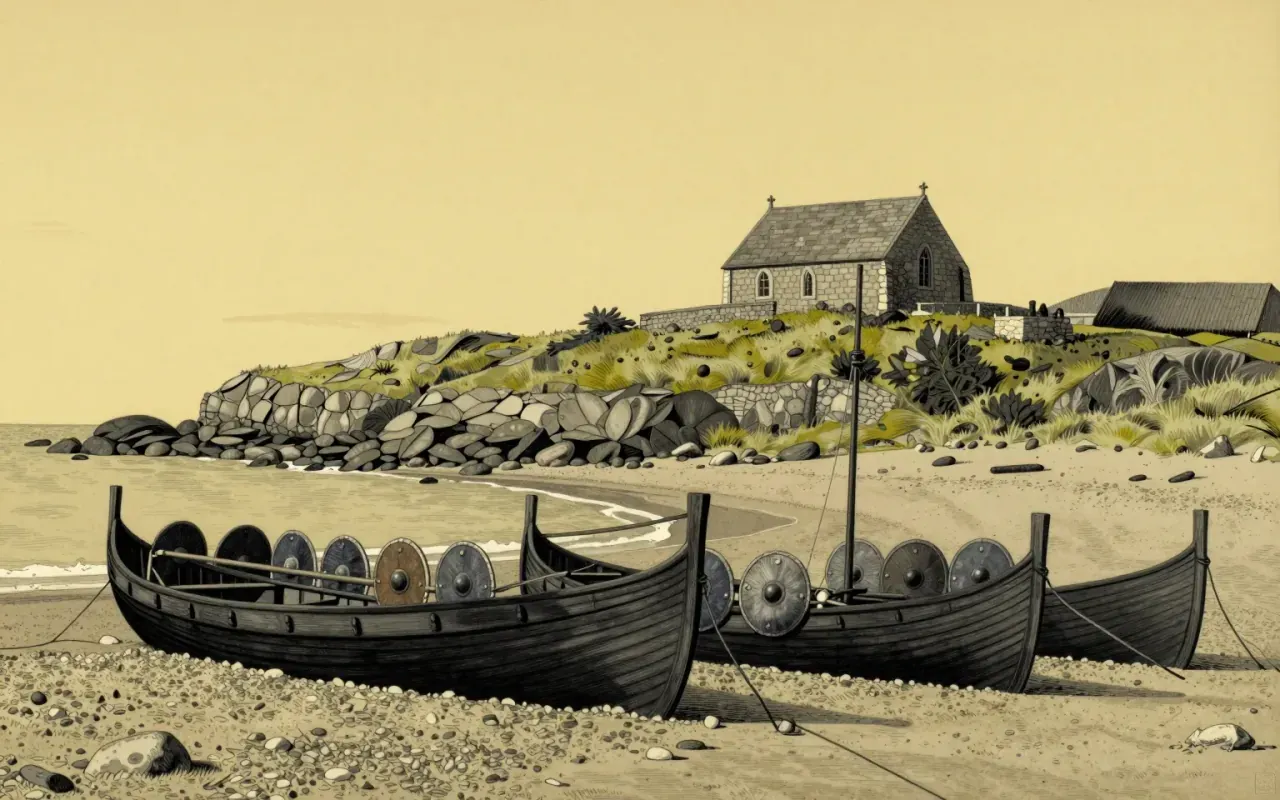
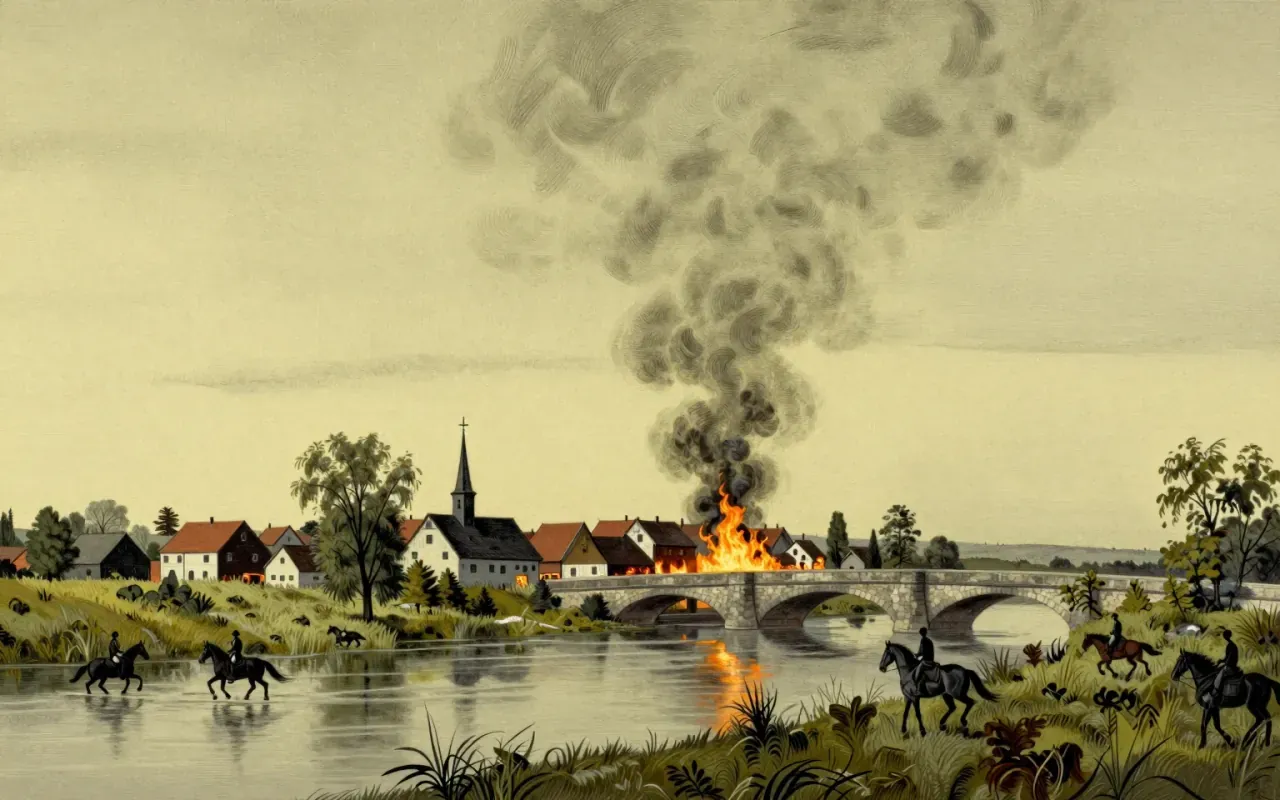
Scandinavian raids on England began around 789 and turned, from 865 onward, into sustained conquest by a force later called the Great Heathen Army, which took East Anglia, York and much of Mercia before King Alfred of Wessex halted it at Edington in 878. The main source, the Anglo-Saxon Chronicle, was compiled under Alfred's own patronage, and historians read its figures for Viking numbers with real caution as a result.
13:00

War of the Austrian Succession

1740–1748

The War of the Austrian Succession began in 1740 when Prussia invaded Silesia within days of Maria Theresa's contested inheritance of the Habsburg lands, drawing in most of Europe's major powers across theatres on four continents. The 1748 peace confirmed Maria Theresa's succession but cost her Silesia permanently, a settlement so resented in Vienna that it triggered a full realignment of European alliances and directly set up the Seven Years' War less than a decade later.

13:00

War of the Spanish Succession

1701–1714

The War of the Spanish Succession began in 1701 after the childless Spanish king Charles II left his throne to a French Bourbon prince, alarming the rest of Europe enough to trigger over a decade of continent-wide fighting. The 1713 and 1714 peace treaties confirmed the Bourbon succession in Spain while stripping it of most of its European territories, leaving Britain, not the dynastically victorious France, as the war's chief strategic beneficiary.

13:00

Women's March on Versailles

5 October – 6 October 1789

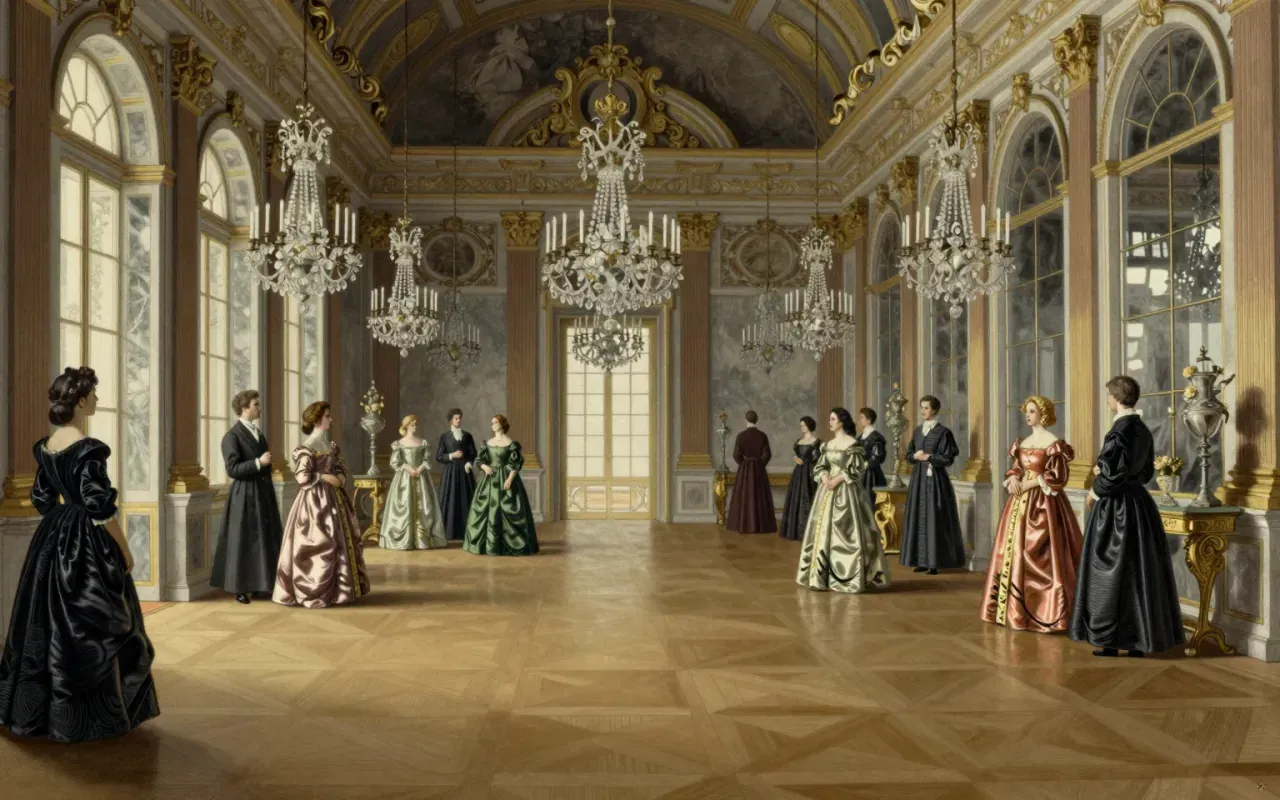
On 5 October 1789, thousands of Parisian market women, angry over bread shortages, gathered at the Hotel de Ville and then walked six hours through rain to Versailles, followed by the National Guard under Lafayette. After a tense night, part of the crowd breached the palace at dawn, killing two royal guards, and by afternoon the royal family had agreed to relocate to Paris under guard, a move that ended Louis XVI's independence and dragged the National Assembly into the capital's orbit for good.

13:00

Anglo-Zulu War

11 January – 4 July 1879

The Anglo-Zulu War began in January 1879 after high commissioner Henry Bartle Frere issued King Cetshwayo deliberately unacceptable demands. A stunning Zulu victory at Isandlwana briefly shattered assumptions of colonial invincibility, but British forces regrouped to win decisively at Kambula and Ulundi, capturing Cetshwayo and dividing his kingdom into thirteen rival chiefdoms. Surviving correspondence between Frere and London shows the ultimatum was engineered to provoke war rather than respond to genuine threat, while contemporary dissent from figures like Bishop Colenso documents real opposition within the colonial establishment itself.

13:00

Thomas Aquinas

1225–1274

Thomas Aquinas joined the Dominican order against his family's fierce opposition and spent his career reconciling newly rediscovered Aristotelian philosophy with Christian theology, chiefly in his unfinished Summa Theologiae. Most of what is known about his life comes from testimony gathered decades later for his canonisation, and his sudden 1273 decision to stop writing before his death the following year remains genuinely unexplained.

13:00

Thomas Hobbes

1588–1679

Thomas Hobbes argued that without a powerful central authority human life would collapse into universal conflict, and that rational self-interest justified surrendering individual freedom to an absolute sovereign, publishing this case most fully in Leviathan in 1651. Accused of atheism by contemporaries for his insistence that everything, including God, was material, Hobbes left a thin early biographical record that historians have had to reconstruct largely from a later, sometimes unreliable collection of anecdotes.

13:00

Thomas Jefferson

1743–1826

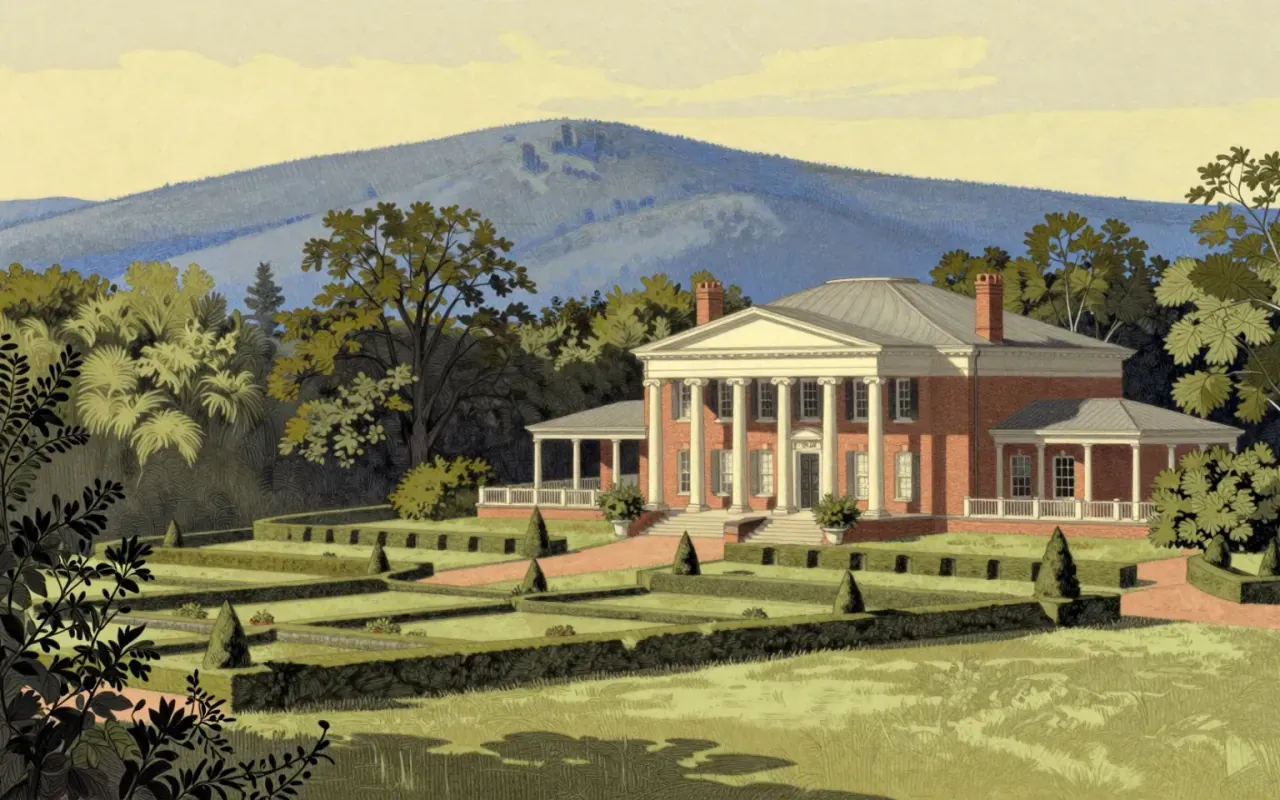
Thomas Jefferson drafted the Declaration of Independence, served as governor, diplomat, secretary of state, and two-term president, and doubled the country's territory with the Louisiana Purchase, all while running a plantation worked by hundreds of enslaved people. For decades historians treated his likely children with Sally Hemings as unproven or unlikely; DNA evidence in the late 1990s forced a reckoning with what his own writing on liberty had left out.

13:00

Thutmose III

1481–1425 BC

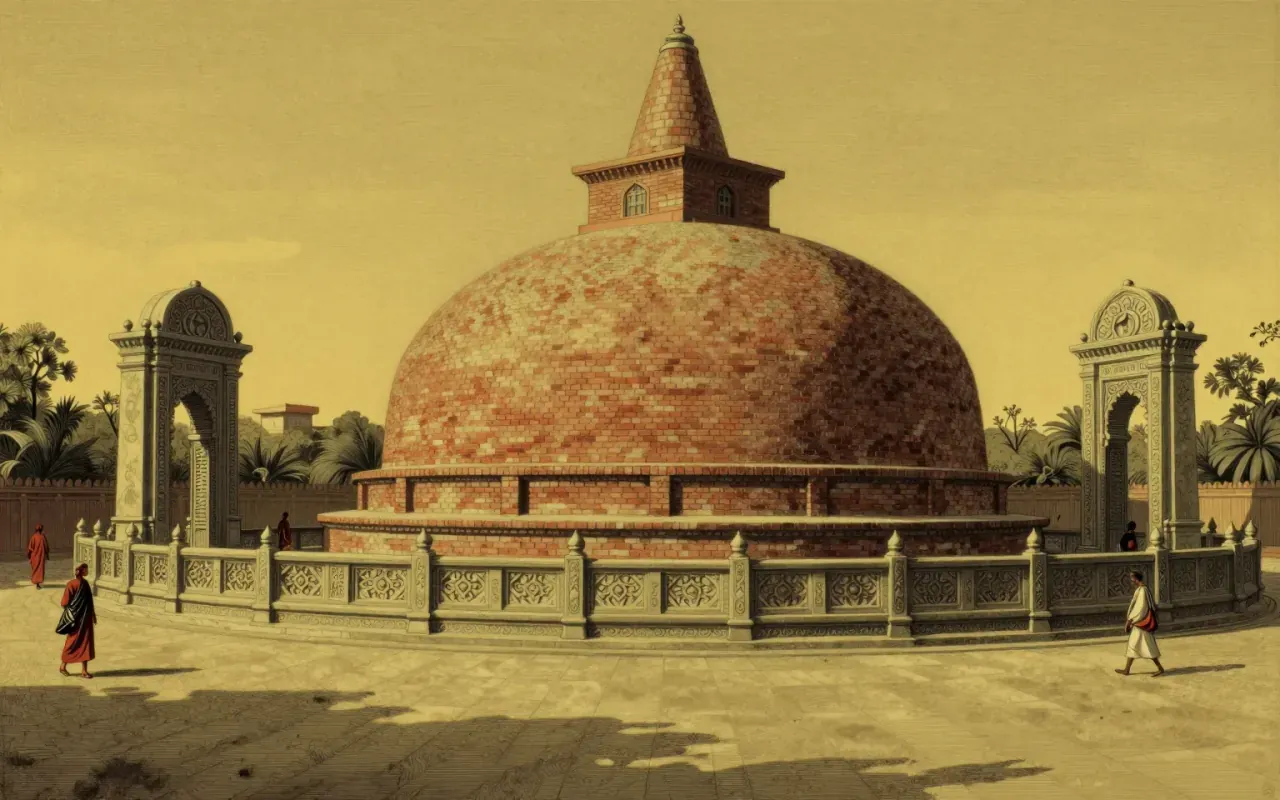
Thutmose III spent twenty-two years as junior partner to his stepmother Hatshepsut before assuming sole rule and launching a sustained run of military campaigns that brought Egypt to its greatest territorial extent, recorded in annals he had inscribed at Karnak. Long attributed to personal resentment, the later defacing of Hatshepsut's monuments has been redated by modern scholars to decades after his own death's approach, pointing instead to a succession strategy pursued under his son. His reign is unusually well checked against independent inscriptions and his own recovered mummy, letting historians separate genuine achievement from official propaganda.
13:00

Timbuktu

Founded early 12th century

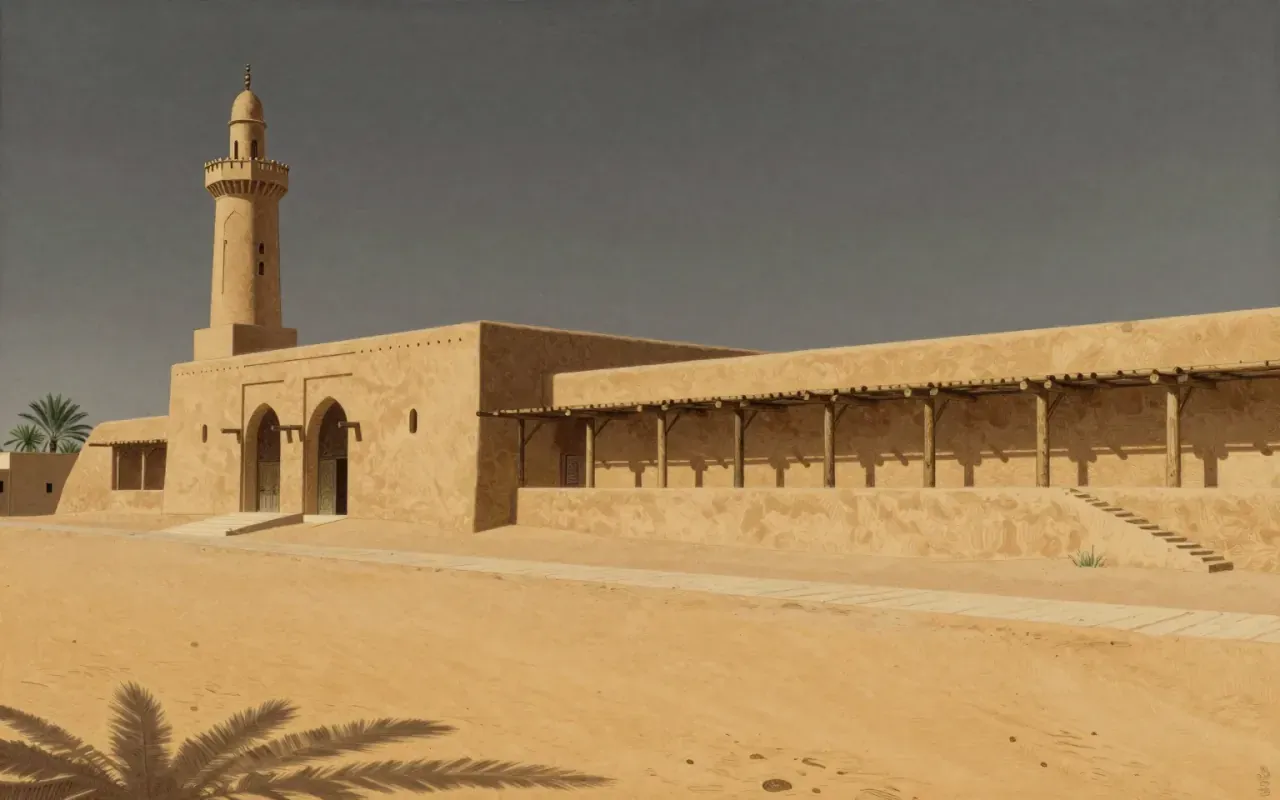
Timbuktu grew from an early twelfth-century settlement into a major trans-Saharan trade and Islamic scholarly centre, its rise accelerated after Mansa Musa's famous visit around 1325, reaching a population of roughly fifty thousand by the 1500s with three madrasas educating some twenty-five thousand students. A Moroccan invasion in 1591 killed or scattered many of its scholars and triggered a long decline, though hundreds of thousands of manuscripts documenting its intellectual life survived, some housed in libraries into the twenty-first century despite recent conflict-related threats.

13:00

Ur

3800–500 BC

Ur grew from a small Ubaid-period settlement on the Euphrates into a Sumerian city-state, and briefly, under its Third Dynasty, into the largest city in the world. Most of what is known comes from Leonard Woolley's 1920s and 1930s excavation of its Royal Cemetery, a find as rich as it was troubling, since scores of attendants were buried alongside the dead. Woolley's theory of how they died has not survived contact with later forensic evidence, and the city's traditional link to the biblical Abraham runs into a chronological problem of its own.

13:00

Vasco da Gama

1469–1524

Vasco da Gama led the first European sea voyage to reach India in 1497 to 1499, opening a direct trade route that bypassed existing Arab and Venetian intermediaries, then returned on a far more heavily armed second voyage in 1502 marked by deliberate, documented violence against Muslim traders and pilgrims. He died as Portuguese viceroy of India in 1524, and his legacy now sits uneasily between celebrated navigational achievement and conduct historians no longer treat as incidental.

13:00

Venice

Founded 421

Venice's founding legend puts a precise date, noon on 25 March 421, on a process that in fact unfolded over generations, as people from Roman towns on the mainland retreated into the lagoon ahead of successive invasions. What followed was thirteen centuries of maritime power built on trade with Byzantium and the eastern Mediterranean, a republic that ended when Napoleon took the city in 1797, and a modern afterlife defined by tourism, subsidence, and a flood barrier still not finished decades after it was meant to be.

13:00

Voltaire

1694–1778

Voltaire built a public career campaigning against religious intolerance and judicial injustice, most famously overturning the wrongful execution of the Protestant merchant Jean Calas, while producing an enormous body of writing including Candide and over twenty thousand surviving letters. His documented financial disputes and recorded views on Jewish people remain a genuine, unresolved blemish on his reputation as a champion of tolerance, and even a famous quotation attributed to him turns out to belong to a much later biographer instead.

13:00

William III of England

1650–1702

William of Orange rose from Dutch stadtholder to English king by invading in 1688, ruling jointly with his wife Mary before continuing alone after her death in 1694 until his own in 1702. His record includes genuine constitutional achievement alongside episodes, including the unresolved circumstances of a political lynching and his own connection to the Glencoe massacre, that historians treat as evidence of calculated political ruthlessness beneath his public image as a defender of liberty.

13:00

Yitzhak Rabin

1922–1995

Rabin rose through Israel's military to command its victory in the 1967 Six-Day War, then served two terms as prime minister bookending a period as a defence minister who authorised harsh measures against the First Intifada. His second term produced the Oslo Accords and a Nobel Peace Prize shared with Shimon Peres and Yasser Arafat, before he was shot dead at a Tel Aviv peace rally in November 1995 by an Israeli opposed to the agreement he had signed.

11:44

Keshub Chandra Sen

1783–1844

Keshub Chandra Sen was a doctrinal entrepreneur who built institutions and doctrines in rapid succession—school, association, sect, creed—each anchored in a documented act or statement. His work shows no mass following, no legislative effect, and no settled interpretation. What remains is a sequence of deliberate, dated interventions in Bengal’s religious and civic life.

9:32

Cesar Chavez

1965–1970

Cesar Chavez co-founded the National Farm Workers Association in Delano, California in 1962. He launched an insurance scheme, credit union, and El Malcriado newspaper. He led the Delano grape strike from 1965 to 1970. His NFWA merged with Larry Itliong’s Agricultural Workers Organizing Committee in 1967 to form the United Farm Workers. He used nonviolent resistance — picketing, boycotting, public processions, Masses, and fasts — inspired by Gandhi and infused with Catholic symbolism. In the early 1970s, he opened UFW branches outside California.

9:51

Clara Barton

April 19, 1861

Clara Barton’s documented life establishes a direct line from childhood caregiving to wartime triage to institutional foundation — all without formal credentials, and all before women held civic power. The record shows method, scale and timing — but nothing about dissent, implementation, or impact beyond founding.

9:50

Fidel Castro

Castro didn’t just rule Cuba—he built a one-party socialist state in the Western Hemisphere and turned it into a Cold War detonator.
10:41

The Challenger Disaster

1986

A 2013 TV movie dramatises Richard Feynman’s investigation into the 1986 Challenger explosion. It establishes cold-temperature-induced O-ring failure as the cause, shows Feynman discovering he has cancer mid-inquiry, and highlights institutional resistance—but offers no evidence of what changed afterward, no contested interpretations, and no insight into the astronauts’ experience beyond their likely death at takeoff.

11:24

Global financial crisis in 2009

8 January 2009

The 2009 phase of the global financial crisis produced the first partial nationalisation of a German financial institution — Commerzbank — following its merger with Dresdner Bank and subsequent reliance on the SoFFin fund. The record shows that official explanations for state intervention shifted under pressure, and that market reaction preceded and shaped the aid. No broader systemic conclusions — about causes, contagion, or policy coherence — can be drawn from this material alone.

13:00

Ahmad Baba al-Timbukti

1556–1627

Ahmad Baba became one of Timbuktu's most prominent Islamic jurists before Moroccan forces invading the Songhai empire deported him to Marrakesh in 1594, where he remained until 1608. He continued writing throughout his exile and after his return, authoring more than forty works, including a nuanced treatment of slavery that historians still interpret differently. His career and library form part of the much larger Timbuktu manuscript tradition, whose survival was tested again in 2012 when local families and archivists evacuated the bulk of the collection ahead of an armed conflict.

13:00

Askia Muhammad I

1443–1538

Askia Muhammad seized the Songhai throne in 1493 by framing a succession dispute as a defence of proper Islamic rule, then built the empire into West Africa's largest state through provincial administrative reform and a lavish pilgrimage to Mecca that reinforced his religious legitimacy. His reign is known chiefly through two Arabic chronicles compiled in Timbuktu generations later by scholars sharing his own religious culture, making his portrayal as an exemplary Muslim ruler somewhat self-reinforcing. Even his family origins and the source of his royal title remain genuinely disputed among historians.

13:00

Atahualpa

1502–1533

Atahualpa won a civil war against his half-brother Huascar in April 1532, only for Francisco Pizarro's expedition to reach Cajamarca days later and capture him in an ambush his own recent overconfidence had helped enable. He paid an enormous ransom in gold and silver, but Spanish forces executed him anyway in July 1533. Surviving chroniclers, some drawing on direct testimony from Inca nobility, disagree on basic facts including his birthplace and mother's identity, and historians differ on whether his ransom offer aimed at genuine freedom or simply survival.

13:00

Bartolomeu Dias

1450–1500

Bartolomeu Dias rounded the southern tip of Africa in 1488, proving for the first time that a sea passage to the Indian Ocean existed, a discovery that directly enabled Vasco da Gama's more celebrated voyage to India a decade later. Almost no contemporary record of his voyage survives, since Portugal's maritime archives were destroyed in the 1755 Lisbon earthquake, leaving historians to rely on an account written some sixty years after the fact.

13:00

Christopher Columbus

1451–1506

Christopher Columbus, a Genoese sailor working for the Spanish crown, crossed the Atlantic four times between 1492 and 1504, reaching the Bahamas, Cuba, Hispaniola and later the South and Central American coasts while insisting throughout that he had reached Asia. His governance of Spanish settlements involved documented brutality toward indigenous populations that led to his removal from office, and modern historians increasingly weigh his navigational achievement against the enslavement and demographic collapse that followed his voyages.

13:00

Francisco Pizarro

1478–1541

An illiterate colonist from a poor Spanish family, Francisco Pizarro spent nearly fifteen years building standing within Panama's colonial administration before leading a small, well-timed expedition that captured the Inca emperor Atahualpa in 1532. After collecting an enormous ransom he had Atahualpa executed anyway, founded Lima in 1535, and was assassinated by rival conquistadors in 1541. Historians question how genuine his reluctance to execute Atahualpa actually was, and his most celebrated anecdotes, including the famous line drawn in the sand, rest on chronicle tradition rather than independent verification.

13:00

Harun al-Rashid

766–809

Harun al-Rashid became the fifth Abbasid caliph in 786 and ruled from Raqqa for most of his reign, exchanging gifts with Charlemagne's court and presiding over the beginnings of the Islamic Golden Age. His sudden purge of the powerful Barmakid family around 803 remains unexplained even in contemporary sources, and his decision to split succession between two sons collapsed into civil war within a decade of his death. His court became fixed in popular memory through a legendary story collection with little basis in the documented record.

13:00

Hernán Cortés

1485–1547

After nearly fifteen years working through Spanish colonial administration in the Caribbean, Hernan Cortes defied his own superior to lead an unauthorised expedition to Mexico in 1519, exploiting divisions among Aztec tributary peoples to conquer Tenochtitlan by 1521. His own letters to the Spanish crown, written to justify the illegal campaign, remain the central source for his career, supplemented by a soldier's later memoir and his chaplain's admiring biography. Several of his most flattering claims, including Aztec reverence toward him as a god, have not held up to modern scrutiny, and unresolved accusations, including his first wife's suspicious death, shadow his personal reputation.

13:00

Hiawatha

The famous poem bearing his name has almost nothing to do with him; it borrowed his identity for an unrelated Ojibwe legend, burying the real political story underneath it.
13:00

Jayavarman VII

1122–1218

Jayavarman VII took the Khmer throne in 1181 after leading the recovery from a devastating Cham invasion, then built Angkor Thom, the Bayon and a network of hospitals and roads across a thirty-seven-year reign. Almost all surviving evidence for his rule comes from inscriptions and bas-reliefs he commissioned himself, since no independent chronicle or personal account survives. Historians caution against reading his monuments as literal proof of administrative reach, and his Buddhist religious programme did not outlast his own reign.

13:00

Lech Wałęsa

Born 29 September 1943

Lech Wałęsa led the August 1980 shipyard strike that produced Solidarity, the first independent trade union recognised in a Warsaw Pact state, surviving martial law and imprisonment before receiving the 1983 Nobel Peace Prize and becoming Poland's first freely elected president in 1990. Documents surfacing between 2008 and 2017, including files seized from a deceased interior minister's home, allege he collaborated with Polish security services as an informant in the early 1970s, a claim he denies and that remains genuinely disputed among historians examining the same evidence.

13:00

Moctezuma II

1466–1520

Moctezuma II expanded the Aztec Empire to its greatest territorial extent, fought some seventy-three military campaigns, and reorganised imperial administration into centrally governed provinces before Spanish forces reached Tenochtitlan in 1519. Spanish and indigenous sources diverge sharply in their portrayal of him, and his death in June 1520 remains disputed between accounts of his own subjects stoning him and testimony that Spanish soldiers killed him directly. His decades of successful rule have been largely overshadowed in popular memory by the empire's collapse the following year, leaving no single settled portrait of the man behind either extreme characterisation.

13:00

Pearl Harbor

7 December 1941

The Imperial Japanese Navy's surprise attack on the American naval base at Pearl Harbor on 7 December 1941 brought the United States into the Second World War, a strike American commanders were unprepared for because they had judged a Japanese attack on Wake Island or the Philippines far more likely and had, according to the record, no meaningful air-defence plan for Hawaii itself. Two senior commanders, Admiral Husband Kimmel and Lieutenant General Walter Short, were demoted shortly afterward, and the base has since been merged into what is now Joint Base Pearl Harbor-Hickam.

13:00

Sigmund Freud

1856–1939

From The Interpretation of Dreams in 1899 through decades of case studies and theoretical works, Sigmund Freud built psychoanalysis into an international movement centred on the unconscious, infantile sexuality and the talking cure. His methodology, including the abandoned seduction theory and the botched treatment of patient Emma Eckstein, has drawn sustained criticism, and his scientific status remains genuinely contested nearly a century after his death in 1939.

13:00

Simón Bolívar

1783–1830

Simon Bolivar led independence campaigns across what is now Venezuela, Colombia, Ecuador, Peru and Bolivia between the 1810s and 1825, entering Caracas in 1813 to the title El Libertador and later serving as president of the short-lived Gran Colombia, dictator of Peru and first president of Bolivia. He also issued and later annulled a Decree of War to the Death, ordering the execution of Spaniards who did not actively support his forces, and he died of tuberculosis in 1830 at forty-seven, disillusioned and stripped of the offices he had once held, a decline the surviving record acknowledges without fully accounting for.

13:00

Sun Yat-sen

1866–1925

Educated abroad and converted to a republican vision far removed from Qing officialdom, Sun Yat-sen spent most of two decades in exile organising failed uprisings and stitching together revolutionary factions before the 1911 Wuchang mutiny succeeded without his direct involvement. He returned to a brief provisional presidency, then years of political struggle to rebuild influence in southern China. His ideology outlived his limited direct power, and both the Nationalist and Communist governments that later divided China still honour him as their founding figure.

13:00

Apache Wars

1849–1924

Beginning after the 1848 US annexation of former Mexican territory, conflict between Apache bands and American forces ran through loosely connected phases for decades, hardened by episodes of betrayal such as the killing of Mangas Coloradas after he came in to negotiate. The final campaign against Geronimo's small band required over five thousand soldiers using coordinated heliograph communication before his 1886 surrender, though scattered incidents continued into the 1920s. The general narrative rests heavily on later military-history synthesis, and while it flags relatively few open disputes, real ambiguities remain around specific acts of betrayal and an Apache treaty Congress never actually ratified.

13:00

Edicts of Ashoka

3rd century BC

Across more than thirty rock faces and pillars from Afghanistan to Bangladesh, the Mauryan emperor Ashoka had proclamations on ethical governance carved in the third century BC. Lost to readers once Brahmi script fell out of use, the edicts were only deciphered in the 1830s, and their authorship was confirmed as Ashoka's only in 1915, when an inscription at Maski paired his personal name with the title used elsewhere. They remain the earliest datable written texts from the Indian subcontinent.

13:00

Battle of Tours

10 October 732

In October 732, Frankish infantry under Charles Martel held off an Umayyad raiding force near Tours, and the death of the Umayyad commander during the fighting prompted a withdrawal rather than renewed battle. Modern estimates put both armies far below the inflated figures later chroniclers reported, and the notorious casualty count of hundreds of thousands appears to have been recycled from an earlier battle at Toulouse. Historians remain sharply divided over whether the battle saved European Christendom or has been dramatically overstated as a mostly local, if consequential, Frankish victory.

13:00

Boxer Indemnity Scholarship

Roosevelt returned part of an indemnity extracted after a rebellion, and called it friendship while telling Congress it was also the surest way to keep China out of Japan's orbit.
13:00

Pike's Peak gold rush

1858

A Georgian prospector's 1858 discovery near present-day Denver drew an estimated hundred thousand people into the southern Rockies, fast enough to justify creating Colorado Territory in 1861, years before the region had otherwise earned that status. The same wave of settlement fed the tensions that produced the Sand Creek Massacre in 1864, an atrocity historians treat as a direct consequence of the demographic pressure the gold rush created, even though the Wikipedia record of the rush itself says comparatively little about that connection.

13:00

Death of Diana, Princess of Wales

31 August 1997

Diana, Princess of Wales, died in the early hours of 31 August 1997 after the car carrying her through Paris's Pont de l'Alma tunnel crashed at high speed, with driver Henri Paul found to have a blood alcohol level over three times the legal limit. Both a 1999 French judicial inquiry and Britain's own multi-year Operation Paget investigation rejected conspiracy theories advanced by Mohamed Al-Fayed, concluding the crash resulted from grossly negligent driving rather than any orchestrated plot.

13:00

Edict of Milan

February 313

In February 313, Constantine and Licinius agreed at Milan to grant Christians legal standing and restore confiscated property, a policy Licinius then circulated to eastern governors that June. Known today only through two later, differing accounts, it granted toleration rather than establishment, a status Christianity would not formally gain for another sixty-seven years.

13:00

Age of Enlightenment

1700–1820

The Enlightenment is conventionally dated somewhere between the late seventeenth century and 1789, though scholars propose starting points as early as Descartes' 1637 treatise and end points as late as Kant's death in 1804. Thinkers including Voltaire, Rousseau, Locke and Kant promoted reason, empirical method and individual liberty through salons, academies and printed works like the Encyclopédie, but historians remain divided over whether this amounted to one coherent movement or several distinct, sometimes conflicting, strands of thought.

13:00

Proclamation of the People's Republic of China

1 October 1949

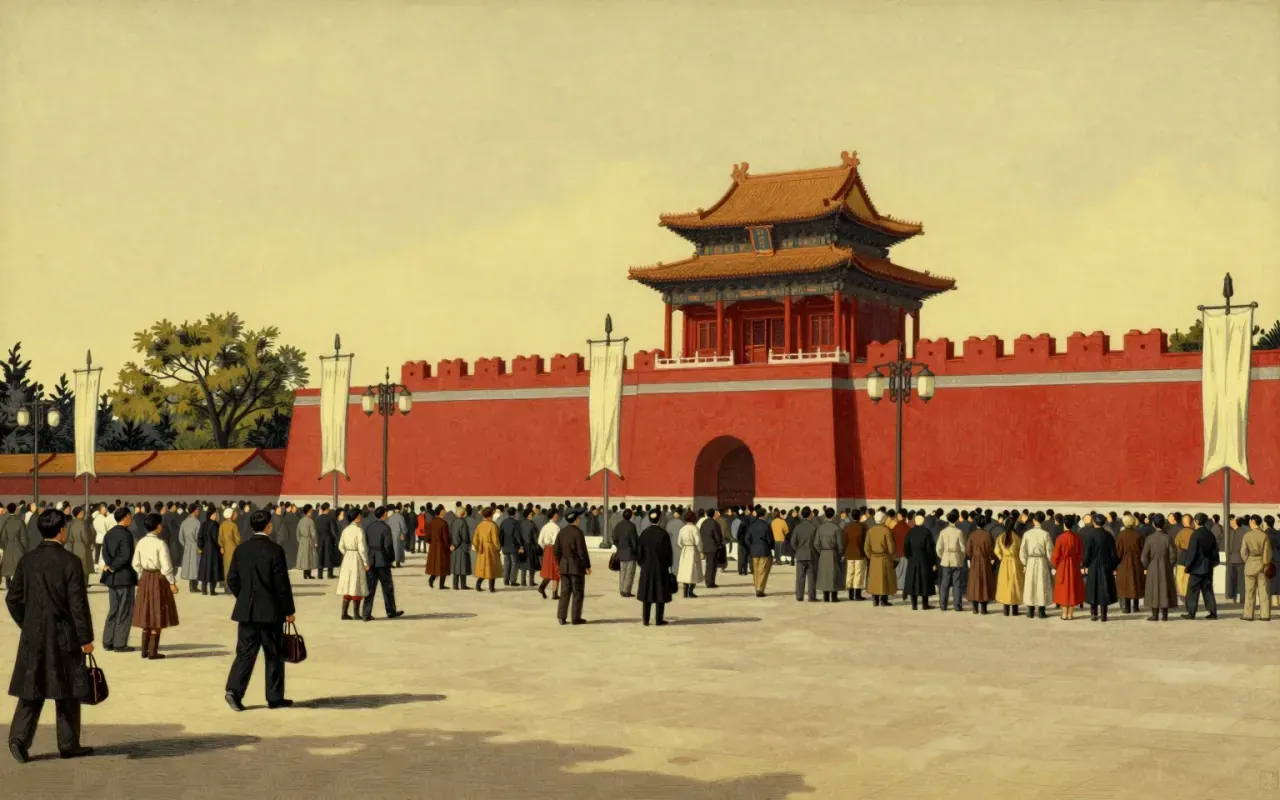
On 1 October 1949, Mao Zedong announced the founding of the People's Republic of China from Tiananmen Gate, closing more than two decades of intermittent civil war against the Nationalist government, which withdrew to Taiwan by year's end. The Communist victory owed as much to Nationalist economic collapse and wartime attrition as to any single battle. No peace treaty was ever signed, and the division of legitimacy the proclamation created between Beijing and Taipei persists unresolved.

13:00

European Union

Founded 1993

European integration began institutionally in 1948 and took concrete shape with the 1950 Schuman Declaration, which led six countries to form the European Coal and Steel Community in 1952 on the premise that shared control of war-making industries would prevent renewed conflict. Successive treaties and enlargements built the European Economic Community, then the European Union itself in 1993, expanding eventually to twenty-seven members, a scale of integration that has produced its own recurring tensions over sovereignty, migration and, in 2020, the departure of the United Kingdom.

13:00

Fall of Angkor

1431

Angkor was besieged and occupied twice by the Ayutthaya kingdom before a final seven-month siege in 1430 forced the Khmer court to abandon it in 1431 for the site of modern Phnom Penh. Historians attribute the fall to some combination of military pressure, drought revealed only by modern tree-ring analysis, ecological strain from the city's own irrigation system, and a religious shift away from the older cult of divine kingship. Many temples remained in use long after the court's departure, and Sanskrit gave way gradually to Middle Khmer rather than the culture vanishing all at once.

13:00

History of the United Nations

June 1945

A series of wartime declarations and conferences, from the 1941 Atlantic Charter through Dumbarton Oaks and Yalta, culminated in fifty nations signing the UN Charter at the San Francisco Conference in June 1945, formally establishing the organisation that October. Franklin Roosevelt's vision of great-power cooperation, embedded in the Security Council's veto structure, was designed around wartime Allied unity that had already begun fracturing into Cold War division before the ink on the Charter had properly dried.

13:00

Hellenistic period

323–30 BC

The Hellenistic period runs conventionally from Alexander's death in 323 BC to Cleopatra VII's death in 30 BC, spanning the successor kingdoms, Ptolemaic Egypt, the Seleucid realm and Macedon among them, that emerged from the wars fought among his former generals. It was a period of active scholarship and cultural mixing, producing figures such as Euclid and Archimedes and blending Greek culture with Egyptian, Persian and other local traditions, before Rome absorbed the last of the successor states.

13:00

Hindenburg disaster

6 May 1937

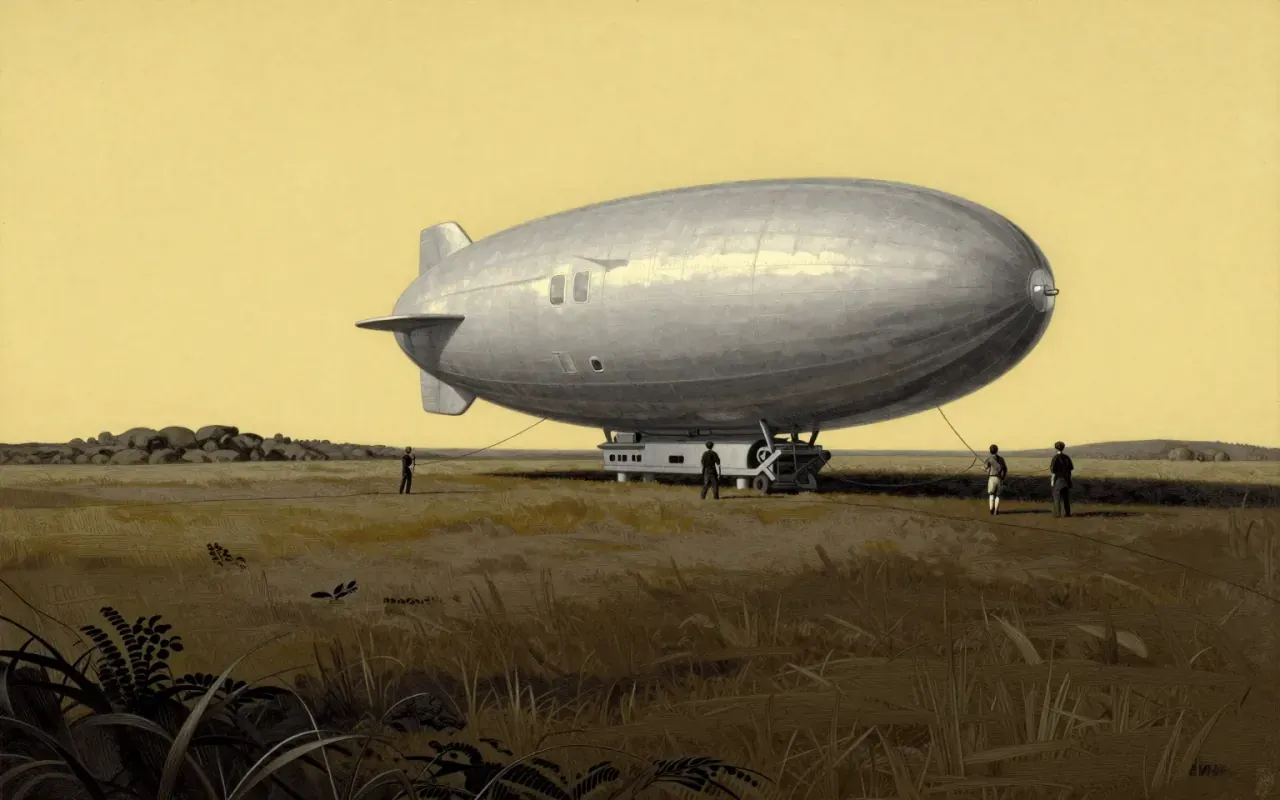
The German passenger airship Hindenburg caught fire while landing at Lakehurst, New Jersey, on 6 May 1937, killing 36 people in under a minute despite the Zeppelin Company's previously spotless safety record across 1.6 million kilometres of flight. German and American investigations reached different emphases on the ignition cause, static electricity remains the most widely accepted explanation, and the extensive newsreel and radio coverage of the disaster effectively ended commercial passenger airship travel within months.

13:00

House of Wisdom

800–1258

Tradition places the founding of Baghdad's House of Wisdom under the eighth-century Abbasid caliphs, reaching its peak as a centre of translation and original scholarship under al-Ma'mun before its supposed destruction in the 1258 Mongol siege. Modern historians, led by Dimitri Gutas, have challenged whether it existed as the formal academy popularly described, noting that the name barely appears in Abbasid-era sources and that the grand image may have been built up by nineteenth-century Orientalist scholarship. Real translation and original research undoubtedly took place in Baghdad; its precise institutional shape remains genuinely disputed.

13:00

July Revolution

26 July – 29 July 1830

Charles X's decrees dissolving parliament and gutting the press in July 1830 set off three days of Parisian street fighting that toppled him within a week, but the provisional government installed Louis Philippe of the House of Orleans as a constitutional citizen king rather than pursuing a republic. Historians still debate whether the fighting itself was a middle-class revolt that borrowed working-class muscle or a genuinely popular uprising whose result the bourgeoisie then claimed for itself.

13:00

Kyoto Protocol

2005

Adopted in 1997 and taking effect in 2005 once Russia's ratification met the treaty's entry threshold, the Kyoto Protocol bound thirty-seven industrialised countries to specific greenhouse gas reduction targets against a 1990 baseline. All thirty-six parties assessed for the first commitment period complied with their targets, yet global emissions rose by roughly a third between 1990 and 2010, a gap that shaped the Paris Agreement's later shift toward voluntary national pledges rather than binding international targets.

13:00

Mozambican War of Independence

1964–1974

FRELIMO launched an armed insurgency against Portuguese colonial rule in Mozambique in September 1964, sustaining a decade-long guerrilla campaign that Portugal's military never decisively defeated despite escalating troop deployments. The war ended not through military resolution but through Portugal's 1974 Carnation Revolution, itself partly fuelled by soldiers' discontent over the colonial wars, leading to a negotiated ceasefire and Mozambican independence in June 1975 under FRELIMO's Marxist-Leninist government.

13:00

Nubian pyramids

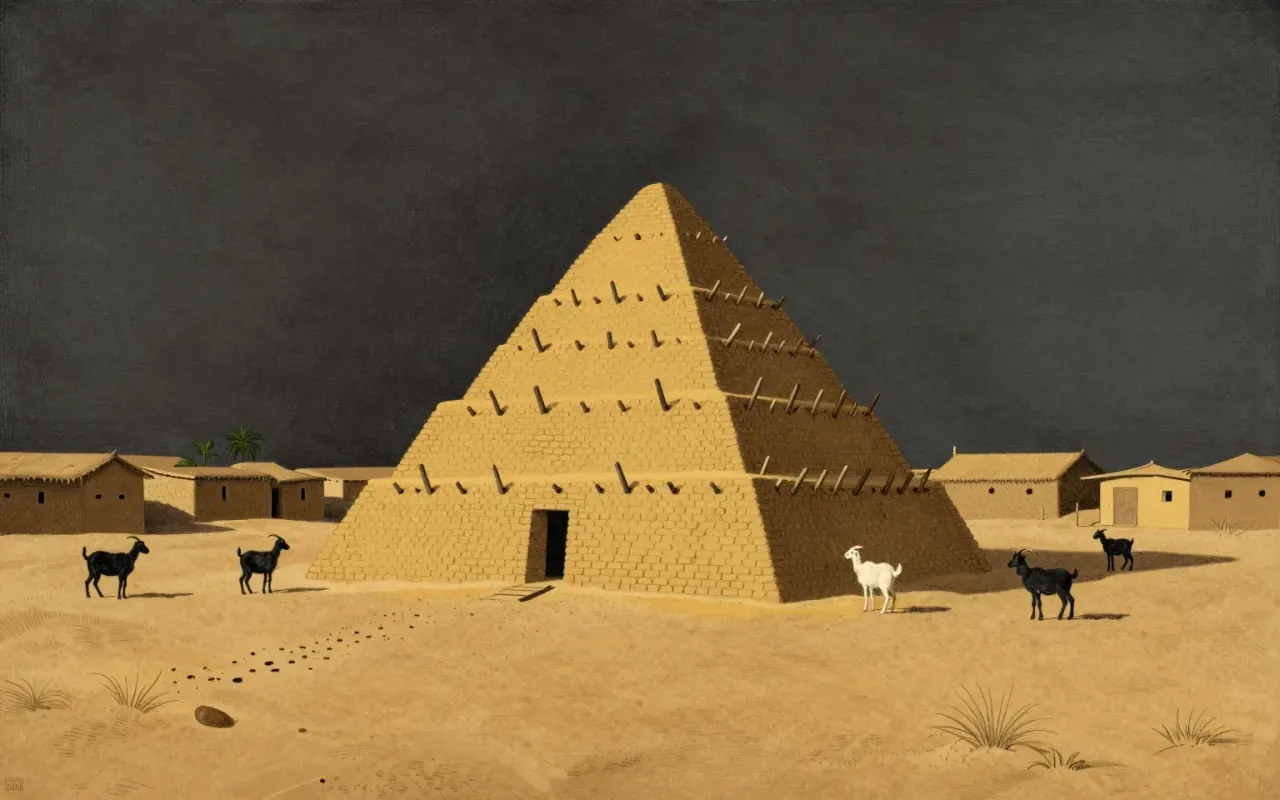
More than double the number Egypt built, these pyramids survived a nineteenth-century treasure hunter who demolished forty of them from the top down searching for gold.
13:00

Opium Wars

1839–1860

Britain fought two wars against Qing China, from 1839 to 1842 and again from 1856 to 1860, after Chinese officials moved to suppress the opium trade British merchants had built up to offset a longstanding deficit in trade for Chinese tea, silk and porcelain. Chinese defeat in both conflicts led to the ceding of Hong Kong, the opening of treaty ports, and a set of unequal treaties that Chinese historiography treats as the beginning of what is called the century of humiliation.

13:00

Oslo Accords

13 September 1993

Secret talks in Norway produced the September 1993 Declaration of Principles between Israel and the PLO, establishing mutual recognition and a Palestinian Authority meant to govern a five-year transition toward permanent status negotiations. Those final talks never concluded, settlement building continued throughout, and both the assassination of Yitzhak Rabin in 1995 and the collapse of the 2000 Camp David summit left the accords' unresolved questions of Jerusalem, borders and refugees exactly where they started.

13:00

Roman Curia

Founded late 11th century

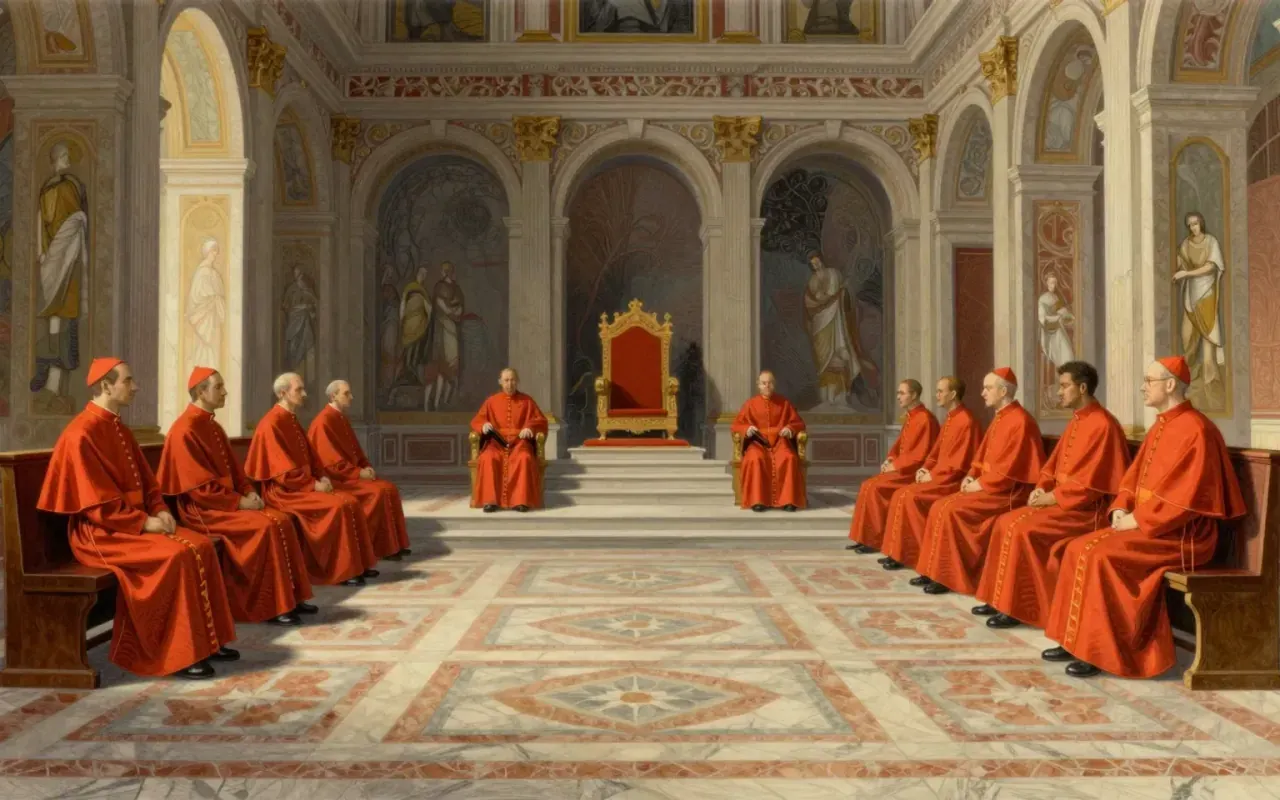
The Roman Curia, the administrative body that runs the Catholic Church's central affairs, is generally traced to Pope Urban II at the end of the eleventh century, though the word curia itself simply meant royal court in medieval Latin. It has been reorganised repeatedly since: by Pius X in the early twentieth century, by Paul VI in the 1960s, by John Paul II in 1988, and most recently by Pope Francis, whose 2022 constitution Praedicate evangelium opened senior leadership roles to laypeople and, within three years, produced the Curia's first female prefect.

13:00

Peace of Utrecht

1713

Twenty separate treaties, negotiated at Utrecht between 1712 and 1715, ended the War of the Spanish Succession by confirming Philip V as Spain's king while barring any future union of the French and Spanish crowns. Britain emerged with Gibraltar, Minorca, Canadian territory and a lucrative slave-trading monopoly, cementing its naval and commercial rise even as historian Brendan Simms has argued the settlement addressed France's past threat rather than the Spanish Mediterranean ambitions that would trouble Europe next.

13:00

Roman expansion in Italy

753 BC – 3rd century BC

Between the traditional founding date of 753 BC and the completion of Roman rule over the Italian peninsula by the third century BC, Rome expanded from a small Latin settlement into the dominant power in Italy through a sequence of wars against the Latins, Samnites and Greek colonies in the south. The literary record for the earliest centuries, chiefly Livy, is now generally regarded by historians as unreliable in its detail and partly legendary, growing steadily more trustworthy from the fourth century BC onward.

13:00

Umayyad Caliphate

661–750

After Ali's assassination ended years of civil war in 661, the Syrian governor Muawiya secured the caliphate through political patience and a well-organised private army rather than religious authority, then broke precedent by nominating his own son as hereditary successor. Later Umayyad caliphs expanded the empire to its greatest extent before the dynasty was overthrown by the Abbasids in 750. Much of the surviving historical record was compiled under that successor dynasty, giving Muslim historiography clear incentive to emphasise Umayyad injustice over administrative achievement, a bias historians now correct using coins, inscriptions and rarer outside sources.

13:00

Roaring Twenties

1920–1929

The 1920s brought rapid economic growth, mass consumer goods, jazz and a new pace of urban life to the United States and, more unevenly, to parts of Europe. The prosperity behind the name was real but badly distributed: rural industries stagnated, and Prohibition, in force for most of the decade, produced a black market and thousands of poisoning deaths alongside whatever gains it made against drinking. The Wall Street crash of 1929 ended the boom abruptly, and the arguments the decade started, about excess, exclusion and the wisdom of Prohibition, ran on well past the crash.

13:00

Sengoku period

1467–1590

Japan's Sengoku, or Warring States, period saw the Ashikaga shogunate's authority collapse into more than a century of conflict among competing regional lords, a process historians variously date from incidents in 1454, 1467 or 1493, and which ended through the successive unification efforts of Oda Nobunaga, Toyotomi Hideyoshi and Tokugawa Ieyasu, culminating in the establishment of the Tokugawa shogunate by 1615. The introduction of firearms in 1543 and the resulting rise of large infantry armies reshaped Japanese warfare and enabled unusual social mobility during the conflict.

13:00

First Sino-Japanese War

1894–1895

War broke out between Qing China and Meiji Japan in August 1894 over rival influence in Korea. Japan's modernised military won a rapid succession of victories on land and sea, and the 1895 Treaty of Shimonoseki forced China to recognise Korean independence, cede Taiwan, and pay a large indemnity. The defeat exposed the limits of China's partial reforms and fed directly into the revolutionary politics that would end the Qing dynasty, while Japan emerged as the region's dominant power.

13:00

Space Race

1957–1975

From the mid-1950s to the mid-1970s, the United States and the Soviet Union competed to demonstrate technological supremacy through spaceflight, a rivalry that produced Sputnik, Yuri Gagarin's orbital flight, and the Apollo moon landings. The Soviets pursued a strategy of dramatic firsts announced only after success, while the Americans broadcast their efforts publicly, including their failures, and the competition faded rather than concluded, ending in a joint mission rather than a declared victory.

13:00

Treaty of Amiens

27 March 1802

Signed after a five-hour overnight session in March 1802, the Treaty of Amiens briefly ended a decade of war between Britain and France, with Britain returning most captured territory in exchange for French withdrawal from Egypt, Naples and the Papal States. Napoleon's continued expansion into Switzerland and Italy, and Britain's refusal to evacuate Malta as agreed, brought the two countries back to war within thirteen months, opening the Napoleonic Wars that would run for another twelve years.

13:00

Treaty of Nanking

29 August 1842

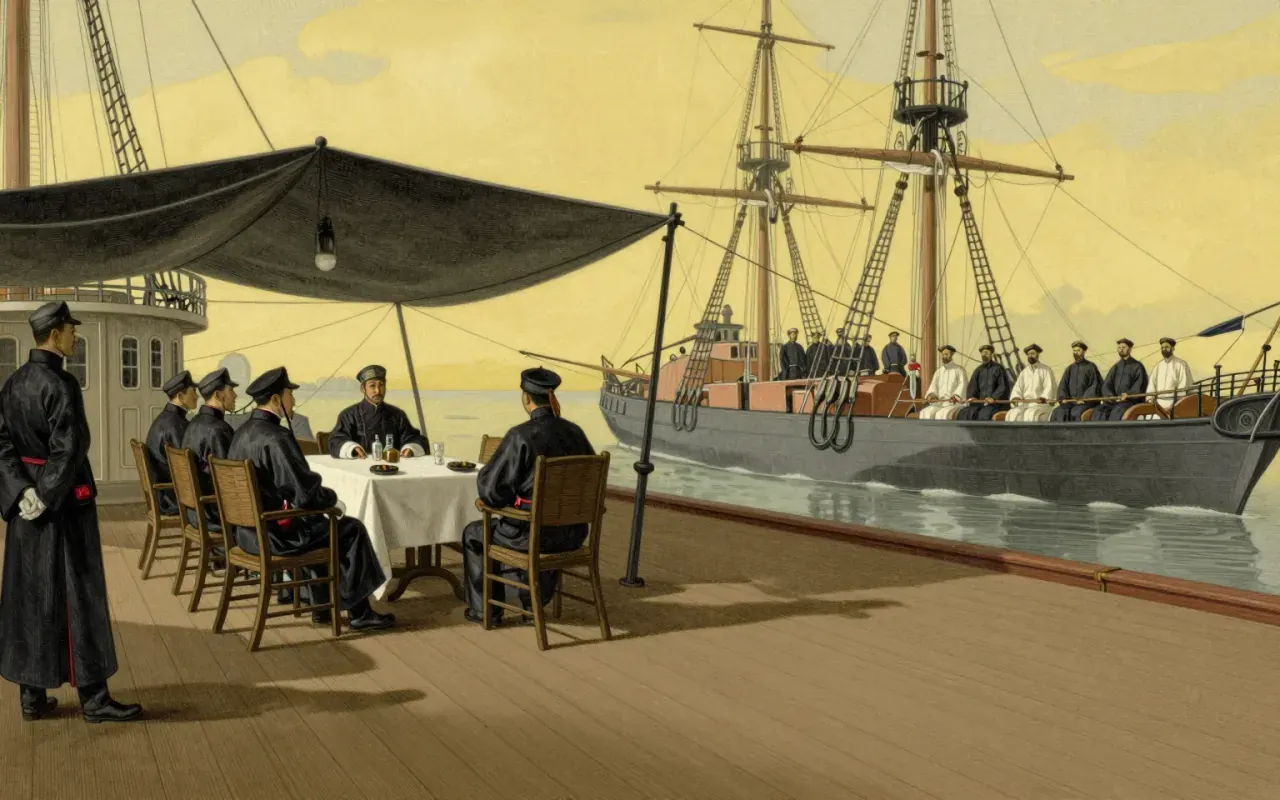
Signed aboard a British warship off Nanjing in August 1842, the treaty that ended the First Opium War opened five Chinese ports to British trade, ceded Hong Kong Island, and imposed an indemnity covering confiscated opium, ransom and war costs. Its one-sided terms followed directly from Britain's military advantage rather than negotiation. Only later did Chinese nationalists label it an unequal treaty and the opening of a century of humiliation, a framing quite different from the Qing court's muted contemporary response.

13:00

Treaty of Paris (1763)

10 February 1763

Signed on 10 February 1763 in Paris, the treaty ended the Seven Years' War among Britain, France, Spain and Portugal after a conflict that historians estimate killed well over half a million soldiers across Europe. France ceded Canada and its territory east of the Mississippi to Britain and transferred Louisiana west of the river to Spain, while Spain gave Florida to Britain in exchange for the return of Havana and Manila, redrawing the map of North America and beginning what the treaty's own terms describe as an era of British dominance beyond Europe.

13:00

Treaty of Paris (1783)

3 September 1783

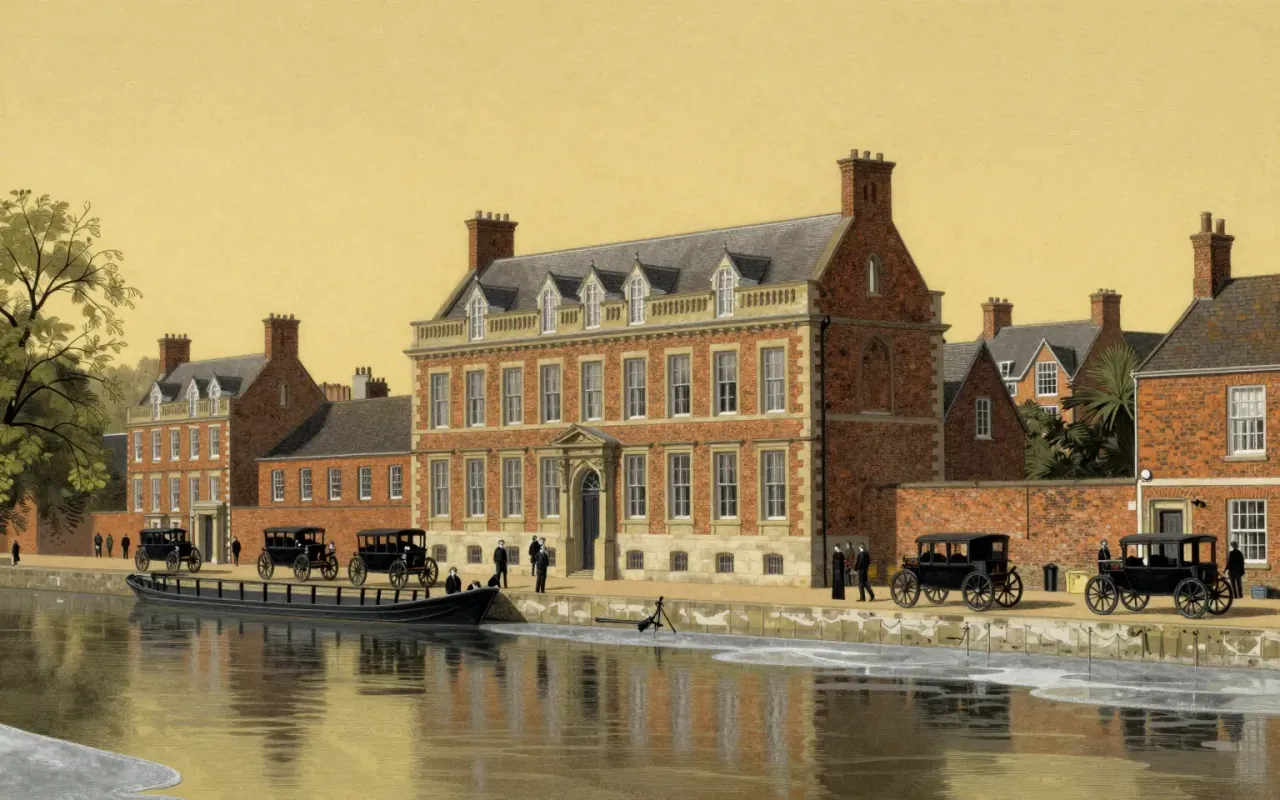
Signed on 3 September 1783 at the Hotel d'York in Paris, the treaty ended the American Revolutionary War, with Britain recognising the thirteen colonies as free and independent states after American negotiators Benjamin Franklin, John Jay, John Adams and Henry Laurens reached terms with British representative David Hartley. It set boundaries running to the Mississippi River, granted American fishing rights off Newfoundland, and included unenforceable promises on debts and loyalist property that left disputes simmering for years, some not resolved until the Jay Treaty of 1794.

13:00

Muslim conquest of the Iberian Peninsula

711–726

Beginning in 711, a small Muslim force crossed into Iberia, defeated and killed the Visigothic king Roderic, and within a few years had overrun most of the peninsula, aided by how fragile and contested Visigothic rule already was. No contemporary account survives from either side, and much of the conquest's famous detail, including the story of Count Julian's betrayal, is now regarded by historians as later legend rather than established fact. Muslim rule persisted in some form for nearly eight centuries, ending only with Granada's fall in 1492.

13:00

Qin's wars of unification

230–221 BC

Between 230 and 221 BC, the state of Qin under the future First Emperor conquered the six remaining Warring States of ancient China in succession, Han, Zhao, Wei, Yan, Chu and Qi, using a strategy of allying with distant states while attacking nearby ones, guided by advisors including Li Si and the general Wang Jian. The campaign culminated in China's first unified empire under a single ruler, but the ancient sources reporting individual battle casualties in the hundreds of thousands, including the flooding of Wei's capital and fighting near Zhao, carry no independent corroboration, leaving historians to treat the conquest's scale as more reliably established than its specific, often dramatic death tolls.

13:00

Battle of Bạch Đằng (938)

938

In 938, the Vietnamese general Ngo Quyen ended roughly a millennium of Chinese administrative control by luring a Southern Han invasion fleet onto iron-tipped stakes concealed in the Bach Dang River, then attacking as the tide dropped and stranded the ships. What survives of the battle comes largely from near-contemporary Chinese chronicles and much later Vietnamese legendary collections written for nation-building purposes. Ngo Quyen proclaimed himself king the following spring, though his own dynasty collapsed into succession disputes within decades.

13:00

Treaty of Rome

25 March 1957

Signed on 25 March 1957 on Capitoline Hill in Rome and effective from 1 January 1958, the Treaty of Rome established the European Economic Community among Belgium, France, Italy, Luxembourg, the Netherlands and West Germany, alongside a companion treaty founding the European Atomic Energy Community. Built on the 1955 Spaak Report and negotiations at Val Duchesse, it created a customs union intended to foster economic integration, and its institutions were later merged with those of the earlier Coal and Steel Community before evolving, through the Maastricht and Lisbon treaties, into the European Union.