What happened
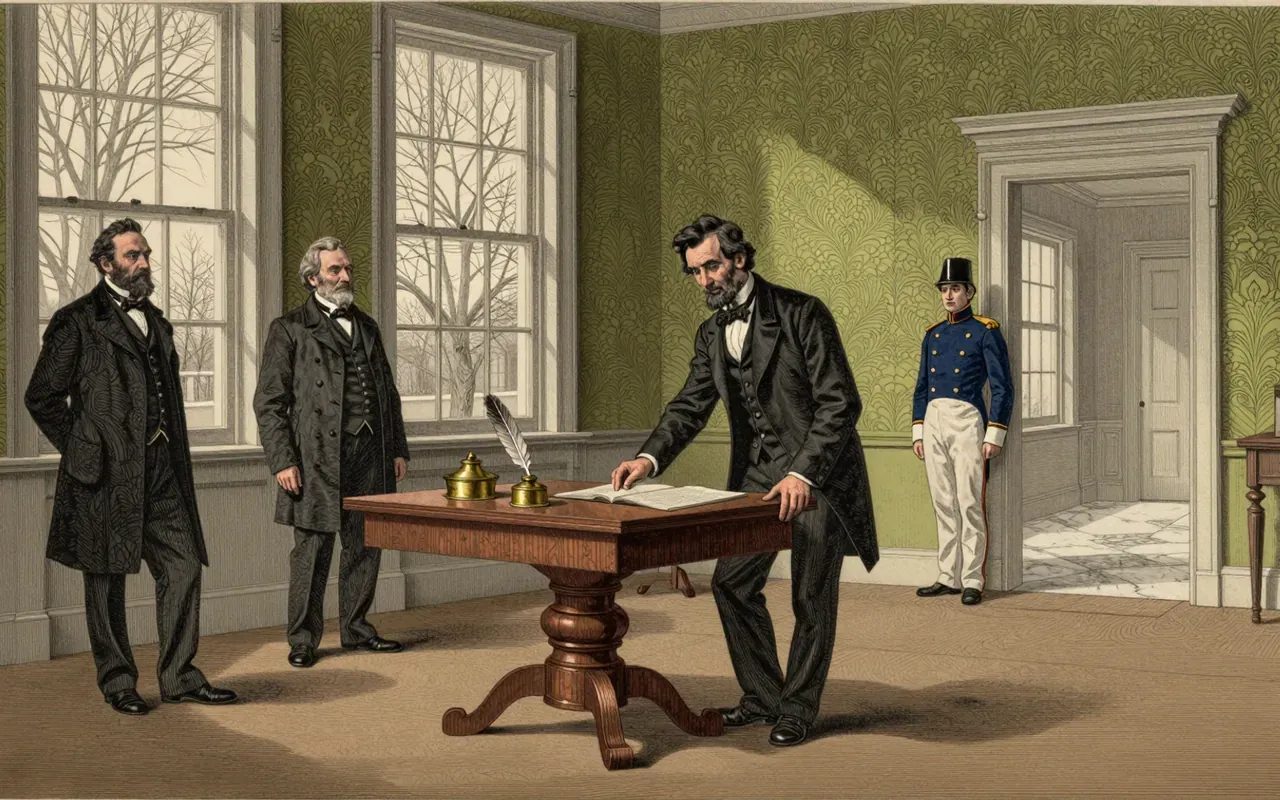
Abraham Lincoln issued the Emancipation Proclamation on 1 January 1863. It declared enslaved people free in designated areas in rebellion against the United States, linking emancipation to the Union war effort.
The order had a preliminary form, issued on 22 September 1862, which said that enslaved people in states or parts of states still in rebellion on 1 January 1863 would be declared free. The National Archives says that one hundred days later, with the rebellion unabated, Lincoln issued the final text declaring that persons held as slaves in the rebellious areas “are, and henceforward shall be free.”
How we know it
The signed proclamation and transcript identify its geographical limits. Those exclusions are essential evidence: the text did not immediately abolish slavery throughout the country.
The transcript names the designated areas: Arkansas, Texas, Louisiana, Mississippi, Alabama, Florida, Georgia, South Carolina, North Carolina and Virginia. It then excepts thirteen named Louisiana parishes including New Orleans, the forty-eight counties designated as West Virginia, and seven Virginia counties including the cities of Norfolk and Portsmouth, which it says are left for the present exactly as if the proclamation had not been issued. The Archives adds that the order applied only to states that had seceded, leaving slavery untouched in the loyal border states.
Why it went that way
Lincoln framed the order through his wartime authority. The preliminary proclamation had warned that areas remaining in rebellion would be covered, joining military policy to an expanding commitment to emancipation.
The Archives describes the order as a military measure, issued a few days after the Union victory at Antietam. It says Lincoln hoped to inspire Black people, and enslaved people in the Confederacy in particular, to support the Union cause, and to keep England and France from recognizing and aiding the Confederacy. The text rests on Lincoln’s power as Commander-in-Chief and calls the order a fit and necessary war measure for suppressing the rebellion.
What is still contested
The familiar claim that one signature freed everyone mistakes a legal declaration for universal enforcement. Freedom depended on developments on the ground as well as the order’s stated scope.
The Archives names the most important limit: the freedom the proclamation promised depended on Union military victory. The Archives also stresses that enslaved people had acted to secure their own liberty from the first days of the war, and says the proclamation confirmed their insistence that the war for the Union must become a war for freedom.
What it changed
The proclamation committed federal military authority to recognize freedom in the designated areas and authorized Black enlistment. It made the Union’s prosecution of the war inseparable from emancipation.
In the Archives’ account, every advance of federal troops after 1 January 1863 expanded the domain of freedom. The text says that persons of suitable condition would be received into the armed service to garrison forts, positions and stations and to man vessels, and the Archives reports that almost 200,000 Black soldiers and sailors had fought for the Union by the end of the war.
Is it worth your time
Worth studying with a map and the exceptions visible. That approach makes its significance clearer: a limited wartime instrument could transform the conflict without being the final constitutional abolition of slavery.