What happened
In August 1980, striking workers in Gdańsk issued twenty-one demands. The confrontation helped create Solidarity, an independent trade union and a mass social movement in communist Poland.
UNESCO’s Memory of the World entry describes the demands as those made by the Strike Committee in Gdańsk in August 1980, and Solidarity as the first free trade union within the communist bloc.
How we know it
UNESCO identifies the demands as documentary heritage. The surviving text allows the movement’s program to be read directly, rather than reconstructed only from later accounts of communism’s collapse.
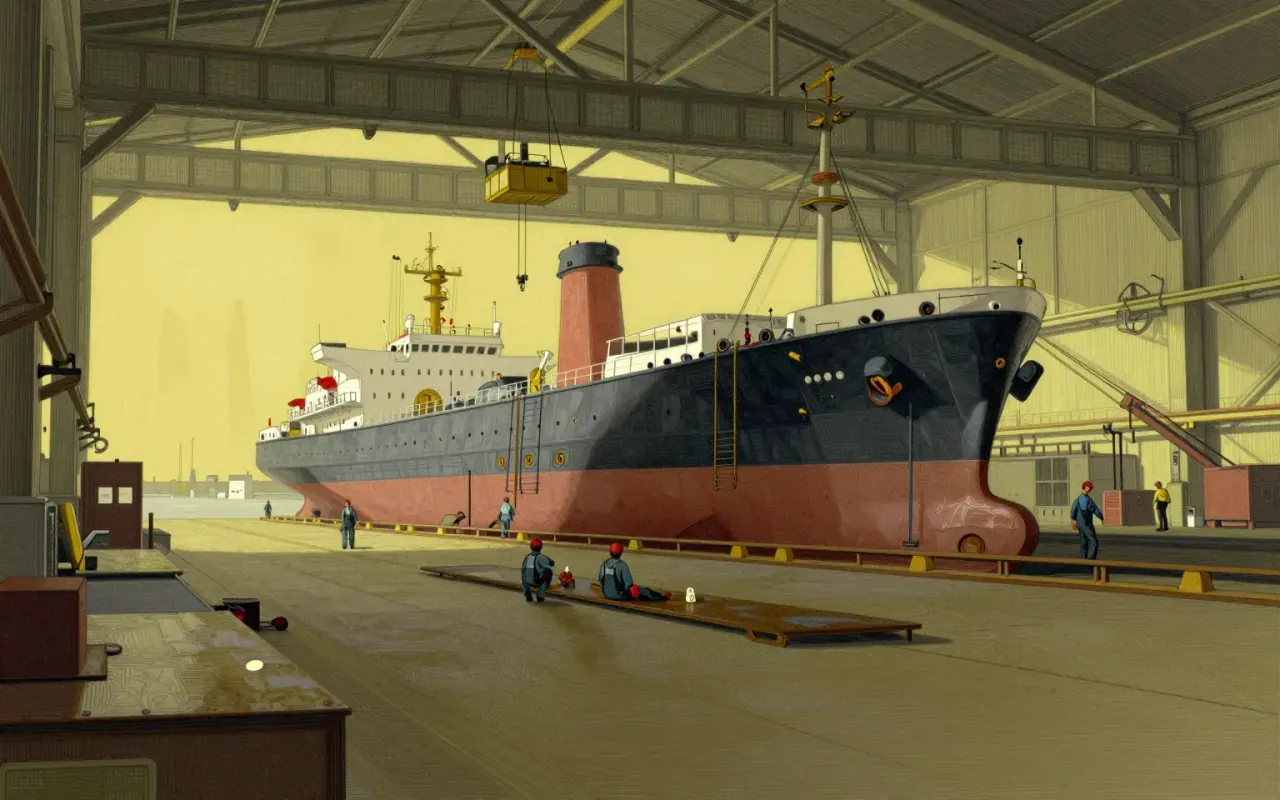
Poland submitted the document in 2002 and it was registered in 2003. A photograph in the entry shows a board on the wall of the Gdańsk Shipyard bearing the Solidarity symbol and the slogan “21 x yes,” referring to the demands.
Why it went that way
Economic grievances were joined to demands for independent unions, an end to censorship and the release of political prisoners. A pay increase alone could not satisfy a program that sought the ability to organize and speak.
UNESCO says that in the course of the strike it was decided to make demands of a political nature, which it calls quite a new phenomenon. Some of the demands were very pragmatic, of an economic and social nature. The entry sets this against the background of communism’s constant shortages of consumer goods and bad management, which it says caused workers’ protests across the bloc; those protests, it says, were suppressed by force and promises of pay rises. In Gdańsk the government keenly agreed to significant pay increases, but this time the strike did not stop.
What is still contested
Later outcomes should not make the strike seem like a completed plan for 1989. The demands record what workers sought in 1980; they do not prove that everyone shared one vision of Poland’s future.
UNESCO’s entry itself reads backward from 1989. It calls the 1980 success a turning point and “the first stone to be removed from the Berlin Wall,” a claim about influence that comes from the entry’s own framing. The events it links to the strike are later and separate: the round-table talks of 1989, concessions by the communist party, and the first democratic elections in the communist bloc, which it says prompted other Soviet-bloc countries to seek freedom.
What it changed
The government’s acceptance created room for independent organization. The demands challenged the assumption that a ruling party could represent workers while denying them autonomous institutions.
According to UNESCO, the practical result of accepting the demands was the foundation of the independent union Solidarity, which had more than 10 million members. It was active for more than a year, until December 1981, when it was outlawed as a direct result of martial law in Poland, introduced, the entry says, under pressure from the Soviet Union. Solidarity survived as an underground organization and formed a team of negotiators who held the 1989 round-table talks with the government.
Is it worth your time
Worth studying as a negotiation over both material conditions and political power. Read the social provisions together with the organizational demands: separating them obscures the strike’s distinctive challenge.