What happened
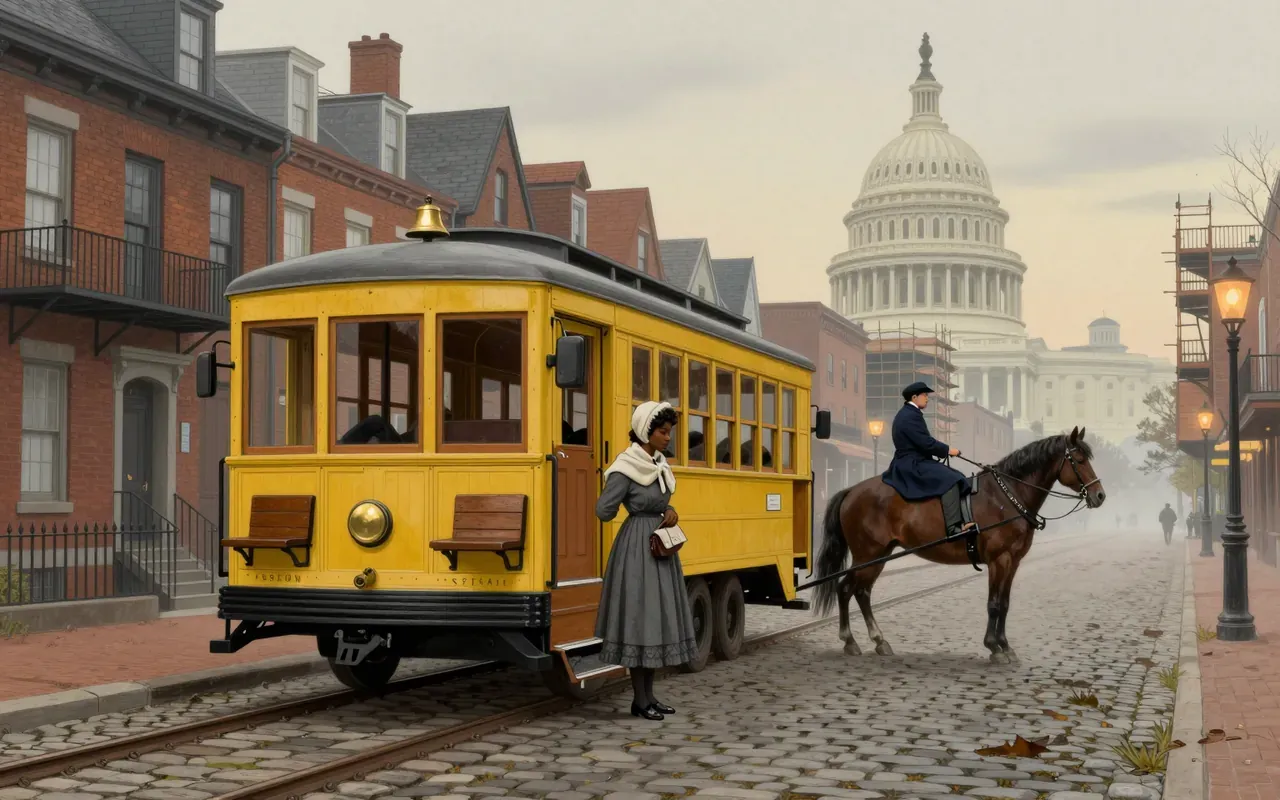
Sojourner Truth escaped slavery in 1826 with her infant daughter; won a landmark 1828 court case to recover her abused son from illegal sale; joined the Northampton Association in 1844; delivered an extemporaneous speech at the 1851 Ohio Women’s Convention in Akron; toured with George Thompson in 1851; recruited Black soldiers during the Civil War; desegregated Washington, D.C. streetcars in 1865; and campaigned for land grants to formerly enslaved people after the war.
How we know it
The record consists of verified documentary claims: court records (1828), contemporaneous accounts of her 1851 speech and lecture tours, Civil War-era recruitment efforts, and her 1865 streetcar actions in Washington, D.C. All claims are drawn from a single source document that explicitly attributes each fact to Sojourner Truth’s documented life.
Why it went that way
Truth acted within existing but underused legal and rhetorical channels: New York’s post-manumission courts, interdenominational reform networks like the Northampton Association, and antebellum lecture circuits. Her methods were not novel in form — litigation, public speaking, moral suasion — but unprecedented in execution by a Black woman operating autonomously across racial and gender lines.
What is still contested
The text does not state who recorded or transcribed Truth’s 1851 speech, nor whether competing versions exist. It does not specify the outcome of her land grant advocacy beyond ‘unsuccessful’, nor whether her streetcar actions led to formal policy change. No source is cited for the claim that she was ‘the first Black woman’ to win such a case — only that the document asserts it.
What it changed
Truth’s 1828 case established that a Black woman could prevail in New York courts against white enslavers on custody grounds. Her 1851 speech entered activist discourse as a foundational critique of gendered exclusion within abolitionism. Her 1865 streetcar actions contributed to visible, embodied pressure on segregated transit — though the document does not say whether segregation ended as a result.
Is it worth your time
Yes. Truth’s 1828 legal victory set a precedent for Black women’s use of courts to reclaim kin; her 1851 speech became a touchstone for feminist and abolitionist rhetoric; her postwar land advocacy directly confronted federal abandonment of Reconstruction promises. These are discrete, consequential acts — not symbolic milestones.