9:32in productionCh. 1 · Suez: A sea-level success/ 9:32 · ceiling 15 min
19th century · Economy & trade
Ferdinand de Lesseps
Lesseps didn’t fail because he was reckless — he failed because his success at Suez made him blind to what couldn’t be copied.
Ferdinand de Lesseps built the Suez Canal — a sea-level maritime link between the Mediterranean and Red Seas — opening it in 1869 after beginning construction at Port Said in 1859. He raised over half its capital via French public subscriptions. In the 1880s, he repeated the model for Panama: a sea-level canal approved by a 1879 Paris congress. But tropical disease, technical challenges and financial collapse led to bankruptcy in December 1888. The record establishes these events, methods and outcomes — but says nothing about motives, dissent, or wider consequences.
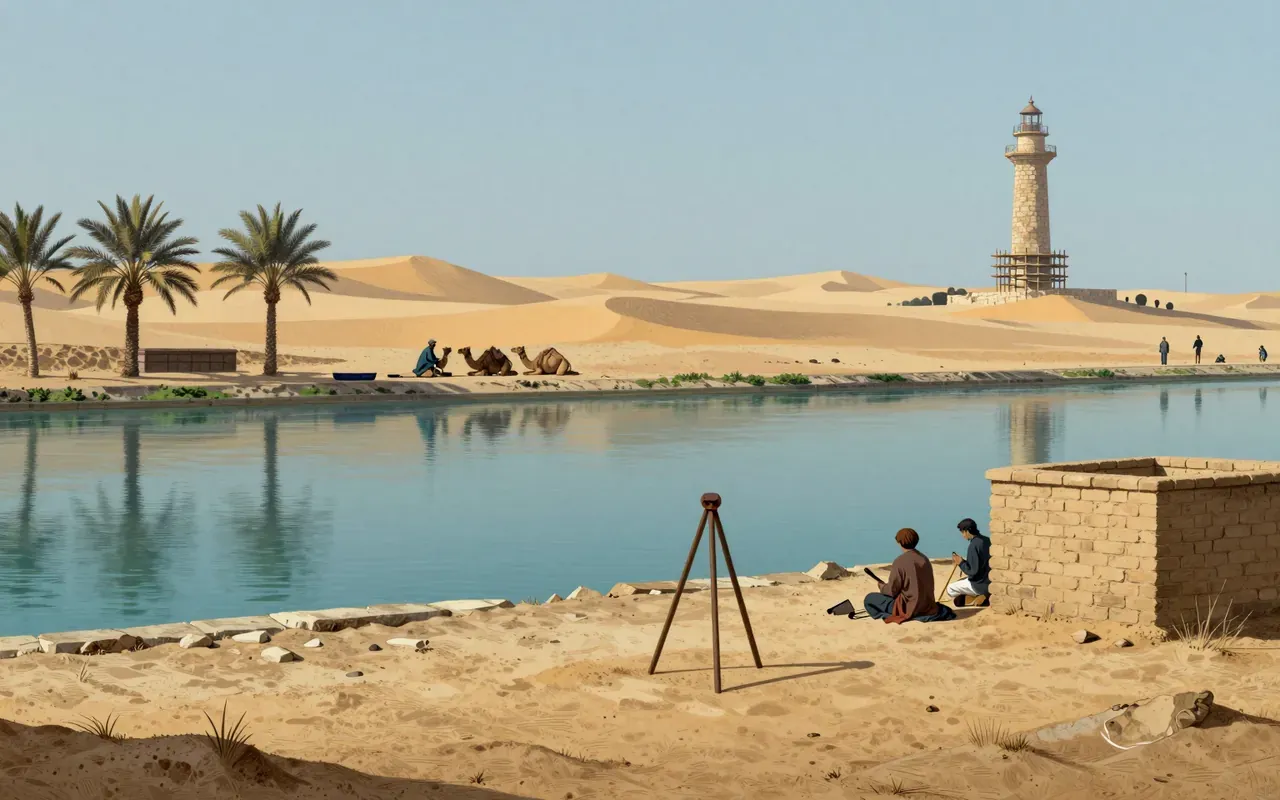
Lesseps built the Suez Canal as a sea-level maritime link, ceremonially launched at Port Said in 1859 and opened in 1869.
2:34
The French money machine
He raised over half the Suez capital through French public subscriptions — but attracted no substantial British or foreign investment.
4:19
Panama: Same plan, wrong place
A 1879 Paris congress voted for a lockless Panama Canal — but tropical disease and technical challenges doomed it.
6:00
Collapse in liquidation
The Panama Canal Company declared bankruptcy in December 1888 — ending Lesseps’ canal-building career.
Worth your time?
Yes. Study the whole thing.
4/ 5
What works
shows exactly how Lesseps’ method worked — and where it broke
uses primary-source-derived claims without invention or hedging
exposes the limits of ‘success transfer’ in 19th-century engineering
What does not
state motives
describe wider consequences
name dissenters or critics
quantify disease deaths or investor losses
Study it if
readers assessing how technical models travel across empires
students comparing infrastructure projects in different climates and sovereignties
Skip it if
those seeking analysis of French financial regulation
those needing epidemiological detail on yellow fever in Panama
The written brief1 min read
What happened
Ferdinand de Lesseps developed the Suez Canal, opened in 1869, then attempted a sea-level Panama Canal in the 1880s, which collapsed in bankruptcy in December 1888.
How we know it
The record comes from a single biographical source, cited repeatedly: the Wikipedia article ‘Ferdinand de Lesseps’, which provides dates, methods, outcomes and contextual claims. All six verified claims derive from direct quotations from that article.
Why it went that way
Lesseps applied the same sea-level model and French public subscription method to both projects. The Suez succeeded under Egyptian sovereignty and Mediterranean conditions; Panama failed due to tropical disease, technical overreach and capital exhaustion — all stated as facts, not interpreted causes.
What is still contested
The source does not state whether Lesseps personally misjudged tropical disease risk, or whether French investors were misled; it reports only that epidemics devastated the project, without assigning responsibility or documenting dissent among contemporaries.
What it changed
The Suez Canal shortened Europe–East Asia sailing routes; the Panama failure triggered a French financial and political crisis — but the source does not describe those consequences.
Is it worth your time
Yes — because it shows how a single figure’s method (sea-level canals, public subscription, diplomatic leverage) succeeded in one imperial context and catastrophically failed in another, exposing limits of transferable expertise.