historybriefs
1:12in productionCh. 1 · What happened/ 1:12 · ceiling 15 min
Economy & trade

The Opening of the Suez Canal — 1869

A new shipping passage also raised questions of finance and control.

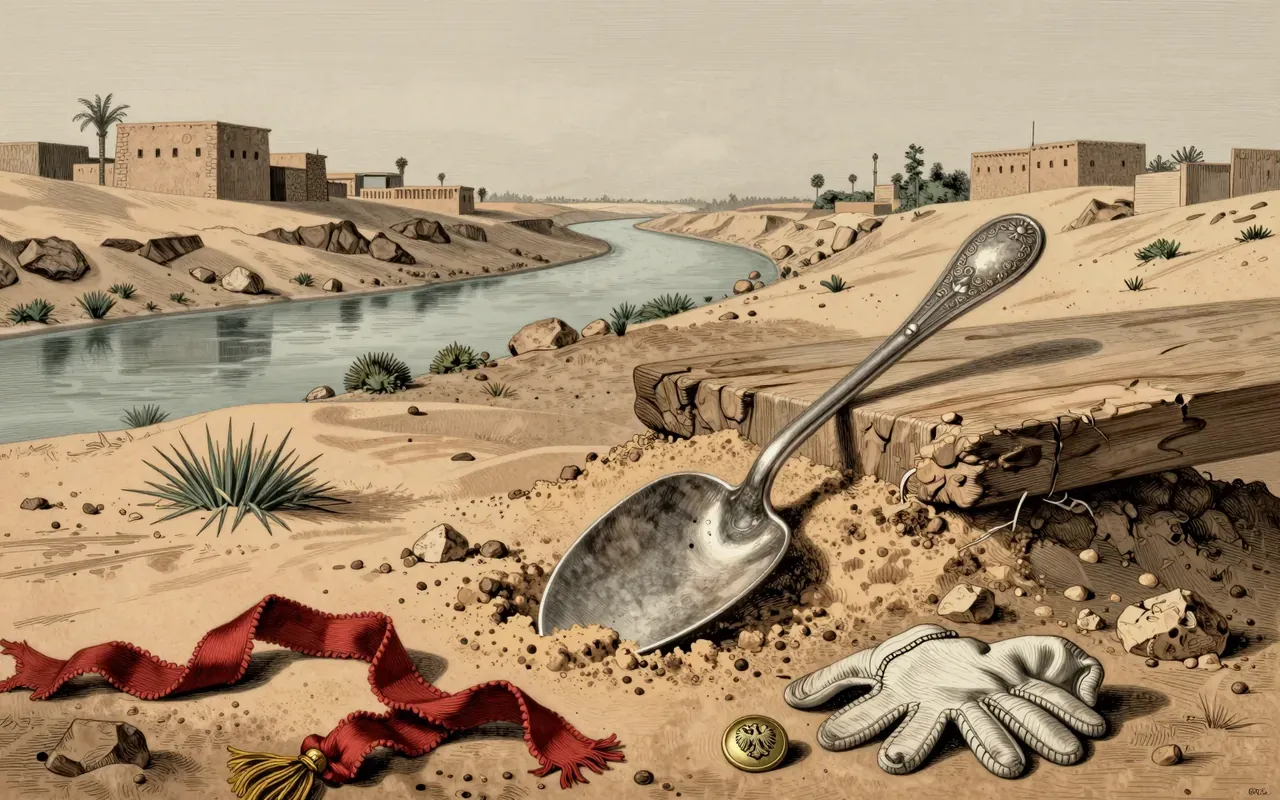
The Suez Canal was ceremonially opened on 17 November 1869, linking the Mediterranean and Red seas. Its inauguration followed years of excavation and the joining of the waters earlier that year.

Chapters & takeaways6
  1. 0:00
    What happened

    The Suez Canal was ceremonially opened on 17 November 1869, linking the Mediterranean and Red seas.

  2. 0:12
    How we know it

    The Suez Canal Authority’s history records concessions, construction and financial arrangements.

  3. 0:24
    Why it went that way

    The project depended on political concessions and major financing as well as engineering.

  4. 0:36
    What is still contested

    A ceremony marks an opening, not a full assessment of its costs.

  5. 0:48
    What it changed

    The canal created a direct maritime connection through Egypt.

  6. 1:00
    Is it worth your time

    Worth understanding as infrastructure with a political history.

Worth your time?

Selectively. Start with the brief, then study the parts we point at.

What works
    What does not
      Study it if
        Skip it if
          The written brief1 min read

          What happened

          The Suez Canal was ceremonially opened on 17 November 1869, linking the Mediterranean and Red seas. Its inauguration followed years of excavation and the joining of the waters earlier that year.

          How we know it

          The Suez Canal Authority’s history records concessions, construction and financial arrangements. As the institution responsible for the canal, it provides useful chronology but also narrates its own institutional inheritance.

          Why it went that way

          The project depended on political concessions and major financing as well as engineering. Creating a navigable passage was inseparable from agreements determining who could build, operate and profit from it.

          What is still contested

          A ceremony marks an opening, not a full assessment of its costs. Construction quantities and official expenditure do not by themselves explain workers’ experiences or how benefits were distributed.

          What it changed

          The canal created a direct maritime connection through Egypt. Later widening and deepening show that the waterway familiar to subsequent shipping was not simply the unchanged channel of 1869.

          Is it worth your time

          Worth understanding as infrastructure with a political history. Follow ownership and financing alongside the route on a map; control of a passage matters as much as its physical existence.

          Same strand · Economy & trade4 of 23
          1:08
          The Marshall Plan — 1948In April 1948, the United States enacted the recovery program known as the Marshall Plan. It followed George Marshall’s 1947 proposal for American assistance supporting European economic reconstruction.
          1:10
          The Sherman Antitrust Act — 1890In 1890, the United States enacted the Sherman Antitrust Act. It prohibited combinations restraining interstate or foreign trade and addressed monopolization, creating a federal instrument against concentrated commercial power.
          1:10
          The Social Security Act — 1935Franklin Roosevelt signed the Social Security Act on 14 August 1935. It established a framework for old-age benefits and other forms of assistance, including provisions connected to unemployment and dependent children.
          13:00
          GoréePortuguese traders reached Goree Island off Senegal in 1444, and the island passed through Dutch and then French control before Senegalese independence in 1960, developing a reputation as a major hub of the Atlantic slave trade that UNESCO's own heritage listing still describes as the largest on the African coast. Historical research has since challenged that framing directly, estimating no more than five hundred people were traded through the island annually, a small fraction of regional slave exports, and finding that the famous House of Slaves building itself lacks archaeological evidence of large-scale trans-Atlantic trafficking, complicating a narrative that took shape largely through one influential curator's account from the 1990s onward.
          Up next in History

          The Voting Rights Act — 1965

          · 1:09

          Enforcement addressed the gap between a constitutional right and access to registration.

          1:09