What happened
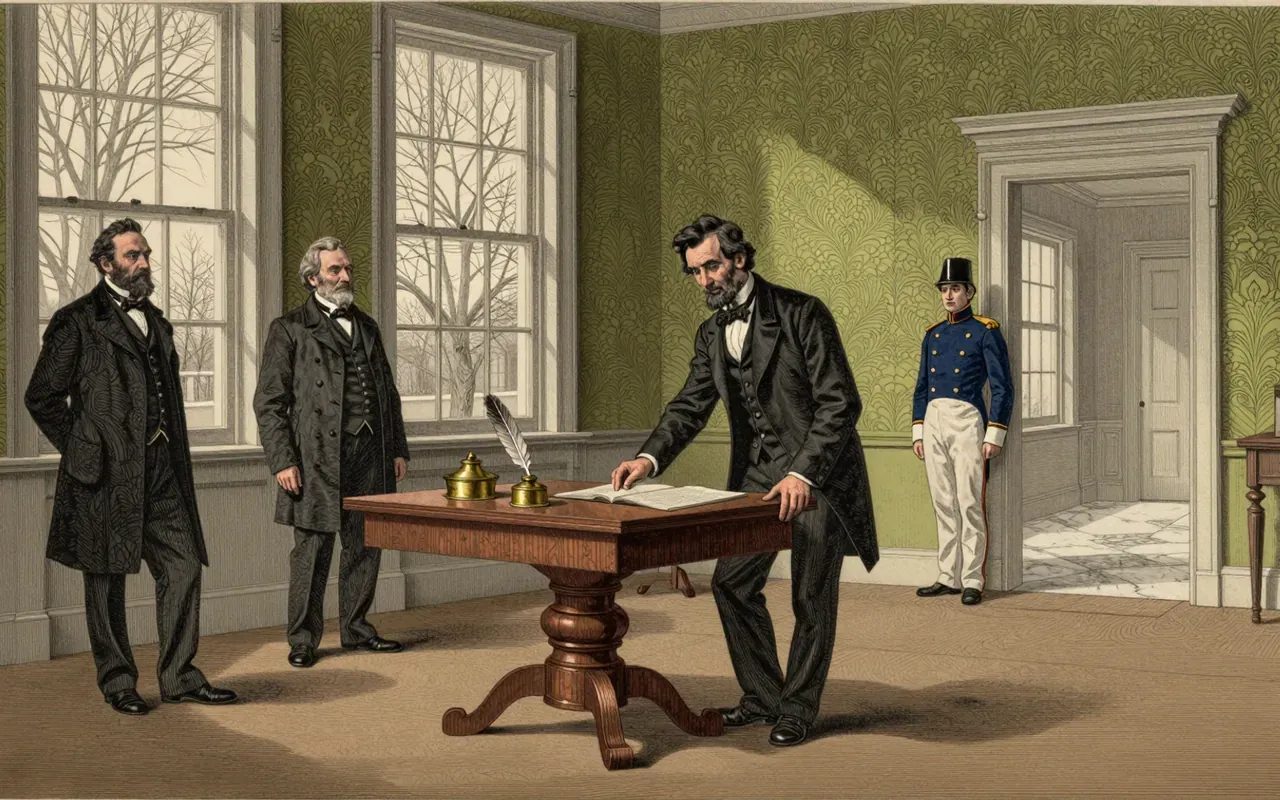
Lyndon Johnson signed the Civil Rights Act on 2 July 1964. Its provisions addressed discrimination in public accommodations, employment and federally supported programs, among other areas.
The act’s own long title lists its purposes: to enforce the constitutional right to vote, to allow injunctive relief against discrimination in public accommodations, to authorize the Attorney General to bring suits over public facilities and public education, to extend the Commission on Civil Rights, to prevent discrimination in federally assisted programs and to establish a Commission on Equal Employment Opportunity.
How we know it
The act’s separate titles survive in the National Archives. Their differences matter: the law used several forms of federal authority rather than one general declaration that automatically changed every institution.
The text runs to eleven titles, from Title I on voting rights to Title XI, miscellaneous. Title II bars discrimination or segregation on the ground of race, color, religion or national origin in places of public accommodation, which it lists as inns and hotels, restaurants and lunch counters, gasoline stations, and theaters, concert halls and sports arenas, where their operations affect commerce or the discrimination is supported by State action.
Why it went that way
Civil-rights organizing brought discrimination into sustained public and political confrontation. Enactment required overcoming congressional opposition as well as articulating a claim to equal treatment.
The National Archives recounts that after President Kennedy’s televised address of 6 June 1963 he proposed legislation on voting rights, public accommodations, school desegregation and nondiscrimination in federally assisted programs. After his assassination in November 1963, the Archives says, that proposal culminated in the act. In the Senate, Southern Democratic opponents attempted a filibuster; the Archives credits Hubert Humphrey’s floor leadership, Johnson’s support and Everett Dirksen’s work in persuading enough Republicans to back the bill. The compromise bill passed the Senate 73 to 27.
What is still contested
A law’s passage does not measure compliance. Disputes over enforcement and the meaning of its provisions followed, so its adoption should not be described as the instant disappearance of discrimination.
The text also limited its own reach. Title VII defined an employer as a person with twenty-five or more employees, but for the first year after its effective date it did not count firms with fewer than one hundred employees, for the second year fewer than seventy-five, and for the third year fewer than fifty.
What it changed
The act expanded federal tools for challenging discriminatory practices and created a framework for employment enforcement. It changed the institutional routes through which people could pursue claims.
Section 703 made it an unlawful employment practice for an employer to refuse to hire, to discharge or to discriminate in pay, terms, conditions or privileges of employment because of race, color, religion, sex or national origin. Title VII created a five-member Equal Employment Opportunity Commission, with no more than three members from one party. A charge was made in writing under oath, and if the Commission found reasonable cause it was to try to end the practice by conference, conciliation and persuasion.
Is it worth your time
Worth reading by domain: a workplace, a public facility and a federally funded program raise different questions. That approach explains how a broad civil-rights victory became a set of enforceable provisions.