The strongest cyclone ever recorded, by wind speed
Typhoon Haiyan reached its peak intensity on 7 November 2013, with the Joint Typhoon Warning Center estimating one-minute sustained winds of 315 kilometres per hour, a figure that made it, at the time, the strongest tropical cyclone ever recorded by wind speed, a record it held until Hurricane Patricia exceeded it in 2015. The Japan Meteorological Agency’s separate measurement, using a ten-minute sustained wind standard more commonly applied outside the western Pacific, recorded winds of 230 kilometres per hour alongside a minimum central pressure of 895 millibars, figures that placed the storm firmly at the Category 5 equivalent, or super typhoon, level under the classification systems used in the region.
Six landfalls across the Visayas
The storm made its first landfall in the Philippines at Guiuan, in Eastern Samar province, at 20:40 UTC on 7 November, striking at essentially its maximum recorded strength rather than having weakened before reaching land, a factor that significantly worsened the damage compared with a storm that made landfall after losing some of its peak intensity. Haiyan then proceeded to make five further landfalls across the Visayas region of the central Philippines as it tracked westward, each new landfall bringing destructive winds and storm surge to yet another set of coastal communities, before the storm finally weakened as it moved out over the South China Sea, having repeatedly battered one of the most densely populated archipelagic regions of the country.
The surge, not the wind, did the killing
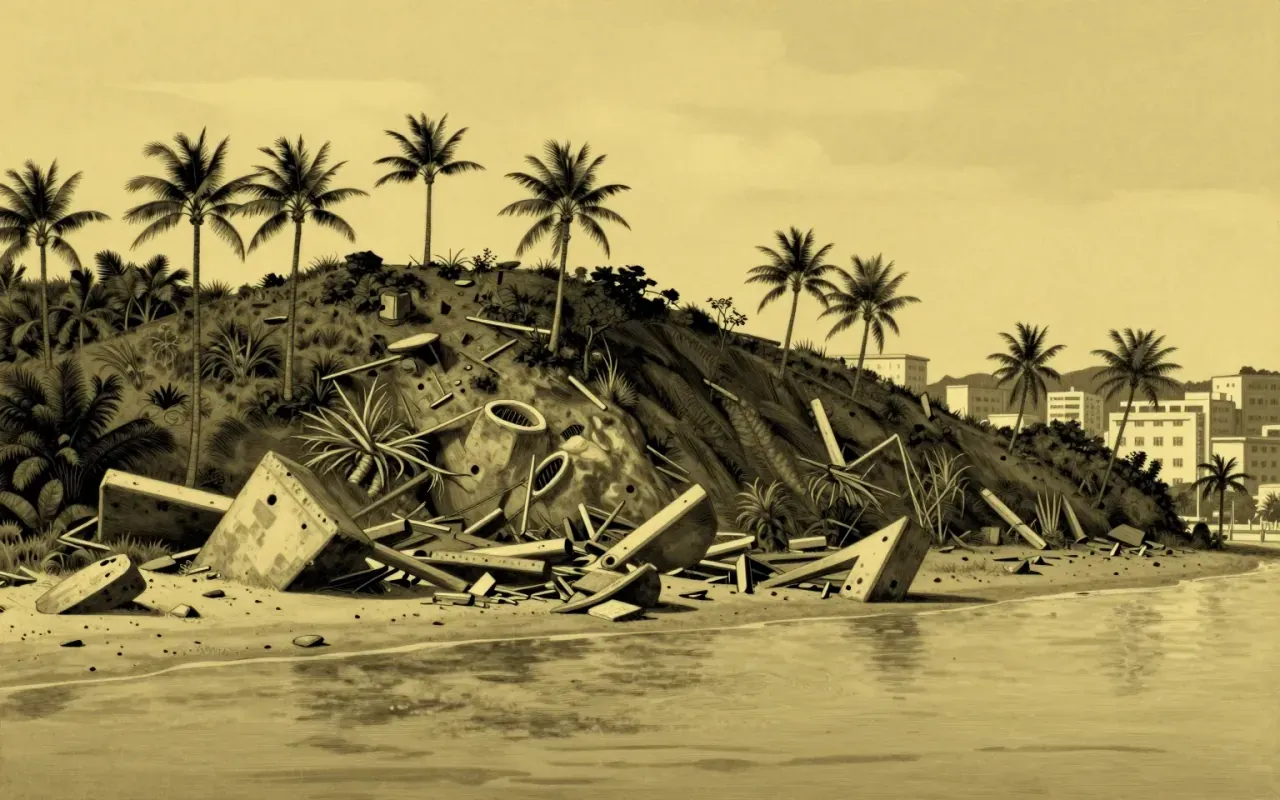
The most severe destruction came not primarily from the storm’s extraordinary winds but from the storm surge it generated, particularly at Tacloban, a coastal city situated between the islands of Samar and Leyte in a position that concentrated the surge’s destructive force. The surge reached 5.2 metres at the city’s airport, destroying the terminal building outright, and city administrator Tecson John Lim estimated that roughly ninety percent of Tacloban had been destroyed overall, with low-lying eastern areas of the city washed away entirely and flooding extending more than a kilometre inland from the coast. Official pre-landfall forecasts had apparently underestimated the severity of this specific hazard in low-lying coastal areas, focusing warnings more heavily on wind intensity than on the surge that ultimately proved far more lethal.
A shelter that flooded too
The consequences of underestimating the surge proved starkest at the very facility meant to protect residents from the storm. The Tacloban City Convention Center, designated as an evacuation shelter for people seeking safety from the typhoon, saw its entire first floor submerged when the storm surge arrived, drowning residents who had gathered there specifically because they believed it offered protection from the disaster rather than exposure to its most dangerous element. Compounding the danger, communication systems across the city largely failed after landfall, with little functioning phone coverage and no effective way to warn people already sheltering in vulnerable locations that rapidly rising water, rather than wind, now posed the most immediate threat to their survival.
At least 6,300 dead, six million displaced
The Philippine government’s National Disaster Risk Reduction and Management Council eventually confirmed 6,300 deaths nationwide, with 5,902 of those recorded in the Eastern Visayas region alone, the area that bore the brunt of the storm’s most severe landfalls. A further 28,688 people were injured, and more than six million were displaced from their homes across the affected regions. Total economic damage was estimated at approximately 2.2 billion dollars, making Haiyan the costliest typhoon in the Philippines’ recorded history, a distinction that reflects both the storm’s extraordinary physical intensity and the dense population and significant economic activity concentrated in the low-lying coastal areas of the Visayas that the surge struck hardest.
Aid, warships, and a small pledge that drew criticism
International relief mobilised at considerable scale, though not without friction over both speed and proportionality. The United States launched Operation Damayan, deploying the USS George Washington carrier strike group, the hospital ship USNS Mercy, nineteen C-130 transport aircraft, and roughly thirteen thousand military personnel, while Japan sent more than a thousand troops and ten military aircraft in what it described as its largest relief deployment to date. China’s initial contribution of just 100,000 dollars drew sharp public criticism, with some commentators linking the modest sum to ongoing South China Sea territorial tensions with the Philippines, before Beijing substantially increased its pledge to 1.64 million dollars and deployed its hospital ship Peace Ark to assist with the response.