A recurring national catastrophe
Bushfires have been a recurring feature of Australian history since European settlement, with roughly eight hundred deaths attributed to them across the country since 1851. Major catastrophic fires have struck at intervals of a decade or more, forming a grim sequence: the Gippsland fires of 1925 and 1926 killed sixty people over two months, Black Friday in 1939 killed seventy-one, Black Tuesday in Tasmania in 1967 killed sixty-two, and Ash Wednesday, which struck Victoria and South Australia together in 1983, killed seventy-five people and destroyed approximately 1,900 homes. This recurring pattern reflects Australia’s underlying climate and vegetation, conditions that regularly combine to produce fire risk on a scale few other populated regions of the world experience with comparable frequency.
Black Saturday, the deadliest single event
The deadliest single bushfire event in Australian history came more recently. The Black Saturday fires of February 2009 killed 173 people and destroyed 2,029 homes across Victoria over a period of twenty-one days. Conditions on 7 February 2009, the day the worst fires broke out, included temperatures exceeding forty-three degrees Celsius sustained across three consecutive days beforehand, combined with strong winds that allowed fires to spread with extraordinary speed once ignited. Black Saturday’s death toll alone exceeds the combined total of several earlier catastrophic fire seasons, and it prompted one of many royal commissions Australia has convened into bushfire policy and preparedness, part of a pattern of fifty-one such inquiries held since 1939.
Nearly half the fires are deliberately lit
How Australian bushfires actually start varies considerably, complicating any simple narrative about cause. A study covering fires in southeastern Australia between 1997 and 2009 found that forty-seven percent began through accidents, such as discarded cigarettes or escaped controlled burns, forty percent were deliberately lit, and only thirteen percent resulted from lightning strikes. This breakdown means that human activity, whether careless or deliberate, accounts for the substantial majority of ignitions in this well-studied period, a finding relevant to policy debates over both fire prevention enforcement and the underlying conditions, including extreme heat and prolonged drought, that determine how readily any given ignition, regardless of its source, turns into an uncontrollable and destructive blaze.
Black Summer burns an area the size of a small country
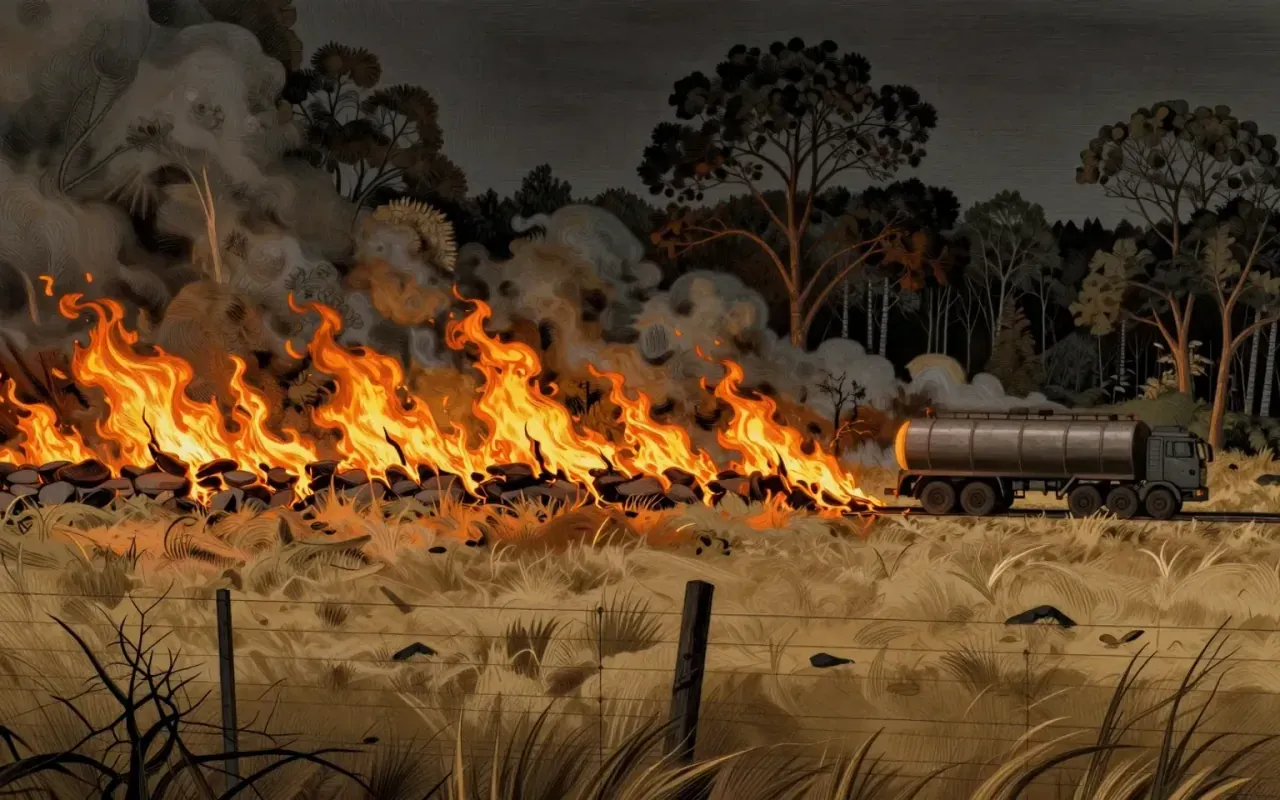
The 2019 to 2020 Black Summer season surpassed every previous bushfire disaster in Australian history by scale. Fires burned across approximately twenty-four million hectares spanning every state and territory in the country, occurring during Australia’s hottest year on record, with national rainfall running some forty percent below the long-term average. New South Wales alone accounted for more than 5.2 million hectares burned, more land than any bushfire season in that state over the preceding twenty-five years. On 12 November 2019, catastrophic fire danger, the highest level on Australia’s rating scale, was declared for Greater Sydney for the first time since that category’s introduction a decade earlier, an early signal of just how extreme the approaching season would prove to be.
Three billion animals, and a prime minister on holiday
The human and ecological toll of Black Summer proved severe on multiple fronts. Thirty-three people died directly as a result of the fires, while a further 417 deaths are attributed to smoke inhalation from the prolonged and widespread air pollution the fires generated, and more than four thousand people were injured. Wildlife losses were estimated at roughly three billion animals killed or displaced, predominantly reptiles, according to later, expanded assessments. The disaster also became politically charged: Prime Minister Scott Morrison’s decision to take a personal holiday during the height of the crisis drew sharp public criticism, particularly after two volunteer firefighters died while he was away, an episode widely interpreted as reflecting inadequate government engagement with the unfolding emergency.
The costliest disaster in the country’s history
Black Summer’s total economic cost reached approximately 100 billion dollars, making it by a wide margin the costliest natural disaster in Australian history, with tourism revenue alone falling by an estimated 2.8 billion dollars and carbon emissions from the fires exceeding 700 million tonnes. Smoke from the fires travelled across the Southern Ocean, affecting air quality and weather patterns on other continents, and Melbourne recorded what was assessed at the time as the worst air quality of any major city in the world during the fires’ peak. In the disaster’s aftermath, Australia adopted a standardised national Fire Danger Rating system in 2022, alongside continued expansion of Aboriginal land management practices that separate research has associated with substantial reductions in destructive fire activity in parts of northern Australia.