A warning made two years early
Warning signs, in a geological rather than practical sense, had existed well before the earthquake struck. A 2013 scientific statement noted that sufficient accumulated tectonic energy existed for an earthquake of magnitude 8 somewhere along the Central Himalayan Gap, a roughly six-hundred-kilometre stretch of the mountain range that had not experienced a major rupture since 1505. This kind of long-term seismic hazard assessment can identify a region as overdue for a significant earthquake without being able to specify exactly when that earthquake will occur, and Nepal’s combination of this known geological risk with rapid urbanisation and widespread substandard building construction left the country doubly exposed when the earthquake finally did strike, more than five centuries after the fault’s previous major rupture.
Fifty seconds on 25 April 2015
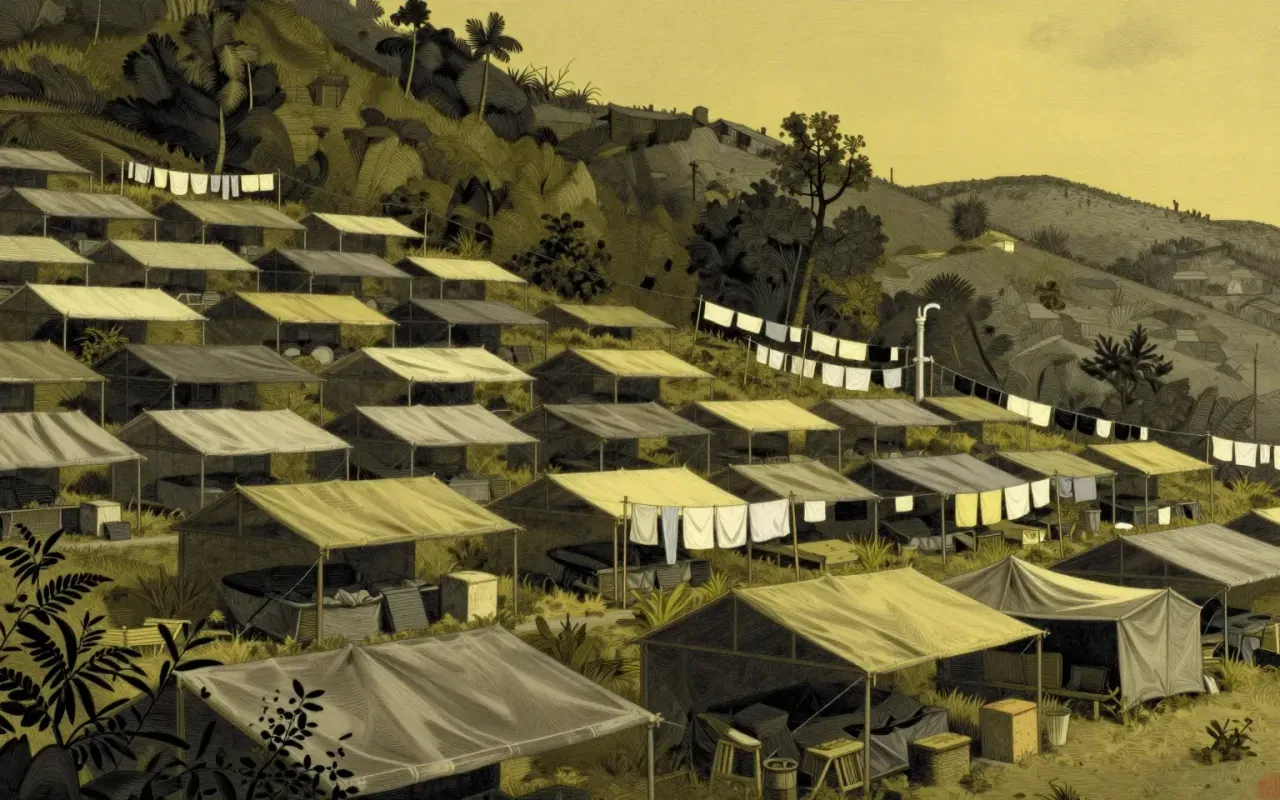
The earthquake struck at 11:56 in the morning, Nepal Standard Time, on 25 April 2015, with a moment magnitude estimated at between 7.8 and 7.9, though some sources reported a surface-wave magnitude as high as 8.1. Shaking lasted approximately fifty seconds at a shallow depth of just 8.2 kilometres, a combination of factors that made the ground motion particularly destructive at the surface. The earthquake killed 8,962 people across four countries, Nepal, India, China, and Bangladesh, with 8,857 of those deaths occurring within Nepal itself, and a further 21,952 people were injured. Roughly 3.5 million people were left homeless, and approximately 2.6 million were internally displaced within Nepal as a direct result of the disaster.
Centuries-old towers and temples come down
The earthquake caused severe damage to some of the Kathmandu Valley’s most historically significant structures. The Dharahara tower, built in 1832, collapsed entirely, killing at least 180 people who were inside or near it at the time. UNESCO documented more than thirty monuments across the valley’s heritage sites as having collapsed outright, with a further 120 sustaining partial damage, affecting temple complexes at Kathmandu Durbar Square, Patan Durbar Square, and Bhaktapur Durbar Square, along with the Swayambhunath and Boudhanath stupas and the Pashupatinath Temple. Restoration cost estimates for these heritage sites alone reached 160 million dollars, a figure reflecting both the scale of physical damage and the specialised, often slow, conservation work required to repair structures of genuine historical and religious significance.
The deadliest day on Everest’s record
Beyond the Kathmandu Valley, the earthquake’s effects extended into Nepal’s high mountain regions with equally severe consequences. The shaking triggered an avalanche on Mount Everest that killed at least nineteen climbers, described as the deadliest single incident recorded on the mountain, with more than 120 additional people injured or reported missing in the same event. This made the 2015 earthquake responsible for the worst single-day death toll in the mountain’s recorded climbing history, a grim distinction achieved not through the extreme altitude conditions climbers usually face but through a geological event originating far below the mountain’s base and travelling upward through the surrounding terrain to destabilise the snow and ice above.
A village buried by its own valley
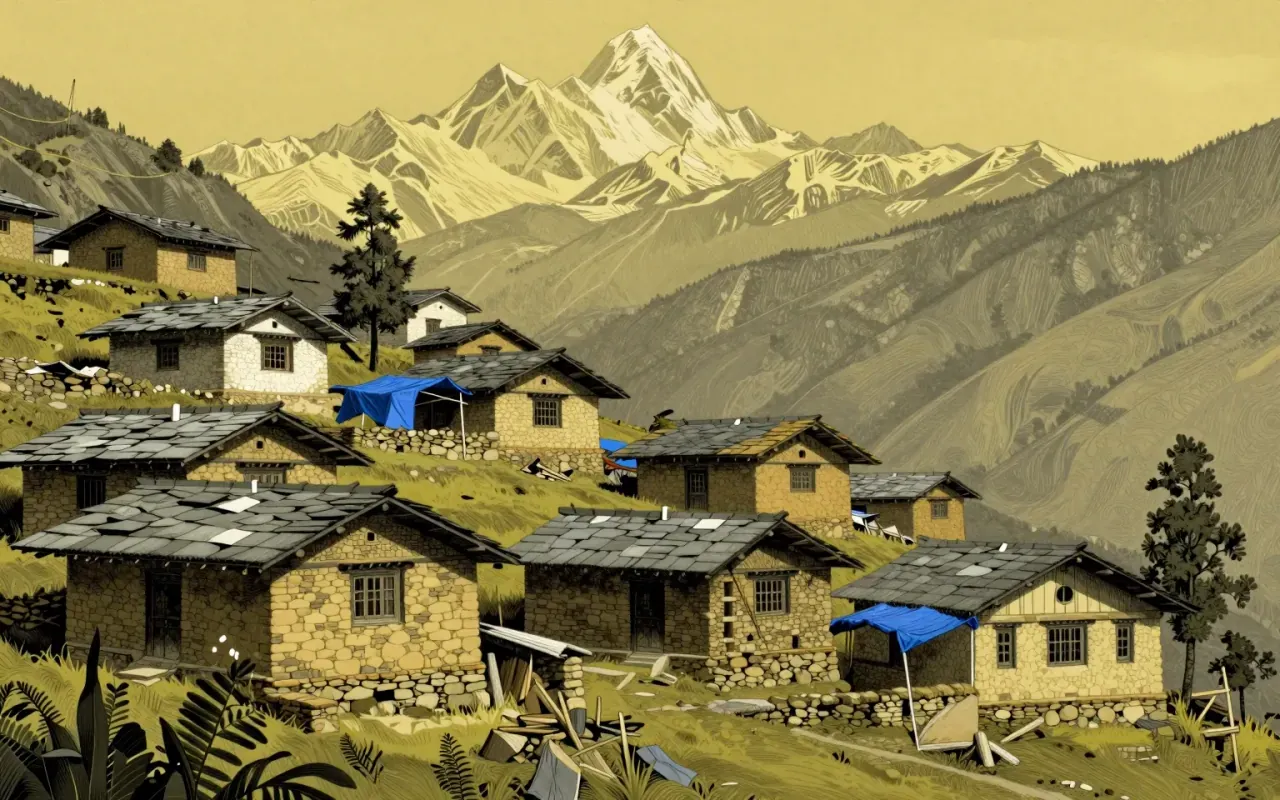
A separate and equally devastating avalanche struck the village of Langtang, north of Kathmandu, where a slide measuring approximately two to three kilometres wide destroyed the settlement outright. In the aftermath, 329 people connected to Langtang were reported missing, a toll reflecting both the scale of the avalanche itself and the practical difficulty of confirming deaths in a remote mountain community where recovery efforts faced serious logistical obstacles. This second, distinct avalanche disaster, separate from the one on Everest itself, illustrates how the earthquake’s destructive reach extended across Nepal’s mountainous terrain well beyond the more heavily reported destruction in the Kathmandu Valley and the internationally prominent Everest climbing routes.
Ten billion dollars, half the country’s economy
Total economic damage from the earthquake was estimated at approximately ten billion dollars, a figure representing roughly half of Nepal’s gross domestic product at the time, a proportion that made reconstruction an exceptionally difficult undertaking for one of the world’s less wealthy nations. International donors pledged a total of three billion dollars to support rebuilding efforts, with India’s Operation Maitri delivering the fastest initial response, sending 450 personnel within hours of the earthquake. Distribution of aid nonetheless faced real friction, including airport congestion linked to competing military flight operations and pointed criticism from Nepal’s own finance minister, Ram Sharan Mahat, who complained publicly that some international relief shipments consisted of items like tuna fish and mayonnaise, supplies he judged of little practical use to earthquake survivors in immediate need of shelter and basic sustenance.