historybriefs
Topic

Preservation

Keeping the artefact alive past its format.

1
in history
13:00
average
13 min
in total
28
across the network
Preservation across the network →
All briefs1
13:00

April 2015 Nepal earthquake

2015

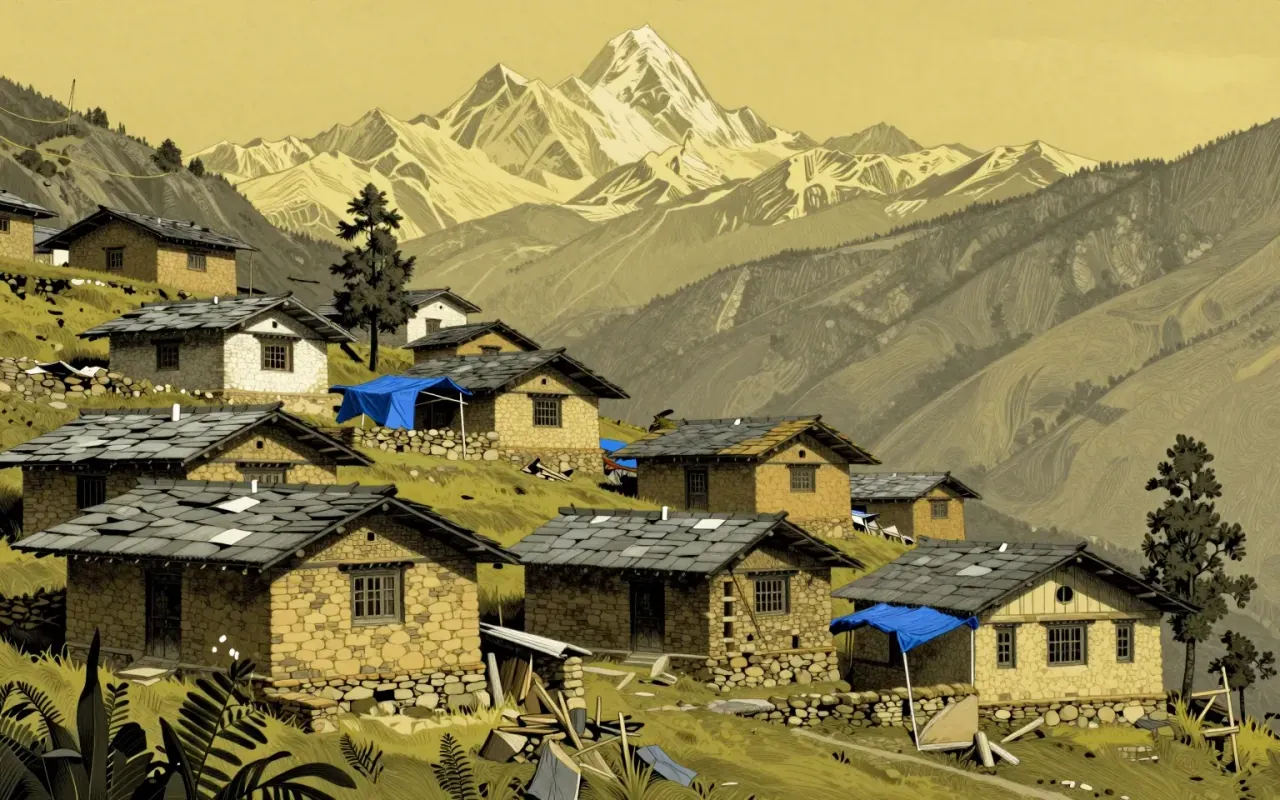
The magnitude 7.8 to 7.9 earthquake that struck central Nepal on 25 April 2015 killed 8,962 people across four countries, most of them in Nepal, and left about 3.5 million people homeless. It toppled the nineteenth-century Dharahara tower and damaged or destroyed more than thirty monuments across the Kathmandu Valley's historic squares, triggered an avalanche on Mount Everest that killed at least nineteen climbers, the deadliest single incident on the mountain's record, and buried the village of Langtang under a slide two to three kilometres wide. Geophysicists had warned for years that the Central Himalayan Gap, unruptured since 1505, held enough accumulated energy for a major quake, and the roughly ten billion dollars in damage this one caused amounted to about half of Nepal's annual economic output.

More from history

All briefs →
11:36

Ancient Greece

Ancient Greece isn’t a place or a nation — it’s the first time history became a written argument about power.
12:27

Samarkand

329 BC

Samarkand at -800 BC is archaeologically verifiable, institutionally attested, and geographically explicable — but its ‘founding’ remains a scholarly estimate, not a recorded event.

11:49

Atomic bombings of Hiroshima and Nagasaki

6 and 9 August 1945

The atomic bombings of Hiroshima and Nagasaki were deliberate, authorised, and executed military operations using newly developed nuclear weapons. Their scale, method, and human impact are well-documented in the source. Their causal relationship to Japan’s surrender is asserted only as ‘precipitation’—not proof of necessity or sufficiency. No claim about motives, alternatives, or internal Japanese decision-making appears in the material.

9:37

Battle of Talikota

23 January 1565

The Battle of Talikota was a decisive military defeat for Vijayanagara, caused by coalition warfare and military asymmetry — not civilizational conflict. Its legacy lies in how early-modern South Asian states negotiated power, not in mythic binaries.