A storm that reached peak strength at landfall
Cyclone Nargis formed in the Bay of Bengal on 27 April 2008 and intensified rapidly over the following days, reaching its most dangerous strength just as it approached the Myanmar coastline. Wind speed estimates varied by measuring agency: the India Meteorological Department recorded peak sustained winds of 165 kilometres an hour, while the Joint Typhoon Warning Center assessed considerably stronger winds of 215 kilometres an hour, classifying the storm as equivalent to a Category 4 hurricane. Nargis made landfall in Myanmar’s Ayeyarwady Division on 2 May 2008 while still at or near this peak intensity, meaning the delta region absorbed the storm’s full destructive force rather than a weakened version of it.
A surge that travelled forty kilometres inland
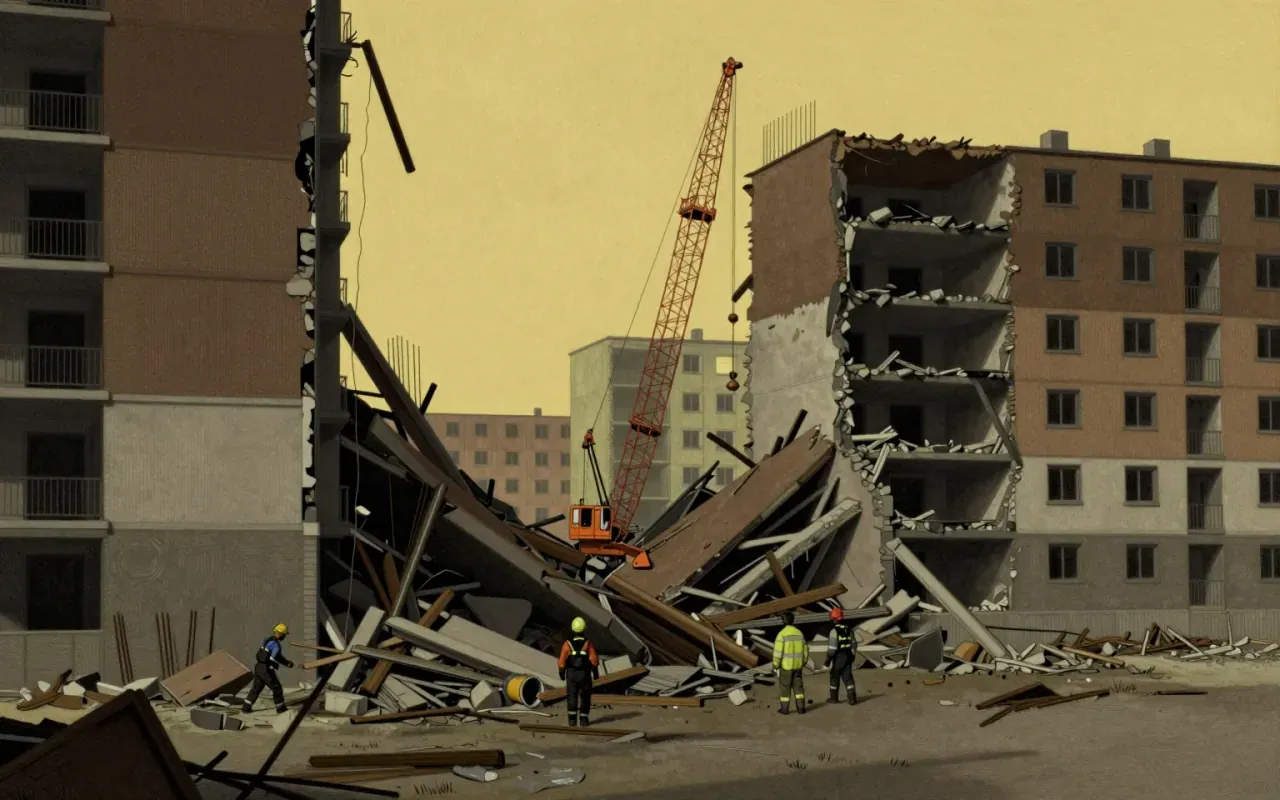
The storm’s most devastating physical effect was its storm surge, which pushed roughly forty kilometres inland along the low-lying, densely populated Irrawaddy Delta, a region offering little natural elevation to slow or diminish the surge’s advance. This combination of a powerful storm striking at peak strength and a coastal geography almost perfectly suited to channelling a surge deep inland produced destruction on a scale disproportionate to the storm’s wind speed alone. An estimated ninety-five percent of buildings within the delta were destroyed, a figure reflecting not only the surge’s reach but the generally modest construction standards of rural housing across the region, which offered little resistance to either the flooding or the accompanying wind.
A death toll disputed from the start
Establishing an accurate death toll for Nargis has proven genuinely contentious. The Myanmar government’s official figures list 84,537 confirmed deaths alongside 53,836 people still listed as missing, together totalling 138,373. Critics have argued that these numbers understate the true scale of the disaster, potentially to limit domestic and international political fallout for the ruling government, and some non-governmental organisations have suggested the actual death toll could run as high as 300,000, with aid workers on the ground offering similarly elevated estimates. The single township of Labutta alone is reported to have suffered approximately eighty thousand deaths, a figure that on its own approaches a substantial share of the government’s total nationwide count.
A carrier group turned away
Myanmar’s military government initially responded to international offers of assistance with significant restriction rather than acceptance. On 9 May, the junta announced it would accept material aid, including food, medicine, and financial contributions, but would not permit foreign aid workers or military personnel to enter the country to help distribute it. This left substantial relief resources stranded and unusable: a United States Navy carrier strike group built around the USS Essex remained positioned offshore for weeks, its supplies undelivered, before finally departing without having discharged its cargo on 5 June, a stark illustration of how political restrictions could leave available humanitarian resources idle even as need on the ground remained acute and rising.
The Secretary-General intervenes
Direct diplomatic intervention eventually loosened, though it did not fully remove, these restrictions. United Nations Secretary-General Ban Ki-moon personally negotiated with Myanmar’s government, and by 23 May the junta had agreed to admit aid workers of any nationality into the country to assist with relief and distribution efforts. Foreign military units, however, remained barred from operating within Myanmar throughout the response, meaning that even after the diplomatic breakthrough, a meaningful category of potential relief capacity, including logistics and transport resources military forces like the stranded American carrier group could have provided, stayed unavailable to the recovery effort for its full duration.
A rice-growing region left hungry
The disaster’s long-term consequences extended well beyond the immediate death toll. The delta’s rice paddies, central to the region’s agricultural economy, suffered damage estimated at sixty-five percent, a level of destruction that threatened Myanmar’s broader food security given the Irrawaddy Delta’s importance as the country’s principal rice-growing region. Cultural losses included 1,163 destroyed temples across the affected area. Recovery proved slow even once aid access improved: a UN-Habitat assessment found that fifteen months after the cyclone, the international response had addressed less than seven percent of the delta’s actual shelter needs, evidence of just how far the combination of the storm’s initial destruction and the government’s early restrictions had set back the region’s eventual recovery.