A landing closer than planned
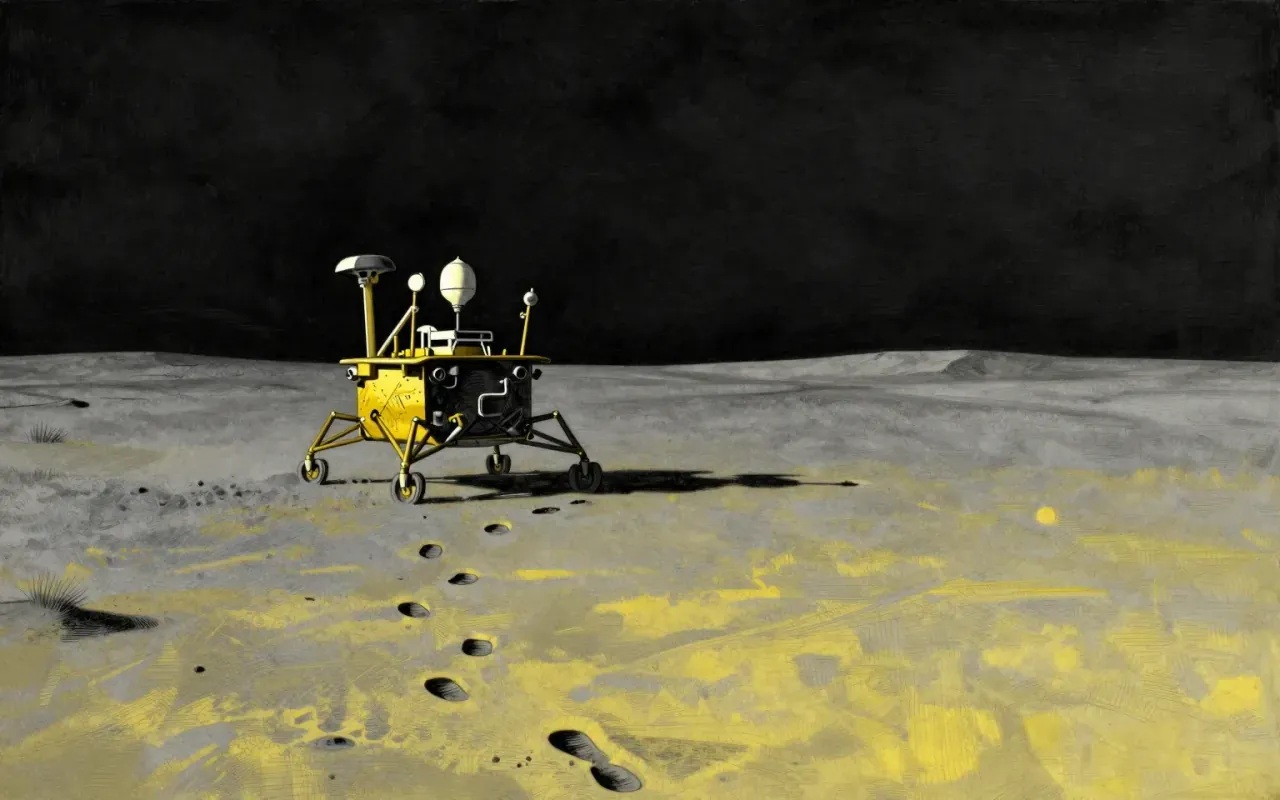
Apollo 11 launched from Kennedy Space Center on 16 July 1969 and entered lunar orbit three days later. On 20 July, the lunar module Eagle, carrying Neil Armstrong and Buzz Aldrin, separated from the command module Columbia, piloted by Michael Collins, and began its descent to the surface. The landing did not go entirely to plan: computer alarms sounded during descent and Armstrong took manual control to steer past a boulder-strewn crater, touching down at Tranquility Base with only about ninety seconds of fuel remaining. Roughly six hours later, at 02:56 UTC on 21 July, Armstrong stepped onto the lunar surface, followed nineteen minutes later by Aldrin.
Six hours before the first step
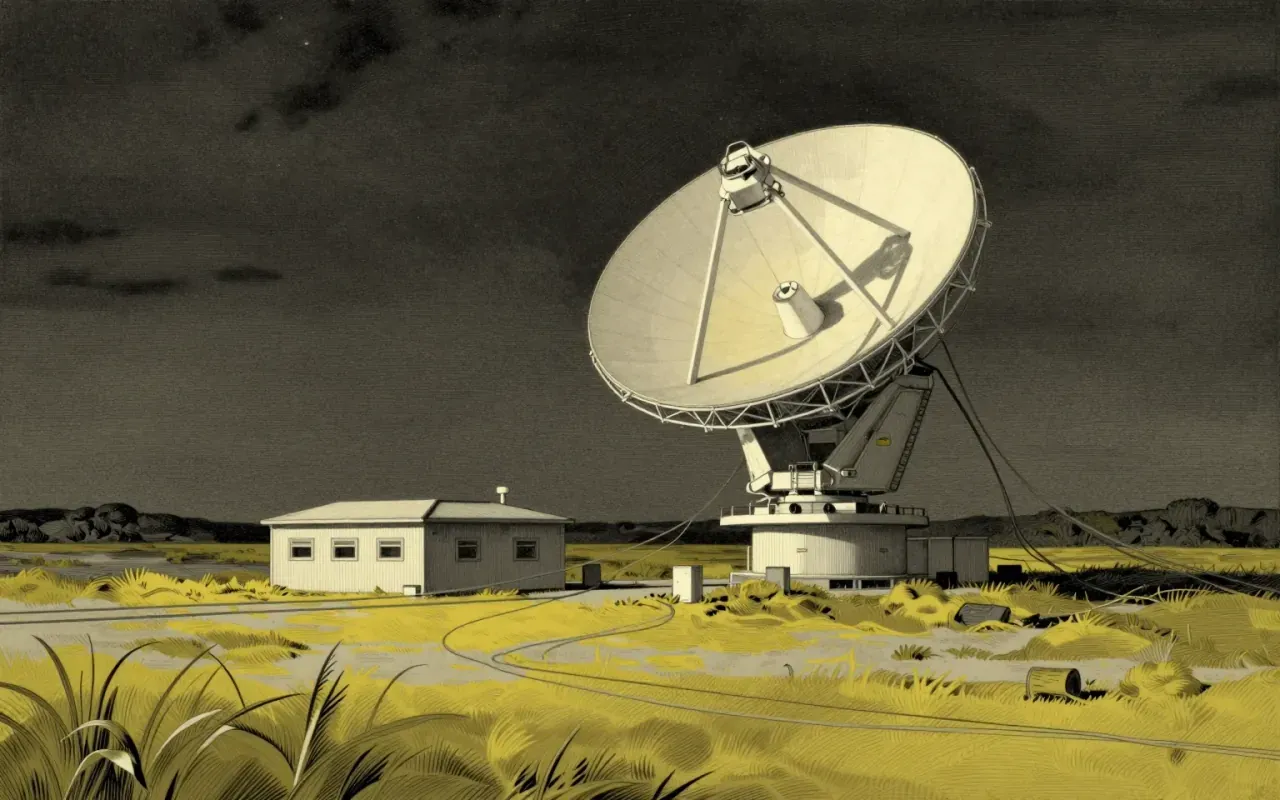
The mission generated an unusually dense record for an event of its kind. Telemetry systems, built on tracking technology already tested during earlier uncrewed Ranger and Surveyor missions, relayed high-bandwidth television and data from the Moon in close to real time. The astronauts’ moonwalk, lasting roughly two and a half hours, was broadcast live and watched by an audience estimated in the hundreds of millions, described at the time as the largest television audience for a live event. The physical evidence brought home, 21.5 kilograms of lunar material later analysed in laboratories, gave scientists an independent, testable record that has been checked and re-checked over subsequent decades.
A broadcast built for the whole planet
The landing succeeded where it did because of years of preparatory uncrewed missions that had already tested landing-site conditions and confirmed that lunar soil could support a heavier crewed lander, reducing the number of unknowns facing Armstrong and Aldrin during the actual descent. Even so, the descent required real-time human judgment: the guidance computer’s alarms stemmed from an overloaded processing queue rather than a fatal fault, and Armstrong’s decision to fly manually past the intended landing zone, using visual judgment rather than the automated system, was what avoided a landing among boulders that could have damaged the lander’s legs.
What came back with the crew
The material describing Apollo 11 treats the landing as an established fact supported by extensive telemetry, photographic and physical evidence, without engaging directly with public doubts about the mission’s authenticity that have circulated since. This is less an omission of a genuine historical dispute than a reflection that no credible body of specialist opinion treats the landing’s occurrence as an open question; the available primary evidence, independently corroborated through instruments left on the surface and lunar samples analysed by multiple laboratories worldwide, has not produced a live scholarly debate of the kind found in other entries here.
A record built to be checked
Apollo 11’s immediate legacy included the identification of previously unknown lunar minerals in the returned samples and instruments left on the surface that continued transmitting scientific data for years afterward. It also confirmed the engineering approach, including the lunar orbit rendezvous method chosen after considerable internal NASA debate, that would carry five further crewed missions to the surface through Apollo 17 in December 1972. Since then no human has returned to the Moon, leaving Apollo 11 and its five successors as the only crewed lunar landings to date, a fact that shapes how the mission is now remembered as much as its original achievement does.
Five landings that followed
The value here is in the granular, minute-by-minute account of a landing that came closer to failure than its calm public narration suggested, and in the reminder of just how large and immediate its audience was at the time. It is worth reading for the descent sequence alone. It offers little if you are looking for engagement with the persistent public scepticism about the landing, which is simply absent from this account rather than addressed and set aside. That gap is worth noting going in, since readers who want the doubts confronted directly, rather than quietly bypassed by weight of documentation alone, will need to look elsewhere for that specific argument.