historybriefs
Newest

All briefs

482 briefs · 5812 min · 289–384 on page 4 of 6
13:00

Edict of Nantes

April 1598 to October 1685

Issued in April 1598 to end decades of the French Wars of Religion, the Edict of Nantes gave French Protestants freedom of worship in specified areas, access to public office, state-funded schools, and control of fortified towns including La Rochelle, while leaving them subject to Catholic tithes and holidays. Henry IV, who had converted to Catholicism himself in 1593 after years fighting as a Protestant leader, signed it to secure a fragile peace, and provincial parlements delayed its registration for years. His grandson Louis XIV revoked it through the Edict of Fontainebleau in October 1685, triggering an exodus of roughly 400,000 Huguenots that religious freedom in France would not formally match again until 1787.
13:00

1994 South African general election

26 April – 29 April 1994

Between 26 and 29 April 1994, South Africans of every race voted together for the first time, and the African National Congress won just under 63 percent, enough to make Nelson Mandela president without the two-thirds majority that would have let his party govern alone. The vote followed four years of negotiation, boycotts and mass violence since Mandela's release in 1990, and it produced a compromise government sharing power with the outgoing National Party and the Inkatha Freedom Party.

13:00

Cold War (1985–1991)

1985–1991

Mikhail Gorbachev's reforms from 1985, combined with a series of summits with Ronald Reagan and the Soviet abandonment of the Brezhnev Doctrine, opened the way for Eastern European communist governments to collapse peacefully through 1989, culminating in German reunification and the Soviet Union's own dissolution by December 1991. Historians remain divided over whether Soviet economic decay, Gorbachev's genuine ideological conviction, or Western pressure deserves primary credit, a debate the evidence supports multiple readings of rather than settling definitively.

13:00

English Civil War

1642–1651

Fought between 1642 and 1651 as part of a wider conflict across England, Scotland and Ireland, the English Civil War pitted King Charles I against a Parliament unwilling to accept his authority unchecked, ending in Charles's execution and a short-lived republic. Historians remain divided over its basic character, with Whig, Marxist and revisionist interpretations all drawing on the same surviving pamphlets and parliamentary records to reach quite different conclusions about what really caused it.

13:00

Age of Enlightenment

1700–1820

The Enlightenment is conventionally dated somewhere between the late seventeenth century and 1789, though scholars propose starting points as early as Descartes' 1637 treatise and end points as late as Kant's death in 1804. Thinkers including Voltaire, Rousseau, Locke and Kant promoted reason, empirical method and individual liberty through salons, academies and printed works like the Encyclopédie, but historians remain divided over whether this amounted to one coherent movement or several distinct, sometimes conflicting, strands of thought.

13:00

Eruption of Mount Vesuvius in 79 AD

24 August 79

In 79 AD, Mount Vesuvius buried Pompeii, Herculaneum and neighbouring towns under ash and superheated volcanic flows over roughly two days, killing an unknown but substantial number of people. The event is known chiefly through two letters Pliny the Younger wrote to Tacitus a quarter-century later, and through the archaeology itself, which has recently pushed the long-accepted August date toward autumn instead.

13:00

Proclamation of the People's Republic of China

1 October 1949

On 1 October 1949, Mao Zedong announced the founding of the People's Republic of China from Tiananmen Gate, closing more than two decades of intermittent civil war against the Nationalist government, which withdrew to Taiwan by year's end. The Communist victory owed as much to Nationalist economic collapse and wartime attrition as to any single battle. No peace treaty was ever signed, and the division of legitimacy the proclamation created between Beijing and Taipei persists unresolved.

13:00

2003 European heatwave

2003

The summer of 2003 was Europe's hottest since at least 1540, with temperatures reaching 47.3 degrees Celsius in Portugal and record highs across Britain, Germany, and Switzerland, and it is estimated to have killed around 72,000 people across the continent. France suffered the heaviest toll, somewhere between roughly 14,800 and 19,000 deaths, driven less by the heat itself than by nights that stayed unusually warm, housing without air conditioning, and a health and social care system that emptied out for the traditional August holiday just as elderly people living alone needed it most. The scandal cost Health Minister Jean-François Mattei his job the following year and led France to build a national heat wave response plan that has measurably reduced death tolls in subsequent hot summers.

13:00

European Union

Founded 1993

European integration began institutionally in 1948 and took concrete shape with the 1950 Schuman Declaration, which led six countries to form the European Coal and Steel Community in 1952 on the premise that shared control of war-making industries would prevent renewed conflict. Successive treaties and enlargements built the European Economic Community, then the European Union itself in 1993, expanding eventually to twenty-seven members, a scale of integration that has produced its own recurring tensions over sovereignty, migration and, in 2020, the departure of the United Kingdom.

13:00

Fall of Angkor

1431

Angkor was besieged and occupied twice by the Ayutthaya kingdom before a final seven-month siege in 1430 forced the Khmer court to abandon it in 1431 for the site of modern Phnom Penh. Historians attribute the fall to some combination of military pressure, drought revealed only by modern tree-ring analysis, ecological strain from the city's own irrigation system, and a religious shift away from the older cult of divine kingship. Many temples remained in use long after the court's departure, and Sanskrit gave way gradually to Middle Khmer rather than the culture vanishing all at once.

13:00

Siege of Baghdad

29 January – 10 February 1258

In January and February 1258, the Mongol prince Hulegu Khan besieged and took Baghdad after the Abbasid caliph al-Musta'sim refused full submission, ending five centuries of Abbasid independent rule. Death toll estimates range enormously, from Hulegu's own figure of roughly two hundred thousand to later Muslim accounts running into the millions, compiled well after the event. The famous image of the Tigris running black with ink from discarded books is now traced by historians to a recycled literary trope, and whether 1258 truly marked the end of the Islamic Golden Age remains genuinely disputed.

13:00

Fall of Constantinople

6 April – 29 May 1453

Ottoman forces under the nineteen-year-old Mehmed II besieged Constantinople for fifty-three days before breaching its ancient walls on 29 May 1453, ending over a thousand years of Byzantine imperial continuity. Defenders numbering fewer than eight thousand faced an Ottoman force contemporaries estimated anywhere from fifty thousand to three hundred thousand, a discrepancy that has never been resolved, while massive gunpowder cannon, one reportedly capable of firing six-hundred-pound projectiles over a mile, demonstrated that the era of medieval fortification was ending.

13:00

End of World War II in Europe

7 May 1945

Between the last week of April and 8 May 1945, Nazi Germany's government, army and territory disintegrated under simultaneous pressure from the Soviet Union in the east and Britain, the United States and their allies in the west. Hitler killed himself in Berlin, his successor Karl Dönitz oversaw a cascade of surrenders, and the country was carved into occupation zones that hardened, within four years, into two separate states.

13:00

Fall of the Western Roman Empire

476

The Western Roman Empire's collapse, conventionally dated to 476 AD when the Germanic commander Odoacer deposed the emperor Romulus Augustulus, followed a century of Gothic and other Germanic incursions, military strain and repeated civil war. Historians propose climatic, epidemiological, economic, political and religious explanations, and disagree sharply about whether to describe the process as a catastrophic fall or a more gradual transformation into successor kingdoms that preserved much of Roman law, language and administration.

13:00

People Power Revolution

22 February – 25 February 1986

After a disputed snap presidential election on 7 February 1986, in which the government's electoral commission and an independent monitoring group reported opposite winners, defense minister Juan Ponce Enrile and armed forces deputy chief Fidel Ramos broke from President Ferdinand Marcos on 22 February. Over the next three days, an estimated two million civilians filled Manila's EDSA avenue to shield the defectors, in a peaceful confrontation that ended Marcos's twenty-year rule and sent him into American-brokered exile in Hawaii, installing Corazon Aquino as president.

13:00

Final Solution

1941–1945

The Final Solution, the Nazi programme to murder Europe's Jewish population, killed around six million people through mobile shooting units operating from mid-1941 and then through gas chambers at dedicated camps from late 1941 onward, formalised administratively at the Wannsee Conference in January 1942. Historians remain divided over whether Hitler issued a single early master plan for total extermination or whether the policy escalated in stages through competing bureaucratic pressures, a debate complicated by the fact that no written order from Hitler himself has ever surfaced.

13:00

Magellan expedition

1519–1522

Ferdinand Magellan's 1519 expedition found a passage through South America and crossed the Pacific before his death in the Philippines, after which Juan Sebastian Elcano brought the sole surviving ship home in 1522, completing the first known voyage around the world. The venture proved the earth could be circled by sea and revealed the Pacific's true scale, even though the western route it pioneered turned out too long and costly to be commercially useful.

13:00

History of the United Nations

June 1945

A series of wartime declarations and conferences, from the 1941 Atlantic Charter through Dumbarton Oaks and Yalta, culminated in fifty nations signing the UN Charter at the San Francisco Conference in June 1945, formally establishing the organisation that October. Franklin Roosevelt's vision of great-power cooperation, embedded in the Security Council's veto structure, was designed around wartime Allied unity that had already begun fracturing into Cold War division before the ink on the Charter had properly dried.

13:00

Franco-Prussian War

1870–1871

Bismarck's editing of the Ems Dispatch in July 1870 turned a diplomatic exchange over a Spanish succession dispute into a war France declared and then lost within weeks, its main army captured at Sedan and Metz before a four-month siege forced Paris to surrender. The German Empire was proclaimed at Versailles as the war ended, and the Treaty of Frankfurt's transfer of Alsace and part of Lorraine to Germany left a grievance in French politics that outlasted everyone who fought the war itself.

13:00

Fukushima nuclear accident

2011

The 2011 Tohoku tsunami overtopped Fukushima Daiichi's seawall about fifty minutes after the earthquake, flooding the plant and destroying ten of its thirteen backup generators, which led to fuel melting in three reactors and hydrogen explosions across the site between 12 and 15 March. Radiation released into the atmosphere made it the worst nuclear accident since Chernobyl, and roughly 164,000 residents were displaced at the evacuation's peak, but the evacuation itself proved directly lethal to at least fifty-one people, mostly elderly patients relocated without adequate medical support. The UN Scientific Committee has found no confirmed radiation-linked health effects among residents, even as cleanup costs run to an estimated 180 billion dollars and more than 41,000 people remained displaced a decade later.

13:00

Glorious Revolution

1688–1689

William of Orange landed in England in November 1688 with a fleet larger than any assembled in European waters to that point, and James II's rule collapsed within weeks, leading Parliament to install William and his wife Mary as joint monarchs. The change of ruler in England involved little direct fighting, but the settlement's aftermath produced genuine, sustained violence in Ireland, and historians now describe the episode as substantially a Dutch military operation rather than a purely English uprising.

13:00

Great Blizzard of 1888

1888

In January 1888 a fast-moving Arctic front crossed the Great Plains, dropping temperatures from near freezing to as low as minus forty within hours during a day that had begun mild enough to be mistaken for spring, catching schoolchildren and workers outdoors and killing at least 235 people in what became known as the Schoolhouse Blizzard. Two months later, an entirely separate storm buried the northeastern United States under snowfall reaching fifty-eight inches in places, with drifts up to fifty-two feet, killing around 400 people and wrecking over two hundred ships along the Atlantic coast. The Northeastern storm's paralysis of surface transport helped push New York and Boston toward building underground subways and burying utility lines.

13:00

Great Depression

1929–1941

The Great Depression began with the October 1929 Wall Street crash and, over the following years, produced a roughly 46 per cent drop in American industrial production, unemployment reaching a quarter of the workforce, and a worldwide contraction in trade and output that lasted until the outbreak of the Second World War. Economists have proposed several overlapping explanations, monetary contraction, insufficient aggregate demand, and a debt-deflation spiral among them, and continue to debate how much credit each deserves alongside factors including the Smoot-Hawley Tariff and the rigidity of the gold standard.

13:00

Great Fire of London

2 September – 6 September 1666

A bakery fire on Pudding Lane in the early hours of 2 September 1666 spread through London's densely packed, largely wooden housing over four days, destroying more than thirteen thousand houses and eighty-six parish churches before burning out on 5 September. Official accounts recorded only a handful of deaths, but the historian Neil Hanson has argued the true toll, including undocumented poor and deaths from exposure and extreme heat, likely ran into the hundreds or thousands, a dispute that remains unresolved. Samuel Pepys's diary provides the most detailed surviving eyewitness account.

13:00

Great Famine (Ireland)

1845–1852

A potato blight that destroyed most of Ireland's harvest in 1846 became a famine that killed around a million people and drove more than two million to emigrate, worsened by a British government that leaned on laissez-faire economics and refused to halt food exports even as people starved. Historians still argue over whether that response amounts to policy failure or something closer to deliberate neglect, an argument the contested name for the event, famine, great hunger, or worse, reflects directly.

13:00

Great Leap Forward

1958–1962

In 1958 Mao Zedong launched a campaign to industrialise China rapidly through mass collectivisation and backyard steel production. Inflated harvest reports fed state procurement that stripped grain from the countryside, and a famine took hold by 1959 that lasted into 1961. Estimates of the death toll, reconstructed only decades later from demographic data, range from roughly fifteen to fifty-five million, and historians still argue over how to divide responsibility between Mao, provincial officials and genuine weather disasters.

13:00

Greek War of Independence

1821–1829

A secret society's planned uprising against Ottoman rule broke out early in 1821 and turned into eight years of war, complicated by two Greek civil wars fought alongside it and by massacres on a scale historians still total in the hundreds of thousands. Britain, France, and Russia intervened only in 1827, when their fleets destroyed the Ottoman-Egyptian navy at Navarino in a battle that began as an accident, tipping a war Greeks had sustained largely by themselves toward independence recognised in 1830.

13:00

Printing press

c. 1440

Around 1440, Johannes Gutenberg combined existing technologies with his own innovations in metal type and ink to create a practical movable-type printing system, completing his famous 42-line Bible around 1455 before the press spread to well over a hundred European cities within decades. Because Gutenberg left no personal account of his methods, most of what is known comes from legal records connected to a financial dispute rather than any direct description of his work.

13:00

Haitian Revolution

1791–1804

Beginning with a 1791 uprising among the roughly 450,000 enslaved people of the French colony of Saint-Domingue and continuing through wars against French, British and Spanish forces, the Haitian Revolution ended in January 1804 with the declaration of Haiti's independence, the only successful slave revolt in history to establish a sovereign state. Historian Michel-Rolph Trouillot has argued the revolution has been systematically overshadowed in mainstream history compared with the French Revolution it followed, despite its more direct and lasting consequences for the institution of slavery itself.

13:00

Hanseatic League

1358–1862

The Hanseatic League grew out of merchant guilds in northern German towns, loosely bound by shared trading privileges rather than any central government, with Lübeck as its de facto leader from the mid-fourteenth century. At its height after the 1370 Treaty of Stralsund it could blockade cities and win wars, running trading posts from Novgorod to London. Dutch and English competition, the closure of its Russian outpost, and the shift of trade toward the Atlantic wore it down over three centuries, and its last formal assembly met in Lübeck in 1669, with no single act ever declaring it ended.

13:00

Hellenistic period

323–30 BC

The Hellenistic period runs conventionally from Alexander's death in 323 BC to Cleopatra VII's death in 30 BC, spanning the successor kingdoms, Ptolemaic Egypt, the Seleucid realm and Macedon among them, that emerged from the wars fought among his former generals. It was a period of active scholarship and cultural mixing, producing figures such as Euclid and Archimedes and blending Greek culture with Egyptian, Persian and other local traditions, before Rome absorbed the last of the successor states.

13:00

Hindenburg disaster

6 May 1937

The German passenger airship Hindenburg caught fire while landing at Lakehurst, New Jersey, on 6 May 1937, killing 36 people in under a minute despite the Zeppelin Company's previously spotless safety record across 1.6 million kilometres of flight. German and American investigations reached different emphases on the ignition cause, static electricity remains the most widely accepted explanation, and the extensive newsreel and radio coverage of the disaster effectively ended commercial passenger airship travel within months.

13:00

The Holocaust

1933–1945

The Holocaust, the systematic murder of approximately six million Jews by Nazi Germany and its collaborators between 1941 and 1945, proceeded through mass shootings, ghettoization and purpose-built extermination camps including Auschwitz-Birkenau and Treblinka, formalised at the January 1942 Wannsee Conference, alongside the murder of millions of others including Soviet prisoners of war, Roma and Sinti people, and people with disabilities. Historians divide over the intentionalist and functionalist interpretations of when and how the decision for total extermination was actually made, a debate that remains unresolved even as the scale and mechanics of the genocide itself are not in dispute.

13:00

Handover of Hong Kong

1 July 1997

A 99-year lease on Hong Kong's New Territories, set to expire in 1997, forced Britain and China into negotiations that produced the 1984 Sino-British Joint Declaration and its promise of one country, two systems. The handover ceremony on 1 July 1997 transferred sovereignty to China with guarantees of autonomy meant to last fifty years, guarantees that Britain now says China has broken and China says no longer carry any legal force at all.

13:00

House of Wisdom

800–1258

Tradition places the founding of Baghdad's House of Wisdom under the eighth-century Abbasid caliphs, reaching its peak as a centre of translation and original scholarship under al-Ma'mun before its supposed destruction in the 1258 Mongol siege. Modern historians, led by Dimitri Gutas, have challenged whether it existed as the formal academy popularly described, noting that the name barely appears in Abbasid-era sources and that the grand image may have been built up by nineteenth-century Orientalist scholarship. Real translation and original research undoubtedly took place in Baghdad; its precise institutional shape remains genuinely disputed.

13:00

Hundred Flowers Campaign

1956–1957

In 1956 Mao Zedong invited public criticism of the Communist Party, encouraging intellectuals to speak freely under the slogan of a hundred flowers blooming. Criticism grew sharper through early 1957 until, within months, Mao reversed course and recast critics as hostile rightists, launching a crackdown that branded roughly four hundred thousand people rightists. Historians still dispute whether the invitation was a deliberate trap or a genuine liberalisation that alarmed its own author once it succeeded.

13:00

Hundred Years' War

1337–1453

Fought intermittently between 1337 and 1453 over rival claims to the French throne and over English-held territory in southwestern France, the Hundred Years' War passed through several distinct phases, marked by English victories at Crécy, Poitiers and Agincourt, French recovery under commanders such as Bertrand du Guesclin, and the campaign associated with Joan of Arc that helped tip the war's final phase toward France. It ended with England retaining only Calais on the continent and left both kingdoms with markedly different governing structures and senses of national identity.

13:00

Hungarian Revolution of 1956

23 October – 10 November 1956

Students, workers and soldiers rose against Hungary's communist government in October 1956, forcing out its Stalinist leadership and briefly installing Imre Nagy, who took the extraordinary step of declaring neutrality and leaving the Warsaw Pact. The Soviet army returned within days and crushed the revolt, executing Nagy after a secret trial.

13:00

Inca Empire

1438–1533

The Inca state took its imperial form as Tawantinsuyu under Pachacuti from 1438, expanding under his successors to become the largest pre-Columbian empire in the Americas by the 1520s, governed through knotted-cord records called khipu that later generations lost the ability to read. Francisco Pizarro's small Spanish force captured the emperor Atahualpa in 1532 amid an Inca civil war, and though resistance continued under a rump Neo-Inca State until 1572, disease and conquest together killed a population historians can now only estimate in the millions.

13:00

Indian Rebellion of 1857

1857–1858

The Indian Rebellion of 1857 began on 10 May with a sepoy mutiny at Meerut over rumours that new rifle cartridges were greased with cow and pig fat, and spread across northern India, drawing in the aged Mughal emperor Bahadur Shah Zafar as a reluctant figurehead before British forces recaptured Delhi by late September and suppressed the last resistance by mid-1858. The uprising killed roughly 6,000 British subjects and an estimated 800,000 or more Indians, including deaths from the war's associated famine and disease, and it ended East India Company rule entirely, transferring India to direct British Crown administration the following year.

13:00

Indian Removal Act

1830

The Indian Removal Act of 1830 passed Congress by narrow margins and authorised the federal government to exchange western land for territory held by tribes east of the Mississippi, language that in practice became coercion and, for the Cherokee in particular, an armed forced march that killed thousands. The Supreme Court ruled against Georgia's authority over Cherokee land in 1832, a decision Andrew Jackson's administration did not enforce, and historians now debate not whether the removals caused mass death but whether the policy and its intent amount to ethnic cleansing.

13:00

Indonesian National Revolution

1945–1949

Sukarno and Mohammad Hatta proclaimed Indonesian independence on 17 August 1945, days after Japan's surrender, opening a four-year revolution against returning Dutch colonial rule that combined diplomatic negotiation with military conflict and a violent period of anti-European unrest known as Bersiap. The Netherlands formally transferred sovereignty in December 1949, but casualty estimates for the revolution still range widely, from roughly 97,000 to 150,000 Indonesian deaths and considerably disputed Dutch and Bersiap-period figures.

13:00

Industrial Revolution

1760–1820

Beginning in Britain around 1760 and spreading to continental Europe and the United States by roughly 1840, the Industrial Revolution combined agricultural surplus, coal and iron resources, and a wave of textile and steam-power inventions to shift production from hand and cottage work to mechanised factories. Historians continue to dispute both how sharply this counts as a revolution rather than a gradual change and, more consequentially, when ordinary workers actually began to see rising living standards from it.

13:00

War in Afghanistan (2001–2021)

2001–2021

America's October 2001 invasion, launched after the Taliban refused to surrender al-Qaeda's leadership following the September 11 attacks, toppled the Taliban government within months but settled into a two-decade counterinsurgency that different tallies put at somewhere between 176,000 and over 212,000 deaths. The war ended in August 2021 with a Taliban takeover that returned Afghanistan to the same movement the invasion had removed.

13:00

Invasion of Poland

1 September – 6 October 1939

Germany invaded Poland on 1 September 1939 behind the manufactured pretext of a staged attack at Gleiwitz, deploying newly mechanised blitzkrieg tactics that broke Polish resistance within weeks while the Soviet Union invaded from the east on 17 September under the secret terms of the Molotov-Ribbentrop Pact signed a week before the war began. Hitler's own instructions to his forces called for killing Polish people without pity or mercy, language historians treat as establishing genocidal intent from the campaign's very outset rather than something that developed only later in the occupation.

13:00

Operation Barbarossa

22 June – 5 December 1941

Germany launched the largest invasion in history against the Soviet Union on 22 June 1941, deploying nearly four million troops along a front stretching almost three thousand kilometres and capturing vast Soviet territory before the advance stalled outside Moscow that December. What followed became the largest and deadliest land campaign of the Second World War, ultimately killing millions on both sides, and historians still debate how much of the German failure traces to winter and logistics against how much reflects a strategic miscalculation built on racial assumptions about Soviet weakness that Hitler held from the outset.

13:00

Iran–Iraq War

1980–1988

Saddam Hussein's invasion of Iran in September 1980, aimed at exploiting the chaos of Iran's revolution and reclaiming disputed border territory, opened an eight-year war that killed an estimated 450,000 to 500,000 people and ended in 1988 with no permanent territorial change on either side. The conflict drew simultaneous American, Soviet and Arab state support for Iraq despite documented Iraqi chemical weapons use, a convergence of Cold War and regional interests that historians still treat as one of the war's most striking features.

13:00

Iranian Revolution

1978–1979

Mass protests against Shah Mohammad Reza Pahlavi grew through 1978 into a revolution that forced his departure from Iran in January 1979 and brought the exiled cleric Ruhollah Khomeini back to establish an Islamic Republic that February. The coalition that toppled the Shah spanned Islamist, liberal, socialist and communist groups, but Khomeini had kept his plan for clerical rule largely hidden beforehand, and once in power he moved to eliminate the secular allies who had helped bring him there.

13:00

Iraq War

2003–2011

A US-led coalition invaded Iraq in March 2003 on claims that Saddam Hussein possessed weapons of mass destruction and had ties to al-Qaeda, both later shown to be unsupported by evidence. Saddam's government fell within weeks, but a sectarian insurgency and civil war followed, with death toll estimates ranging from around 150,000 to over a million depending on methodology, and the resulting instability helped enable the rise of the Islamic State after American withdrawal.

13:00

Islamic Golden Age

800–1258

The Islamic Golden Age, running roughly from the eighth to the thirteenth or fourteenth century under the Abbasid Caliphate and centred on cities including Baghdad, Cairo and Córdoba, produced major advances in mathematics, medicine, astronomy and optics, building on translated Greek, Persian and Sanskrit scholarship. Historians disagree both about what caused the flourishing and about how sharply, or whether, it actually declined after the ninth century, and even the existence of Baghdad's famous House of Wisdom as a formal institution is now disputed.

13:00

1999 İzmit earthquake

17 August 1999

A magnitude 7.6 earthquake struck Kocaeli province in northwestern Turkey on 17 August 1999, killing between roughly 17,000 and 18,000 people by official count, with some estimates running considerably higher, largely because of widespread substandard construction that caused over 60,000 buildings to collapse outright. A second, magnitude 7.2 earthquake struck nearby Duzce on 12 November that year, killing a further 845 to 894 people in a region already weakened by the first quake, and the two disasters together prompted Turkey to create earthquake insurance requirements and stricter enforcement of building codes, reforms whose adequacy remains tested by continuing seismic risk along the same fault system beneath the Sea of Marmara.

13:00

Jacobitism

1688–1807

Jacobitism sought to restore the exiled Stuart dynasty to the British throne through several armed risings between 1689 and 1745, ending decisively at the Battle of Culloden after Charles Edward Stuart's final campaign. The movement's popular image as a Highland Catholic cause obscures a more varied reality of Protestant Lowland Episcopalians, English Tory sympathisers, and heavy dependence on French and Spanish sponsorship pursued mainly to distract British military resources.

13:00

2003 Marriott Hotel bombing

5 August 2003

On 5 August 2003, a vehicle loaded with explosives detonated in the lobby of the JW Marriott hotel in Jakarta, killing twelve people plus the bomber and injuring around 150, an attack the Indonesian government and forensic analysis linked to Jemaah Islamiyah, a network affiliated with al-Qaeda that had also carried out the 2002 Bali bombings and a 2000 wave of church bombings. Investigation traced planning back to December 2002 under organiser Noordin Mohammad Top, leading to convictions including a seven-year sentence for explosives transporter Muhammad Rais, but the same network struck the same hotel again on 17 July 2009 alongside the nearby Ritz-Carlton, killing nine people including two suicide bombers in an attack that showed how much of Jemaah Islamiyah's operational capacity had survived the earlier prosecutions.

13:00

January Uprising

1863–1864

Poland's January Uprising broke out in 1863 after Russian authorities tried to remove suspected agitators through long-term military conscription, triggering a rebellion that spread across the old Polish-Lithuanian lands before Russian forces crushed it by mid-1864. Its final commander, Romuald Traugutt, was captured and hanged after his land-reform decree arrived too late to rally the peasantry, and the roughly eighty thousand people Russia deported afterward, by one historian's count, made the reprisal the largest single deportation in Russian history.

13:00

July Revolution

26 July – 29 July 1830

Charles X's decrees dissolving parliament and gutting the press in July 1830 set off three days of Parisian street fighting that toppled him within a week, but the provisional government installed Louis Philippe of the House of Orleans as a constitutional citizen king rather than pursuing a republic. Historians still debate whether the fighting itself was a middle-class revolt that borrowed working-class muscle or a genuinely popular uprising whose result the bourgeoisie then claimed for itself.

13:00

1995 Hanshin earthquake

17 January 1995

The Great Hanshin earthquake struck the Kobe region at 5:46 a.m. on 17 January 1995 with a magnitude of 7.3, killing between roughly 5,500 and 6,400 people, injuring tens of thousands and displacing over 300,000, Japan's deadliest earthquake of the twentieth century after the 1923 Great Kanto disaster. Many of the deaths came from older wooden houses with heavy tiled roofs collapsing onto residents and from roughly 300 fires that swept through damaged neighbourhoods, while elevated highway sections built to 1960s standards failed even though structures meeting a revised 1981 building code generally held, prompting Japan to overhaul both its construction requirements and its disaster-response chain of command.

13:00

Korean War

1950–1953

The Korean War ran from June 1950 to July 1953, pitting North Korea, backed by China and the Soviet Union, against South Korea and a United Nations force led by the United States. It followed directly from the hurried 1945 division of Korea at the 38th parallel, produced casualty estimates that historians still give only as wide ranges, and ended in an armistice rather than a settlement, leaving the peninsula formally still at war.

13:00

Kosovo War

1998–1999

Kosovo Albanians' decade of failed non-violent resistance to Serbian rule gave way after 1996 to armed insurgency by the Kosovo Liberation Army, provoking a Serbian counter-campaign of expulsion and killing that NATO answered in March 1999 with an air campaign lacking Security Council backing. The war displaced hundreds of thousands and left casualty figures on both sides that historians still cannot fully reconcile.

13:00

Kyoto Protocol

2005

Adopted in 1997 and taking effect in 2005 once Russia's ratification met the treaty's entry threshold, the Kyoto Protocol bound thirty-seven industrialised countries to specific greenhouse gas reduction targets against a 1990 baseline. All thirty-six parties assessed for the first commitment period complied with their targets, yet global emissions rose by roughly a third between 1990 and 2010, a gap that shaped the Paris Agreement's later shift toward voluntary national pledges rather than binding international targets.

13:00

Spanish American wars of independence

1808–1833

When Napoleon deposed Spain's king in 1808, colonial elites across the Americas formed juntas that at first claimed loyalty to the deposed monarchy rather than independence outright. Over the following two decades that position collapsed into open war, fought regionally under leaders such as Simón Bolívar in the north and José de San Martín in the south, producing new republics whose independence did not by itself resolve the social inequalities the fighting had exposed.

13:00

League of Nations

1919–1946

Founded on 10 January 1920 out of the Paris Peace Conference, the League of Nations was the first standing international body meant to keep peace between states, championed above all by Woodrow Wilson even as the United States Senate refused to ratify American membership. It grew to fifty-eight members at its peak, ran a genuine secretariat and court in Geneva, and did real work on labour and refugee issues, but it failed to stop Japan's seizure of Manchuria in 1931 or Italy's invasion of Abyssinia in 1935, and it sat largely inactive through the Second World War before formally dissolving in 1946 in favour of the United Nations.

13:00

Lewis and Clark Expedition

1804–1806

Between May 1804 and September 1806, Meriwether Lewis and William Clark led roughly forty-five people up the Missouri River, over the Continental Divide, and down to the Pacific coast and back, on President Jefferson's orders to survey the Louisiana Purchase and find a practical route to the ocean. The party met dozens of Native nations, recorded hundreds of new plant and animal species, and lost only one member to illness, but its written record was published in a severely cut version for ninety years before the full journals appeared.

13:00

1755 Lisbon earthquake

1 November 1755

The earthquake that struck Lisbon on the morning of 1 November 1755 is estimated at magnitude 7.7 or higher, destroyed some eighty-five percent of the city's buildings, and was followed by a tsunami and fires that together killed an estimated forty to fifty thousand people across Portugal and Morocco. The disaster shook European intellectual life as much as it shook Lisbon itself, prompting Voltaire's attack on optimistic philosophy in Candide and Immanuel Kant's attempts to explain earthquakes through natural rather than divine causes. The chief minister, the future Marquis of Pombal, organised relief, rebuilt the city centre with some of Europe's earliest earthquake-resistant construction, and commissioned a nationwide survey of the disaster's effects that later became a foundational document for modern seismology.

13:00

7 July 2005 London bombings

7 July 2005

Four suicide bombers detonated devices on three London Underground trains and a bus during the morning rush hour of 7 July 2005, killing 52 civilians alongside themselves and injuring nearly 800 people in Britain's deadliest terrorist attack since Lockerbie. An independent inquest later ruled the deaths unlawful but unpreventable, while finding MI5's earlier, brief scrutiny of ringleader Mohammad Sidique Khan had not amounted to a missed warning. Two weeks later, on 21 July, four more attackers attempted an almost identical attack using bombs of similar size and construction, but faulty explosives meant only the detonators fired, and the resulting manhunt led police to fatally shoot an innocent Brazilian electrician, Jean Charles de Menezes, before all four bombers were caught and later sentenced to life imprisonment.

13:00

Long March

1934–1935

Driven from their Jiangxi base in 1934, perhaps 100,000 Communist soldiers and officials retreated on foot toward the north, losing most of their number to fighting, hunger and desertion along the way. The year-long ordeal remade the party's leadership around Mao Zedong and delivered survivors to a base from which they eventually took China. Decades of official retelling have since inflated and smoothed a story that was, at the time, closer to desperate flight than triumph.

13:00

Love Canal

1978–2004

Between 1942 and 1952, Hooker Chemical Company buried roughly 21,800 tons of industrial waste in an abandoned canal excavation near Niagara Falls, then sold the site for one dollar to the local school board, which built an elementary school on it and allowed residential development around it. Contamination surfaced publicly in 1978 after journalists and then activist Lois Gibbs documented chemical vapours, elevated white blood cell counts and chromosomal damage among residents, prompting President Carter to declare the first federal emergency for a non-natural disaster and leading directly to the 1980 Superfund law, even though scientists remained divided for years over how conclusively the buried chemicals, as opposed to other factors, explained residents' specific health problems.

13:00

2004 Madrid train bombings

11 March 2004

Ten bombs exploded across four commuter trains in Madrid on the morning of 11 March 2004, killing 193 people and injuring roughly 2,500 in the deadliest terrorist attack in Spanish history. The government of José María Aznar pointed to the Basque separatist group ETA within hours, even as evidence mounted toward a loosely organised, internet-radicalised cell of Moroccan, Syrian, and Algerian extremists inspired by rather than directed by al-Qaeda. Spontaneous protests erupted once that evidence became public on 12 and 13 March, and three days after the bombings, voters delivered an upset general election victory to the opposition Socialist Party, a result researchers have linked directly to public anger over the government's initial handling of the attack's aftermath.

13:00

Malayan Emergency

1948–1960

British forces fought a twelve-year counterinsurgency against the Malayan National Liberation Army from 1948, relocating roughly a million civilians into fortified new villages under the Briggs Plan while pursuing communist guerrillas who never numbered more than eight thousand fighters. The conflict killed over eleven thousand people and included documented atrocities, notably the Batang Kali massacre of unarmed villagers, alongside Britain's first recorded use of herbicides in warfare, a precedent later cited when the United States considered similar tactics in Vietnam.

13:00

Mamluk Sultanate

1250–1517

The Mamluk Sultanate began in 1250 when slave soldiers overthrew the Ayyubid dynasty in Egypt, installing a system of governance in which power passed largely by military promotion rather than inheritance. Mamluk forces stopped the Mongol advance at Ain Jalut in 1260 and cleared the last Crusader strongholds from the Levant by 1291, but the Black Death of 1347 and 1348 hit the sultanate's population and finances hard, and its Burji-era rulers failed to match Ottoman adoption of firearms. Ottoman Sultan Selim I conquered Cairo in January 1517, ending 267 years of Mamluk rule and inheriting the caliphate along with it.

13:00

Manchester Arena bombing

22 May 2017

Salman Abedi detonated a nail bomb in the foyer of Manchester Arena as concertgoers left an Ariana Grande show on 22 May 2017, killing 22 people and injuring over a thousand in Britain's deadliest terrorist attack since the 2005 London bombings. A public inquiry found a series of missed opportunities, including a security guard who noticed Abedi acting suspiciously but did not intervene for fear of appearing racist, understaffed police coverage of the arena's exit area, and an MI5 assessment that had judged Abedi low-risk despite community warnings about his extremist views. His brother Hashem was later convicted of helping build the bomb and sentenced to a minimum fifty-five years, the longest minimum term ever imposed by a British court, while Ariana Grande's One Love Manchester benefit concert raised more than ten million pounds within twelve hours.

13:00

March on Rome

27 October – 30 October 1922

Fascism's founding myth of a revolutionary seizure of power in October 1922 describes an event that, on the documented record, was a fewer-than-thirty-thousand-strong show of force the king chose not to resist, followed by Mussolini's entirely constitutional appointment as prime minister under Italy's existing statute. Victor Emmanuel III's refusal to sign a state-of-siege order, made amid fears of civil war and of his own pro-fascist cousin's ambitions, did more to bring Mussolini to power than any fighting the march itself involved.

13:00

History of the Philippines (1965–1986)

1965 to 1986

Ferdinand Marcos declared martial law in September 1972 and ruled the Philippines by decree for the following decade, a period historian Alfred McCoy documents as involving over three thousand extrajudicial killings and tens of thousands tortured or detained, while the Marcos family allegedly stole as much as ten billion dollars from state coffers. His government fell to the peaceful 1986 People Power Revolution after a fraudulent snap election, and Philippine politics remains divided today between accounts of the era as a golden age of development and documented evidence of its authoritarian and economic costs.

13:00

Maya civilization

2000 BC–1521

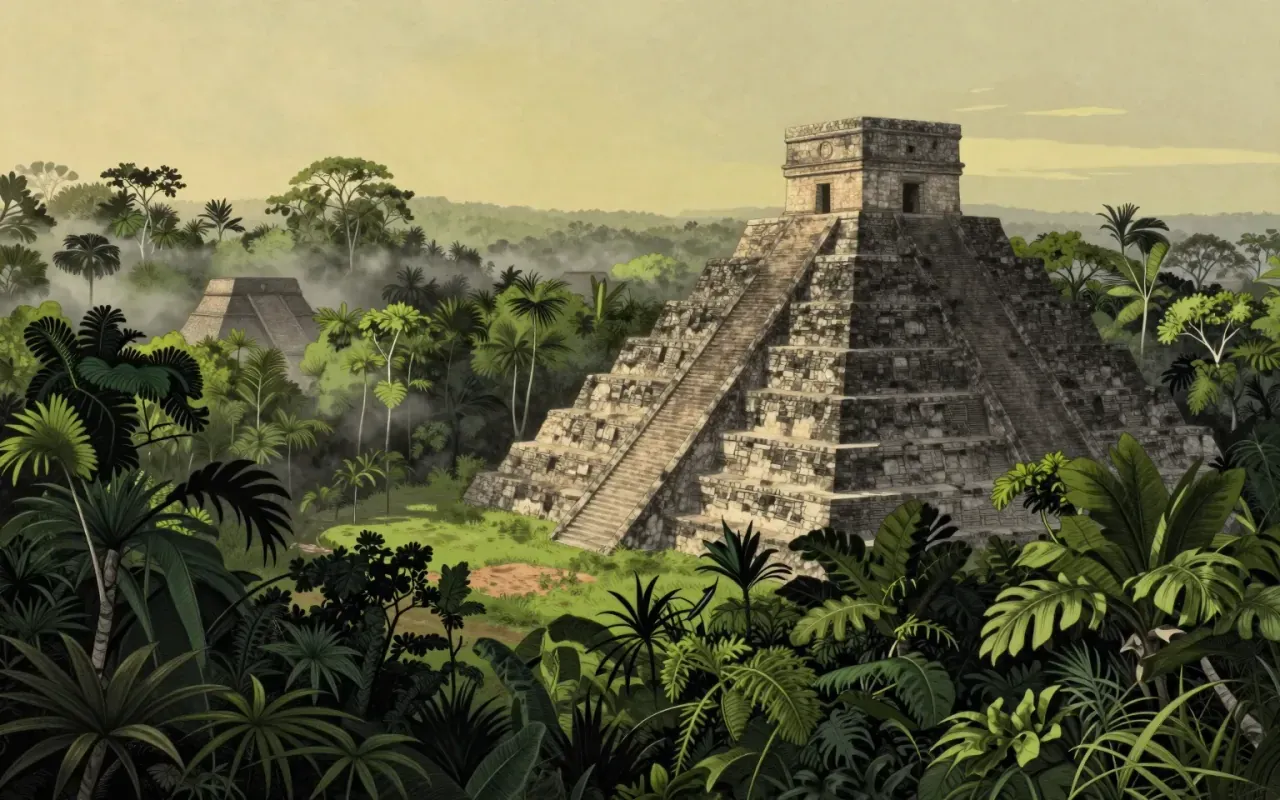
Maya civilisation developed across roughly two thousand years, from early farming settlements around 2000 BC through a Classic period of competing city-states between about 250 and 900, a still-unexplained ninth-century decline, and a Postclassic phase that lasted until Spanish conquest reached the last independent stronghold in 1697. Only three Maya codices survived the conquest, so much of what is known comes from decoded hieroglyphic inscriptions and archaeology, and no single explanation for the Classic collapse commands agreement among historians.
13:00

Medici Bank

1397–1499

Giovanni di Bicci de' Medici founded the bank in 1397 with 10,000 gold florins, building a holding-company structure of semi-independent branch partnerships and using bills of exchange to earn profit on currency conversion rather than charging interest banned under canon law. Wealth from the bank, later boosted by a papal monopoly on alum from Tolfa, let Cosimo de' Medici become Florence's unofficial ruler by 1434 without ever holding formal office. Bad loans to rulers including the English crown, mismanagement at the Bruges branch, and Lorenzo the Magnificent's neglect of the business left the bank unable to survive the political shock of the French invasion of 1494.

13:00

Mongol Empire

1206–1368

Founded when Temüjin was proclaimed Genghis Khan in 1206, the Mongol Empire expanded within a century to cover roughly 23.5 million square kilometres from the Pacific to Eastern Europe, the largest contiguous empire in recorded history, before splitting after 1260 into four khanates that followed separate paths. Its history is documented through Mongolian, Chinese and Persian chronicles composed at different distances from events and with different loyalties, and historians still debate what actually caused its rapid fragmentation.

13:00

Moon landing

20 July 1969

Apollo 11 landed on the Moon on 20 July 1969, with Neil Armstrong and Buzz Aldrin spending about two and a half hours outside the lunar module while Michael Collins orbited above in the command module. The landing itself required Armstrong to take manual control past a boulder field with only seconds of propellant remaining, and the mission was watched live by hundreds of millions of people, a scale of audience unmatched at the time.

13:00

Moscow theater hostage crisis

23 October – 26 October 2002

On 23 October 2002, Chechen militants led by Movsar Barayev seized Moscow's Dubrovka Theatre during a performance, taking roughly 850 to 900 hostages and demanding a Russian withdrawal from Chechnya, before special forces pumped an opioid-based aerosol through the ventilation system and stormed the building before dawn on 26 October, killing all forty hostage-takers. The gas, later identified in a 2012 study as a mixture of carfentanil and remifentanil, was implicated in the deaths of all but one of the 132 officially recorded hostage fatalities, and a Moscow health official stated most died from the gas's effects rather than gunfire, a toll worsened by rescuers who lacked the antidote information needed to treat overdosed survivors and who left seventy-three hostages, including six children, without any medical attention at all.

13:00

Mozambican War of Independence

1964–1974

FRELIMO launched an armed insurgency against Portuguese colonial rule in Mozambique in September 1964, sustaining a decade-long guerrilla campaign that Portugal's military never decisively defeated despite escalating troop deployments. The war ended not through military resolution but through Portugal's 1974 Carnation Revolution, itself partly fuelled by soldiers' discontent over the colonial wars, leading to a negotiated ceasefire and Mozambican independence in June 1975 under FRELIMO's Marxist-Leninist government.

13:00

Mughal Empire

1526–1857

Founded in 1526 when Babur defeated the Delhi Sultanate's forces at Panipat, the Mughal Empire expanded across most of the Indian subcontinent, reaching its greatest territorial extent under Aurangzeb in the late seventeenth century before fragmenting rapidly after his death and formally ending with the deposition of its last emperor following the 1857 uprising. Historians still debate how religiously tolerant or intolerant various emperors actually were, how urbanised Mughal India really was compared with contemporary Europe, and even what to call the dynasty itself.

13:00

Munich Agreement

30 September 1938

Britain, France, Germany, and Italy met in Munich in September 1938 and agreed to hand Germany the Sudetenland, a heavily fortified, industrially significant region of Czechoslovakia, without any Czechoslovak representative present at the actual negotiations. Neville Chamberlain returned home declaring peace for our time, a claim contemporary polling suggests most of the British public initially welcomed, before Hitler occupied the rest of Czechoslovakia within six months and turned the agreement into the standard historical example of appeasement's failure.

13:00

Cyclone Nargis

25 April – 4 May 2008

Cyclone Nargis made landfall in Myanmar's Ayeyarwady Delta on 2 May 2008 at near-peak strength, pushing a storm surge some forty kilometres up the densely populated delta and destroying roughly ninety-five percent of buildings there. The government's official count of 138,373 dead and missing is itself disputed, with aid workers and NGOs suggesting the true toll may have reached as high as 300,000, and the ruling military junta initially refused to allow foreign aid workers or military assistance into the country even as a United States carrier group sat offshore for weeks with undelivered supplies. UN Secretary-General Ban Ki-moon's direct negotiation eventually opened the country to aid workers of any nationality, though military assistance remained barred throughout.

13:00

2016 Nice truck attack

14 July 2016

On Bastille Day, 14 July 2016, Mohamed Lahouaiej-Bouhlel, a 31-year-old Tunisian delivery driver living in Nice, drove a nineteen-tonne truck into crowds on the Promenade des Anglais, killing 86 people and injuring 458 before police shot him dead roughly five minutes after the attack began. He had no prior links to organised terrorism and was not on any watchlist, but investigators found he had rapidly self-radicalised over the preceding months, growing a beard, researching mass-casualty attacks online, and surveying the Promenade in the days beforehand, while separately battling depression, addiction, and a recent divorce and firing. The Islamic State claimed him as acting on its behalf, but French prosecutors concluded he had acted with some accomplices yet without central direction from the group itself.

13:00

Norman Conquest

1066–1075

When Edward the Confessor died childless in January 1066, three men claimed the English throne; William, duke of Normandy, defeated Harold Godwinson at Hastings that October after Harold had already fought off a Norwegian invasion days earlier, and was crowned that Christmas. Full Norman control took nearly a decade to secure, and the conquest's central justifications, a promise from Edward and an oath from Harold, appear only in sources written by the Norman side.

13:00

Nubian pyramids

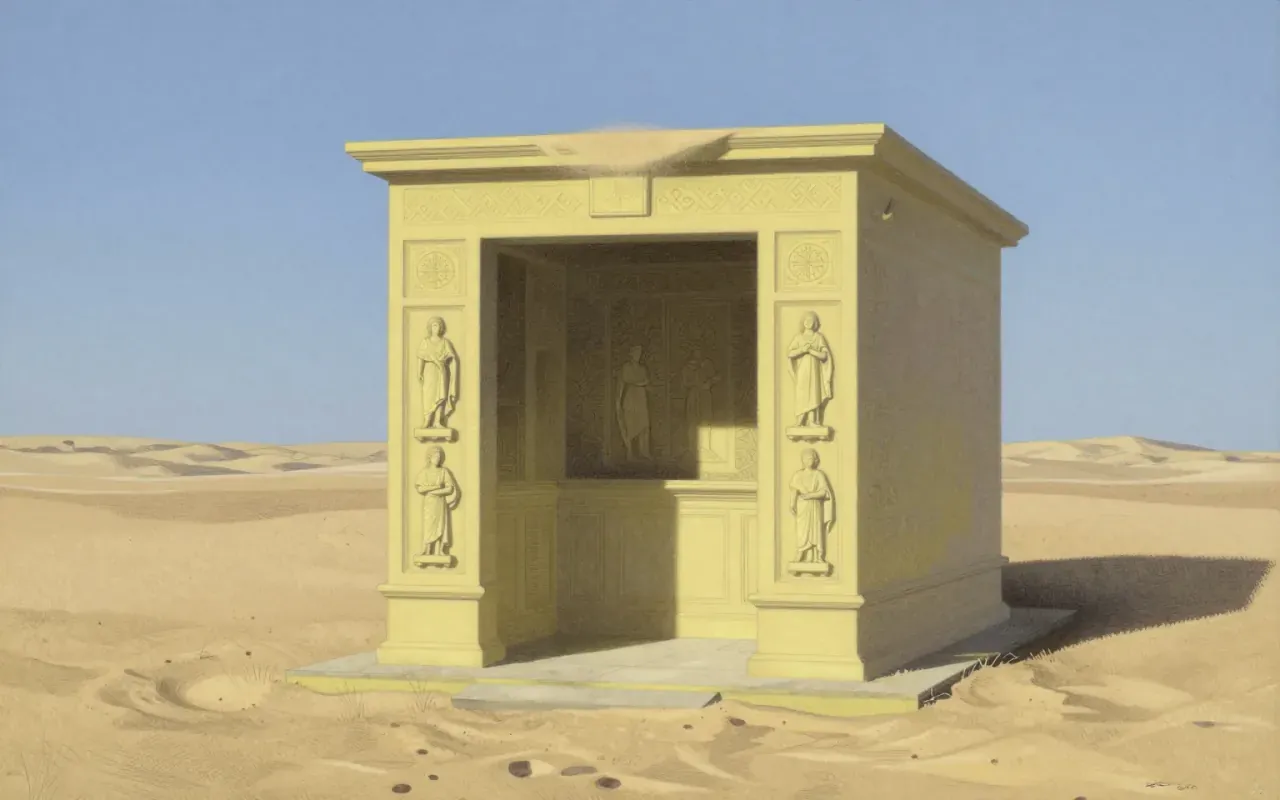
More than double the number Egypt built, these pyramids survived a nineteenth-century treasure hunter who demolished forty of them from the top down searching for gold.
13:00

Nuremberg trials

1945–1946

Twenty-two senior Nazi leaders stood trial before judges from the four Allied powers between November 1945 and October 1946, charged under a newly created legal framework that made individuals, not just states, criminally responsible for aggression and atrocity, resulting in eleven death sentences and three acquittals. The trials established lasting precedents for international law even as critics have long pointed out their selective scope, a charter narrow enough that Soviet purges and deportations never came under the same scrutiny applied to the defendants in the dock.

13:00

Occupation of Czechoslovakia (1938–1945)

14 March – 16 March 1939

Germany annexed the Sudetenland after the 1938 Munich Agreement, then seized the remainder of Czech lands in March 1939, establishing the Protectorate of Bohemia and Moravia while Slovakia declared a nominally independent, German-aligned state. The occupation killed an estimated 294,000 to 320,000 people, mostly Jews, exploited Czechoslovakia's advanced industrial base for German rearmament, and ended only with the Prague Uprising and Soviet arrival in May 1945.

13:00

October Revolution

25 October – 26 October 1917

The October Revolution unfolded over roughly twenty-four hours on 24 and 25 October 1917 in the old Russian calendar, as Bolshevik forces under Leon Trotsky's organisation seized key points in Petrograd and took the Winter Palace from a token garrison of cadets, cossacks and a women's battalion, forcing Alexander Kerensky's Provisional Government to flee. Vladimir Lenin became head of the new Soviet government, and though the Bolsheviks won only 24 percent of the vote in elections held weeks later, they dissolved the resulting Constituent Assembly after a single session, a seizure of power that Soviet-era propaganda later reimagined as a dramatic battle even though the original assault had produced almost no casualties at all.

13:00

Opium in China

1858–1860

Qing emperors issued prohibitions against opium from 1729 onward, but rising imports and two wars forced China to legalise the trade through the 1858 and 1860 treaties that ended the Second Opium War. Suppression campaigns in the early twentieth century briefly cut consumption sharply, only for the trade to resume under revenue pressure after the Qing collapse in 1911, until the Communist government's often brutal 1950s campaigns finally ended mass addiction within Chinese cities.

13:00

First Opium War

1839–1842

The First Opium War ran from 1839 to 1842 after Chinese commissioner Lin Zexu confiscated and destroyed over 20,000 chests of British-imported opium at Humen, prompting Britain to send a naval and military force that defeated Qing forces along the Pearl and Yangtze rivers while suffering only 87 combat deaths against several thousand Chinese casualties. The resulting Treaty of Nanking, signed in August 1842, ceded Hong Kong to Britain in perpetuity, opened five treaty ports, imposed a 21 to 27 million silver dollar indemnity and granted extraterritorial rights to British subjects, becoming the first of the unequal treaties that Chinese nationalist historiography later dated as the start of a Century of Humiliation.

13:00

Opium Wars

1839–1860

Britain fought two wars against Qing China, from 1839 to 1842 and again from 1856 to 1860, after Chinese officials moved to suppress the opium trade British merchants had built up to offset a longstanding deficit in trade for Chinese tea, silk and porcelain. Chinese defeat in both conflicts led to the ceding of Hong Kong, the opening of treaty ports, and a set of unequal treaties that Chinese historiography treats as the beginning of what is called the century of humiliation.

13:00

Oslo Accords

13 September 1993

Secret talks in Norway produced the September 1993 Declaration of Principles between Israel and the PLO, establishing mutual recognition and a Palestinian Authority meant to govern a five-year transition toward permanent status negotiations. Those final talks never concluded, settlement building continued throughout, and both the assassination of Yitzhak Rabin in 1995 and the collapse of the 2000 Camp David summit left the accords' unresolved questions of Jerusalem, borders and refugees exactly where they started.

13:00

Ottoman Empire

1302–1922

Founded around 1299 by the Turkoman leader Osman I and expanded over the following two and a half centuries into a state spanning Southeastern Europe, West Asia and North Africa, the Ottoman Empire reached its territorial peak under Suleiman the Magnificent in the sixteenth century before undergoing a long process of institutional adaptation that older historiography mischaracterised as straightforward decline. It survived until the aftermath of the First World War, when military defeat, genocide against Armenians, Assyrians and Greeks, and the Turkish War of Independence led to the sultanate's abolition in 1922 and the caliphate's in 1924.

13:00

Janissary

1363–1826

Founded in the fourteenth century as the Ottoman sultan's personal infantry, the Janissary corps was filled for nearly three centuries through the devshirme, a periodic levy of Christian boys from the Balkans who were converted, trained, and bound to lifelong service. Their early adoption of firearms made them one of the first true gunpowder infantry forces in the world, but by the seventeenth century the corps had opened membership to hereditary recruits, taken up trade and property, and turned repeatedly on the sultans who depended on it. Sultan Mahmud II finally destroyed the institution in 1826, in an episode still known as the Auspicious Incident.

13:00

Panama Canal

1881–1914

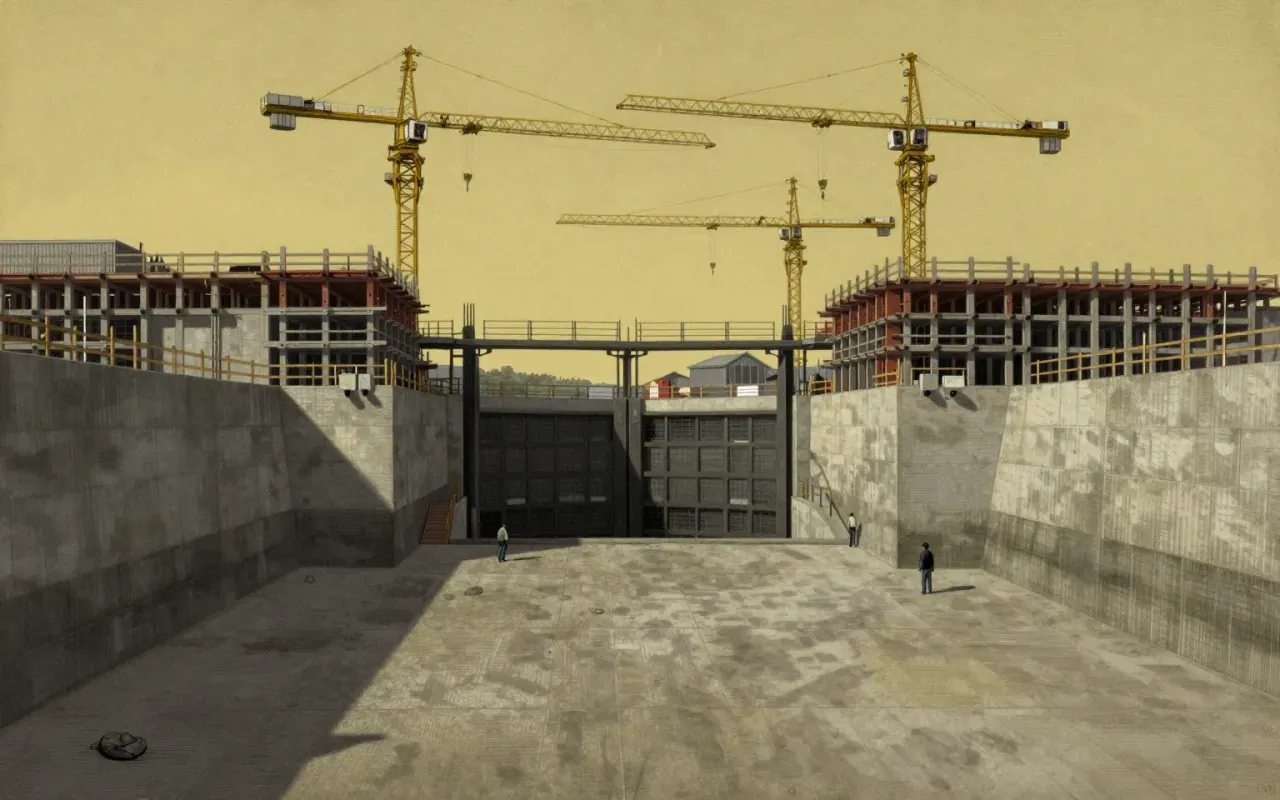
Ferdinand de Lesseps's French company began excavating a sea-level canal across Panama in 1881, a project that collapsed in bankruptcy in 1889 after roughly 22,000 deaths from disease and an underestimation of the terrain's difficulty. The United States acquired the French assets, engineered Panama's 1903 secession from Colombia to secure treaty rights, and completed a lock-and-lake canal in 1914 after further improving disease control, before transferring full sovereignty to Panama in 1999.

13:00

Roman Curia

Founded late 11th century

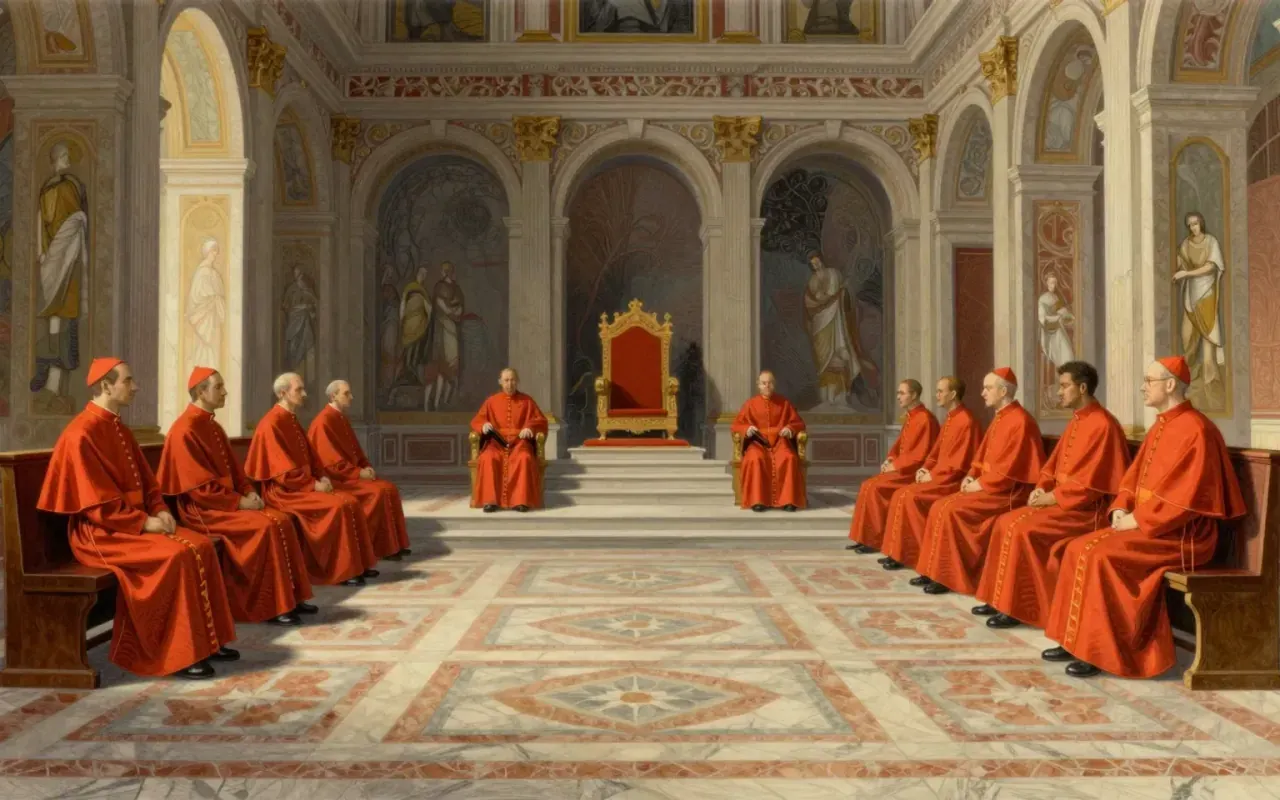
The Roman Curia, the administrative body that runs the Catholic Church's central affairs, is generally traced to Pope Urban II at the end of the eleventh century, though the word curia itself simply meant royal court in medieval Latin. It has been reorganised repeatedly since: by Pius X in the early twentieth century, by Paul VI in the 1960s, by John Paul II in 1988, and most recently by Pope Francis, whose 2022 constitution Praedicate evangelium opened senior leadership roles to laypeople and, within three years, produced the Curia's first female prefect.

13:00

Paris Agreement

12 December 2015

Adopted on 12 December 2015 by nearly two hundred countries at the United Nations climate conference outside Paris, the agreement commits parties to keeping global warming well below two degrees Celsius above pre-industrial levels, with an aspiration toward 1.5 degrees, through voluntary national pledges reviewed every five years. It entered into force in November 2016, and the United States has since withdrawn and rejoined it twice, first under Donald Trump in 2017 and Joe Biden in 2021, and again with Trump's second withdrawal taking effect in January 2026, underscoring how dependent the agreement's voluntary structure is on continued political will.