historybriefs
Newest

All briefs

482 briefs · 5812 min · 385–480 on page 5 of 6
13:00

November 2015 Paris attacks

13 November 2015

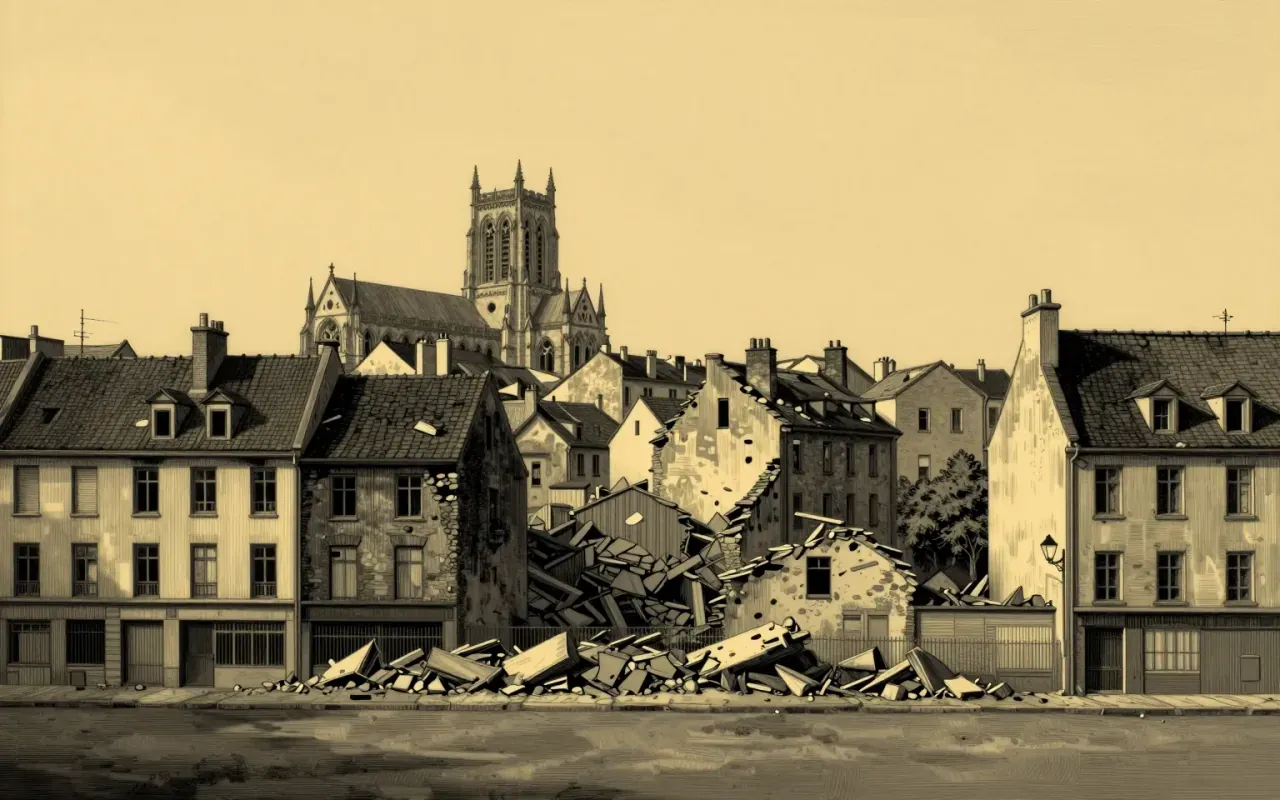
On the night of 13 November 2015, ten operatives from a Brussels-based ISIS cell carried out coordinated shootings and suicide bombings across six sites in Paris and Saint-Denis, killing 130 civilians and injuring more than four hundred, with the Bataclan theatre alone accounting for ninety deaths during a hostage-taking that ended in a police assault. President François Hollande called the attacks an act of war and declared a three-month state of emergency, and France launched major airstrikes against ISIS targets in Raqqa within two days. Salah Abdeslam, the only surviving member of the attack teams, evaded capture until March 2016, while the cell's ringleader, Abdelhamid Abaaoud, was killed in a raid five days after the attacks.
13:00

Partition of India

15 August 1947

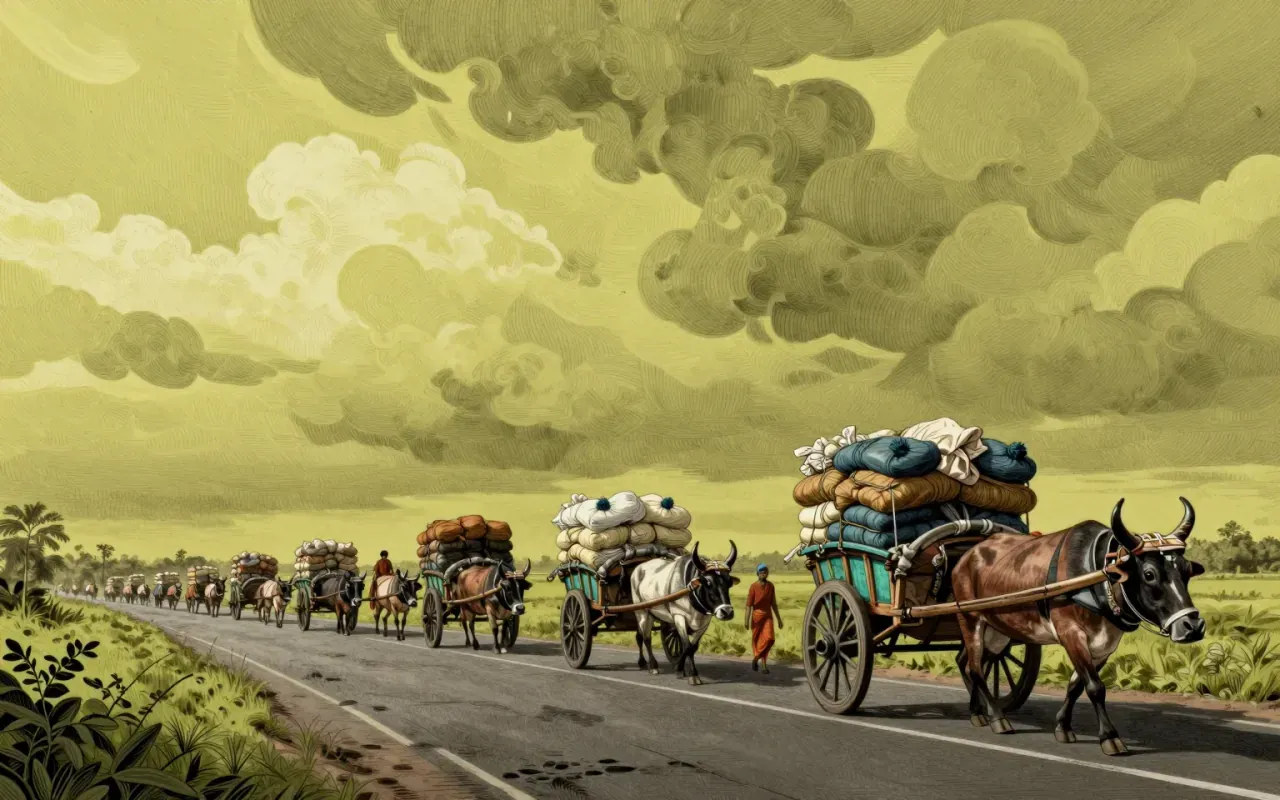
British India was divided into India and Pakistan in August 1947, ending decades of colonial rule and an independence movement that stretched back to the previous century. The partition triggered mass displacement across new religious lines, with estimates of deaths ranging from 200,000 to two million and displaced people numbered between 12 and 20 million, figures that remain disputed rather than settled. It left lasting hostility between the two new states that continues to shape the region.

13:00

Partition of Ireland

3 May 1921

The Government of Ireland Act of 1920 split the island into two self-governing territories, drawing Northern Ireland's border around six counties chosen specifically because they gave unionists a workable majority, even though two of those counties had nationalist majorities of their own. A boundary commission set up under the 1921 treaty to revisit that line spent years preparing its case, only for its 1925 report to leak, be suppressed by all three governments involved, and leave the original six-county border permanently fixed in place.

13:00

Division of Korea

August 1945

Korea was split at the 38th parallel in August 1945 after two young American officers, working overnight with a commercial atlas rather than any deep regional expertise, proposed the line to ensure Seoul fell under American rather than Soviet control. Separate governments under Kim Il Sung and Syngman Rhee formed by 1948, both claiming the whole peninsula, and the resulting Korean War of 1950 to 1953 killed well over a million civilians before ending in an armistice that left the country divided along almost the same line, without a peace treaty ever being signed.

13:00

Peace of Utrecht

1713

Twenty separate treaties, negotiated at Utrecht between 1712 and 1715, ended the War of the Spanish Succession by confirming Philip V as Spain's king while barring any future union of the French and Spanish crowns. Britain emerged with Gibraltar, Minorca, Canadian territory and a lucrative slave-trading monopoly, cementing its naval and commercial rise even as historian Brendan Simms has argued the settlement addressed France's past threat rather than the Spanish Mediterranean ambitions that would trouble Europe next.

13:00

Peloponnesian War

431–404 BC

From 431 to 404 BC, Athens and Sparta fought for dominance of the Greek world, a conflict of shifting alliances, a devastating plague, and a catastrophic Athenian invasion of Sicily that ended in naval defeat and surrender. Nearly everything known about it comes from the Athenian general Thucydides, writing partly from exile, and from Xenophon's later, more Spartan-leaning continuation, sources historians still weigh carefully rather than take at face value.

13:00

Greco-Persian Wars

499–449 BC

Between 499 and 449 BC, a coalition of Greek city-states resisted repeated Persian campaigns, from the burning of Sardis through the stands at Marathon, Thermopylae and Salamis to the eventual Persian withdrawal. Almost everything known about it comes from Herodotus, writing two generations later, whose troop figures modern historians treat with open scepticism even as they largely accept his outline of events.

13:00

Piper Alpha

July 1988

The Piper Alpha platform in the North Sea exploded and burned through the night of 6 and 7 July 1988 after a night shift restarted a pump whose safety valve had been removed for maintenance, a hazard recorded only on a separate permit that had gone missing during the shift handover, killing 167 people including two rescuers in what remains the worst death toll in offshore oil and gas history. The subsequent Cullen Inquiry issued 106 safety recommendations and led to the transfer of North Sea safety regulation to an independent body, fundamentally reshaping offshore platform design and oversight standards later adopted internationally, even as a 1997 civil ruling controversially found two dead workers negligent for failures that occurred amid the same broken permit system.

13:00

Carnation Revolution

25 April 1974

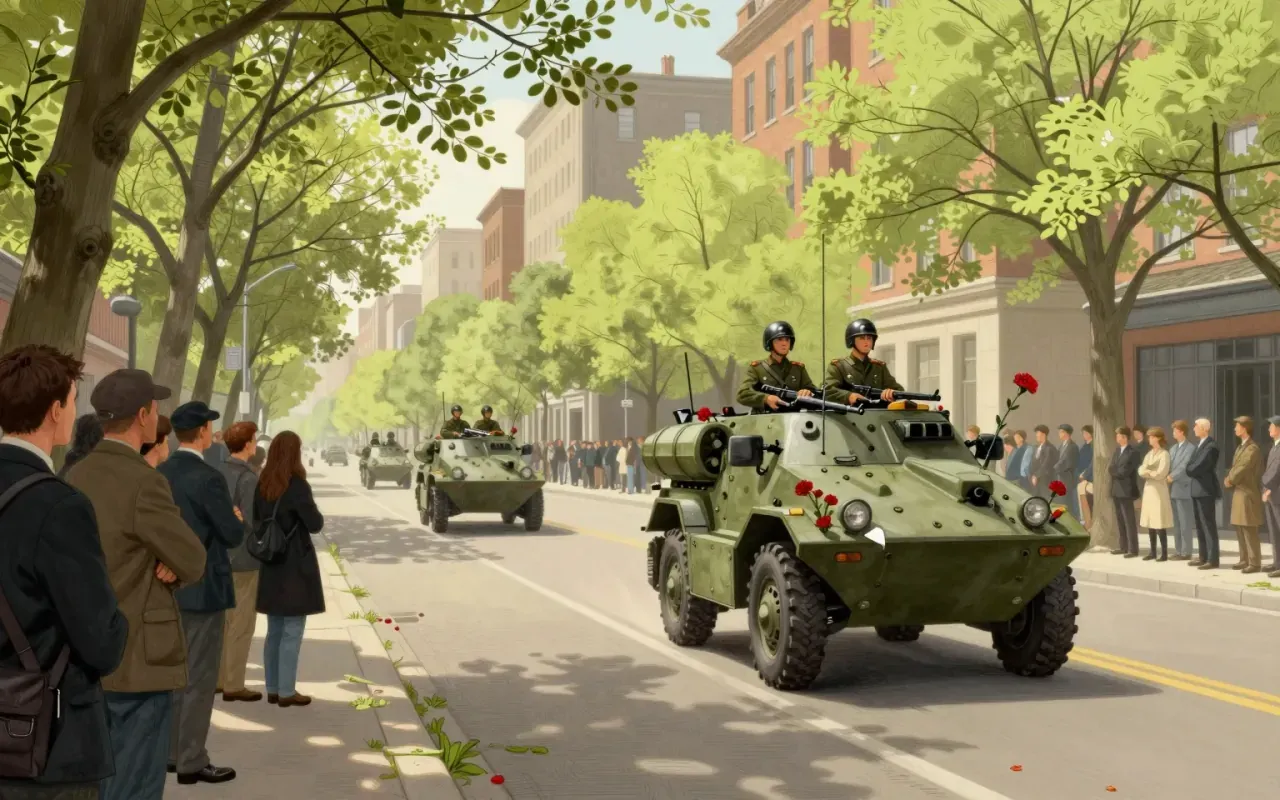
On 25 April 1974, junior military officers in the Armed Forces Movement seized key positions across Lisbon, ending the Estado Novo regime that Antonio Salazar and then Marcelo Caetano had run since 1933. The operation, planned as a military coup against an unsustainable colonial war in Africa, was joined by unexpected crowds who placed carnations in soldiers' rifles, giving the revolution its name, and it triggered the rapid independence of Portugal's African colonies and the return of more than a million Portuguese settlers within two years.

13:00

Prestige oil spill

19 November 2002

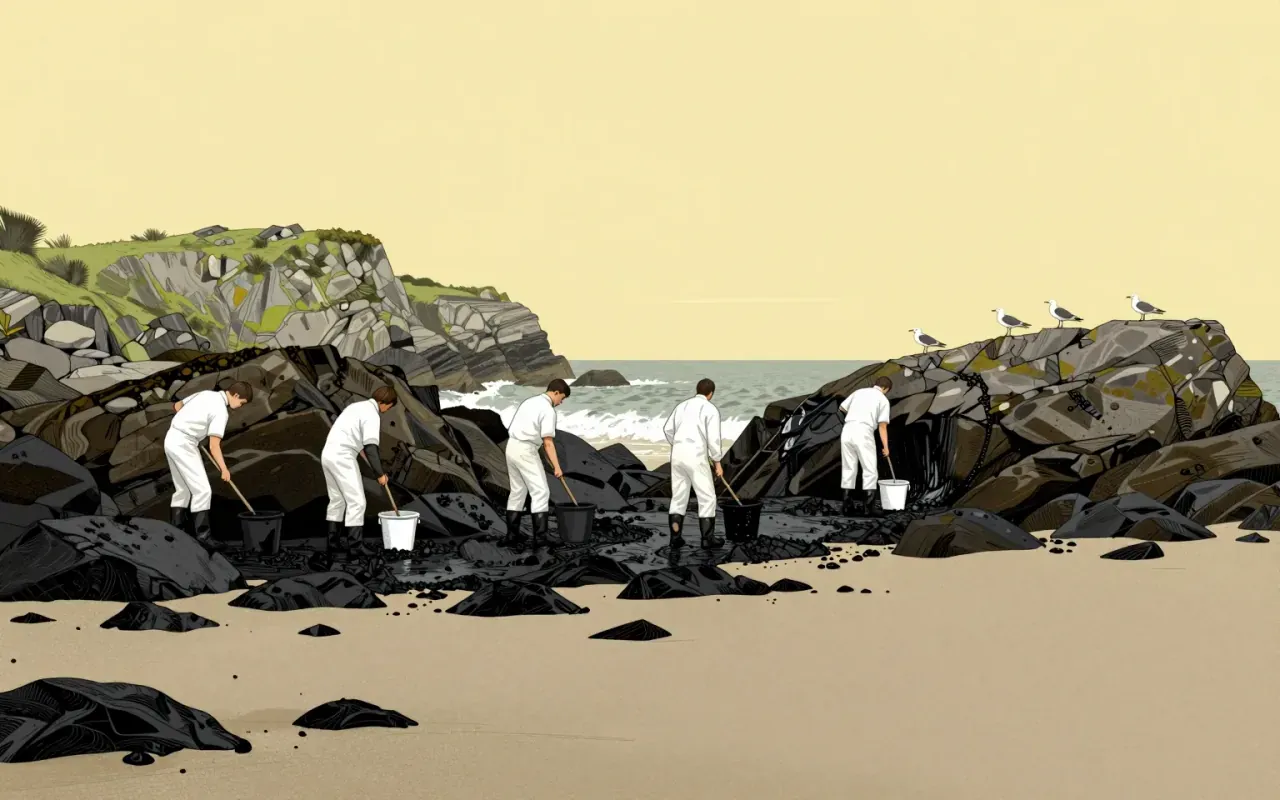
The tanker Prestige suffered a hull breach off Galicia, Spain, during a storm on 13 November 2002 and, after Spanish, French and Portuguese authorities refused it safe harbour and ordered it back out to sea, broke apart and sank on 19 November roughly 210 kilometres from the coast, releasing an estimated 60,000 tonnes of fuel oil that polluted around 2,300 kilometres of coastline across three countries. The disaster produced cleanup costs estimated at 2.5 billion euros for Galicia alone, more than a decade of litigation that eventually saw Spain's Supreme Court convict the ship's captain of recklessness in 2016, and a London insurer ordered in 2017 to pay one billion dollars, though an English court later declined to enforce Spain's full compensation ruling.

13:00

Gutenberg Bible

c. 1455

Gutenberg's Latin Bible, printed in Mainz and reaching its first complete copies around 1454 or 1455, ran to somewhere between about 160 and 185 copies, of which forty-nine survive today with only twenty-five complete. Its production is documented mainly through physical study of surviving copies and a handful of outside references, since no complete written account of how the project was organised or financed has come down to us.

13:00

Reformation

1517–1648

Conventionally dated from Martin Luther's 1517 publication of the Ninety-five Theses challenging the Catholic Church's sale of indulgences, the Reformation split Western Christianity into competing Protestant and Catholic camps over the following century, spreading through the work of Zwingli, Calvin and others and provoking wars of religion estimated to have killed between seven and seventeen million people before ending, in various accounts, at the Peace of Augsburg in 1555 or the close of the Thirty Years' War in 1648. Historians increasingly describe the period in the plural, as overlapping Reformations rather than one unified movement.

13:00

Philosophiæ Naturalis Principia Mathematica

1687

Prompted by a question from the astronomer Edmond Halley in 1684, Isaac Newton spent roughly two years producing the Principia, a three-book work establishing the mathematical laws of motion and gravitation, published in 1687 with Halley personally funding the print run. A priority dispute with Robert Hooke over the underlying gravitational insight nearly derailed the project, and historians now read that dispute as more nuanced than a simple case of Newton taking credit for someone else's idea.

13:00

Pueblo Revolt

10 August – 21 August 1680

In August 1680, Pueblo communities across Spanish New Mexico, coordinated by the Tewa religious leader Po'pay after five years of secret planning, rose simultaneously and expelled Spanish colonists for twelve years, the longest sustained indigenous victory over a European colonial power in the Americas. Spanish colonial letters dominate the immediate record, while Po'pay's own character survives mostly through hostile testimony, leaving historians uncertain whether he ruled afterward as visionary or tyrant. When Spain returned in 1692, it permanently abandoned earlier attempts at religious suppression, making the revolt one of the rare cases of resistance producing lasting concessions.

13:00

Punic Wars

264–146 BC

Rome and Carthage fought three wars between 264 and 146 BC, moving from a dispute over Sicily through Hannibal's invasion of Italy to the final siege and total destruction of Carthage itself. The whole surviving record comes from Greek and Roman writers, chiefly Polybius and Livy, since no Carthaginian account of any of the three wars has survived.

13:00

International Committee of the Red Cross

Founded 1863

The International Committee of the Red Cross grew directly out of Henry Dunant's shock at the aftermath of the 1859 Battle of Solferino, where he organised civilian relief for roughly forty thousand wounded and dying soldiers regardless of which side they fought for. His 1862 book led to a founding committee in Geneva the following year and, in 1864, the first Geneva Convention. The organisation's strict neutrality, run by an assembly of Swiss citizens only, has sustained its access to conflicts for over a century and a half, but the same neutrality left it silent about the Holocaust while it was happening, a failure the ICRC has since formally acknowledged.

13:00

Renaissance

1400–1650

Conventionally dated from the fourteenth to the sixteenth or seventeenth century and beginning in the cities of northern Italy, the Renaissance combined a revival of interest in classical Greek and Roman texts with advances in art, printing, navigation and natural philosophy, spreading gradually across Europe from Florence and Venice outward. Modern historians dispute both what caused it, citing everything from Medici patronage to the aftermath of the Black Death, and whether it represents a genuine rupture with the medieval period or an extension of trends already under way before it.

13:00

Stuart Restoration

1660–1714

After Richard Cromwell's protectorate collapsed, General George Monck's march on London opened the way for Charles II's return in May 1660, restoring the monarchy under a settlement that pardoned most former opponents while executing ten of the surviving regicides. Historians generally describe the Restoration as an act of constitutional continuity rather than revolutionary rupture, even though acceptance was neither universal nor immediate across the country.

13:00

German reunification

1989–1990

East Germany's parliament voted in August 1990 to dissolve itself and accede to the Federal Republic under Article 23 of the West German constitution, completing formal reunification on 3 October after the Two Plus Four Treaty secured Allied agreement to full German sovereignty and NATO membership. The process, compressed into roughly six months once East Germany's first free elections opened the way, is remembered by most as reunification, though some analysts and politicians have described it in the more contested language of annexation given how completely West Germany's institutions simply absorbed the East.

13:00

Revolutions of 1848

1848–1849

A famine-driven economic crisis and a backlog of liberal, radical, and nationalist grievances broke out across more than fifty European states between January 1848 and October 1849, toppling governments in France, Austria, and Prussia within weeks. Almost all of it was rolled back within two years once the temporary alliances between workers, the middle class, and nationalists fractured and conservative armies regrouped, leaving historians to debate whether the episode was a genuine turning point or a rehearsal for the unifications and labour movements that followed decades later.
13:00

Rhodesian Bush War

1964–1979

Ian Smith's white minority government fought a fifteen-year war against ZANU and ZAPU guerrilla movements after unilaterally declaring independence from Britain in 1965 rather than accept demands for majority rule, a conflict that killed roughly 20,000 people. Neither side achieved outright military victory; the war ended instead through the negotiated Lancaster House Agreement of December 1979, leading to internationally supervised elections and the birth of Zimbabwe under Robert Mugabe in 1980.

13:00

History of fascism (1922–1945)

1922–1945

Fascism emerged as a distinct political movement in early twentieth-century Europe, rooted in a broader turn-of-the-century revolt against liberal democracy, and took power first in Italy under Benito Mussolini after the 1922 March on Rome, then in Germany under Adolf Hitler from 1933, before spreading in varied national forms to Spain, Hungary, Romania and elsewhere through the interwar period. Historians including Robert Paxton and Stanley Payne describe fascism as a genuinely diverse and evolving synthesis of ideas rather than a single coherent system, a definitional looseness that continues to complicate comparisons between its different national movements.
13:00

Roman expansion in Italy

753 BC – 3rd century BC

Between the traditional founding date of 753 BC and the completion of Roman rule over the Italian peninsula by the third century BC, Rome expanded from a small Latin settlement into the dominant power in Italy through a sequence of wars against the Latins, Samnites and Greek colonies in the south. The literary record for the earliest centuries, chiefly Livy, is now generally regarded by historians as unreliable in its detail and partly legendary, growing steadily more trustworthy from the fourth century BC onward.
13:00

Umayyad Caliphate

661–750

After Ali's assassination ended years of civil war in 661, the Syrian governor Muawiya secured the caliphate through political patience and a well-organised private army rather than religious authority, then broke precedent by nominating his own son as hereditary successor. Later Umayyad caliphs expanded the empire to its greatest extent before the dynasty was overthrown by the Abbasids in 750. Much of the surviving historical record was compiled under that successor dynasty, giving Muslim historiography clear incentive to emphasise Umayyad injustice over administrative achievement, a bias historians now correct using coins, inscriptions and rarer outside sources.

13:00

Roaring Twenties

1920–1929

The 1920s brought rapid economic growth, mass consumer goods, jazz and a new pace of urban life to the United States and, more unevenly, to parts of Europe. The prosperity behind the name was real but badly distributed: rural industries stagnated, and Prohibition, in force for most of the decade, produced a black market and thousands of poisoning deaths alongside whatever gains it made against drinking. The Wall Street crash of 1929 ended the boom abruptly, and the arguments the decade started, about excess, exclusion and the wisdom of Prohibition, ran on well past the crash.

13:00

Roman Empire

27 BC–395

The Roman Empire began in 27 BC when the Senate granted Octavian the title Augustus, and grew to its greatest territorial extent under Trajan around 117 AD before a third-century crisis of civil war and invasion forced administrative reform under Diocletian and Constantine. It split into western and eastern halves, of which the western collapsed in 476 while the eastern, Byzantine half continued for another millennium. Historians differ over whether to treat the empire's later centuries as decline, as Edward Gibbon argued, or as gradual transformation.

13:00

Russo-Japanese War

1904–1905

The Russo-Japanese War of 1904 and 1905 grew from rival Russian and Japanese ambitions in Manchuria and Korea, opening with a surprise Japanese attack on Port Arthur in February 1904 and culminating in the destruction of Russia's Baltic Fleet at Tsushima in May 1905 after a seven-month voyage of some 18,000 nautical miles. Total deaths reached roughly 43,000 to 71,000 for Russia and 80,000 to 99,000 for Japan, and the Treaty of Portsmouth, mediated by Theodore Roosevelt, awarded Japan control of the Liaodong Peninsula, the South Manchuria Railway and southern Sakhalin, a settlement whose lack of a cash indemnity sparked riots in Tokyo even as the war marked the first modern defeat of a European power by an Asian one and helped trigger Russia's 1905 revolution.

13:00

Russian Revolution

1917

The Russian Revolution unfolded in two stages during 1917: the February Revolution, which forced Tsar Nicholas II's abdication amid wartime economic collapse and military failure, and the October Revolution, in which Vladimir Lenin's Bolsheviks overthrew the resulting Provisional Government. A civil war between Bolshevik Red forces and a loose anti-Bolshevik White coalition followed from 1918 to 1922, ending in Bolshevik victory and the formation of the Soviet Union, while Russia's withdrawal from the First World War via the 1918 Treaty of Brest-Litovsk and the loss of Poland, Finland and the Baltic states reshaped the region's map.

13:00

Rwandan Civil War

1990–1993

From October 1990, the Rwandan Patriotic Front invaded from Uganda seeking the return of Tutsi refugees exiled since the 1959 revolution, fighting a mostly stalemated war against Juvénal Habyarimana's government that was still unresolved when the president's assassination in April 1994 triggered the genocide. The RPF's renewed offensive that followed ended the war and the killing together in July 1994, but left the causes of both only partly settled among historians.

13:00

Rwandan genocide

7 April – 4 July 1994

Following the assassination of President Juvénal Habyarimana on 6 April 1994, Hutu extremists in Rwanda's government and military organised the systematic killing of the Tutsi minority and moderate Hutu, coordinated in part through radio broadcasts and neighbourhood checkpoints, over roughly one hundred days. Scholarly estimates put the death toll between 500,000 and 662,000, well below the Rwandan government's own figure of over a million, and the killing ended only when the Rwandan Patriotic Front took military control of the country in July 1994.

13:00

Sacco and Vanzetti

23 August 1927

Nicola Sacco and Bartolomeo Vanzetti, Italian immigrant anarchists, were convicted of a 1920 Massachusetts robbery and double murder on disputed ballistics evidence and eyewitness testimony, tried amid the anti-radical, anti-immigrant climate of the First Red Scare. Despite a separate man's later confession implicating a different gang, appeals failed and both were executed in 1927, a verdict Massachusetts's governor formally acknowledged as unfair fifty years later without issuing a pardon.

13:00

Sack of Rome (410)

24 August – 27 August 410

In August 410, Visigothic forces under Alaric looted Rome for three days, the first time a foreign army had taken the city in roughly eight centuries, after years of failed negotiation with the western Roman government. Ancient sources, none of them Gothic, describe the damage as concentrated and the violence relatively restrained by the standards of the age, while historians still debate how far Alaric sought the city's destruction against a secure, legitimate place within the empire he had spent his career fighting.

13:00

Salem witch trials

1692–1693

Between February 1692 and May 1693, accusations of witchcraft in Salem Village, Massachusetts, led to more than two hundred people being accused, nineteen hanged, and one man pressed to death for refusing to enter a plea, before the governor halted proceedings and later courts disallowed the spectral evidence that had driven convictions. The episode is small by the standards of the wider European witch panics that preceded it by more than a century, and historians still debate how much weight to give factional rivalry, wartime anxiety, and even a disputed poisoning theory in explaining why it happened when it did.

13:00

Samurai

8th century – 1868

The samurai emerged gradually from the eighth century as landowning mounted warriors serving powerful families, formalised as a distinct hereditary class after the Genpei War in the twelfth century, and transitioned during the long Tokugawa peace from active fighters into administrators before the Meiji government dismantled their legal privileges from 1868 onward. Much of the popular idea of bushido as an ancient, unified samurai code in fact took its familiar shape only in Nitobe Inazo's 1899 book, published after the class it claimed to describe no longer legally existed.

13:00

Scientific Revolution

1543–1687

Between roughly 1543, when Copernicus and Vesalius published their landmark works, and 1687, when Newton's Principia appeared, European natural philosophy shifted toward mathematical, mechanistic explanation and systematic observation, work later credited with founding modern science. The label revolution was not applied to this period until the eighteenth century, and historians remain divided over whether it represents a sharp break with medieval scholarship or a more gradual continuation of it, since many of its central figures trained within and built upon medieval university traditions.

13:00

Scopes trial

1925

John Scopes agreed to be prosecuted for teaching evolution under Tennessee's 1925 Butler Act, turning a publicity stunt for the town of Dayton into a national confrontation between defence attorney Clarence Darrow and prosecutor William Jennings Bryan. Scopes was convicted and fined, a verdict later overturned on an unrelated technicality, and while the trial is widely remembered through the largely fictionalised 1955 play Inherit the Wind, historians still dispute how much it actually changed American attitudes toward evolution in schools.

13:00

Scramble for Africa

1885–1914

Between roughly 1881 and 1914, European powers moved from controlling about a tenth of Africa's territory to claiming roughly ninety per cent of it, a process regulated but not caused by the 1884 to 1885 Berlin Conference and driven by a combination of economic interest, strategic competition and new technology that made the continent's interior newly accessible. The human cost varied enormously by territory, with the Congo Free State under Leopold II of Belgium responsible for a documented mortality catastrophe whose exact scale historians still dispute, and the resulting arbitrary borders persisted through decolonisation to shape conflicts long afterward.

13:00

Sengoku period

1467–1590

Japan's Sengoku, or Warring States, period saw the Ashikaga shogunate's authority collapse into more than a century of conflict among competing regional lords, a process historians variously date from incidents in 1454, 1467 or 1493, and which ended through the successive unification efforts of Oda Nobunaga, Toyotomi Hideyoshi and Tokugawa Ieyasu, culminating in the establishment of the Tokugawa shogunate by 1615. The introduction of firearms in 1543 and the resulting rise of large infantry armies reshaped Japanese warfare and enabled unusual social mobility during the conflict.

13:00

Seven Years' War

1756–1763

The Seven Years' War, fought from 1756 to 1763 across Europe, North America, India, the Caribbean and West Africa, grew out of unresolved tensions from the previous War of the Austrian Succession and a sudden realignment of European alliances. The 1763 Treaty of Paris confirmed Britain as the dominant global colonial power, and the resulting tax burden on Britain's American colonies fed directly into the grievances behind the American Revolution barely a decade later.

13:00

Sakoku

1639–1854

Between 1633 and 1639, the Tokugawa shogunate issued edicts restricting foreign contact and threatening execution for Japanese who left or returned from abroad, a policy later named sakoku that lasted until Commodore Perry's 1853 arrival forced its end. Revisionist historians since the 1970s have argued the policy, better described by the term kaikin or maritime prohibitions, permitted substantial regulated trade through Nagasaki and three other channels throughout its supposed closure.

13:00

Siege of Vienna (1529)

27 September – 15 October 1529

After crushing Hungary's army at Mohács in 1526, Suleiman the Magnificent marched on Vienna in 1529 to extend Ottoman control over central Europe, but flooding along the Balkan approach forced him to abandon heavy artillery and pack animals well before he reached the city. His force, estimated between roughly seventy-five thousand and a hundred thousand men at the walls, besieged a garrison of some seventeen to twenty-one thousand defenders under Nicholas, Count of Salm, for about two and a half weeks in September and October before supply shortages, disease, and a failed final assault forced a retreat. The failure marked the effective limit of Ottoman expansion into central Europe and opened a century and a half of recurring conflict with the Habsburgs.

13:00

Silk Road

114 BC – 1450

For roughly two thousand years, from around 114 BC until Ottoman control of overland routes hastened its decline after 1450, a shifting network of roads and sea lanes carried silk, spices, paper, religions and disease between China, Central Asia, India and the Mediterranean. The term Silk Road itself is a nineteenth-century coinage, and historians now argue over whether it overstates the coherence of what was really a patchwork of regional trades, with maritime routes through India possibly mattering more economically than the overland paths the name evokes.

13:00

Sinking of RMS Lusitania

7 May 1915

On 7 May 1915 a German submarine torpedoed the Cunard liner Lusitania off the Irish coast, killing roughly twelve hundred of the 1,960 people aboard in eighteen minutes. Three inquiries, in Cork, London and New York, examined what happened, but they disagreed among themselves and with each other about the death toll, the cause of a mysterious second explosion, and whether a liner carrying declared war cargo was a legitimate target. The sinking hardened American opinion against Germany, though the United States did not enter the war for almost two more years.

13:00

First Sino-Japanese War

1894–1895

War broke out between Qing China and Meiji Japan in August 1894 over rival influence in Korea. Japan's modernised military won a rapid succession of victories on land and sea, and the 1895 Treaty of Shimonoseki forced China to recognise Korean independence, cede Taiwan, and pay a large indemnity. The defeat exposed the limits of China's partial reforms and fed directly into the revolutionary politics that would end the Qing dynasty, while Japan emerged as the region's dominant power.

13:00

Six-Day War

5 June – 10 June 1967

Israel launched a surprise air assault against Egypt on 5 June 1967 after weeks of escalating tension triggered partly by a false Soviet report of Israeli troop movements against Syria, and within six days had defeated Egyptian, Jordanian and Syrian forces, seizing the Sinai Peninsula, the West Bank, East Jerusalem, Gaza and the Golan Heights. The war displaced roughly 413,000 Palestinians and remains disputed over whether Israel's strike constituted legitimate pre-emption or aggression, a question tied to the closure of the Straits of Tiran that preceded it.

13:00

University of Paris

1896–1971

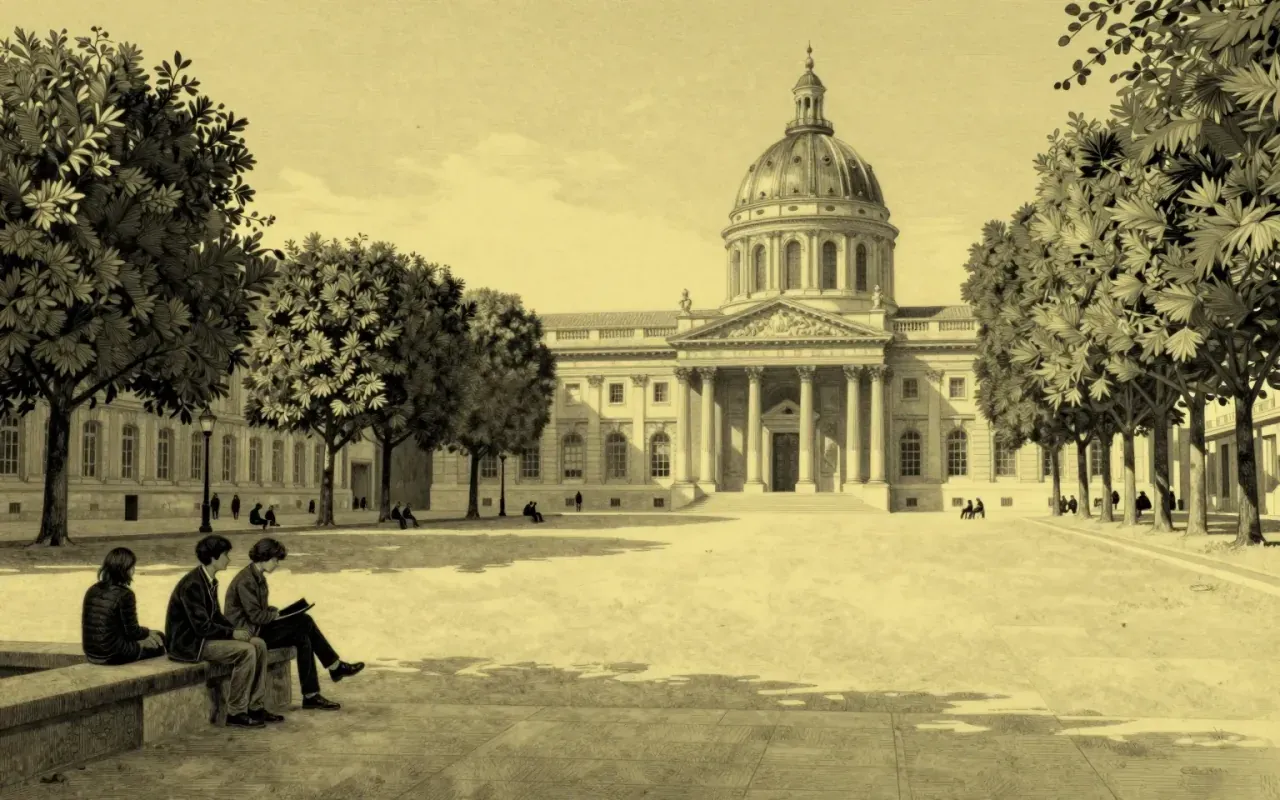
The University of Paris grew out of a twelfth-century cathedral school and was formally recognised by King Philip II in 1200, becoming the model medieval European university and drawing scholars into faculties of arts, law, medicine, and theology organised by nation of origin. Robert de Sorbon's 1253 theological college for poor students gave the whole institution its popular name. The French Revolution abolished the university outright in 1793, Napoleon restored a version of it in 1806, and the student unrest of May 1968 led directly to a 1970 law that split what remained into thirteen separate, autonomous universities.

13:00

Space Race

1957–1975

From the mid-1950s to the mid-1970s, the United States and the Soviet Union competed to demonstrate technological supremacy through spaceflight, a rivalry that produced Sputnik, Yuri Gagarin's orbital flight, and the Apollo moon landings. The Soviets pursued a strategy of dramatic firsts announced only after success, while the Americans broadcast their efforts publicly, including their failures, and the competition faded rather than concluded, ending in a joint mission rather than a declared victory.

13:00

Spanish–American War

25 April – 11 August 1898

The Spanish-American War ran from April to August 1898, triggered by the unexplained sinking of the USS Maine in Havana harbour in February that year and fought over Spain's brutal suppression of Cuban independence movements. American victories at Manila Bay and Santiago de Cuba, alongside far heavier losses to disease than to combat, forced Spain to sue for peace, and the resulting Treaty of Paris transferred Puerto Rico, Guam and the Philippines to the United States for a payment of twenty million dollars while granting Cuba nominal independence, a settlement that made the United States an overseas imperial power and that historians still debate as either a humanitarian intervention or a calculated act of expansion dressed in moral language.

13:00

Spanish Empire

1492–1899

Formed from the 1469 union of Ferdinand of Aragon and Isabella of Castile and launched into overseas expansion by Columbus's 1492 voyage, the Spanish Empire grew to cover roughly 13.7 million square kilometres across the Americas, parts of Europe, Africa and Asia before contracting through independence movements in the 1810s and 1820s and finally ending with the loss of its last colony in 1976. Conquest of the Aztec and Inca empires brought catastrophic population loss to indigenous peoples, a record contemporaries and later scholars have argued over from opposing directions, from exaggerated Protestant-era atrocity propaganda to more recent scholarship documenting genuine and extensive harm.

13:00

Storming of the Bastille

14 July 1789

On 14 July 1789, a Paris crowd searching for gunpowder and cannon attacked the Bastille, a royal fortress-prison, after seizing muskets from the Hotel des Invalides that morning. Fighting killed around ninety-eight attackers and one defender before the governor, Bernard-Rene de Launay, surrendered and was then killed by the crowd. The fortress held only seven inmates at the time, but its fall became the symbolic opening act of the French Revolution and the origin of France's national day.

13:00

Taiping Rebellion

1851–1864

Hong Xiuquan, a failed imperial examination candidate from Guangdong who came to believe he was the younger brother of Jesus Christ after a breakdown and a set of visions, founded a millenarian movement that captured Nanjing in 1853 and fought the Qing dynasty for fourteen years before the city fell in 1864 and Hong died during its final siege. Death toll estimates range from a commonly cited 20 to 30 million up to as high as 73 to 100 million, figures historians acknowledge are necessarily speculative given the absence of reliable census data and the destruction of most Taiping records, and modern scholars continue to disagree over whether to call the conflict a rebellion, a civil war or a revolution, each label carrying different implications about the Qing dynasty's legitimacy and the movement's own transformative ambitions.

13:00

1976 Tangshan earthquake

28 July 1976

The magnitude 7.6 earthquake that struck Tangshan at 3:42 in the morning on 28 July 1976 gave no perceptible warning, unlike a 1975 quake at Haicheng that had been successfully predicted, and it collapsed roughly 85 percent of the city's largely unreinforced brick buildings within minutes. China's official death toll stands at 242,469, though historians cross-checking government files put the true figure at 300,000 or more, a gap the state has never fully resolved. The disaster struck six weeks before Mao Zedong's death and amid the ideological pressures of the Cultural Revolution, and the government initially refused foreign aid, mobilising over 42,000 workers domestically instead to restore rail lines within weeks even as full economic recovery took well over a year.

13:00

Sinking of the Titanic

14 April – 15 April 1912

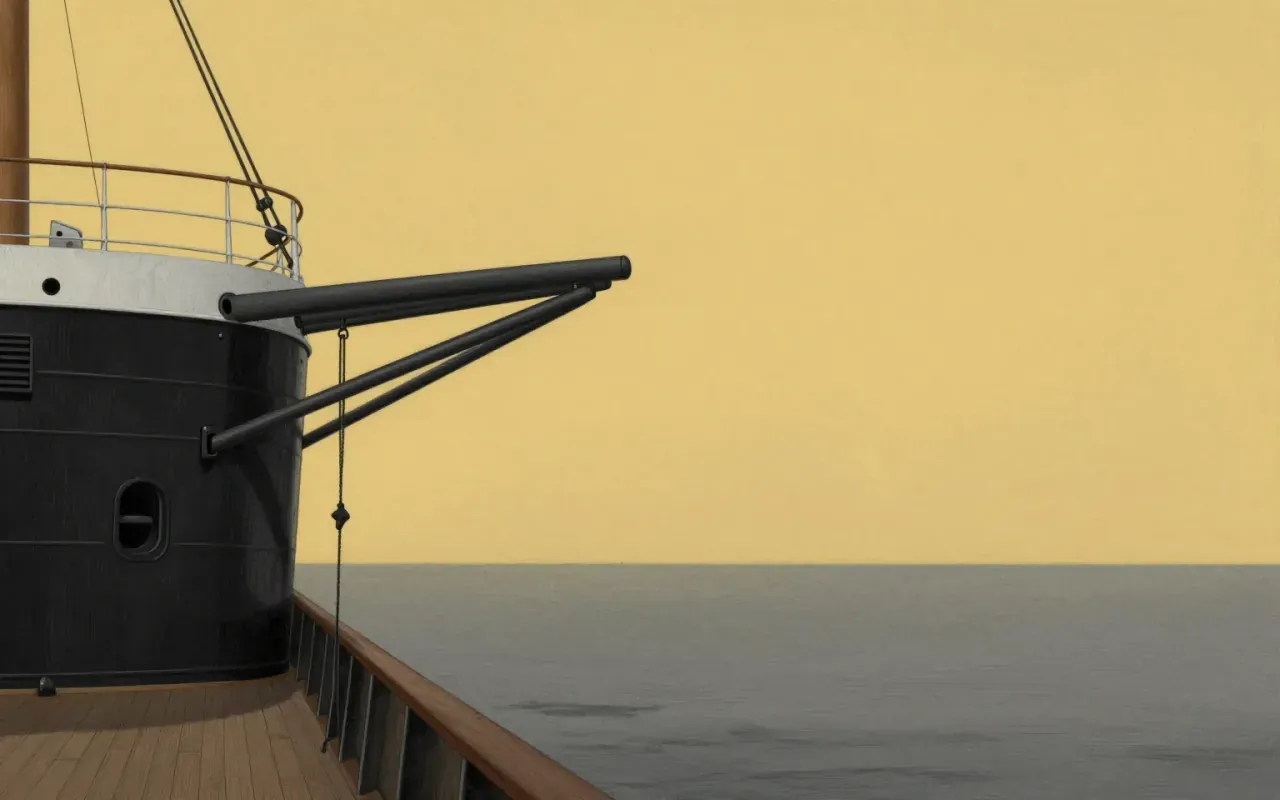
RMS Titanic struck an iceberg at 23:40 ship's time on 14 April 1912 and sank roughly two hours and forty minutes later, killing between 1,490 and 1,635 of the 2,208 people aboard. The ship carried lifeboats for only about half those on board, a legal requirement it actually exceeded, and third-class passengers faced structural and practical barriers to reaching the boat deck that reduced their odds of survival. Modern surveys of the wreck have since revised earlier assumptions about the exact damage the iceberg caused.

13:00

Tokugawa shogunate

1603–1867

Established by Tokugawa Ieyasu after his 1600 victory at Sekigahara and formalised when he took the title of shogun in 1603, the Tokugawa shogunate governed Japan for over two and a half centuries through a system dividing power between the shogunate in Edo and roughly 270 regional domains, enforced by hostage-style residence requirements on local lords and a strict limitation on foreign contact. The shogunate ended in 1868 when the fifteenth shogun resigned amid the Meiji Restoration, following decades of internal strain and mounting foreign pressure.

13:00

Atlantic slave trade

15th–19th century

Between the fifteenth and nineteenth centuries, European traders transported an estimated 12.75 million enslaved Africans across the Atlantic, purchasing most from African merchants rather than capturing them directly, with roughly two million dying during the voyage itself. Portugal and Britain carried the largest shares, the trade fed plantation economies concentrated heavily in Brazil and the Caribbean, and historians continue to debate how equal a bargaining position African traders actually held against the European commercial networks driving demand.

13:00

Treaty of Amiens

27 March 1802

Signed after a five-hour overnight session in March 1802, the Treaty of Amiens briefly ended a decade of war between Britain and France, with Britain returning most captured territory in exchange for French withdrawal from Egypt, Naples and the Papal States. Napoleon's continued expansion into Switzerland and Italy, and Britain's refusal to evacuate Malta as agreed, brought the two countries back to war within thirteen months, opening the Napoleonic Wars that would run for another twelve years.

13:00

Treaty of Brest-Litovsk

3 March 1918

Russia's new Bolshevik government tried to exit the First World War through a negotiating strategy of prolonged delay rather than concession, until a renewed German offensive in February 1918 forced Lenin to accept terms costing Russia roughly a third of its former population and the great majority of its industry and coalfields. The treaty freed a million German soldiers for the Western Front but was annulled within eight months by Germany's own defeat, leaving its territorial losses to be fought over again in the civil war that followed.

13:00

Camp David Accords

17 September 1978

President Jimmy Carter mediated thirteen days of negotiation between Egyptian President Anwar Sadat and Israeli Prime Minister Menachem Begin at Camp David in September 1978, the two leaders so personally hostile toward each other that Carter had to shuttle between separate cabins rather than let them negotiate face to face. The resulting accords produced a framework for Palestinian autonomy that went largely unimplemented and a separate framework leading directly to the 1979 Egypt-Israel peace treaty, under which Israel withdrew fully from the Sinai Peninsula. Sadat and Begin shared the 1978 Nobel Peace Prize, but the Arab League suspended Egypt's membership for a decade in retaliation, and Sadat himself was assassinated by Egyptian Islamic Jihad militants in October 1981, a peace that has endured since as what observers describe as a cold one.

13:00

Treaty of Nanking

29 August 1842

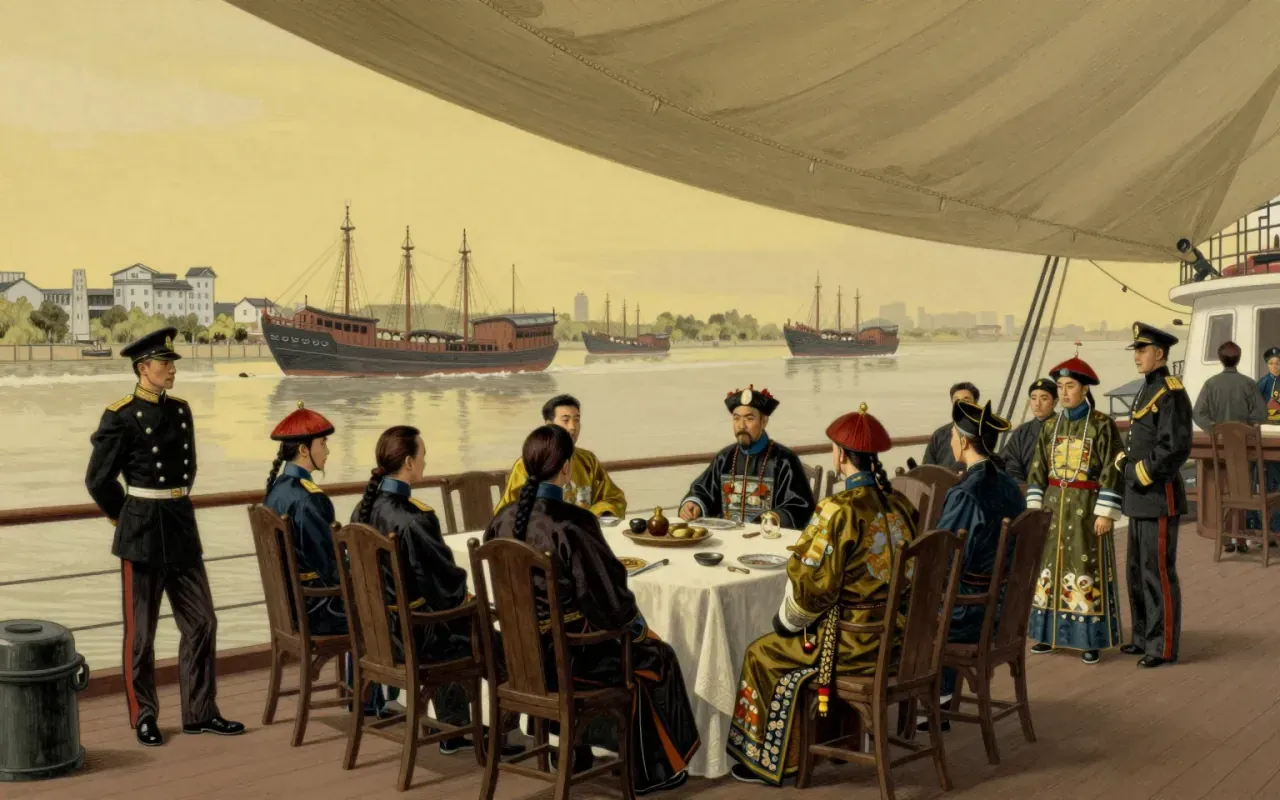
Signed aboard a British warship off Nanjing in August 1842, the treaty that ended the First Opium War opened five Chinese ports to British trade, ceded Hong Kong Island, and imposed an indemnity covering confiscated opium, ransom and war costs. Its one-sided terms followed directly from Britain's military advantage rather than negotiation. Only later did Chinese nationalists label it an unequal treaty and the opening of a century of humiliation, a framing quite different from the Qing court's muted contemporary response.

13:00

Treaty on the Non-Proliferation of Nuclear Weapons

1 July 1968

Signed in 1968 and in force since 5 March 1970, the Treaty on the Non-Proliferation of Nuclear Weapons recognises the United States, Russia, Britain, France and China as nuclear-weapon states while committing other signatories not to acquire such weapons, in exchange for access to civilian nuclear technology and a pledge from the five toward eventual disarmament. India, Pakistan and Israel never joined and have since built arsenals, North Korea withdrew in 2003 and tested a weapon in 2006, and the treaty, extended indefinitely in 1995, now has 189 parties even as roughly 13,400 warheads remain among the recognised nuclear powers.

13:00

Treaty of Paris (1763)

10 February 1763

Signed on 10 February 1763 in Paris, the treaty ended the Seven Years' War among Britain, France, Spain and Portugal after a conflict that historians estimate killed well over half a million soldiers across Europe. France ceded Canada and its territory east of the Mississippi to Britain and transferred Louisiana west of the river to Spain, while Spain gave Florida to Britain in exchange for the return of Havana and Manila, redrawing the map of North America and beginning what the treaty's own terms describe as an era of British dominance beyond Europe.

13:00

Treaty of Paris (1783)

3 September 1783

Signed on 3 September 1783 at the Hotel d'York in Paris, the treaty ended the American Revolutionary War, with Britain recognising the thirteen colonies as free and independent states after American negotiators Benjamin Franklin, John Jay, John Adams and Henry Laurens reached terms with British representative David Hartley. It set boundaries running to the Mississippi River, granted American fishing rights off Newfoundland, and included unenforceable promises on debts and loyalist property that left disputes simmering for years, some not resolved until the Jay Treaty of 1794.

13:00

Treaty of Rome

25 March 1957

Signed on 25 March 1957 on Capitoline Hill in Rome and effective from 1 January 1958, the Treaty of Rome established the European Economic Community among Belgium, France, Italy, Luxembourg, the Netherlands and West Germany, alongside a companion treaty founding the European Atomic Energy Community. Built on the 1955 Spaak Report and negotiations at Val Duchesse, it created a customs union intended to foster economic integration, and its institutions were later merged with those of the earlier Coal and Steel Community before evolving, through the Maastricht and Lisbon treaties, into the European Union.

13:00

Treaty of Tordesillas

June 1494

Signed in 1494, the Treaty of Tordesillas divided newly encountered lands between Spain and Portugal along an imprecisely defined line west of the Cape Verde islands, a Portuguese diplomatic win that secured its route to India and a share of the South Atlantic including future Brazil. Other European powers rejected the treaty outright, and Spain and Portugal themselves never enforced its vague boundary with any real precision.

13:00

Treaty of Versailles

1920

Negotiated by the Allied powers, chiefly the United States, France, Britain and Italy, at the Paris Peace Conference of 1919 and signed by Germany on 28 June 1919, the Treaty of Versailles required Germany to cede territory, disarm, accept sole responsibility for the war under its Article 231, and pay reparations, while establishing the League of Nations. Historians remain divided over whether the treaty was excessively punitive or insufficiently so, and the record explicitly connects German resentment of its terms to the rise of the Nazi Party and, eventually, the Second World War.

13:00

Peace of Westphalia

24 October 1648

After five years of fragmented negotiations across two cities, the treaties of Münster and Osnabrück ended the Thirty Years' War in October 1648, reorganising the Holy Roman Empire's religious and territorial arrangements and granting Calvinism formal recognition for the first time. The peace did not end all European fighting, and the widely cited idea of Westphalian sovereignty as a founding principle of international law is now regarded by most historians as a myth constructed centuries after the treaties themselves were signed.

13:00

The Troubles

1960–1998

The Troubles ran from the late 1960s to the 1998 Good Friday Agreement, an ethno-nationalist conflict over whether Northern Ireland should remain part of the United Kingdom or unite with the Republic of Ireland, rooted in discrimination against the Catholic minority that dated back to seventeenth-century Protestant settlement in Ulster. More than 3,500 people died, over half of them civilians, with republican paramilitaries responsible for around sixty per cent of deaths and loyalist paramilitaries for roughly thirty per cent, before a peace agreement established power-sharing government and required paramilitary disarmament.

13:00

Muslim conquest of the Iberian Peninsula

711–726

Beginning in 711, a small Muslim force crossed into Iberia, defeated and killed the Visigothic king Roderic, and within a few years had overrun most of the peninsula, aided by how fragile and contested Visigothic rule already was. No contemporary account survives from either side, and much of the conquest's famous detail, including the story of Count Julian's betrayal, is now regarded by historians as later legend rather than established fact. Muslim rule persisted in some form for nearly eight centuries, ending only with Granada's fall in 1492.

13:00

Qin's wars of unification

230–221 BC

Between 230 and 221 BC, the state of Qin under the future First Emperor conquered the six remaining Warring States of ancient China in succession, Han, Zhao, Wei, Yan, Chu and Qi, using a strategy of allying with distant states while attacking nearby ones, guided by advisors including Li Si and the general Wang Jian. The campaign culminated in China's first unified empire under a single ruler, but the ancient sources reporting individual battle casualties in the hundreds of thousands, including the flooding of Wei's capital and fighting near Zhao, carry no independent corroboration, leaving historians to treat the conquest's scale as more reliably established than its specific, often dramatic death tolls.

13:00

Unification of Germany

1866–1871

German unification proceeded through a combination of economic integration under the Prussian-led customs union, or Zollverein, established in 1818, and three wars orchestrated chiefly by Otto von Bismarck against Denmark, Austria and France between 1864 and 1871, culminating in the proclamation of the German Empire in January 1871. Historians continue to debate whether Bismarck pursued unification as a deliberate long-term goal or arrived at it opportunistically through a series of separate decisions aimed more narrowly at expanding Prussian power.

13:00

Unification of Italy

1815–1871

The unification of Italy proceeded through a combination of diplomacy under Camillo Cavour, war against Austria, and Giuseppe Garibaldi's volunteer conquest of Sicily and Naples in 1860, culminating in the proclamation of the Kingdom of Italy in March 1861 and completed with the capture of Rome in 1870. Historians disagree about when the process should be considered finished, some extending it to 1871 or even 1920, and about how much popular support genuinely existed for a national project largely driven by elite diplomacy and military campaigns.

13:00

Portuguese discovery of the sea route to India

1498

Vasco da Gama's 1497 to 1499 voyage rounded Africa, following a route Bartolomeu Dias had already shown was navigable, to become the first known European sea passage to India, reaching Calicut in May 1498 at the cost of most of his crew to disease on the return journey. A once-standard explanation tying the voyage to the Ottoman capture of Constantinople has been undermined by later research, and the expedition itself achieved far less immediate commercial success than its later reputation suggests.

13:00

Velvet Revolution

17 November – 29 December 1989

Beginning with a police crackdown on a student march in Prague on 17 November 1989, Czechoslovakia's Velvet Revolution unfolded over six weeks through strikes, mass demonstrations reaching hundreds of thousands, and negotiations led by the newly formed Civic Forum under Vaclav Havel. The Communist Party's leading role was struck from the constitution on 27 November, Havel became president on 29 December, and the transition, named for its lack of violence, was completed without the bloodshed seen elsewhere in the region that year.

13:00

Venetian Arsenal

Founded c. 1104

Venice began building its state shipyard around 1104, expanding it into the much larger Arsenale Nuovo in 1320, and by the early sixteenth century the complex employed roughly sixteen thousand workers using standardised parts, frame-first hull construction, and a canal-based assembly process capable of producing close to one ship a day. Dante described its labourers in the Inferno, and the state devoted close to a tenth of its revenue to keeping the fleet built there maintained and outfitted. The Arsenal declined alongside the Republic itself after Napoleon's conquest in 1797, and today it serves as a naval base, research site, and Biennale exhibition venue.

13:00

Vietnam War

1955–1975

Fought from the mid-1950s to 1975 between communist North Vietnam and the American-backed south, the Vietnam War grew out of the unresolved partition that followed France's defeat in Indochina. It drew in the Soviet Union, China and a coalition of American allies, produced casualty estimates that vary by hundreds of thousands depending on methodology, and ended with North Vietnam's victory, reunification, and a war whose spillover into Cambodia and Laos killed hundreds of thousands more.

13:00

Viking activity in the British Isles

789–878

Scandinavian raids on England began around 789 and turned, from 865 onward, into sustained conquest by a force later called the Great Heathen Army, which took East Anglia, York and much of Mercia before King Alfred of Wessex halted it at Edington in 878. The main source, the Anglo-Saxon Chronicle, was compiled under Alfred's own patronage, and historians read its figures for Viking numbers with real caution as a result.

13:00

War of the Austrian Succession

1740–1748

The War of the Austrian Succession began in 1740 when Prussia invaded Silesia within days of Maria Theresa's contested inheritance of the Habsburg lands, drawing in most of Europe's major powers across theatres on four continents. The 1748 peace confirmed Maria Theresa's succession but cost her Silesia permanently, a settlement so resented in Vienna that it triggered a full realignment of European alliances and directly set up the Seven Years' War less than a decade later.

13:00

War of the Spanish Succession

1701–1714

The War of the Spanish Succession began in 1701 after the childless Spanish king Charles II left his throne to a French Bourbon prince, alarming the rest of Europe enough to trigger over a decade of continent-wide fighting. The 1713 and 1714 peace treaties confirmed the Bourbon succession in Spain while stripping it of most of its European territories, leaving Britain, not the dynastically victorious France, as the war's chief strategic beneficiary.

13:00

Watergate scandal

1972–1974

A break-in at the Democratic National Committee's Watergate offices in June 1972 unravelled over two years into a constitutional crisis, as investigation revealed Nixon's own White House taping system had captured him ordering the FBI investigation obstructed. Nixon resigned on 9 August 1974 rather than face near-certain impeachment, but the burglary's actual purpose and who ordered it have never been conclusively established, even after sixty-nine people were charged in connection with the wider scandal.

13:00

Women's March on Versailles

5 October – 6 October 1789

On 5 October 1789, thousands of Parisian market women, angry over bread shortages, gathered at the Hotel de Ville and then walked six hours through rain to Versailles, followed by the National Guard under Lafayette. After a tense night, part of the crowd breached the palace at dawn, killing two royal guards, and by afternoon the royal family had agreed to relocate to Paris under guard, a move that ended Louis XVI's independence and dragged the National Assembly into the capital's orbit for good.

13:00

Anglo-Zulu War

11 January – 4 July 1879

The Anglo-Zulu War began in January 1879 after high commissioner Henry Bartle Frere issued King Cetshwayo deliberately unacceptable demands. A stunning Zulu victory at Isandlwana briefly shattered assumptions of colonial invincibility, but British forces regrouped to win decisively at Kambula and Ulundi, capturing Cetshwayo and dividing his kingdom into thirteen rival chiefdoms. Surviving correspondence between Frere and London shows the ultimatum was engineered to provoke war rather than respond to genuine threat, while contemporary dissent from figures like Bishop Colenso documents real opposition within the colonial establishment itself.

13:00

Thomas Aquinas

1225–1274

Thomas Aquinas joined the Dominican order against his family's fierce opposition and spent his career reconciling newly rediscovered Aristotelian philosophy with Christian theology, chiefly in his unfinished Summa Theologiae. Most of what is known about his life comes from testimony gathered decades later for his canonisation, and his sudden 1273 decision to stop writing before his death the following year remains genuinely unexplained.

13:00

Thomas Hobbes

1588–1679

Thomas Hobbes argued that without a powerful central authority human life would collapse into universal conflict, and that rational self-interest justified surrendering individual freedom to an absolute sovereign, publishing this case most fully in Leviathan in 1651. Accused of atheism by contemporaries for his insistence that everything, including God, was material, Hobbes left a thin early biographical record that historians have had to reconstruct largely from a later, sometimes unreliable collection of anecdotes.

13:00

Thomas Jefferson

1743–1826

Thomas Jefferson drafted the Declaration of Independence, served as governor, diplomat, secretary of state, and two-term president, and doubled the country's territory with the Louisiana Purchase, all while running a plantation worked by hundreds of enslaved people. For decades historians treated his likely children with Sally Hemings as unproven or unlikely; DNA evidence in the late 1990s forced a reckoning with what his own writing on liberty had left out.

13:00

Thutmose III

1481–1425 BC

Thutmose III spent twenty-two years as junior partner to his stepmother Hatshepsut before assuming sole rule and launching a sustained run of military campaigns that brought Egypt to its greatest territorial extent, recorded in annals he had inscribed at Karnak. Long attributed to personal resentment, the later defacing of Hatshepsut's monuments has been redated by modern scholars to decades after his own death's approach, pointing instead to a succession strategy pursued under his son. His reign is unusually well checked against independent inscriptions and his own recovered mummy, letting historians separate genuine achievement from official propaganda.

13:00

Timbuktu

Founded early 12th century

Timbuktu grew from an early twelfth-century settlement into a major trans-Saharan trade and Islamic scholarly centre, its rise accelerated after Mansa Musa's famous visit around 1325, reaching a population of roughly fifty thousand by the 1500s with three madrasas educating some twenty-five thousand students. A Moroccan invasion in 1591 killed or scattered many of its scholars and triggered a long decline, though hundreds of thousands of manuscripts documenting its intellectual life survived, some housed in libraries into the twenty-first century despite recent conflict-related threats.

13:00

Toussaint Louverture

1743–1803

Toussaint Louverture, freed well before the Haitian Revolution began, rose from plantation overseer to the colony's commander and governor, negotiating with Spain, Britain, and revolutionary France in turn before his own 1801 constitution provoked Napoleon into sending an invasion force. Captured under a broken amnesty and imprisoned in France, he died in 1803, months before his former officers completed the revolution and declared Haiti's independence.

13:00

Ur

3800–500 BC

Ur grew from a small Ubaid-period settlement on the Euphrates into a Sumerian city-state, and briefly, under its Third Dynasty, into the largest city in the world. Most of what is known comes from Leonard Woolley's 1920s and 1930s excavation of its Royal Cemetery, a find as rich as it was troubling, since scores of attendants were buried alongside the dead. Woolley's theory of how they died has not survived contact with later forensic evidence, and the city's traditional link to the biblical Abraham runs into a chronological problem of its own.

13:00

Vasco da Gama

1469–1524

Vasco da Gama led the first European sea voyage to reach India in 1497 to 1499, opening a direct trade route that bypassed existing Arab and Venetian intermediaries, then returned on a far more heavily armed second voyage in 1502 marked by deliberate, documented violence against Muslim traders and pilgrims. He died as Portuguese viceroy of India in 1524, and his legacy now sits uneasily between celebrated navigational achievement and conduct historians no longer treat as incidental.

13:00

Venice

Founded 421

Venice's founding legend puts a precise date, noon on 25 March 421, on a process that in fact unfolded over generations, as people from Roman towns on the mainland retreated into the lagoon ahead of successive invasions. What followed was thirteen centuries of maritime power built on trade with Byzantium and the eastern Mediterranean, a republic that ended when Napoleon took the city in 1797, and a modern afterlife defined by tourism, subsidence, and a flood barrier still not finished decades after it was meant to be.

13:00

Vladimir Lenin

1870–1924

Vladimir Lenin's brother was executed for plotting against the tsar in 1887, a turning point that pushed him toward the revolutionary Marxism he spent three decades organising before leading the Bolsheviks to power in October 1917. His government's mix of land and peace decrees, a violent Red Terror, and a wartime economy built on forced grain requisition left a legacy historians still argue over: a champion of working-class liberation to his admirers, and to his critics the architect of a one-party, secret-police state with a direct line to Stalin's later atrocities.

13:00

Voltaire

1694–1778

Voltaire built a public career campaigning against religious intolerance and judicial injustice, most famously overturning the wrongful execution of the Protestant merchant Jean Calas, while producing an enormous body of writing including Candide and over twenty thousand surviving letters. His documented financial disputes and recorded views on Jewish people remain a genuine, unresolved blemish on his reputation as a champion of tolerance, and even a famous quotation attributed to him turns out to belong to a much later biographer instead.

13:00

William III of England

1650–1702

William of Orange rose from Dutch stadtholder to English king by invading in 1688, ruling jointly with his wife Mary before continuing alone after her death in 1694 until his own in 1702. His record includes genuine constitutional achievement alongside episodes, including the unresolved circumstances of a political lynching and his own connection to the Glencoe massacre, that historians treat as evidence of calculated political ruthlessness beneath his public image as a defender of liberty.

13:00

Winston Churchill

1874–1965

Winston Churchill spent the 1930s as a marginalised backbencher warning about German rearmament before becoming prime minister in May 1940 and leading Britain through the war largely alone against Hitler until the Soviet Union and the United States joined. British voters rejected him at the ballot box within months of victory in 1945, and his record now carries alongside its wartime achievement a harder scrutiny of his imperialism, his recorded comments on race, and his government's response to the 1943 Bengal famine, questions historians increasingly weigh against his standing as a defender of liberal democracy.

13:00

World War I

1914–1918

World War I ran from 28 July 1914 to 11 November 1918, triggered by the assassination of Archduke Franz Ferdinand and escalating through a web of alliances into a conflict that killed an estimated fifteen to twenty-two million people across the Western, Eastern and several peripheral fronts. It ended with the collapse of the German, Austro-Hungarian, Ottoman and Russian empires and a peace settlement, centred on the Treaty of Versailles, that many historians connect directly to the political conditions enabling the Second World War two decades later.

13:00

World War II

1939–1945

World War II is most commonly dated from Germany's invasion of Poland on 1 September 1939 to Japan's formal surrender on 2 September 1945, though historians propose earlier starting points including Japan's 1931 invasion of Manchuria and Italy's 1935 invasion of Ethiopia, reflecting genuine disagreement over which aggression should count as the war's true beginning. The conflict killed an estimated sixty to seventy-five million people, a majority of them civilians, across European, Pacific and Mediterranean theatres, and ended with the collapse of the League of Nations system, the founding of the United Nations, and the emergence of the United States and Soviet Union as rival superpowers.