A predicted failure point, reached almost exactly on schedule
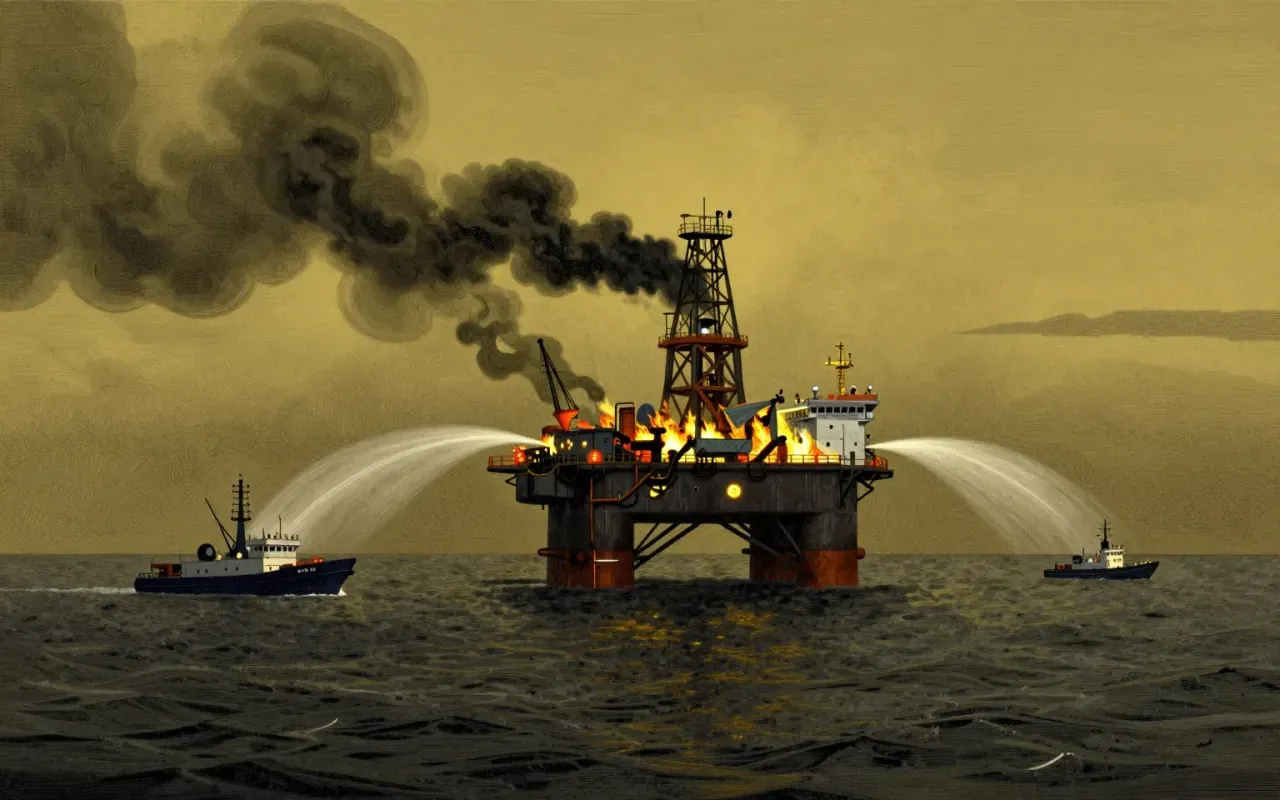
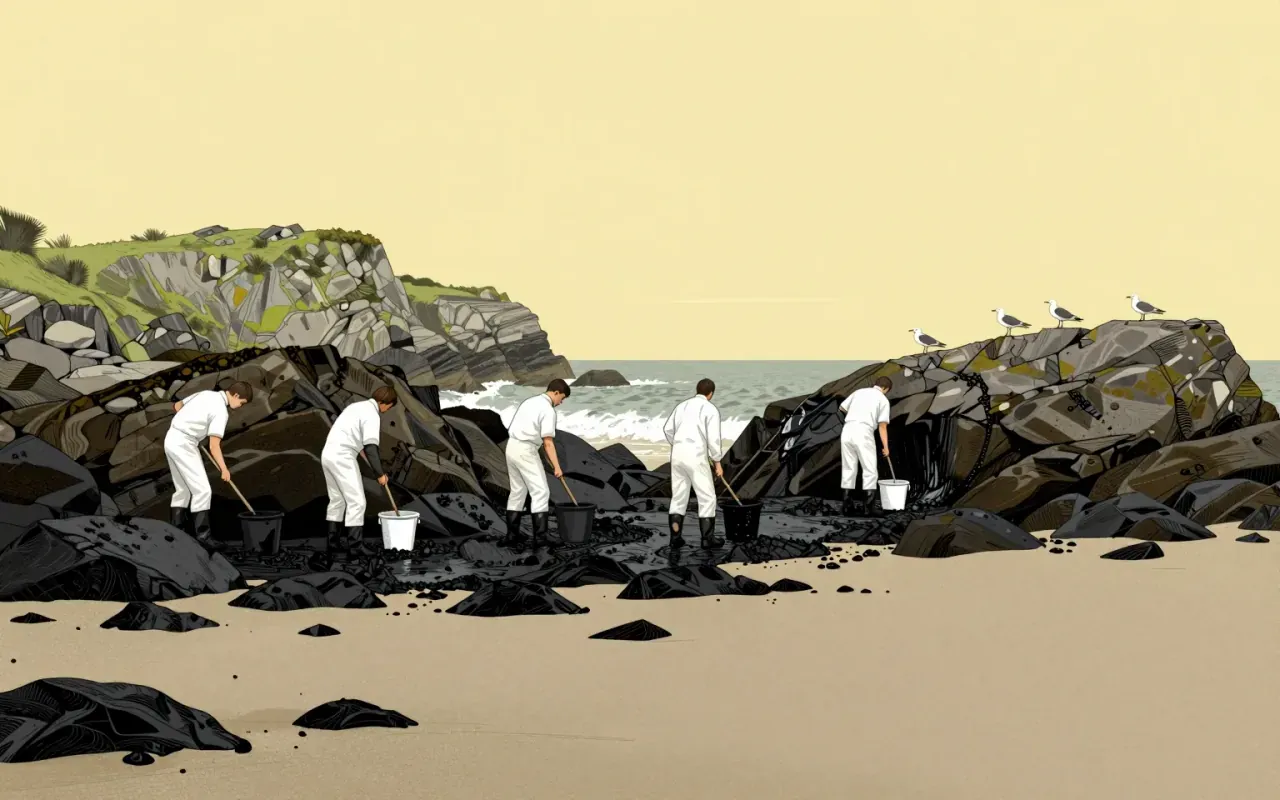
The Prestige, a twenty-six-year-old single-hulled tanker, suffered a hull breach during a storm off Galicia’s Costa da Morte on 13 November 2002. Captain Apostolos Mangouras initially sought shelter in a Spanish port, the standard maritime response to a damaged vessel, but Spanish, French and Portuguese authorities refused to allow it to dock, and under pressure from the Spanish navy the ship was ordered back out to sea with a replacement captain sent to enforce the directive. The Prestige broke apart and sank on 19 November roughly 210 kilometres from the Galician coast, ultimately releasing an estimated 60,000 tonnes of fuel oil that polluted around 2,300 kilometres of coastline across Spain, France and Portugal, affecting more than a thousand beaches.
A refusal of shelter that turned a leak into a sinking
The ship’s failure had, in effect, been predicted years earlier. A 1996 inspection of the Prestige’s sister ships, the Alexandros and Centaur, forecast structural failure at a specific section of the hull, between frames 61 and 71, within about five years, and when the Prestige itself failed roughly five years after that assessment, the break occurred in precisely that predicted location. This gives the disaster an unusually well-documented technical origin: not a sudden, unforeseeable accident but ordinary metal fatigue in a vessel design whose specific weak point had already been identified and dated with real accuracy well before it actually failed.
Structural fatigue in a single-hulled ship built to an old standard
Critics argue the decision to deny the Prestige a sheltered port and instead send it back into open, stormy water directly worsened the disaster, since bringing the ship into harbour and containing the leak there would very likely have released far less oil than the eventual total loss at sea produced. That decision has been characterised by some analysts as amounting to reckless disregard for the more contained alternative, and it remains a central point of criticism in assessments of the disaster, since the initial hull breach alone, if managed differently, might have produced a considerably smaller spill than the one that eventually reached the coastlines of three countries.
How much oil actually spilled, revised upward for years afterward
Official estimates of the spill’s size grew substantially over time rather than being fixed at the outset. Authorities initially believed only about 17,000 of the ship’s roughly 77,000 tonnes of cargo had leaked in November 2002, a figure revised to around half the cargo by early 2003 and then to roughly 63,000 tonnes by August of that year, with a final widely cited estimate settling near 60,000 tonnes. A 2006 study further suggested that between 16,000 and 23,000 tonnes of oil remained inside the sunken wreck, a figure considerably higher than government estimates of 700 to 1,300 tonnes, leaving even the spill’s ultimate total a matter of some continuing dispute.
A decade of courts, ending in split and unevenly enforced verdicts
Legal proceedings stretched across more than a decade and multiple jurisdictions without producing a single unified resolution. A 2003 Spanish civil suit against the American Bureau of Shipping, the classification society that had certified the vessel, was dismissed by a United States court in 2007. A 2013 Galician trial convicted Captain Mangouras only of disobeying authorities, but Spain’s Supreme Court went further in 2016, convicting him of recklessness causing environmental damage and sentencing him to two years in prison, a ruling that opened the door to larger compensation claims. The London P&I Club, the ship’s insurer, was ordered in November 2017 to pay one billion dollars, though a 2023 English High Court ruling declined to enforce Spain’s separate 1.5 billion euro damages judgment, citing arbitration rules requiring the dispute be settled in English courts.
Worth reading for the decision that made the spill so much worse
The Prestige disaster is worth engaging closely for the specific decision that turned a serious but potentially containable hull breach into one of Europe’s largest oil spills: the refusal of any of three neighbouring countries to grant the stricken tanker safe harbour. Readers drawn to the scale of the environmental damage, coastline stretching across three nations, cleanup costs estimated in the billions, gain the most from tracing that single choice back to its consequences, since the ship’s underlying structural failure had been foreseeable and even specifically predicted years in advance, while the decision that multiplied its damage was made in the hours immediately following the initial breach itself.