From cathedral school to chartered university
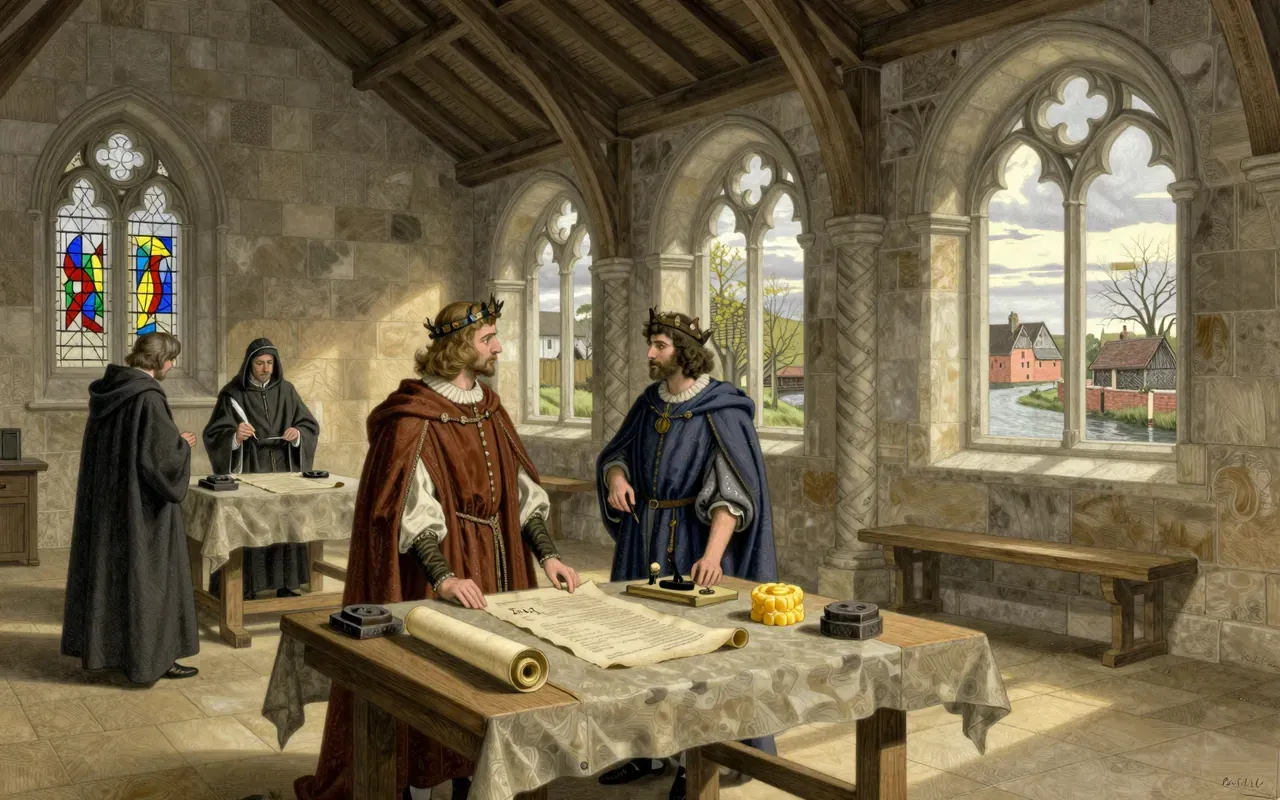
The University of Paris grew out of a cathedral school associated with Notre-Dame, developing around 1150 into what is described as a corporation of students and teachers operating alongside that school rather than fully independent of it. Formal royal recognition came in 1200, when King Philip II issued a diploma granting the emerging institution’s members protection under ecclesiastical rather than secular jurisdiction, a response to a violent confrontation that year between students and the city’s officers. Pope Innocent III confirmed the university’s status further in 1215 through regulations governing who could qualify as a professor, giving the institution recognised standing from both the French crown and the papacy within its first few decades of organised existence.
Four faculties, four nations
Structurally, the university divided into four faculties, arts, medicine, law, and theology, with arts holding the lowest formal rank but the largest number of students, since most scholars passed through it before specialising further. Students were also grouped into four nations based on linguistic and regional origin, French, Norman, Picard, and a fourth grouping later dominated by Germanic students, with an elected rector drawn from nation procurators presiding over the teaching body as a whole. By 1268, faculties had their own deans and increasingly distinct internal governance, and colleges had begun to provide organised housing for students, with the Collège de Sorbonne, founded in 1257, emerging as the most influential of these residential institutions.
A college for poor theology students
The college that gave the whole university its popular later name was founded by Robert de Sorbon, a theology master and confessor to King Louis IX, who established it in 1253 with royal confirmation following in 1257. Sorbon’s purpose was specific and practical: he wanted to provide housing and food for poorer theology students who lacked the institutional backing that students belonging to religious orders already enjoyed. The college began with around twenty students but grew steadily, acquiring a library of more than a thousand volumes by 1292, and it became the most distinguished centre for theological study within the wider university, its name eventually coming to stand, in popular usage, for the University of Paris as a whole.
Popes, condemnations, and resistance to friars
Medieval Paris trained a substantial share of Europe’s ecclesiastical and intellectual elite, including several future popes, and its Faculty of Theology exercised real doctrinal authority within the wider church, most visibly through the Condemnations issued between 1210 and 1277 against philosophical propositions judged theologically dangerous. The university also fought sustained battles over its own institutional boundaries, resisting for decades the claims of mendicant religious orders, chiefly the Dominicans and Franciscans, to hold teaching positions within its faculties, a dispute that combined genuine theological disagreement with more straightforward institutional turf protection among established masters unwilling to share authority and revenue with newly arrived orders.
Abolished by revolution, rebuilt by an emperor
The French Revolution ended this centuries-old arrangement decisively. The National Convention abolished the university by decree on 15 September 1793, confiscating college endowments and buildings as part of the Revolution’s broader dismantling of institutions tied to the old ecclesiastical and royal order. Napoleon later restored a version of higher education in Paris in 1806, organised as the University of France with five reorganised faculties, but this was a deliberate reconstruction under an entirely different legal and political framework rather than a simple resumption of the medieval institution’s continuous existence, and the Sorbonne’s own theological college, separately disestablished in 1792, was not permanently revived and finally closed for good in 1882.
Broken apart after May 1968
The university’s modern form ended in turn following the protests of May 1968, themselves fed by severe overcrowding: total enrollment across the Paris university system had risen from around 280,000 in the 1962 to 1963 academic year to roughly 500,000 by 1967 to 1968, straining facilities built for a much smaller student population. The resulting unrest led to the Faure Law of 1968, which mandated a fundamental reorganisation of French higher education, and by 1970 the historic University of Paris had been formally divided into thirteen separate, autonomous universities, among them what are now known as Sorbonne University and Paris Cité University. This division ended eight centuries of continuous institutional identity, even as several of the resulting universities continue to trade on the Sorbonne name.