historybriefs
Topic

Nationalism

The idea that a people should have a state, and the cost of drawing the line.

25
in history
12:40
average
317 min
in total
40
across the network
Nationalism across the network →
All briefs25
10:09

2014 Russian annexation of Crimea

February and March 2014

The 2014 Russian annexation of Crimea was a coordinated military and political operation executed without formal declaration, relying on unmarked forces, coerced legislative action, and a referendum stripped of legitimacy by occupation and exclusion of the status quo. It altered Black Sea maritime claims, triggered sustained Western sanctions, and remains internationally condemned as a violation of Ukraine’s sovereignty and the UN Charter. No credible evidence supports the referendum’s fairness or voluntariness. Its legal and geopolitical consequences endure.
10:20

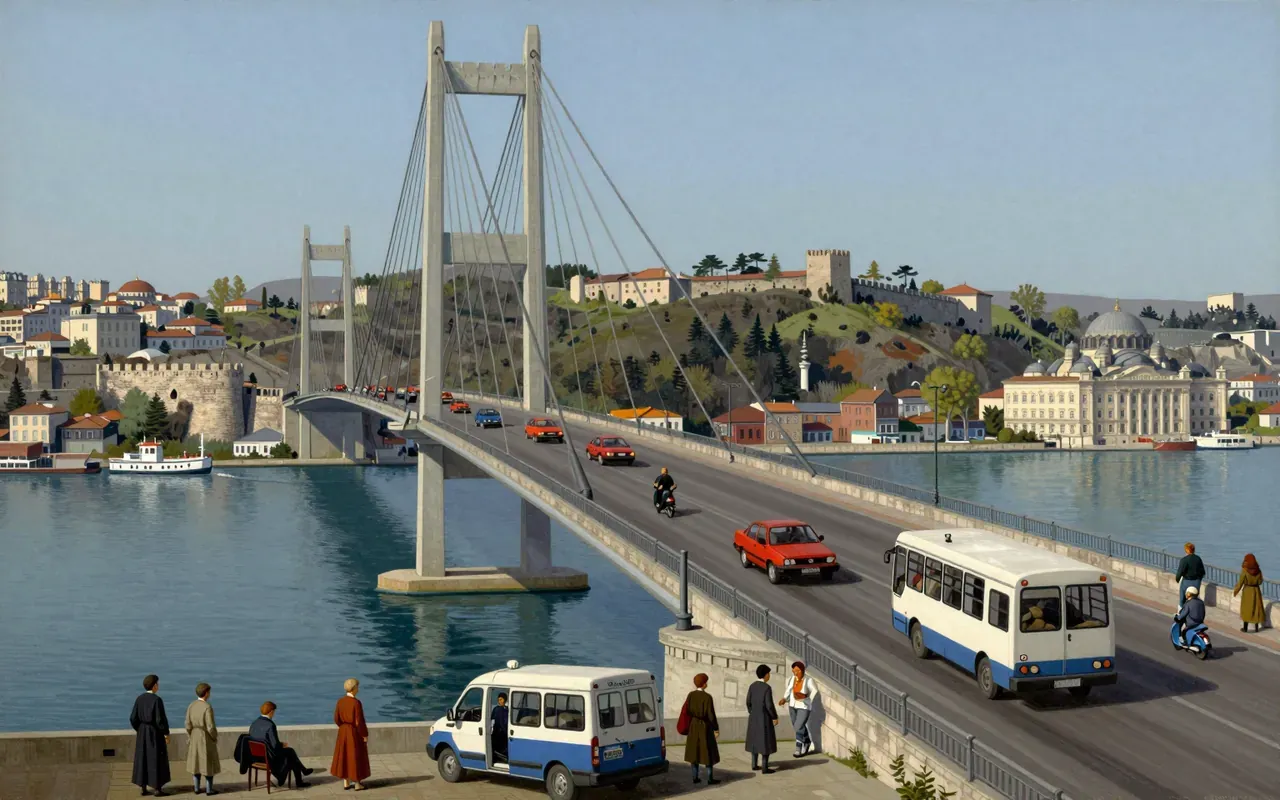
Istanbul

6 October 1923

This brief treats only what the sources verify: Istanbul’s 20th-century political reconstitution. The year 1453 appears only as a footnote in a song lyric—cited solely to date the composition of 'Istanbul (Not Constantinople)', not to assert historical causation. No claim connects 1453 to the city’s modern governance, demography, infrastructure, or naming. To centre 1453 would be to ignore the evidence.

10:22

Mikhail Gorbachev

11 March 1985

Gorbachev’s leadership was defined by deliberate, irreversible institutional concessions — not negotiation. His policies had no exit ramp. The record shows he did not foresee dissolution. It does not show he welcomed it.

13:00

Gamal Abdel Nasser

1918–1970

Gamal Abdel Nasser rose through a secret military faction to help overthrow Egypt's monarchy in 1952, then out-manoeuvred his own revolutionary partner to become sole ruler by 1954, surviving an assassination attempt that year that only strengthened his popular standing. His 1956 nationalisation of the Suez Canal and subsequent political survival against British, French, and Israeli attack made him the era's dominant Arab nationalist figure, a reputation that never fully recovered from Egypt's crushing defeat in the 1967 Six-Day War, and one historians still weigh against an authoritarian domestic record that set a lasting template for military rule in Egypt.

13:00

Giuseppe Garibaldi

1807–1882

Giuseppe Garibaldi spent fourteen years fighting in South American civil wars before returning to Italy, where he led a volunteer force of roughly a thousand men to conquer Sicily and Naples in 1860 and then handed both to King Victor Emmanuel II rather than pursue the republic he actually believed in. Historians have increasingly complicated the heroic myth built around him, noting that the peasants who supported his cause in Sicily were driven by hatred of local landlords rather than nationalism, and that Garibaldi himself sided with those same landlords once uprisings threatened his campaign's order.

13:00

Jawaharlal Nehru

1889–1964

Educated in England and imprisoned repeatedly across a quarter century of resistance to British rule, Jawaharlal Nehru became independent India's first prime minister in 1947 and led it for seventeen years. He built a lasting parliamentary democracy, secular constitution and non-aligned foreign policy across a vast, diverse country, while decisions on Kashmir, economic planning and defence readiness against China remain sharply contested. His own prolific writing, combined with colonial records and party archives, makes him unusually well documented for a leader of his era.

13:00

Lord Byron

1788–1824

Lord Byron became famous overnight with the first cantos of Childe Harold's Pilgrimage, then scandal over his marriage and rumoured relationship with his half-sister drove him from England for good in 1816. He spent his final months and most of his remaining fortune backing the Greek war of independence, dying of fever at Missolonghi in 1824 without seeing a Greek victory his death nonetheless helped bring closer.

13:00

Klemens von Metternich

1773–1859

Klemens von Metternich rose from a minor German diplomatic family to become Austria's foreign minister and, from 1821, its chancellor, presiding over the Congress of Vienna and then building a continent-wide network of censorship and surveillance meant to hold back liberal and nationalist movements. The 1848 revolutions ended his career in a single day, and historians still argue over whether to remember him as a stabiliser who kept Europe largely at peace for three decades or as a reactionary who left problems to compound rather than resolving them.

13:00

Saddam Hussein

1937–2006

From a Ba'athist plotter in 1959 to president from 1979 to 2003, Saddam Hussein built one of the Arab world's more literate, industrialised states while running a security apparatus that Human Rights Watch estimates killed or disappeared a quarter of a million people. He invaded Iran, then Kuwait, survived one war and was toppled by another, and was hanged in 2006 after a trial for a single 1982 massacre.

13:00

Sun Yat-sen

1866–1925

Educated abroad and converted to a republican vision far removed from Qing officialdom, Sun Yat-sen spent most of two decades in exile organising failed uprisings and stitching together revolutionary factions before the 1911 Wuchang mutiny succeeded without his direct involvement. He returned to a brief provisional presidency, then years of political struggle to rebuild influence in southern China. His ideology outlived his limited direct power, and both the Nationalist and Communist governments that later divided China still honour him as their founding figure.

13:00

Anschluss

13 March 1938

Adolf Hitler annexed Austria in March 1938 after coercing Chancellor Kurt Schuschnigg's resignation and sending German troops in under the pretext of a forged invitation, ending Austrian independence and folding it into the Reich as Ostmark. A plebiscite the following month reported 99.7 percent approval, but arrests, disenfranchisement of political opponents and Jews, and intense propaganda surrounding the vote have left historians divided over how genuine that figure actually was.

13:00

Bosnian War

1992–1995

When Bosnia and Herzegovina voted for independence in 1992, its Serb population rejected the result and, backed by Serbia, fought a three-year war against Bosniak and Croat forces that killed over 100,000 people and displaced 2.2 million more. The siege of Sarajevo and the Srebrenica massacre became its defining atrocities, and the war ended only after NATO air strikes and American-brokered negotiations produced the Dayton Accords in late 1995.

13:00

Congress of Vienna

1814–1815

Diplomats from more than two hundred states met in Vienna from September 1814 to June 1815, redrawing Europe's map after Napoleon's defeat under the direction of Austria's Klemens von Metternich, Britain's Castlereagh, Russia's Tsar Alexander, and France's Talleyrand. Contemporaries mocked it as a congress that danced rather than worked; a century later historians remain divided on whether its conservative settlement should be credited with a long peace or blamed for suppressing the liberal and national movements that eventually broke it apart.

13:00

Dayton Agreement

14 December 1995

Negotiated at Wright-Patterson Air Force Base in November 1995 after intense American-led shuttle diplomacy, the Dayton Agreement ended the Bosnian War by dividing the country into two semi-autonomous entities under a complex power-sharing constitution. Scholars credit it with successfully stopping the fighting, but criticise its entrenchment of the ethnic partition it was meant to overcome, an assessment sharpened by the loss of original signed copies from both Serbian and Bosnian archives in the years since.

13:00

Breakup of Yugoslavia

1991–1992

Yugoslavia, a federation of six republics held together for thirty-five years partly by Josip Broz Tito's authority, began unravelling after his death in 1980 amid mounting foreign debt, unemployment and the rise of Slobodan Milosevic in Serbia. Slovenia and Croatia declared independence on 25 June 1991, followed by Macedonia and Bosnia and Herzegovina, and the wars that followed over the next decade killed an estimated 130,000 to 140,000 people and displaced more than four million, ending the country historians still argue over how to explain.

13:00

Easter Rising

24 April – 30 April 1916

Roughly fifteen hundred republican volunteers seized key buildings across Dublin over Easter week 1916, holding out for six days against a British garrison that grew to over sixteen thousand before Patrick Pearse surrendered to prevent further civilian deaths. Public opinion in Dublin was initially hostile to the rising, but the execution of sixteen leaders that May reversed that sentiment so thoroughly that it helped produce Sinn Féin's landslide in the 1918 election, a shift historians treat as the rising's real historical consequence rather than anything it achieved militarily.

13:00

Proclamation of the People's Republic of China

1 October 1949

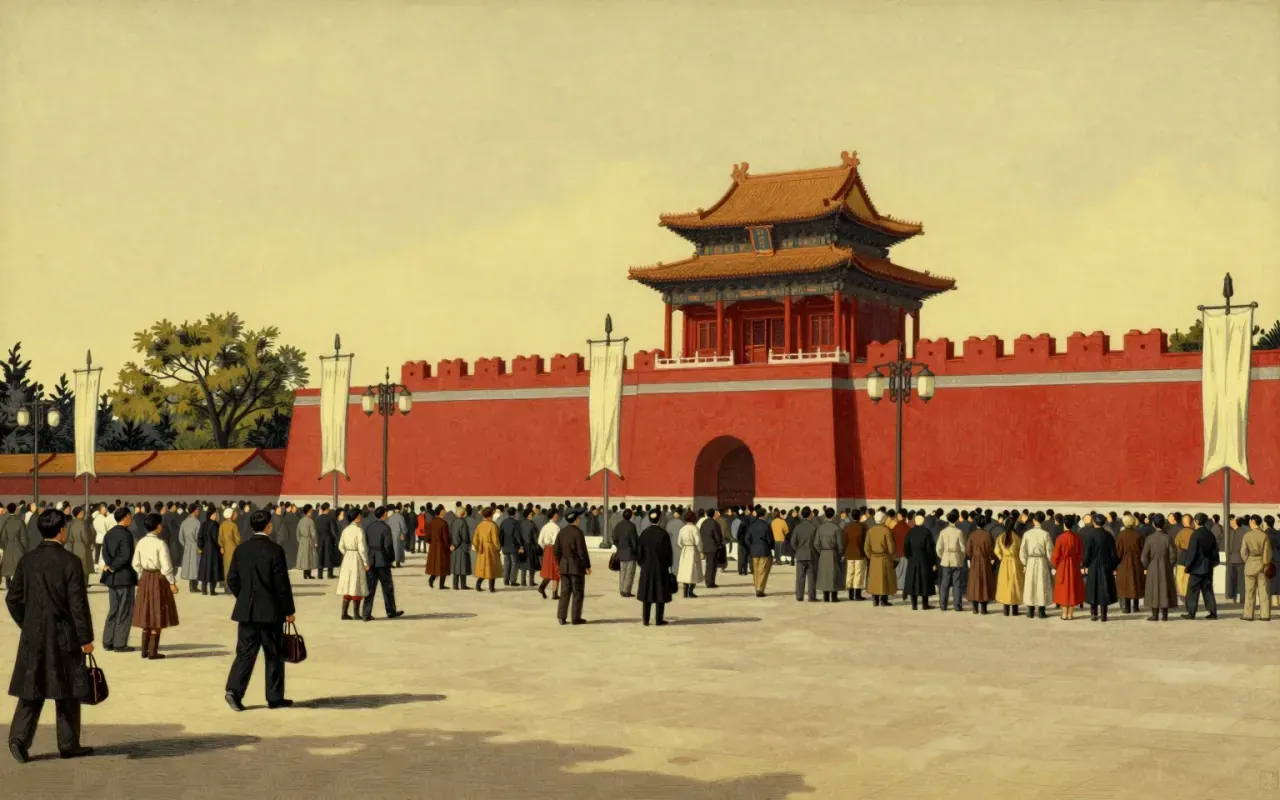
On 1 October 1949, Mao Zedong announced the founding of the People's Republic of China from Tiananmen Gate, closing more than two decades of intermittent civil war against the Nationalist government, which withdrew to Taiwan by year's end. The Communist victory owed as much to Nationalist economic collapse and wartime attrition as to any single battle. No peace treaty was ever signed, and the division of legitimacy the proclamation created between Beijing and Taipei persists unresolved.

13:00

Greek War of Independence

1821–1829

A secret society's planned uprising against Ottoman rule broke out early in 1821 and turned into eight years of war, complicated by two Greek civil wars fought alongside it and by massacres on a scale historians still total in the hundreds of thousands. Britain, France, and Russia intervened only in 1827, when their fleets destroyed the Ottoman-Egyptian navy at Navarino in a battle that began as an accident, tipping a war Greeks had sustained largely by themselves toward independence recognised in 1830.

13:00

Kosovo War

1998–1999

Kosovo Albanians' decade of failed non-violent resistance to Serbian rule gave way after 1996 to armed insurgency by the Kosovo Liberation Army, provoking a Serbian counter-campaign of expulsion and killing that NATO answered in March 1999 with an air campaign lacking Security Council backing. The war displaced hundreds of thousands and left casualty figures on both sides that historians still cannot fully reconcile.

13:00

Oslo Accords

13 September 1993

Secret talks in Norway produced the September 1993 Declaration of Principles between Israel and the PLO, establishing mutual recognition and a Palestinian Authority meant to govern a five-year transition toward permanent status negotiations. Those final talks never concluded, settlement building continued throughout, and both the assassination of Yitzhak Rabin in 1995 and the collapse of the 2000 Camp David summit left the accords' unresolved questions of Jerusalem, borders and refugees exactly where they started.

13:00

Partition of Ireland

3 May 1921

The Government of Ireland Act of 1920 split the island into two self-governing territories, drawing Northern Ireland's border around six counties chosen specifically because they gave unionists a workable majority, even though two of those counties had nationalist majorities of their own. A boundary commission set up under the 1921 treaty to revisit that line spent years preparing its case, only for its 1925 report to leak, be suppressed by all three governments involved, and leave the original six-county border permanently fixed in place.

13:00

Revolutions of 1848

1848–1849

A famine-driven economic crisis and a backlog of liberal, radical, and nationalist grievances broke out across more than fifty European states between January 1848 and October 1849, toppling governments in France, Austria, and Prussia within weeks. Almost all of it was rolled back within two years once the temporary alliances between workers, the middle class, and nationalists fractured and conservative armies regrouped, leaving historians to debate whether the episode was a genuine turning point or a rehearsal for the unifications and labour movements that followed decades later.

13:00

History of fascism (1922–1945)

1922–1945

Fascism emerged as a distinct political movement in early twentieth-century Europe, rooted in a broader turn-of-the-century revolt against liberal democracy, and took power first in Italy under Benito Mussolini after the 1922 March on Rome, then in Germany under Adolf Hitler from 1933, before spreading in varied national forms to Spain, Hungary, Romania and elsewhere through the interwar period. Historians including Robert Paxton and Stanley Payne describe fascism as a genuinely diverse and evolving synthesis of ideas rather than a single coherent system, a definitional looseness that continues to complicate comparisons between its different national movements.

13:00

Unification of Germany

1866–1871

German unification proceeded through a combination of economic integration under the Prussian-led customs union, or Zollverein, established in 1818, and three wars orchestrated chiefly by Otto von Bismarck against Denmark, Austria and France between 1864 and 1871, culminating in the proclamation of the German Empire in January 1871. Historians continue to debate whether Bismarck pursued unification as a deliberate long-term goal or arrived at it opportunistically through a series of separate decisions aimed more narrowly at expanding Prussian power.

13:00

Unification of Italy

1815–1871

The unification of Italy proceeded through a combination of diplomacy under Camillo Cavour, war against Austria, and Giuseppe Garibaldi's volunteer conquest of Sicily and Naples in 1860, culminating in the proclamation of the Kingdom of Italy in March 1861 and completed with the capture of Rome in 1870. Historians disagree about when the process should be considered finished, some extending it to 1871 or even 1920, and about how much popular support genuinely existed for a national project largely driven by elite diplomacy and military campaigns.