historybriefs
Topic

Poland

A country repeatedly erased from the map that kept turning up on it.

3
in history
13:00
average
39 min
in total
17
across the network
Poland across the network →
All briefs3
13:00

Lech Wałęsa

Born 29 September 1943

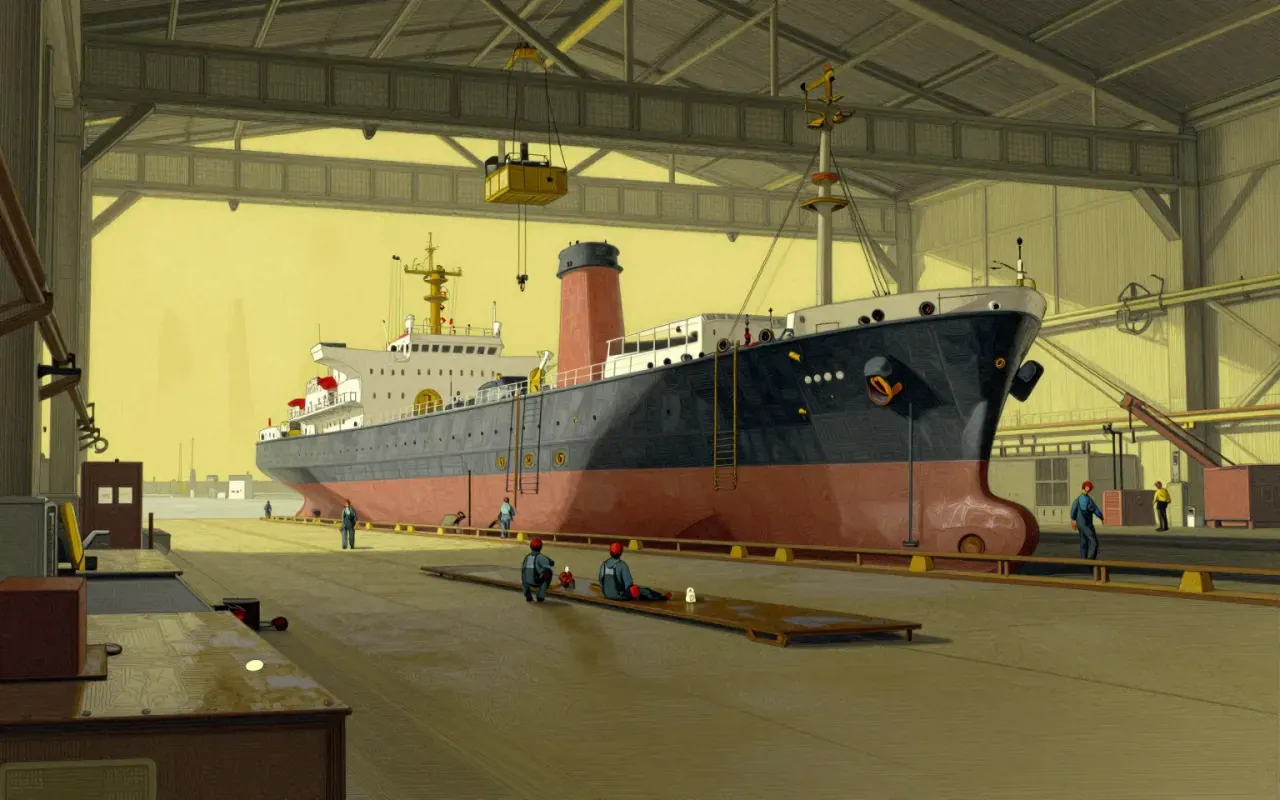
Lech Wałęsa led the August 1980 shipyard strike that produced Solidarity, the first independent trade union recognised in a Warsaw Pact state, surviving martial law and imprisonment before receiving the 1983 Nobel Peace Prize and becoming Poland's first freely elected president in 1990. Documents surfacing between 2008 and 2017, including files seized from a deceased interior minister's home, allege he collaborated with Polish security services as an informant in the early 1970s, a claim he denies and that remains genuinely disputed among historians examining the same evidence.
13:00

Invasion of Poland

1 September – 6 October 1939

Germany invaded Poland on 1 September 1939 behind the manufactured pretext of a staged attack at Gleiwitz, deploying newly mechanised blitzkrieg tactics that broke Polish resistance within weeks while the Soviet Union invaded from the east on 17 September under the secret terms of the Molotov-Ribbentrop Pact signed a week before the war began. Hitler's own instructions to his forces called for killing Polish people without pity or mercy, language historians treat as establishing genocidal intent from the campaign's very outset rather than something that developed only later in the occupation.

13:00

January Uprising

1863–1864

Poland's January Uprising broke out in 1863 after Russian authorities tried to remove suspected agitators through long-term military conscription, triggering a rebellion that spread across the old Polish-Lithuanian lands before Russian forces crushed it by mid-1864. Its final commander, Romuald Traugutt, was captured and hanged after his land-reform decree arrived too late to rally the peasantry, and the roughly eighty thousand people Russia deported afterward, by one historian's count, made the reprisal the largest single deportation in Russian history.

More from history

All briefs →
11:36

Ancient Greece

Ancient Greece isn’t a place or a nation — it’s the first time history became a written argument about power.
12:27

Samarkand

329 BC

Samarkand at -800 BC is archaeologically verifiable, institutionally attested, and geographically explicable — but its ‘founding’ remains a scholarly estimate, not a recorded event.

11:49

Atomic bombings of Hiroshima and Nagasaki

6 and 9 August 1945

The atomic bombings of Hiroshima and Nagasaki were deliberate, authorised, and executed military operations using newly developed nuclear weapons. Their scale, method, and human impact are well-documented in the source. Their causal relationship to Japan’s surrender is asserted only as ‘precipitation’—not proof of necessity or sufficiency. No claim about motives, alternatives, or internal Japanese decision-making appears in the material.

9:37

Battle of Talikota

23 January 1565

The Battle of Talikota was a decisive military defeat for Vijayanagara, caused by coalition warfare and military asymmetry — not civilizational conflict. Its legacy lies in how early-modern South Asian states negotiated power, not in mythic binaries.