historybriefs
Topic

Judaism

A people, a law and an argument conducted across millennia.

2
in history
13:00
average
26 min
in total
13
across the network
Judaism across the network →
All briefs2
13:00

Dreyfus affair

1894–1906

Alfred Dreyfus, a Jewish artillery officer, was wrongly convicted of treason in 1894 on the strength of disputed handwriting evidence and imprisoned on Devil's Island, while the army suppressed subsequent proof identifying the real culprit. Émile Zola's 1898 open letter J'Accuse galvanised public opinion, and Dreyfus was eventually pardoned in 1899 and fully exonerated in 1906, an affair that split French society and exposed institutional antisemitism at the highest levels of the military.

13:00

The Holocaust

1933–1945

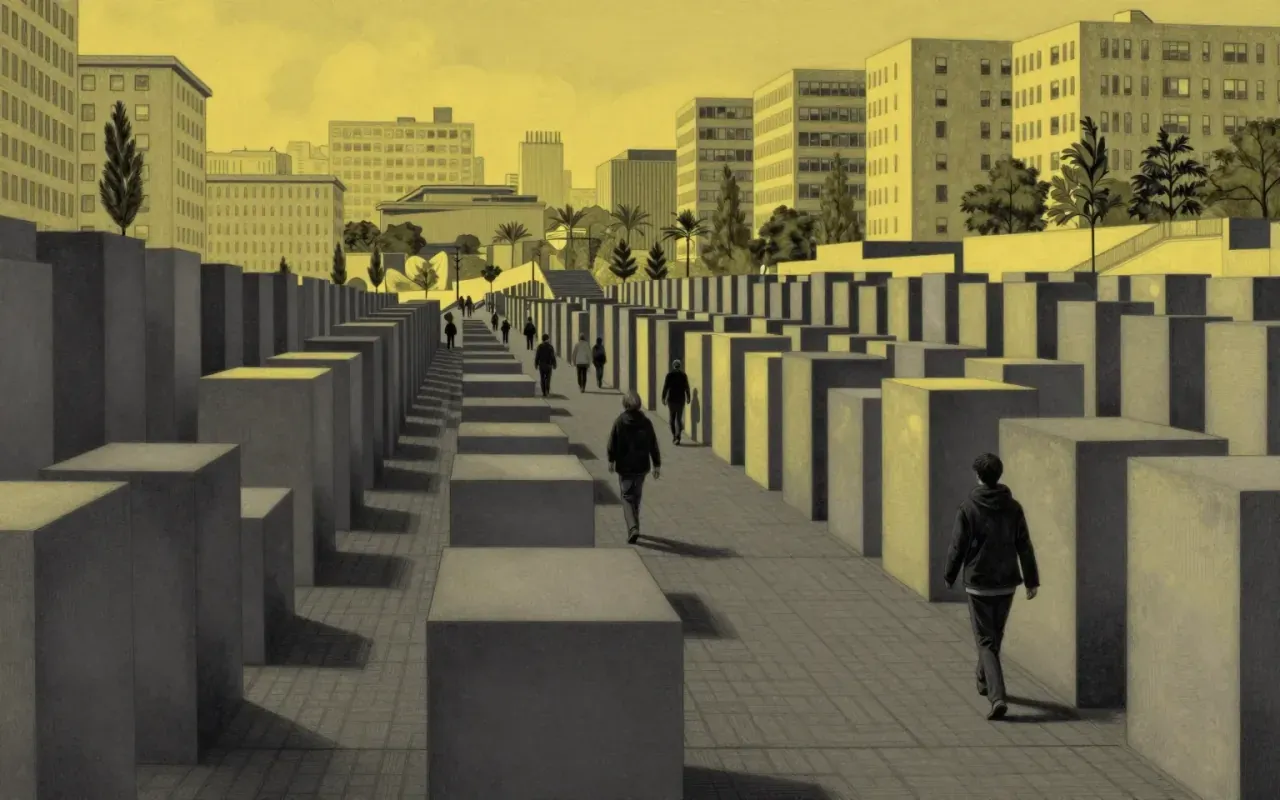
The Holocaust, the systematic murder of approximately six million Jews by Nazi Germany and its collaborators between 1941 and 1945, proceeded through mass shootings, ghettoization and purpose-built extermination camps including Auschwitz-Birkenau and Treblinka, formalised at the January 1942 Wannsee Conference, alongside the murder of millions of others including Soviet prisoners of war, Roma and Sinti people, and people with disabilities. Historians divide over the intentionalist and functionalist interpretations of when and how the decision for total extermination was actually made, a debate that remains unresolved even as the scale and mechanics of the genocide itself are not in dispute.

More from history

All briefs →
11:36

Ancient Greece

Ancient Greece isn’t a place or a nation — it’s the first time history became a written argument about power.
12:27

Samarkand

329 BC

Samarkand at -800 BC is archaeologically verifiable, institutionally attested, and geographically explicable — but its ‘founding’ remains a scholarly estimate, not a recorded event.

11:49

Atomic bombings of Hiroshima and Nagasaki

6 and 9 August 1945

The atomic bombings of Hiroshima and Nagasaki were deliberate, authorised, and executed military operations using newly developed nuclear weapons. Their scale, method, and human impact are well-documented in the source. Their causal relationship to Japan’s surrender is asserted only as ‘precipitation’—not proof of necessity or sufficiency. No claim about motives, alternatives, or internal Japanese decision-making appears in the material.

9:37

Battle of Talikota

23 January 1565

The Battle of Talikota was a decisive military defeat for Vijayanagara, caused by coalition warfare and military asymmetry — not civilizational conflict. Its legacy lies in how early-modern South Asian states negotiated power, not in mythic binaries.