historybriefs
Saved
Topic

Islands

Isolation as a natural experiment.

1
in history
10:42
average
11 min
in total
17
across the network
Islands across the network →
All briefs1
10:42

Easter Island

April 5, 1722

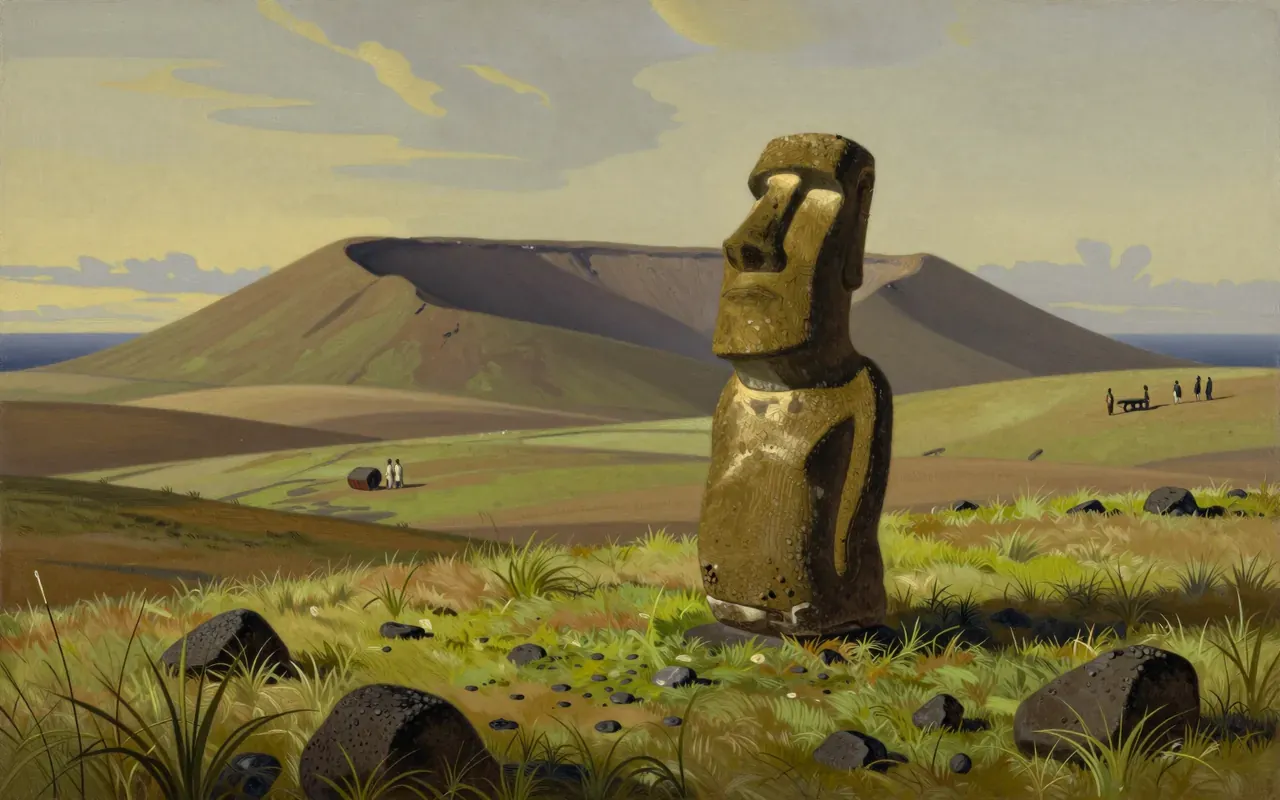
1722 is the hinge — not between isolation and connection, but between self-determined time and imposed chronology. Roggeveen did not find a blank slate. He sighted a society that had already shaped its landscape, language, and cosmology over centuries — and whose moai predated his arrival by up to 600 years. The event changed nothing on the island that day. But it guaranteed that everything after would be measured against European time.

More from history

All briefs →
11:36

Ancient Greece

Ancient Greece isn’t a place or a nation — it’s the first time history became a written argument about power.
12:27

Samarkand

329 BC

Samarkand at -800 BC is archaeologically verifiable, institutionally attested, and geographically explicable — but its ‘founding’ remains a scholarly estimate, not a recorded event.

11:49

Atomic bombings of Hiroshima and Nagasaki

6 and 9 August 1945

The atomic bombings of Hiroshima and Nagasaki were deliberate, authorised, and executed military operations using newly developed nuclear weapons. Their scale, method, and human impact are well-documented in the source. Their causal relationship to Japan’s surrender is asserted only as ‘precipitation’—not proof of necessity or sufficiency. No claim about motives, alternatives, or internal Japanese decision-making appears in the material.

9:37

Battle of Talikota

23 January 1565

The Battle of Talikota was a decisive military defeat for Vijayanagara, caused by coalition warfare and military asymmetry — not civilizational conflict. Its legacy lies in how early-modern South Asian states negotiated power, not in mythic binaries.