historybriefs
Topic

The Industrial Revolution

The moment human muscle stopped being the limit.

1
in history
13:00
average
13 min
in total
93
across the network
The Industrial Revolution across the network →
All briefs1
13:00

Industrial Revolution

1760–1820

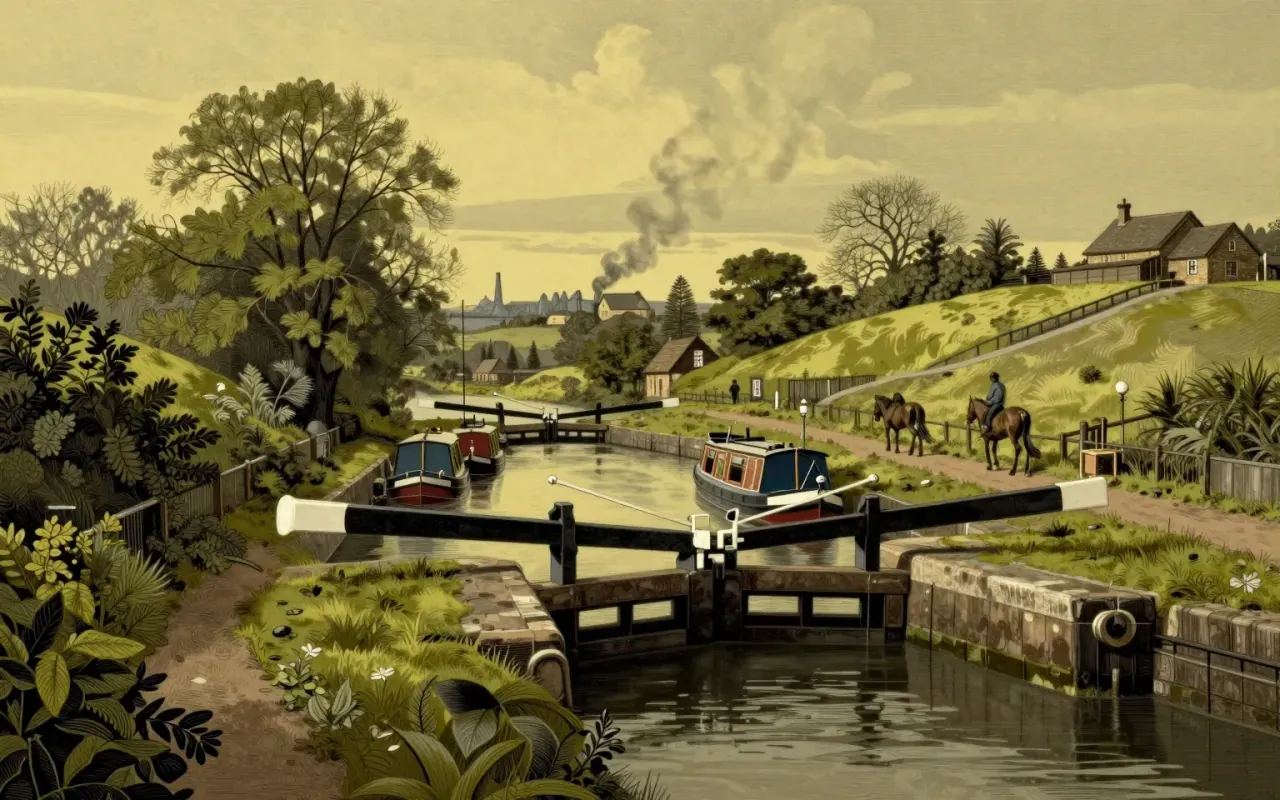
Beginning in Britain around 1760 and spreading to continental Europe and the United States by roughly 1840, the Industrial Revolution combined agricultural surplus, coal and iron resources, and a wave of textile and steam-power inventions to shift production from hand and cottage work to mechanised factories. Historians continue to dispute both how sharply this counts as a revolution rather than a gradual change and, more consequentially, when ordinary workers actually began to see rising living standards from it.

More from history

All briefs →
11:36

Ancient Greece

Ancient Greece isn’t a place or a nation — it’s the first time history became a written argument about power.
12:27

Samarkand

329 BC

Samarkand at -800 BC is archaeologically verifiable, institutionally attested, and geographically explicable — but its ‘founding’ remains a scholarly estimate, not a recorded event.

11:49

Atomic bombings of Hiroshima and Nagasaki

6 and 9 August 1945

The atomic bombings of Hiroshima and Nagasaki were deliberate, authorised, and executed military operations using newly developed nuclear weapons. Their scale, method, and human impact are well-documented in the source. Their causal relationship to Japan’s surrender is asserted only as ‘precipitation’—not proof of necessity or sufficiency. No claim about motives, alternatives, or internal Japanese decision-making appears in the material.

9:37

Battle of Talikota

23 January 1565

The Battle of Talikota was a decisive military defeat for Vijayanagara, caused by coalition warfare and military asymmetry — not civilizational conflict. Its legacy lies in how early-modern South Asian states negotiated power, not in mythic binaries.