historybriefs
Topic

Byzantium

The Roman empire that lasted another thousand years and gets a different name.

3
in history
13:00
average
39 min
in total
10
across the network
Byzantium across the network →
All briefs3
13:00

Byzantine Empire

395–1453

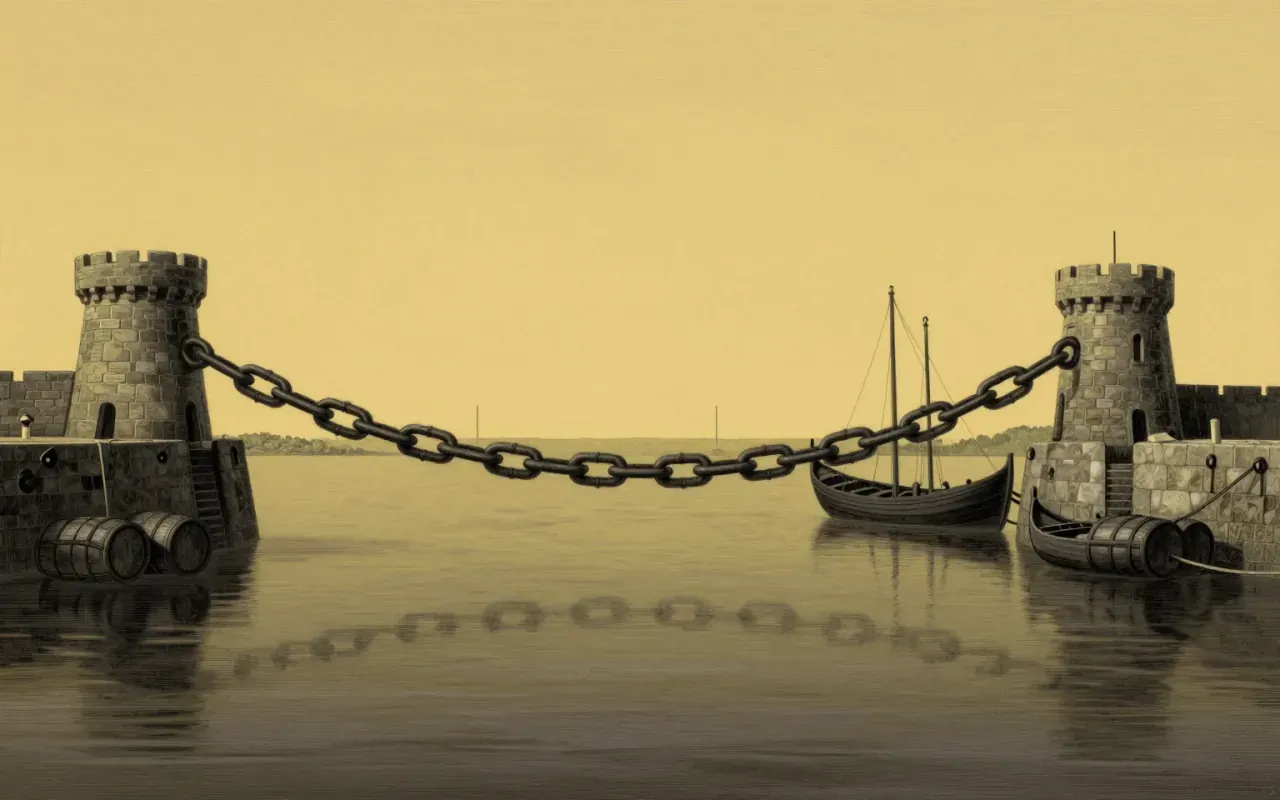
The Byzantine Empire was the continuation of the Roman state centred on Constantinople after the western empire's collapse, reaching its greatest extent under Justinian in the sixth century, surviving devastating territorial losses to Arab conquest in the seventh century, and enduring in reduced form until the Ottoman conquest of Constantinople in 1453. Historians disagree on when to date its beginning, and note that the empire's own inhabitants never called themselves Byzantine, a label applied only after the state had ceased to exist.
13:00

Fall of Constantinople

6 April – 29 May 1453

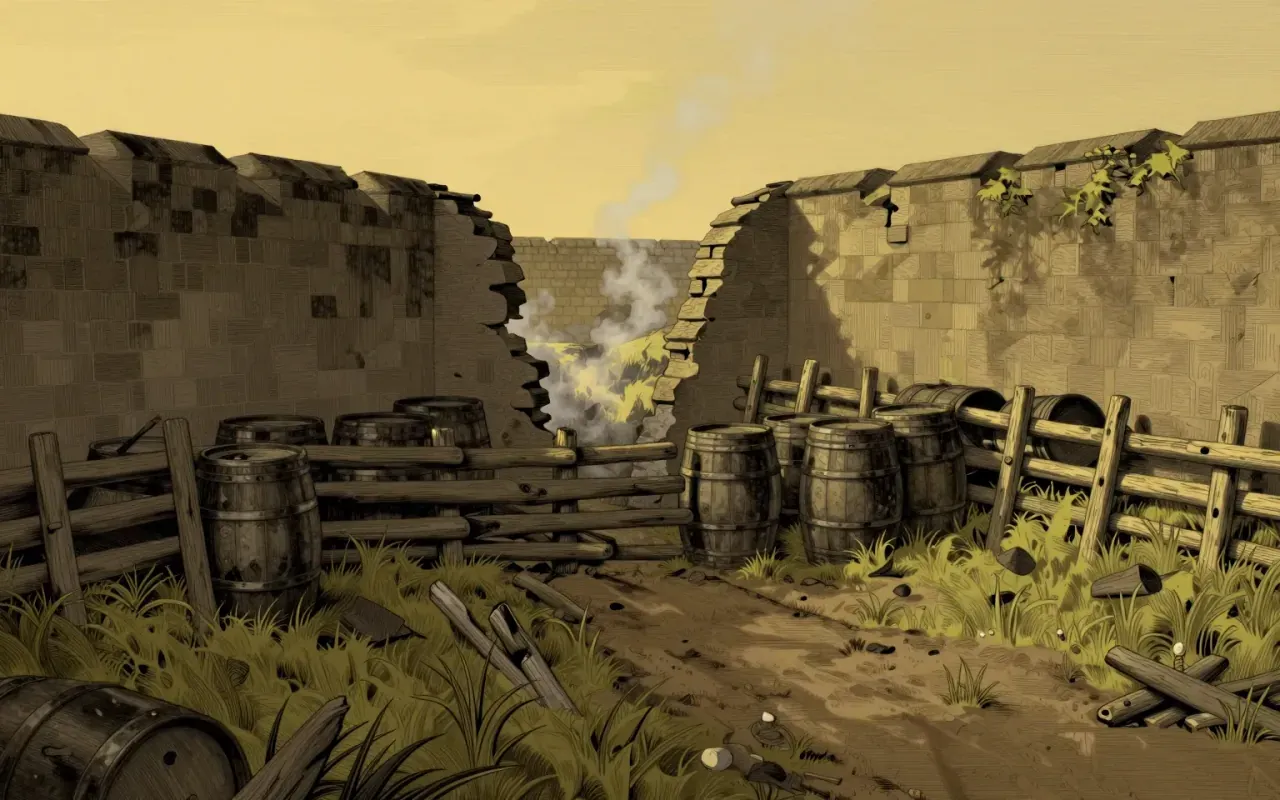
Ottoman forces under the nineteen-year-old Mehmed II besieged Constantinople for fifty-three days before breaching its ancient walls on 29 May 1453, ending over a thousand years of Byzantine imperial continuity. Defenders numbering fewer than eight thousand faced an Ottoman force contemporaries estimated anywhere from fifty thousand to three hundred thousand, a discrepancy that has never been resolved, while massive gunpowder cannon, one reportedly capable of firing six-hundred-pound projectiles over a mile, demonstrated that the era of medieval fortification was ending.

13:00

Venice

Founded 421

Venice's founding legend puts a precise date, noon on 25 March 421, on a process that in fact unfolded over generations, as people from Roman towns on the mainland retreated into the lagoon ahead of successive invasions. What followed was thirteen centuries of maritime power built on trade with Byzantium and the eastern Mediterranean, a republic that ended when Napoleon took the city in 1797, and a modern afterlife defined by tourism, subsidence, and a flood barrier still not finished decades after it was meant to be.

More from history

All briefs →
11:36

Ancient Greece

Ancient Greece isn’t a place or a nation — it’s the first time history became a written argument about power.
12:27

Samarkand

329 BC

Samarkand at -800 BC is archaeologically verifiable, institutionally attested, and geographically explicable — but its ‘founding’ remains a scholarly estimate, not a recorded event.

11:49

Atomic bombings of Hiroshima and Nagasaki

6 and 9 August 1945

The atomic bombings of Hiroshima and Nagasaki were deliberate, authorised, and executed military operations using newly developed nuclear weapons. Their scale, method, and human impact are well-documented in the source. Their causal relationship to Japan’s surrender is asserted only as ‘precipitation’—not proof of necessity or sufficiency. No claim about motives, alternatives, or internal Japanese decision-making appears in the material.

9:37

Battle of Talikota

23 January 1565

The Battle of Talikota was a decisive military defeat for Vijayanagara, caused by coalition warfare and military asymmetry — not civilizational conflict. Its legacy lies in how early-modern South Asian states negotiated power, not in mythic binaries.