historybriefs
Topic

Ancient Egypt

Three thousand years of one idea, executed in stone.

5
in history
12:27
average
62 min
in total
17
across the network
Ancient Egypt across the network →
All briefs5
10:17

Great Pyramid of Giza

c. 2600 BC

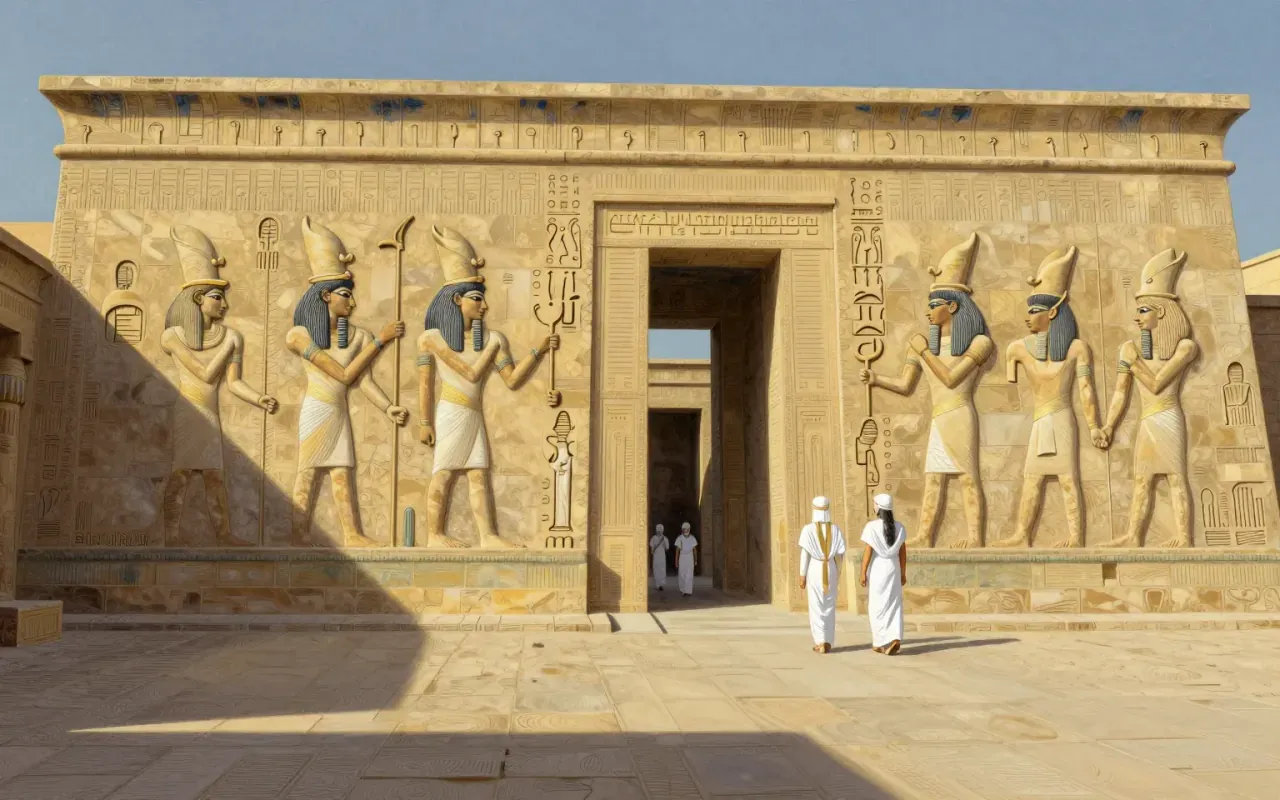
The Great Pyramid of Giza is the oldest and only largely intact Wonder of the Ancient World. Built c. 2600 BC as Khufu’s tomb, it stood 146.6 m tall for over 3,700 years. Its dimensions — 230.3 m per side, 2.6 million m³ volume — are precisely measured. What remains visible today is the underlying core structure, after most of its smooth white limestone casing was removed.

13:00

Alexandria

Founded 331 BC

Alexander the Great founded Alexandria in April 331 BC after taking Egypt from Persian control, then departed shortly afterward, leaving his successors, particularly Ptolemy I, to build it into the largest city in the world within a century through institutions including its famous library and the Pharos lighthouse, one of the ancient world's seven wonders. The library's eventual destruction, often attributed to a single dramatic event during Julius Caesar's siege in 47 BC, remains disputed among historians, and the city's long decline followed Portuguese discovery of alternative sea routes to India in the late fifteenth century.

13:00

Cleopatra

69–30 BC

Cleopatra VII ruled Ptolemaic Egypt from 51 to 30 BC, allying in turn with Julius Caesar and Mark Antony and bearing children by both, before Octavian's forces defeated Antony at Actium and she died by suicide as Rome absorbed Egypt. The fullest ancient account, Plutarch's, was written about a century and a half after her death, and much of the negative Roman portrait that shaped later European memory of her originated as wartime propaganda against Antony rather than as neutral reporting.

13:00

Nubian pyramids

More than double the number Egypt built, these pyramids survived a nineteenth-century treasure hunter who demolished forty of them from the top down searching for gold.
13:00

Thutmose III

1481–1425 BC

Thutmose III spent twenty-two years as junior partner to his stepmother Hatshepsut before assuming sole rule and launching a sustained run of military campaigns that brought Egypt to its greatest territorial extent, recorded in annals he had inscribed at Karnak. Long attributed to personal resentment, the later defacing of Hatshepsut's monuments has been redated by modern scholars to decades after his own death's approach, pointing instead to a succession strategy pursued under his son. His reign is unusually well checked against independent inscriptions and his own recovered mummy, letting historians separate genuine achievement from official propaganda.