Moncada and its aftermath
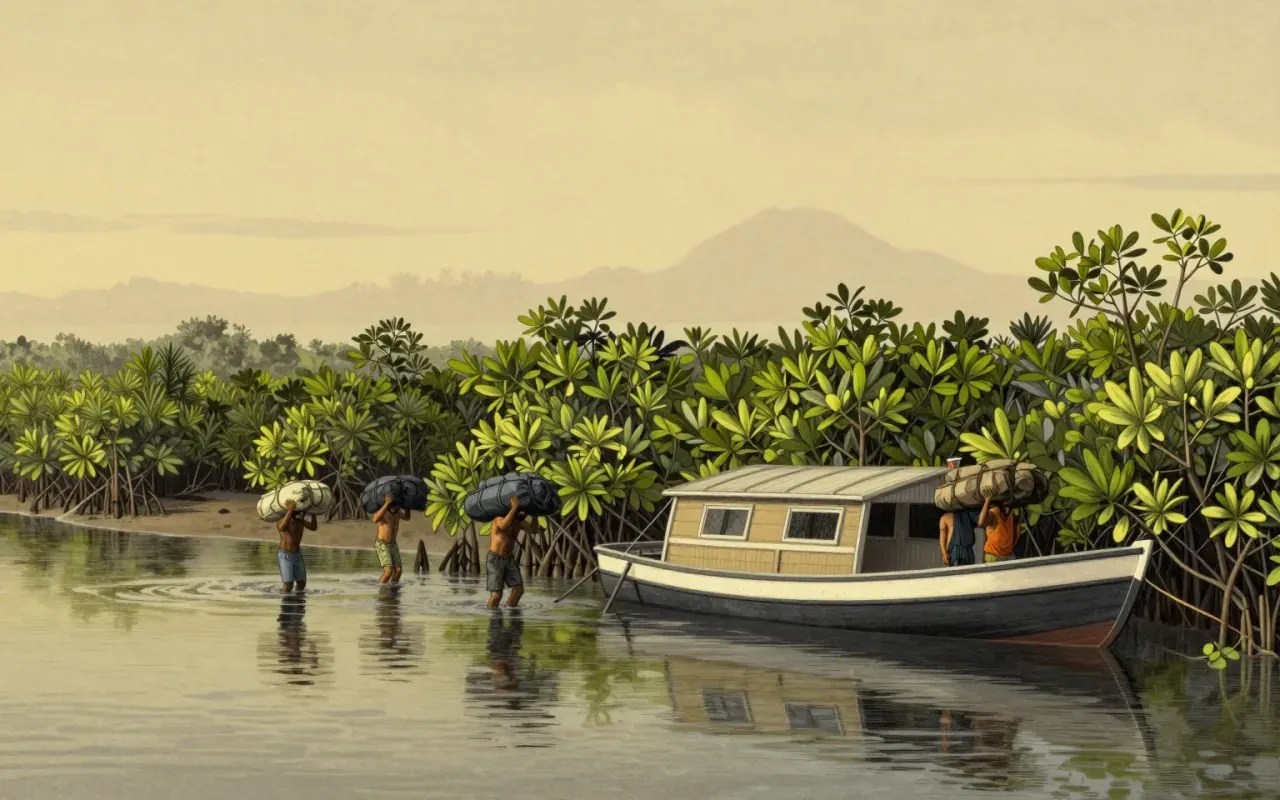
The Cuban Revolution is usually dated from 26 July 1953, when Fidel Castro led an attack on the Moncada Barracks that failed and led to his imprisonment, to 1 January 1959, when Fulgencio Batista’s government collapsed. After his release under amnesty in 1955, Castro organised the 26th of July Movement in Mexico with his brother Raúl and the Argentine revolutionary Che Guevara, landing back in Cuba aboard the yacht Granma in December 1956. From bases in the Sierra Maestra mountains the small guerrilla force built up support through 1957 and 1958, and Batista fled the country on 31 December 1958 as rebel forces closed in, leaving Castro’s movement to take power in the days that followed without a final large-scale battle.
The Granma landing and the mountains
The revolution’s documentary record includes Castro’s own trial speech following the Moncada attack, later published under the title History Will Absolve Me, which became a foundational text of the movement’s official self-presentation. Government casualty figures, rebel accounts, and later academic scholarship do not always align, particularly regarding the Moncada attack itself: Castro’s own account put the toll at five killed in the fighting and fifty-six executed afterward, while other historians have suggested different numbers for how many attackers survived to reach the mountains. Much of the broader social and economic picture of pre-revolutionary Cuba comes from period statistics on employment and regional development, which historians have used to test claims made by the revolutionary movement about the country’s condition.
Why Batista’s regime was vulnerable
Batista’s government was vulnerable despite Cuba ranking relatively well on some Latin American economic measures, because those averages concealed sharp regional inequality. Close to a third of the labour force lacked full-time work, with roughly 475,000 workers dependent on seasonal sugar employment, and rural areas had far less access to education, healthcare, electricity and clean water than the cities. Batista’s regime compounded this with well-documented corruption, ties to organised crime, and repression that included press censorship, torture and public executions. These conditions gave Castro’s small guerrilla force room to build rural support even while heavily outnumbered by Batista’s army.
Nationalist movement or communist plot
One of the more persistent disagreements among historians concerns what the revolution actually was at the time it happened: during his trial and through much of the guerrilla campaign, Castro publicly emphasised nationalism and reform rather than communism, and some historians argue his Marxism only hardened once in power and facing American hostility, while others contend his commitment to a socialist state was present earlier than his public statements suggested. A related dispute concerns the composition of Cuba’s shrinking middle class in the 1950s, with scholars divided over whether it was genuinely losing economic ground or merely perceived itself to be doing so, a distinction that affects how much of the revolution’s appeal is attributed to real versus felt decline.
Batista’s flight and the new government
Batista’s departure and the swift collapse of his government’s remaining authority allowed Castro’s movement to take power with comparatively little further fighting, followed immediately by Castro becoming prime minister in February 1959. Within roughly a year, Castro’s government had redistributed a significant share of national wealth through land seizure and nationalised sugar, oil and other foreign-owned holdings, moves that damaged relations with the United States sharply and durably. By October 1965 the 26th of July Movement had formally reorganised as the Communist Party of Cuba, cementing a Marxist-Leninist direction that had been ambiguous during the fighting itself.
A revolution that outlasted its enemies
The revolution is worth attention for how starkly it illustrates the gap between an economy’s aggregate statistics and the lived reality of the population an insurgency draws from, and for the genuinely unresolved question of when, exactly, Castro’s movement became communist rather than merely anti-Batista. It rewards readers who want to sit with ambiguity rather than a tidy verdict on Castro’s intentions. It is less satisfying as social history, since the guerrilla campaign and its leadership dominate the record far more than the experience of the Cuban population living through it.