A 6.9-magnitude quake during a live World Series broadcast
The earthquake struck at 5:04 p.m. Pacific time on 17 October 1989, with a magnitude of 6.9, its epicentre in the Forest of Nisene Marks State Park near Santa Cruz, about ten miles northeast of the city at a depth of nineteen kilometres. It killed 63 people in total, 57 directly and six from indirect causes, injured 3,757 people including 400 seriously, and caused an estimated 5.6 to 6 billion dollars in property damage. The quake struck minutes before Game 3 of the 1989 World Series between the Oakland Athletics and San Francisco Giants was due to begin at Candlestick Park, interrupting a live ABC broadcast mid-sentence as sportscaster Al Michaels began describing the shaking before the signal cut out.
Death toll estimates revised down as traffic patterns became clear
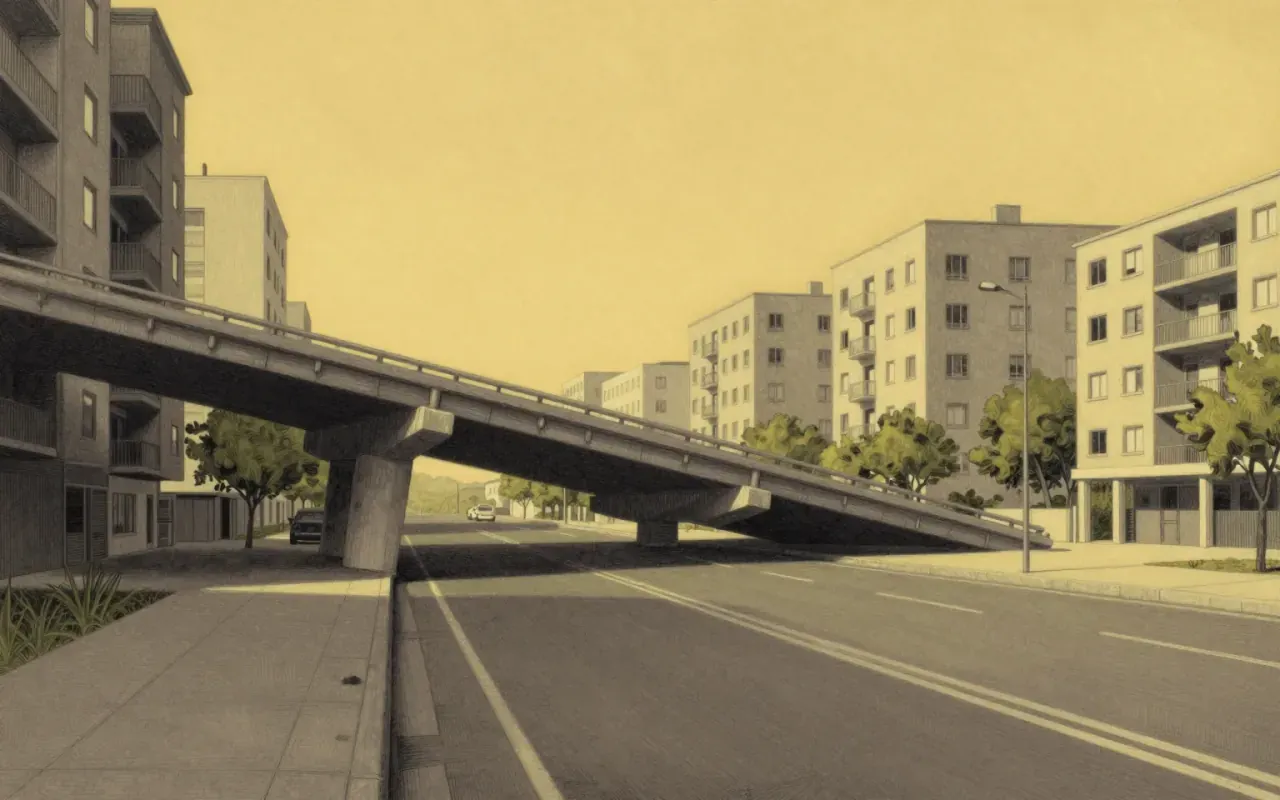
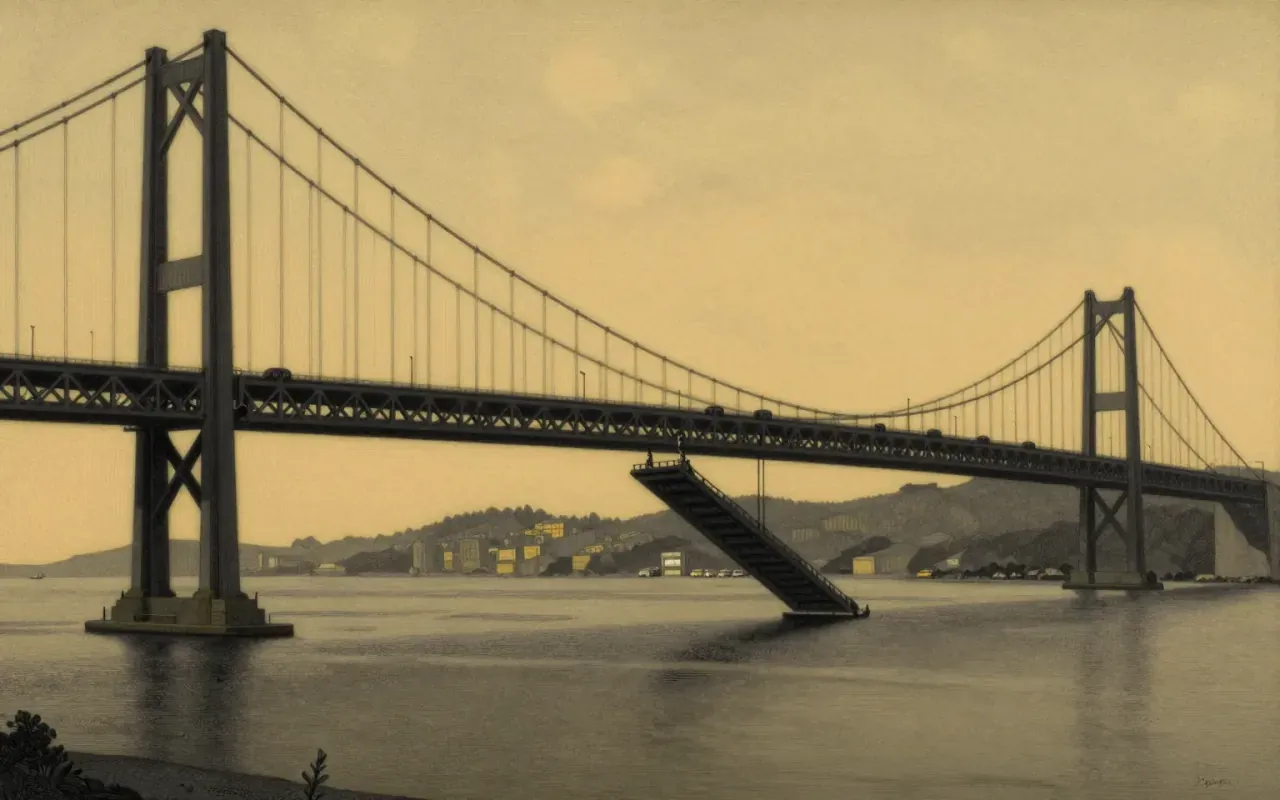
Initial media reports estimated as many as 300 deaths, a figure later revised down substantially to the confirmed 63 once investigators recognised how unusually light Bay Area freeway traffic had been that evening. The worst single loss of life came in West Oakland, where a 1.25-mile section of the double-deck Cypress Street Viaduct on Interstate 880 collapsed when its upper deck fell onto the lower deck, killing 42 people and crushing vehicles beneath. A further death occurred on the San Francisco-Oakland Bay Bridge, where a section of the upper deck fell onto the roadway below and a driver, misdirected onto the affected upper deck, was killed after her car went over the resulting gap; the bridge reopened after repairs on 18 November.
A viaduct built on marshland, and a bridge exposed by soil that gave way
The Cypress Viaduct’s location contributed directly to its collapse: built in the late 1950s from nonductile reinforced concrete, roughly half of it sat on filled marshland rather than more stable ground, and the shaking was amplified there through soil liquefaction, a process in which saturated, loosely packed fill temporarily behaves like a liquid under strong shaking. A comparable pattern affected San Francisco’s Marina District, built partly on rubble dumped after the 1906 earthquake and fill laid down for a 1915 exposition, where liquefaction caused four deaths and the collapse of seven buildings, giving investigators clear before-and-after evidence connecting specific ground conditions to specific structural failures during the same earthquake.
A retrofit that addressed the wrong failure mode
Engineering review after the quake found the Cypress Viaduct had received only limited retrofitting following the 1971 San Fernando earthquake, adding longitudinal restraints at certain expansion joints, but that no study had specifically examined how the structure’s particular design might fail under strong shaking, a gap that meant the retrofit addressed general seismic vulnerability without anticipating the specific failure mode that ultimately brought down the upper deck. This distinction, between a structure receiving some seismic attention and receiving attention adequate to its actual risk, became a central point in the broader reassessment of California infrastructure that followed the disaster.
A game’s timing that likely prevented a much higher death toll
The World Series broadcast’s timing measurably reduced the earthquake’s human cost. Because many commuters had left work early or delayed their evening commute to watch or attend the game, the Cypress Viaduct, which on an ordinary day carried around 195,000 vehicles, held far fewer cars than usual at the moment of collapse, a coincidence investigators credit with preventing a substantially higher death toll. The interrupted broadcast itself, restored via telephone audio after a thirteen-second gap, gave the country a real-time, nationally televised view of a major earthquake as it happened, a format of live disaster coverage that later events, including the 1994 Northridge earthquake, would follow.
Worth reading for how much chance shaped the final toll
The Loma Prieta earthquake is worth returning to less for its magnitude, substantial but not extraordinary by regional standards, than for how clearly it demonstrates the role of chance in shaping a disaster’s final toll: a baseball game’s start time emptying a doomed freeway, a specific stretch of reclaimed marshland amplifying shaking in ways solid ground nearby did not, and a retrofit that addressed real but ultimately insufficient risks. Readers interested in the gap between an earthquake’s physical force and its actual human cost will find this case unusually well documented, since so many of the factors that kept the death toll from being far higher are independently traceable and explainable rather than simply attributed to luck.