What happened
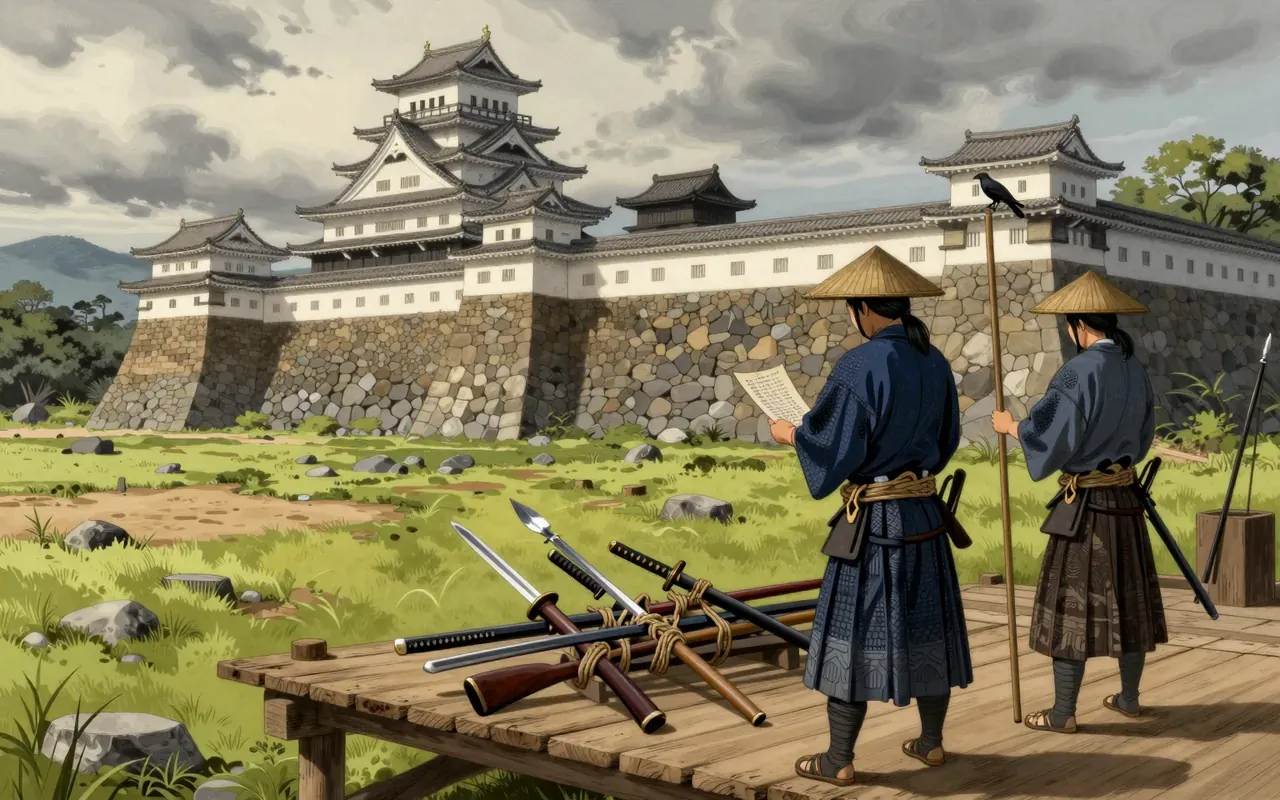
Hideyoshi succeeded Oda Nobunaga in 1582 after defeating Akechi Mitsuhide at Yamazaki. He conquered Shikoku (1585), Kyūshū (1587), and Kii Province (1585 via Negoro-ji). He received the Toyotomi name in 1585, launched a sword hunt in 1588, besieged Odawara in 1590 using unconventional siege lines, and crushed the Kunohe rebellion in Mutsu Province between March 13 and September 4, 1591.
How we know it
The record consists of six verified claims drawn from a single source titled ‘Toyotomi Hideyoshi’. Each claim cites a specific action, date, location or institutional change and attributes it directly to Hideyoshi. No external sources, chronicles, letters, or contemporary accounts are cited in the material.
Why it went that way
The source gives no motives, no internal deliberations, no strategic calculations beyond battlefield outcomes, and no reference to alliances, logistics, or intelligence. It records only what was done—not why Hideyoshi chose one method over another, nor why rivals submitted or rebelled when they did.
What is still contested
The source does not state who disagreed with Hideyoshi’s actions, why they resisted, or whether any faction contested his authority beyond the named rebellions. It does not report dissent over the sword hunt, the legitimacy of the Toyotomi name, or interpretations of the Odawara siege lines. No alternative readings of cause, intent or reception are provided.
What it changed
The source establishes that Hideyoshi’s campaigns completed Japan’s unification and that the 1588 sword hunt formally disarmed peasants. It shows he replaced the Fujiwara name with Toyotomi—a symbolic elevation sanctioned by the Imperial Court. It does not state how these changes affected landholding, taxation, peasant livelihoods, or regional governance.
Is it worth your time
Yes—if you need to understand how military coercion, symbolic naming, and weapon confiscation were used together to enforce hierarchy in late 16th-century Japan. It is not worth your time if you seek motives, resistance narratives, economic drivers, or social consequences beyond what the source states.