A merger with a charter attached
The Dutch East India Company was created on 20 March 1602, when the Dutch government consolidated several competing regional trading firms into a single entity backed by the States General. In exchange for this consolidation, the new company received a twenty-one-year monopoly over Dutch trade and navigation in Asia, covering the route east of the Cape of Good Hope and west of the Straits of Magellan. This was not simply a merger of private interests; it was a deliberate act of state policy intended to stop Dutch firms from competing against one another for the same Asian markets and instead concentrate resources behind a single, better-capitalised venture capable of contesting Portuguese and later English trading positions in the region.
A company that could raise armies and mint coins
What made the VOC unusual was the scope of authority written into its charter. Beyond its trade monopoly, the company could wage war, imprison and execute those it convicted of crimes within its jurisdiction, negotiate treaties with local rulers, strike its own coinage, and establish colonies, powers ordinarily associated with sovereign states rather than commercial ventures. This authority let the VOC act as a quasi-governmental power across large parts of maritime Asia, building fortifications, administering territory, and maintaining armed forces without needing separate approval from the Dutch government for each action. By 1619 the company had established Batavia, on the site of present-day Jakarta, as its administrative headquarters for these operations.
Shareholders in Amsterdam, soldiers in Asia
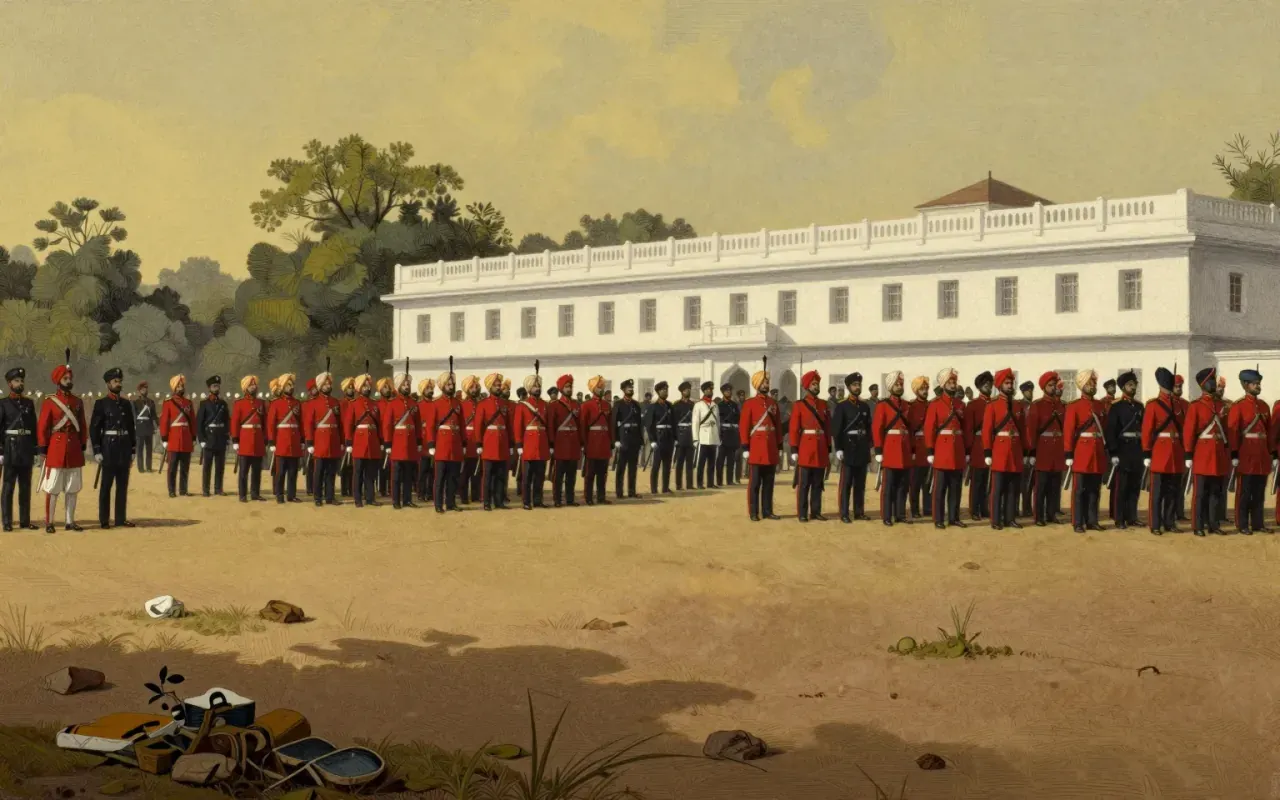
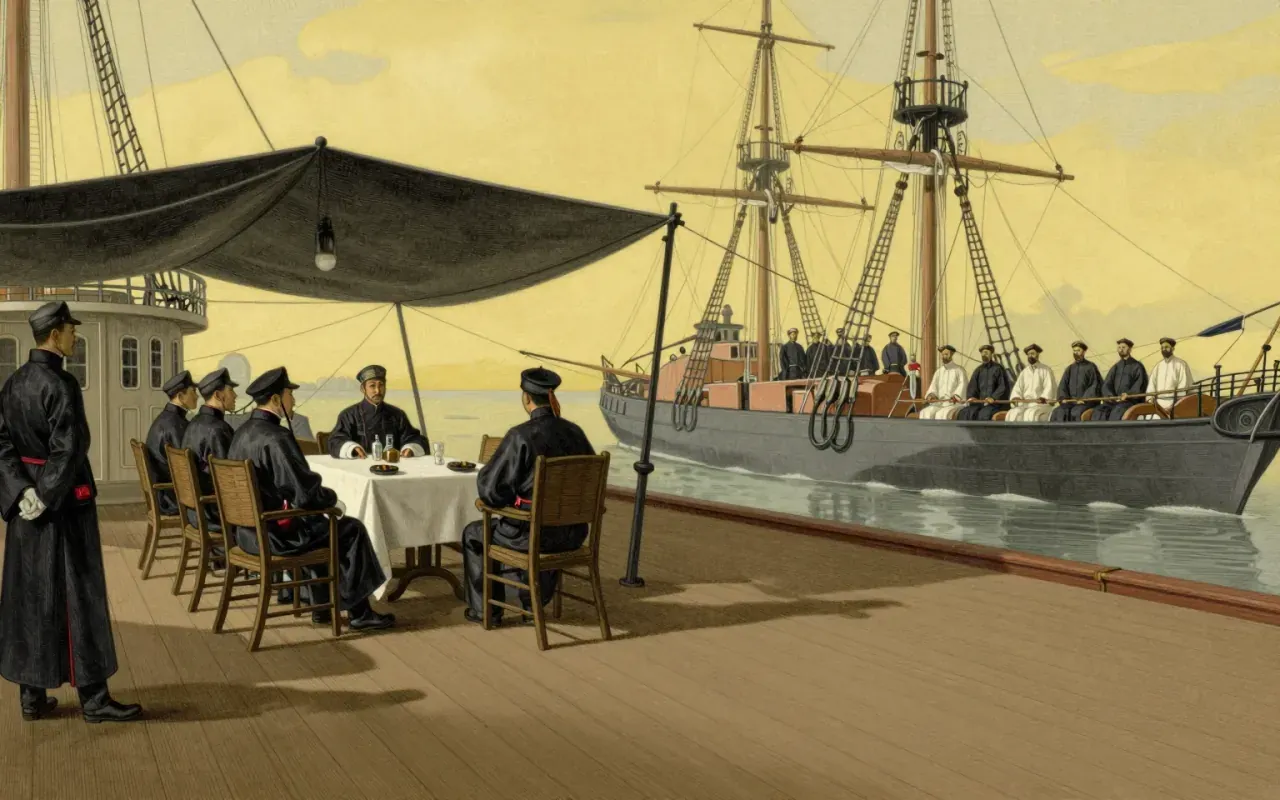
The company also pioneered the structure now recognised as the joint-stock corporation, raising capital from investors, known as participants, while limiting the personal liability of both those investors and the managing directors who ran the company day to day. Shares in the VOC could be bought and sold on the Amsterdam exchange, giving investors a way to profit from Asian trade without ever travelling there themselves. That financial innovation supported an operation of considerable physical scale: across its history the company sent nearly a million Europeans to Asia aboard almost 4,800 ships, and by 1669 it maintained more than 150 merchant vessels, 40 warships, some 50,000 employees, and a private army of roughly 10,000 soldiers.
Monopoly enforced by force
The VOC’s profitability rested heavily on its control of the spice trade, particularly nutmeg, mace, and cloves, which it sold in Europe at many times the price paid to producers in the Indonesian archipelago. That monopoly was enforced with documented violence. In 1620, ten English merchants at Amboyna were arrested, tried, and beheaded on charges of conspiracy, an episode that provoked a diplomatic crisis and contributed to England’s eventual withdrawal from spice trading in the region. Around the same period, the company’s campaign to secure exclusive control of nutmeg production in the Banda Islands led to the killing, starvation, or forced removal of most of the islands’ native population, clearing the land for VOC-controlled plantations.
Profits that outlasted good management
For much of its existence the VOC delivered extraordinary returns, averaging roughly 18 percent in annual dividends across close to two centuries of operation, with a peak of around 40 percent by 1669 and average annual profits in the millions of guilders during its mid-seventeenth-century golden age. That performance masked growing structural weaknesses from the 1730s onward: intra-Asian trade networks that had once generated additional profit began to erode, the concentration of administration in Batavia proved inefficient, corruption among company personnel spread, and mortality among employees stationed in Asia remained high. Dividend payments continued at levels the underlying business could not sustainably support, a pattern that steadily hollowed out the company’s financial reserves even as its outward reputation for wealth persisted.
War losses and a quiet nationalisation
The end came through a combination of military disaster and accumulated debt. The Fourth Anglo-Dutch War, fought between 1780 and 1783, cost the VOC roughly half its fleet and caused damages estimated at 43 million guilders, a blow the company’s finances could not absorb. In 1796 its board was dissolved and management passed to a state committee, and the charter itself expired on 31 December 1799, after which its assets and territories were absorbed into what became the Dutch East Indies under direct government administration. That state-run colonial period lasted, with a wartime interruption under Japanese occupation, until Indonesian independence in the mid-twentieth century, extending the VOC’s practical legacy in the archipelago well beyond the company’s own formal existence.