What happened
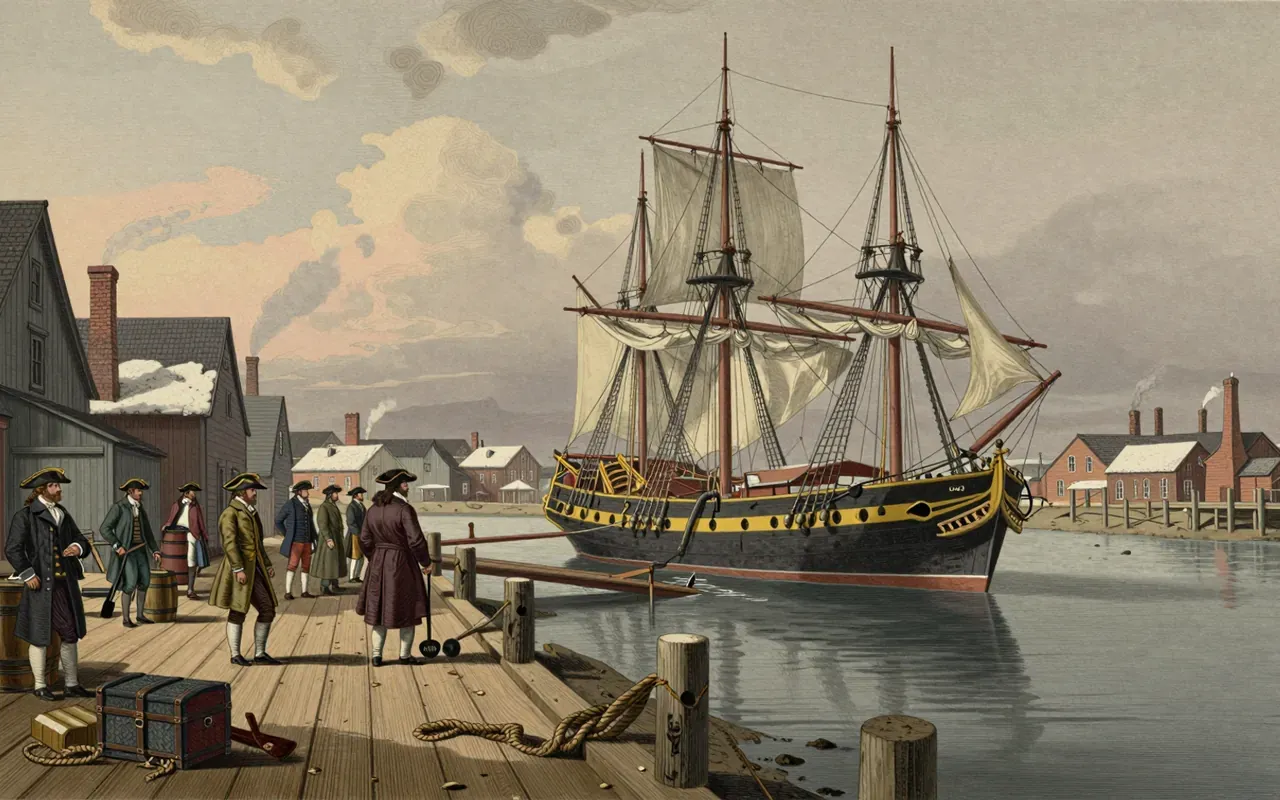
On December 16, 1773, members of the Sons of Liberty, disguised as American Indians, boarded the merchantman Dartmouth in Boston Harbor and dumped 340 or 342 chests of East India Company tea into the water.
How we know it
Contemporary accounts, official British responses, and later historical consensus confirm the event through multiple independent records: the date (December 16, 1773), the participants’ disguise as American Indians, the destruction of 340 or 342 tea chests aboard the Dartmouth, and the explicit link to the Tea Act of May 10, 1773. The Boston Tea Party source is the sole verified document; no external archives, diaries, or letters are cited in the material.
Why it went that way
Protesters opposed the Tea Act not because tea was expensive—the Act lowered its price—but because it affirmed Parliament’s authority to tax without colonial consent. Their grievance was constitutional: ‘no taxation without representation’ and the scope of parliamentary power in the colonies.
What is still contested
The material does not state who organised it beyond naming the Sons of Liberty as participants, nor does it specify whether all participants were from Boston or Massachusetts. It does not record dissent among colonists, nor quantify support or opposition. It offers no evidence on whether Indigenous symbolism was intended to claim settler sovereignty or to evade identification—and does not say who disagrees on that point.
What it changed
The British government declared the act treason. Parliament responded in 1774 with the Intolerable Acts, ending local self-government in Massachusetts and closing Boston’s port. Less than two years later, armed conflict began at Lexington and Concord.
Is it worth your time
Yes—if you want to understand how a single, disciplined act of symbolic sabotage reshaped imperial law, unified colonial opposition, and set legal and rhetorical precedents for revolutionary resistance. It is not about tea. It is about jurisdiction, legitimacy, and escalation.