From a Crimean siege to a continental pandemic
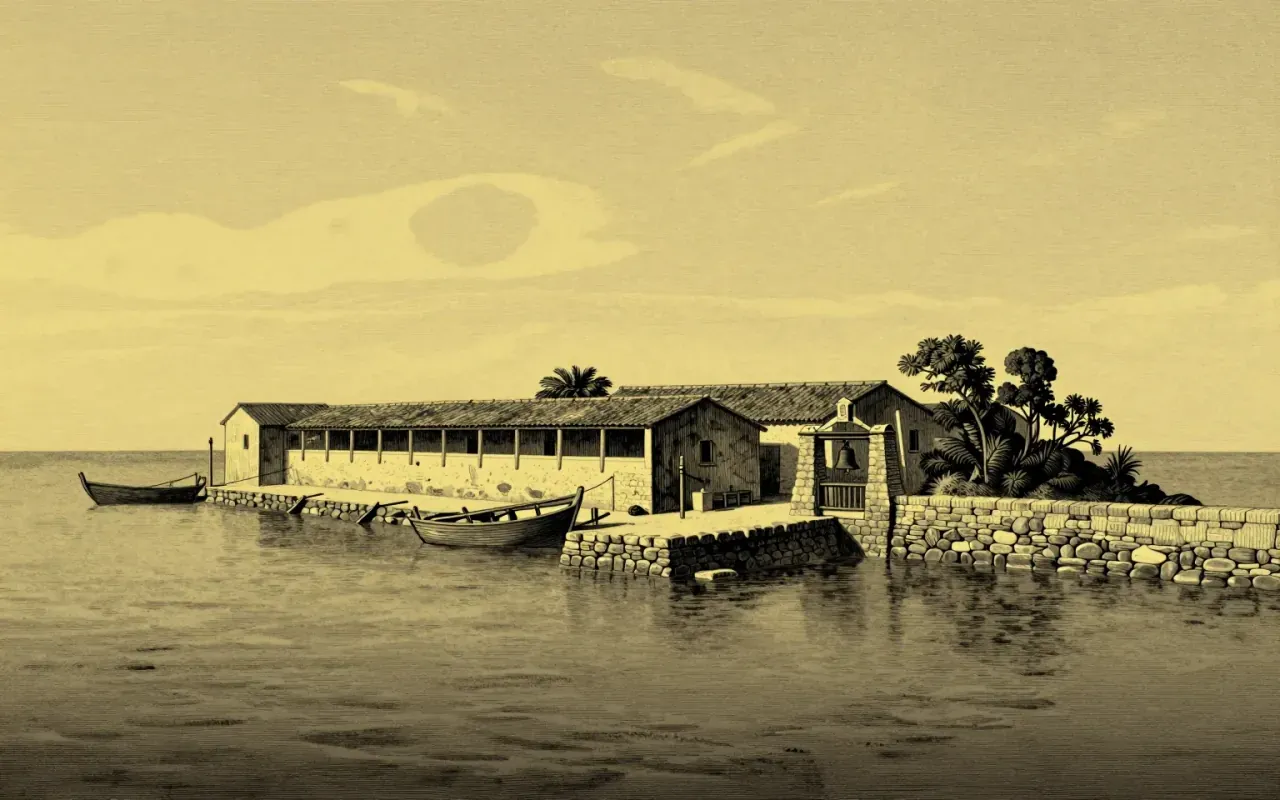
The plague is understood to have reached Crimea in 1347 during the Genoese-held port of Kaffa’s siege by forces of the Golden Horde, from where Genoese merchants fleeing across the Black Sea carried it to Constantinople and, by autumn 1347, to Sicily. From there it spread through the Mediterranean and northward across Europe over the following years, reaching England by June 1348, Scandinavia by 1350 and Moscow by 1353. Genetic research on burials near Lake Issyk-Kul in what is now Kyrgyzstan, dated to 1338 and 1339, has identified a related strain of the bacterium Yersinia pestis in that region shortly before the outbreak, though whether that site marks the pandemic’s true point of origin remains debated among researchers.
No census, so no reliable death toll
No contemporary government kept anything resembling a full census at the time, and estimates of mortality vary correspondingly widely: historians generally describe a death toll of between a quarter and three-fifths of Europe’s population, with specific city figures, Florence falling from around 110,000 to 50,000 residents, Paris losing roughly half its population, cited as illustrations rather than as evidence of a uniform pattern. A 2022 study using pollen records to track agricultural activity found considerable regional variation, identifying uninterrupted farming continuity in parts of central and eastern Europe, Iberia and Ireland that would be hard to reconcile with uniformly catastrophic mortality everywhere. Because underlying pre-plague population figures themselves vary by more than a hundred per cent between different historians’ estimates, any percentage-based death toll carries substantial built-in uncertainty.
Miasma, divine punishment, and other 14th-century explanations
Contemporary writers described the plague’s physical symptoms in vivid and broadly consistent terms, Boccaccio’s account of swellings the size of an apple among the best known, but their explanations for its cause reflected the medical theory of the time rather than anything resembling modern epidemiology. The medical faculty of Paris attributed the outbreak to an unfavourable alignment of planets, producing corrupted air, or miasma, while some physicians in the Muslim world treated it as divine punishment, a framing that in some cases actively discouraged practical countermeasures. The Italian chronicler Agnolo di Tura’s description of mass graves in Siena, dug so deep that dogs reportedly dragged bodies from them, illustrates the scale of contemporary shock but, like other vivid narrative accounts, cannot itself be used to calculate a reliable death toll.
Rats, fleas, or lice: the transmission argument
The traditional explanation for the plague’s spread, transmission by fleas carried on black rats, has been directly challenged by researchers pointing out that the archaeological record for medieval London shows no clear evidence of the mass rat die-off that theory would predict, and that the specific rat flea associated with the disease survives poorly in the cooler climates of northern Europe where the plague nonetheless spread rapidly. Alternative proposals point instead to human fleas and body lice, or to direct person-to-person transmission, as better explanations for the speed and pattern of the outbreak in these regions. Mathematical modelling studies have pushed back in the other direction, arguing the rat-flea mechanism still best fits the documented mortality curves, leaving the underlying transmission question unresolved among specialists rather than settled by any single study.
Labour shortages, persecuted minorities, and a reshaped economy
The sudden reduction in the labour supply drove wages upward for surviving workers even as landlords, no longer able to rely on customary labour service, shifted toward monetary rents, unsettling the economic relationships that had structured much of rural European life before the outbreak. Tax collection and church administration were both severely disrupted as clergy died in large numbers and parishes went unstaffed. The disaster also intensified religious scapegoating: persecution of Jewish communities accused of causing the plague culminated in massacres including one at Strasbourg in February 1349 that killed roughly two thousand people, part of a wave that is recorded as having destroyed dozens of Jewish communities across the affected regions over the following years.
A disaster whose scale is agreed upon only in outline
The Black Death is a case where the broad outline, a catastrophic mid-fourteenth-century pandemic that reshaped European society, is not in dispute, while nearly every specific figure attached to it, the death toll, the regional variation, even the exact mechanism of transmission, remains genuinely contested among specialists working from incomplete and unevenly distributed evidence. Readers wanting to understand how a documented historical disaster can still generate live scientific and historical argument centuries later will find the plague an unusually good case study; readers wanting a single confirmed statistic to quote should expect to qualify almost any number they take from the record.