What happened
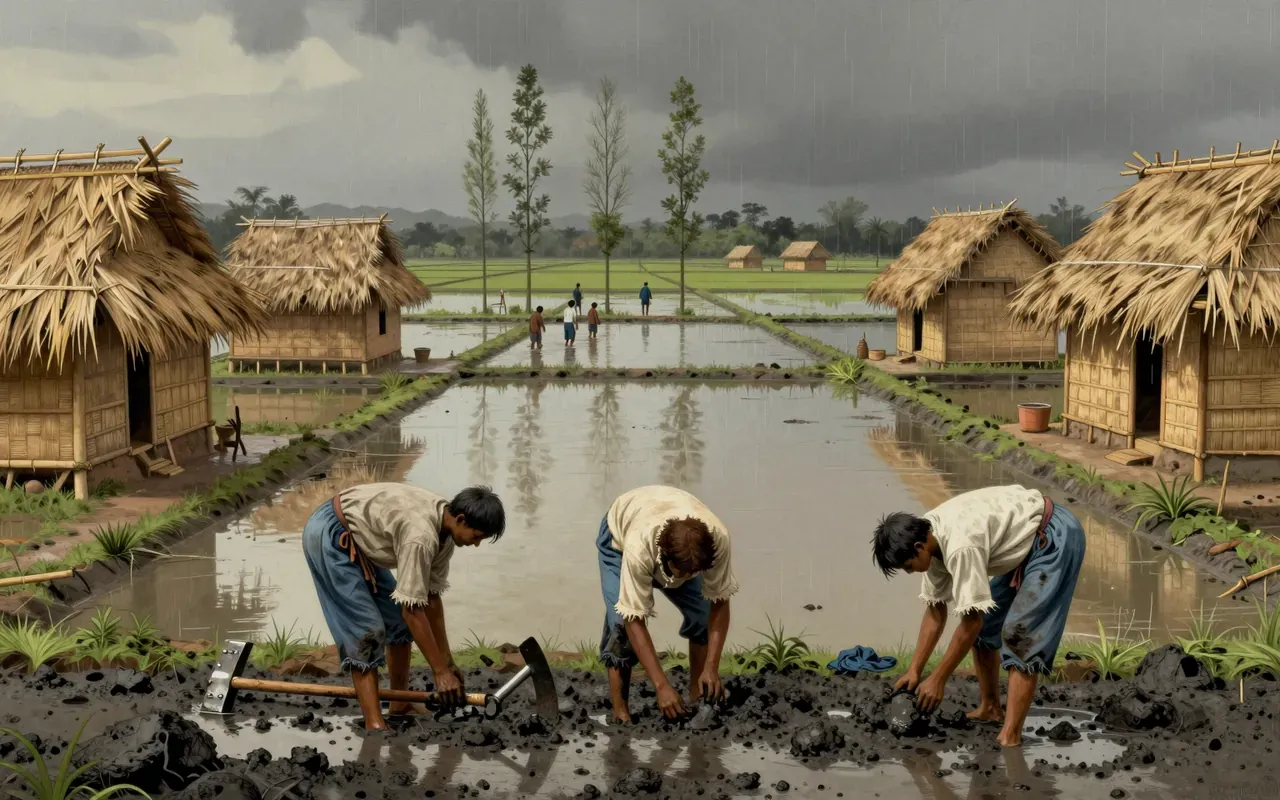
Pol Pot led the Khmer Rouge to seize power in 1975. He declared ‘Year Zero’ on 17 April. He emptied cities and forced the population onto collective farms. He ruled Democratic Kampuchea as a one-party state until Vietnam invaded in December 1978 and overthrew him in 1979.
How we know it
The record comes from a single verified source: the biographical entry titled ‘Pol Pot’. It names him, dates his rule (1975–1979), identifies his party (Communist Party of Kampuchea), cites ‘Year Zero’ on 17 April 1975, specifies Vietnam’s December 1978 invasion, and gives death figures (1.5–2 million total; 1.3 million executed in the Killing Fields). No other sources are cited or implied.
Why it went that way
Pol Pot sought an agrarian socialist society. He believed this required purging all pre-1975 institutions, knowledge and people. The Khmer Rouge enforced this through total control: evacuating cities, abolishing money and schools, and executing perceived enemies. The state became the sole arbiter of life and death.
What is still contested
The source does not address contested questions: Pol Pot’s personal role in day-to-day killings, whether the genocide was centrally planned or locally improvised, why Vietnam invaded when it did, or how much external support the Khmer Rouge retained after 1979. These remain unresolved in the material provided.
What it changed
It ended the Khmer Rouge’s formal rule. It replaced Democratic Kampuchea with a Vietnamese-backed government. It confined the Khmer Rouge to western rural areas. It halted the genocide — but did not prosecute Pol Pot or dismantle the party’s structure.
Is it worth your time
Yes. The event establishes how a self-declared agrarian socialist revolution produced industrial-scale killing without war, famine or foreign occupation — and how its end came not from internal revolt but from cross-border invasion. That pattern remains analytically urgent.